
Soups & Stews
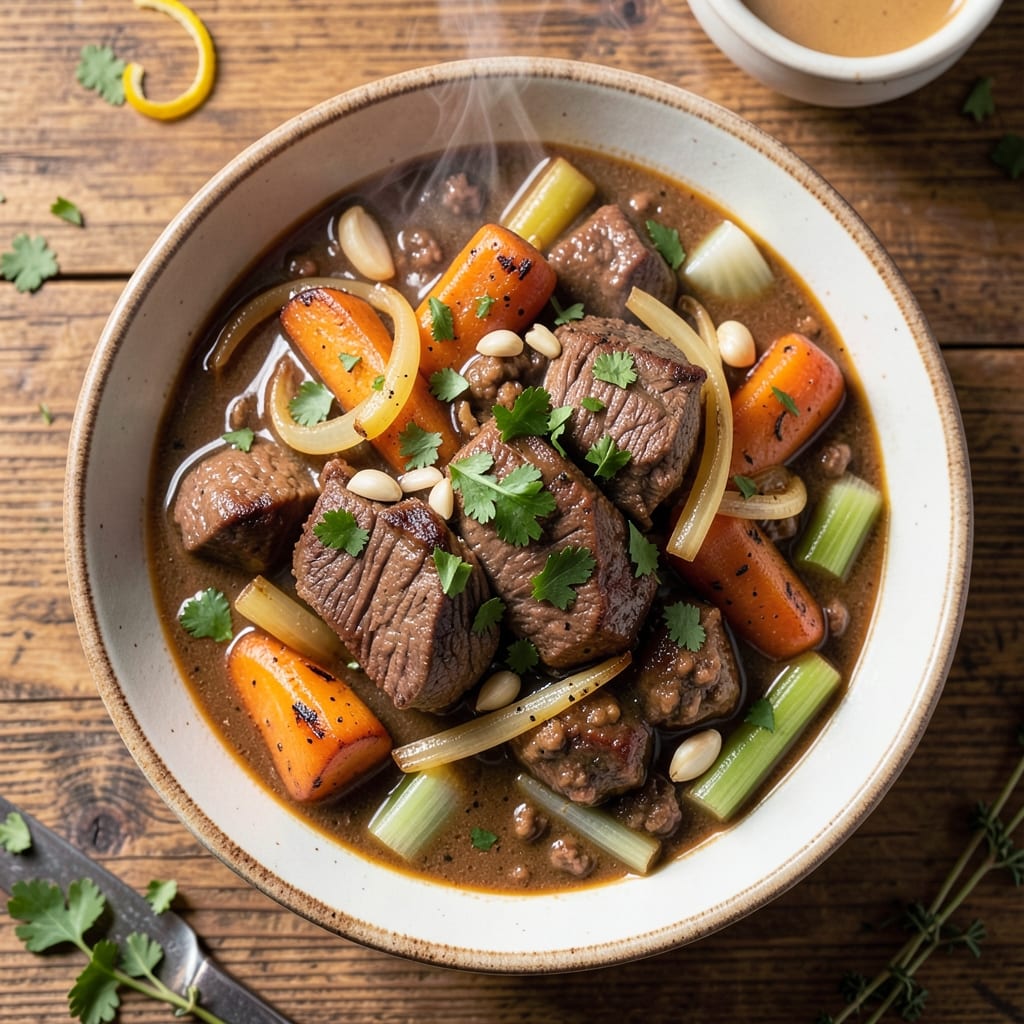
This all-natural beef stew recipe transforms tough cuts into melt-in-your-mouth perfection through slow simmering and herb-infused meatballs. The secret lies in proper browning and low-and-slow cooking—techniques that build deep, complex flavors without artificial additives. Every bite delivers tender beef, caramelized vegetables, and aromatic herbs that create restaurant-quality depth at home.
What sets this recipe apart is the combination of traditional braising methods with simple, high-quality ingredients. You'll start by searing beef chuck roast to develop a rich crust, then build layers of flavor through sautéed vegetables and aromatic herbs. The herb-infused meatballs add texture and extra beefy richness that elevates the stew beyond basic recipes.
The result is a hearty stew with fork-tender beef, flavorful meatballs, and vegetables that have absorbed the savory broth. This dish delivers the kind of satisfying, comforting meal that tastes even better the next day as flavors meld together. The slow simmering process ensures maximum flavor extraction while keeping the meat incredibly tender.
Perfect for family dinners, holiday gatherings, or meal prep, this beef stew serves as both a main dish and a comforting centerpiece. Pair it with crusty bread to soak up every last drop of that rich, aromatic broth. Let's create this deeply satisfying stew from scratch.
Ingredients for all natural beef stew
High-quality beef and aromatic herbs create restaurant-worthy depth in this slow-simmered masterpiece.
| Ingredient | Amount | Notes |
|---|---|---|
| Beef Chuck Roast 🥩 | 3 lb | Well-marbled, cut into 1.5-inch chunks |
| Yellow Onions 🧅 | 2 whole | Medium size, sliced into half-moons |
| Carrots 🥕 | 4 whole | Medium size, peeled and cut into chunks |
| Celery Stalks 🌿 | 4 whole | Trimmed and cut into 1-inch pieces |
| Garlic Cloves 🧄 | 6 cloves | Peeled and lightly crushed |
| Ground Beef 🥩 | 1 lb | 80/20 fat ratio for meatballs |
| Fresh Parsley 🌿 | ¼ cup | Chopped finely, stems removed |
| Fresh Thyme 🌿 | 2 tbsp | Leaves only, chopped |
| Fresh Rosemary 🌿 | 1 tbsp | Needles only, finely chopped |
| All-Purpose Flour 🌾 | ½ cup | For meatball binding |
| Beef Broth 💧 | 6 cups | Low-sodium, homemade preferred |
| Red Wine 🍷 | 1 cup | Dry, bold variety like Cabernet |
| Tomato Paste 🍅 | 2 tbsp | Smooth, no sugar added |
| Olive Oil 🫒 | ¼ cup | Extra-virgin for searing |
| Salt 🧂 | 2 tsp | Diamond Crystal kosher salt |
| Ground Black Pepper 🌶️ | 1 tsp | Freshly cracked |
| Bay Leaves 🌿 | 2 whole | Dried, standard size |
The beef chuck roast is the foundation—look for well-marbled cuts with visible fat for maximum flavor and tenderness. Costco or local butchers often carry premium chuck roasts that deliver superior results. For the meatballs, 80/20 ground beef ensures juiciness, while the herb blend transforms ordinary beef into something extraordinary. Fresh herbs like thyme and rosemary can be found at Whole Foods or local farmers markets, where they maintain their vibrant color and aroma. If using dried herbs, reduce to one-third the fresh amount—though fresh is always preferred for that restaurant-quality depth.
No red wine? Beef broth with 1 tbsp balsamic vinegar works beautifully, though the acidity won't match wine's complexity. For the tomato paste, San Marzano or high-quality jarred brands avoid metallic aftertaste. The flour in meatballs acts as a binder—King Arthur or Gold Medal brands yield consistent results. Substituting beef broth for wine requires adding 1 tsp Worcestershire sauce (ensure it's vegetarian if needed) to replicate depth. Carrots and celery can be swapped for turnips or fennel for variety, though onions are non-negotiable—they form the flavor base.
This stew develops richer flavors overnight—make a double batch and freeze portions for future meals. Store in airtight containers with a thin layer of broth on top to prevent browning. Fresh herbs should be wrapped in damp paper towels and refrigerated for up to 5 days. The chuck roast can be prepped ahead and refrigerated overnight for even more tender results. For meal prep, portion into individual containers with broth—reheating preserves texture perfectly. Leftovers keep for 5 days in the fridge or 3 months frozen.
Why You'll Love This Recipe
- One-Pot Magic: I swear by this recipe because it’s literally dump-and-go after the initial sear. Brown that beef chuck in the same pot, toss in the onions, carrots, celery, and garlic—no extra pans, no stress. The slow simmer does all the work while I’m scrolling through my phone or pretending to fold laundry.
- Deep, Rich Flavor: That beef chuck? It turns insanely tender, falling apart like it’s been cooking for days (even though it’s not). The onions caramelize just enough to add sweetness, while the garlic and celery stalks infuse every bite with that homey, savory depth. Honestly, the first bowl is always the hardest to stop eating.
- Weeknight & Potluck Star: This stew is my go-to when I need something hearty but don’t want to slave over it. Double the batch, freeze half—perfect for lazy Mondays or bringing to a friend’s house (they’ll ask for the recipe, and I’ll smile while secretly keeping it to myself). The aroma alone makes any room feel like a cozy kitchen.
- Budget-Friendly Powerhouse: Beef chuck is cheap, and this recipe stretches it across multiple meals without sacrificing taste. I’ve fed four people for under $15, and the leftovers? Even better the next day. Plus, it’s the kind of dish that makes you feel fancy without breaking the bank—just add crusty bread and call it a dinner party.
Step-by-step instructions for slow-simmered beef stew with herb-infused meatballs
This method delivers restaurant-quality depth through precise timing and layering of flavors.
Prepare the Herb-Infused Meatballs
In a medium bowl, combine the 1 lb ground beef with the 0.5 cup all-purpose flour, 0.25 cup finely chopped fresh parsley, 2 tbsp chopped fresh thyme, 1 tbsp finely chopped fresh rosemary, 2 tsp salt, and 1 tsp freshly cracked ground black pepper. Using your hands, gently mix until just combined—overworking develops gluten and makes meatballs tough.
Roll the mixture into 12 equal-sized meatballs, about 1.5 inches in diameter. Place them on a parchment-lined plate and refrigerate for 30 minutes. This chilling step firms up the meatballs, preventing them from falling apart during cooking. The herbs will infuse deeply during the simmering process, creating aromatic layers of flavor.
Sear the Beef Chuck Roast and Vegetables
Heat the 0.25 cup olive oil in a large Dutch oven over medium-high heat until shimmering. Add the 3 lb beef chuck roast cut into 1.5-inch chunks and sear on all sides until deeply browned, about 5-6 minutes per side. This Maillard reaction creates the rich foundation for your stew.
Remove the beef and set aside. In the same pot, add 0.25 cup olive oil if needed and sear the 2 whole yellow onions sliced into half-moons, 4 whole carrots cut into chunks, and 4 whole celery stalks cut into 1-inch pieces for 8-10 minutes until softened and lightly caramelized. Add the 6 peeled and lightly crushed garlic cloves, cooking for an additional 30 seconds until fragrant.
Build the Stew Base
Stir in the 2 tbsp tomato paste and cook for 1 minute until it darkens slightly. Pour in the 1 cup red wine, scraping up any browned bits from the bottom of the pot. This deglazing captures all the flavorful fond that would otherwise be lost.
Add the 6 cups beef broth and bring to a gentle simmer. Return the seared beef chunks to the pot along with the 2 whole bay leaves. The liquid should just cover the beef—if it's too shallow, add a splash of water to maintain proper moisture levels during cooking.
Simmer for Deep Flavor Development
Cover the Dutch oven and transfer to a preheated 325°F oven. Cook for 2 hours, then carefully add the chilled meatballs to the pot. Return to the oven and continue cooking uncovered for an additional 1-1.5 hours, until the beef is fork-tender and the meatballs are cooked through with an internal temperature of 165°F.
The slow cooking process allows the beef to become melt-in-your-mouth tender while developing complex, layered flavors. The meatballs will absorb the rich stew juices, becoming infused with all the aromatic vegetables and herbs. Skim off any excess fat that rises to the surface during cooking for a cleaner final product.
Finish and Serve
Remove the stew from the oven and let it rest for 10 minutes. Discard the bay leaves and adjust seasoning if needed—this is your final opportunity to balance flavors before serving. The stew should have a rich, velvety consistency with deeply developed beef and herb notes.
Serve immediately with crusty bread or over mashed potatoes. Each spoonful should deliver tender beef, melt-in-your-mouth meatballs, and a complex broth that coats your palate with every bite. The wine and herbs create a sophisticated depth that makes this stew special for any occasion.
Pro Tips For Making All Natural Beef Stew
- Sear the Chuck Hard: I used to treat the beef chuck like a shy guest—gentle pats, low heat. Wrong. Sear it over medium-high heat until it’s deep brown, almost black in spots, with a crust that looks like it survived a campfire. This locks in flavor and makes the final stew taste like it simmered for days, not hours.
- Cut Onions Small: Big onion chunks turn to mush and water down the stew. Dice them into ¼-inch pieces—small enough to disappear but big enough to keep texture. Skip the food processor; your knife does a better job, and you’ll avoid the slimy texture that comes from over-processing.
- Don’t Rush the Searing: I learned this the hard way—crowding the pan steams the meat instead of browning it. Work in batches if needed, but give each piece space to develop that crust. A busy pan = bland stew. A patient pan = rich, caramelized flavor that carries through the whole dish.
- Salt the Meat First: Season the beef chuck with salt and pepper before it hits the pan. Let it sit for 10 minutes—yes, even if you’re impatient like me—so the salt penetrates. This makes the meat juicier and the stew’s seasoning more even, not just a salty crust on top.
Essential equipment for all natural beef stew
Dutch Oven Essentials
A 5-7 quart Dutch oven is your secret weapon for this recipe—I swear by my Le Creuset Signature for even heat distribution and durability. The deep sides prevent spills during simmering, and the tight lid traps moisture for perfect tenderness. For budget-friendly alternatives, Lodge Cast Iron offers excellent performance with similar benefits. Preheat your Dutch oven before adding ingredients to maintain consistent temperatures throughout cooking. 🔥
Precision Thermometer
Never guess temperatures again! A meat thermometer like the ThermoWorks Smoke ensures your beef reaches 165°F and your meatballs cook evenly. I place it in the thickest piece of beef to monitor progress without opening the lid. A laser thermometer is another great option for hands-free monitoring during the long simmer. These tools prevent overcooking while guaranteeing safe, tender results every time.
Cutting Tools Matter
Invest in a sharp chef's knife (I recommend Wüsthof Classic) for cleanly cutting your 1.5-inch beef chunks and uniformly sized vegetables. A mandoline speeds up prep for onions, carrots, and celery, but only if you're comfortable with its safety features. For meatballs, use a scale to portion 1.5-inch diameter balls consistently—this ensures even cooking. Proper knife work prevents uneven searing and improves flavor distribution.
Herb Prep Tools
Fresh herbs make all the difference—use a microplane for finely chopping thyme and rosemary stems, or a herb mincer for precise control. A mortar and pestle works beautifully for crushing garlic cloves to release their oils. I store my fresh herbs in glass containers with damp paper towels to maintain their vibrant flavors. For the 0.5 cup flour in meatballs, a wire whisk blends it perfectly with ground beef without overmixing.
Broth and Wine Essentials
For maximum flavor, use homemade beef broth (or Kettle & Fire for store-bought quality). A fine-mesh strainer helps remove impurities if using homemade stock. For the 1 cup red wine, a wine funnel makes pouring precise without spills. I always keep a bottle of Cabernet Sauvignon on hand for this recipe—its bold profile stands up to the beef's richness. A wooden spoon helps deglaze the pot without scratching the surface.
Storage Solutions
After cooking, transfer stew to glass Pyrex containers with tight-sealing lids for fridge storage. For freezing, use quart-sized freezer bags with 1 inch headspace to prevent ice crystals. I label each container with the date—this stew tastes even better after 2-3 days of flavor melding. A vacuum sealer extends freshness to 3 months while preserving texture. Always cool stew to room temperature before refrigerating to prevent bacterial growth. ❄️
Nutrition facts
Frequently asked questions
Can I substitute ground beef in the meatballs with another protein?
You can use ground lamb or ground turkey (with added olive oil for moisture), but the flavor profile changes significantly. For a beef-forward taste, try ground venison or ground bison—both work beautifully with the same herb blend. Avoid lean proteins like chicken breast, as they'll dry out during the long simmer.
How do I make this stew in a slow cooker instead of an oven?
Transfer the seared beef and vegetables to your slow cooker after deglazing. Add the broth, wine, and bay leaves, then cook on low for 6-7 hours (or high for 3-4 hours). Add the meatballs during the last 1 hour of cooking. The texture will be slightly different but still delicious—just check the internal temperature of meatballs reaches 165°F.
What vegetables can I add or swap in this recipe?
You can easily swap carrots for turnips or parsnips, and celery for fennel or leeks. For extra heartiness, add potatoes (cut into chunks) during the last 1 hour of cooking. Avoid watery vegetables like zucchini or tomatoes—they'll dilute the rich broth. Potatoes should be added later to prevent mushiness.
Why did my meatballs fall apart in the stew?
This usually happens from overmixing the meatball dough or using too much flour. For best results, handle the mixture gently and stick to the 0.5 cup flour measurement. Also ensure your ground beef has enough fat (80/20 ratio)—leaner meats break down more easily. Chill the meatballs for 30 minutes before cooking to help them hold together.
Can I make this stew ahead of time for meal prep?
This stew actually tastes better the next day as flavors meld together. Cook it fully, then refrigerate in airtight containers for up to 5 days or freeze for 3 months. When reheating, warm over medium-low heat until bubbling, stirring occasionally. For best texture, add a splash of beef broth when reheating to restore moisture.