
Soups & Stews
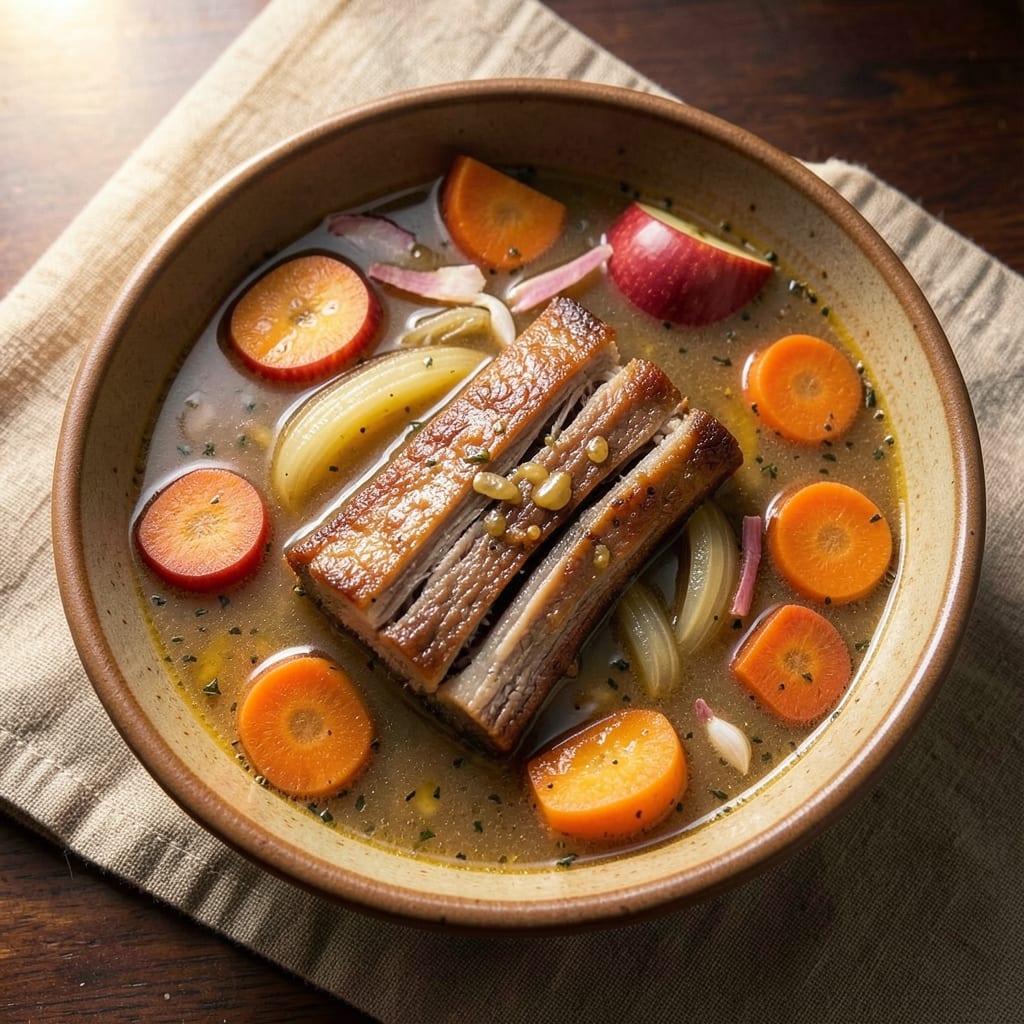
This apple carrot beef rib soup recipe transforms humble ingredients into a deeply comforting bowl of slow-simmered perfection. The rich, spiced beef ribs melt into tender strands, while sweet apples and earthy carrots create a harmonious balance of sweetness and savory depth. What sets this recipe apart is the careful braising technique that develops complex flavors over hours, turning tough cuts into melt-in-your-mouth pieces.
The foundation begins with searing beef ribs until deeply caramelized, locking in their natural richness before a long, slow simmer in aromatic broth. Fresh ginger and garlic infuse the liquid with warmth, while cinnamon and star anise add subtle spice that lingers on the palate. The apples soften just enough to lend natural sweetness without overpowering the hearty beef and vegetables.
By the time you ladle this soup into bowls, you'll find tender beef ribs that practically dissolve at the touch of a spoon, carrots that have caramelized into sweet perfection, and apples that contribute a gentle tartness. The broth is rich yet balanced, with layers of flavor that reward each sip. This is the kind of soup that warms both body and soul on chilly evenings.
Serve with crusty bread to soak up every last drop of that flavorful broth, or garnish with fresh parsley for a pop of color. The slow-cooked technique ensures maximum tenderness and depth, while the apple-carrot combination adds a touch of freshness that makes this soup uniquely satisfying. Let's create this comforting masterpiece.
Ingredients for apple carrot beef rib soup
Six hearty ingredients create this deeply comforting, slow-simmered masterpiece of sweet and savory harmony.
| Ingredient | Amount | Notes |
|---|---|---|
| Beef Ribs 🥩 | 3 lb | Bone-in, cut into 1-inch pieces |
| Yellow Onions 🧅 | 2 whole | Chopped, medium size |
| Carrots 🥕 | 3 lb | Peeled, cut into 1-inch chunks |
| Apples 🍎 | 3 medium | Peeled, cored, diced (Honeycrisp recommended) |
| Garlic Cloves 🧄 | 6 cloves | Minced, fresh preferred |
| Fresh Ginger 🌿 | 2 tbsp | Grated, peeled |
| Cinnamon Sticks 🍃 | 2 whole | 2-inch pieces |
| Star Anise Pods 🌶️ | 2 whole | Crushed lightly |
| Beef Broth 💧 | 6 cups | Low-sodium preferred |
| Apple Cider Vinegar 🍎 | 1 tbsp | For brightness |
| Tomato Paste 🍅 | 2 tbsp | Smooth consistency |
| Olive Oil 🫒 | 2 tbsp | Extra-virgin preferred |
| Salt 🧂 | 1 ½ tsp | Kosher or sea salt |
| Black Pepper 🌶️ | ½ tsp | Freshly ground |
| Fresh Parsley 🌿 | ¼ cup | Chopped, for garnish |
The beef ribs are the soul of this soup—look for bone-in cuts at your butcher or grocery store's meat counter. Costco or Whole Foods often carry excellent quality at reasonable prices. If you can't find beef ribs, pork ribs or chuck roast work in a pinch, though the flavor profile shifts slightly. For the apples, Honeycrisp or Fuji varieties hold up best during cooking, offering that perfect balance of sweetness and tartness. The carrots should be firm and vibrant—organic from Trader Joe's is my go-to for consistent quality. Fresh ginger and garlic are non-negotiable here; frozen or powdered just won't give you that same aromatic punch.
No beef broth on hand? Homemade vegetable broth with a splash of soy sauce works surprisingly well, though you'll lose some depth. The apple cider vinegar might seem like an afterthought, but it's what brightens the whole dish—Bragg or local orchard brands are my favorites. Star anise and cinnamon are available at most grocery stores, but spice sections at World Market or Penzeys offer fresher, more aromatic options. For the tomato paste, Rao's or Muir Glen are reliable brands that won't taste canned. If you're short on time, frozen diced apples can substitute, though they'll break down more quickly during cooking.
This soup tastes even better the next day as flavors meld together. Store leftovers in an airtight container in the fridge for up to 5 days, or freeze portions for 3 months. The broth thickens as it cools, so add a splash of water when reheating. I always make a double batch—one for dinner, one for lunches—because it reheats beautifully. Garnish with fresh parsley just before serving to keep that vibrant color and add a fresh herbal note that cuts through the richness. The ribs will be most tender after 3-4 hours of simmering, so plan accordingly for maximum comfort.
Why You'll Love This Recipe
- No-Fuss Prep: That thick-cut beef ribs? I just sear them whole in the pot—no fancy cutting, no stress. Toss in chopped onions, carrots, and apples, then let the slow simmer do the magic. (Yes, even on a Tuesday night.)
- Sweet-Savory Magic: The apples caramelize into the broth, balancing the rich beef ribs with just the right tang. Garlic cloves roasted right in the pot? That crispy edge with the creamy center? Chef’s kiss.
- Leftovers That Shine: This soup tastes even better the next day—honestly, I make double batches. Reheat with a splash of water, and it’s like a warm hug in a bowl. Perfect for meal prep or feeding a crowd without extra effort.
- Budget-Friendly Feast: Beef ribs on sale? Stock up. Onions, carrots, and apples stretch this recipe far. One pot, minimal ingredients, maximum satisfaction—no fancy ingredients needed, just good, honest flavor.
Step-by-step instructions for apple carrot beef rib soup
This slow-simmered soup delivers deep flavor through careful layering of spices, sweetness, and tender beef.
🍳 Step 1: Sear the Beef Ribs for Rich Flavor
Heat the 2 tablespoons olive oil in a large Dutch oven over medium-high heat. Working in batches if needed, add the 3 lb beef ribs cut into 1-inch pieces and sear for 4-5 minutes per side until deeply browned. This step creates the Maillard reaction that builds flavor—don't rush it, even if it takes time.
As the ribs brown, they'll release their own fat, which helps create a rich base for the soup. Once all pieces are golden, remove them and set aside. The fond left in the pot will dissolve beautifully into the broth later. Keep the heat at medium-high for the next steps.
👨🍳 Step 2: Build the Aromatic Base
In the same Dutch oven, add the 2 whole chopped yellow onions and cook for 5 minutes until softened and translucent. Add the 3 lb peeled and chopped carrots and cook for another 5 minutes, stirring occasionally, until they begin to caramelize slightly at the edges.
Next, add the 6 minced garlic cloves and 2 tablespoons grated fresh ginger, cooking for 1 minute until fragrant. The ginger will mellow as it cooks, but its bright aroma is essential for balancing the sweetness. At this point, you should smell layers of onion, carrot, garlic, and ginger—this is your flavor foundation.
🥘 Step 3: Develop the Spiced Broth
Stir in the 2 whole cinnamon sticks (cut into 2-inch pieces), 2 whole lightly crushed star anise pods, 2 tablespoons tomato paste, and 1 tablespoon apple cider vinegar. Cook for 2 minutes, stirring constantly, until the tomato paste darkens slightly and the spices release their aromas.
Pour in the 6 cups beef broth and bring to a gentle boil. Return the seared beef ribs to the pot, along with the 3 peeled, cored, and diced apples. Reduce heat to low and let the soup simmer uncovered for 1 hour 30 minutes. This long simmer allows the beef to become fork-tender while the flavors meld together harmoniously.
⏰ Step 4: Finish with Seasoning and Parsley
After 1 hour 30 minutes, taste the soup and adjust seasoning with the 1.5 teaspoons salt and 0.5 teaspoon black pepper as needed. The sweetness from the apples and carrots should balance with the savory beef and spices—this is where you fine-tune the harmony.
Stir in the 0.25 cup chopped fresh parsley just before serving. The parsley adds a fresh contrast to the rich, spiced broth. Ladle the soup into bowls, ensuring each serving includes both beef and vegetables. The ribs should be tender enough to pull apart with a fork, and the broth should coat the back of a spoon with a velvety texture.
🍽️ Step 5: Serve with Crusty Bread
Serve the soup immediately while hot. The aroma of cinnamon and star anise will fill your kitchen, and each spoonful should deliver a perfect balance of sweet, savory, and spiced notes. The beef ribs should be tender but still hold their shape, and the carrots and apples should be soft yet retain their structure.
For an elevated presentation, garnish each bowl with an extra sprinkle of fresh parsley and a drizzle of the cooking liquid. Pair with crusty bread to soak up every last drop of that flavorful broth. This soup tastes even better the next day as the flavors continue to develop, so consider making a double batch for leftovers.
Pro Tips For Making Apple Carrot Beef Rib Soup
- Sear the Ribs First: High heat for 3-4 minutes on each side until deeply browned—this isn’t just for looks. The crust locks in flavor and prevents the ribs from turning mushy later, especially when they’ll be simmering for hours.
- Use Tart Apples Only: Skip the sweet ones like Gala or Fuji. Honeycrisp or Granny Smith add brightness that cuts through the richness of the beef and balances the carrots’ natural sweetness—this isn’t dessert, after all.
- Don’t Overcrowd the Pot: If you dump everything in at once, the soup will steam instead of simmer. Start with ribs, onions, and garlic in a single layer, then add liquids and carrots. Apples go in last—yes, even if the recipe says otherwise.
- Strain and Reduce the Broth: After simmering, fish out the meat, chop it, and return it to the pot. Then strain the broth through a fine-mesh sieve to remove scraps. Reduce it by half on medium heat—this thickens the soup naturally and makes the flavors sing.
Dietary considerations for this recipe
Gluten-Free Adaptations
This soup is naturally gluten-free as written, but always double-check your ingredients for hidden gluten. The beef broth should be labeled gluten-free—I recommend Imagine or Pacific Foods brands. The apple cider vinegar and tomato paste are also typically gluten-free, but Bragg and Muir Glen products are certified safe. For extra precaution, use a dedicated pot if you've cooked gluten-containing dishes recently. 🥄
Low-Carb Modifications
To reduce carbohydrates, swap the carrots for zucchini (about 3 cups, diced) or cauliflower florets (about 3 cups). You can also reduce the apple quantity to 2 medium apples and increase the beef ribs to 4 lbs for more protein-focused flavor. The broth and spices remain the same, keeping the rich, savory base intact while cutting carbs.
Dairy-Free Considerations
This recipe is already dairy-free, but if you're sensitive to potential cross-contamination, use a separate pot and utensils. The only dairy-free consideration is ensuring your beef broth doesn't contain milk solids—I prefer Kirkland Signature or Swanson for reliable dairy-free options. The apple cider vinegar and spices are inherently dairy-free, so no adjustments are needed beyond ingredient verification.
Vegetarian Substitutions
For a vegetarian version, replace the beef ribs with extra-firm tofu (about 20 oz, pressed and cubed) or mushrooms (about 1.5 lbs, like cremini or portobello). Sear the tofu or mushrooms in the same way, then proceed with the recipe. Boost umami by adding 1 tablespoon soy sauce to the broth. The sweetness from apples and carrots will still shine, though the texture will be lighter. 🌱
Allergen-Friendly Tips
If nut allergies are a concern, avoid star anise (it's not a tree nut but can cross-contain) and substitute with 1 extra cinnamon stick or ½ teaspoon ground cardamom for warmth. For soy allergies, skip soy-based broths and use chicken or vegetable broth instead. Always check labels on tomato paste and apple cider vinegar for soy or nut traces. When in doubt, opt for certified allergen-free brands like Annie's for tomato paste.
Protein Boost Options
For extra protein, stir in ½ cup cooked quinoa or ½ cup lentils (cooked) per serving before serving. Both add heartiness without altering the soup's texture significantly. If you love beans, ½ cup white beans (like cannellini) blend seamlessly into the broth. For meat lovers, add ½ lb shredded rotisserie chicken or crumbled bacon (cooked separately) as a garnish. 💪
Nutrition facts
Frequently asked questions
Can I use pork ribs instead of beef ribs in this recipe?
Yes, pork ribs will work beautifully! Use the same 3 lb quantity, but reduce the cooking time to 1 hour instead of 1 hour 30 minutes since pork ribs tenderize faster. The flavor profile will be slightly sweeter, complementing the apples and carrots perfectly. Just be sure to trim excess fat to avoid a greasy broth.
What if I don't have star anise or cinnamon sticks?
No problem! For star anise, substitute with ½ teaspoon ground allspice or ½ teaspoon ground cloves. For cinnamon, use 1 teaspoon ground cinnamon instead of the sticks. Both alternatives will still add warmth but with slightly different depth. The apple cider vinegar will help maintain the bright, balanced flavor even without these spices.
How can I make this soup in a slow cooker?
Transfer all ingredients to your slow cooker after searing the ribs and building the aromatic base (Steps 1-2). Simmer on low heat for 6-7 hours or high heat for 3-4 hours, stirring occasionally. The long cook time ensures the ribs become fork-tender. If the broth reduces too much, add ½ cup water during the last hour to restore consistency.
Why do my carrots and apples turn mushy?
Overcooking is the most likely culprit! The carrots and apples should be tender but still hold their shape—aim for 1 hour 30 minutes total simmering time. If they're mushy, try reducing the cooking time to 1 hour and checking for doneness earlier. Also, ensure your apples are peeled and cut into ½-inch chunks rather than tiny dice for better texture control.
Can I prepare this soup ahead of time?
Absolutely—it tastes even better the next day! Store leftovers in an airtight container in the fridge for up to 5 days. Reheat gently on the stove over medium-low heat, adding a splash of water if the broth thickens too much. For freezing, portion into containers and freeze for up to 3 months. Thaw overnight in the fridge before reheating.