
Tips
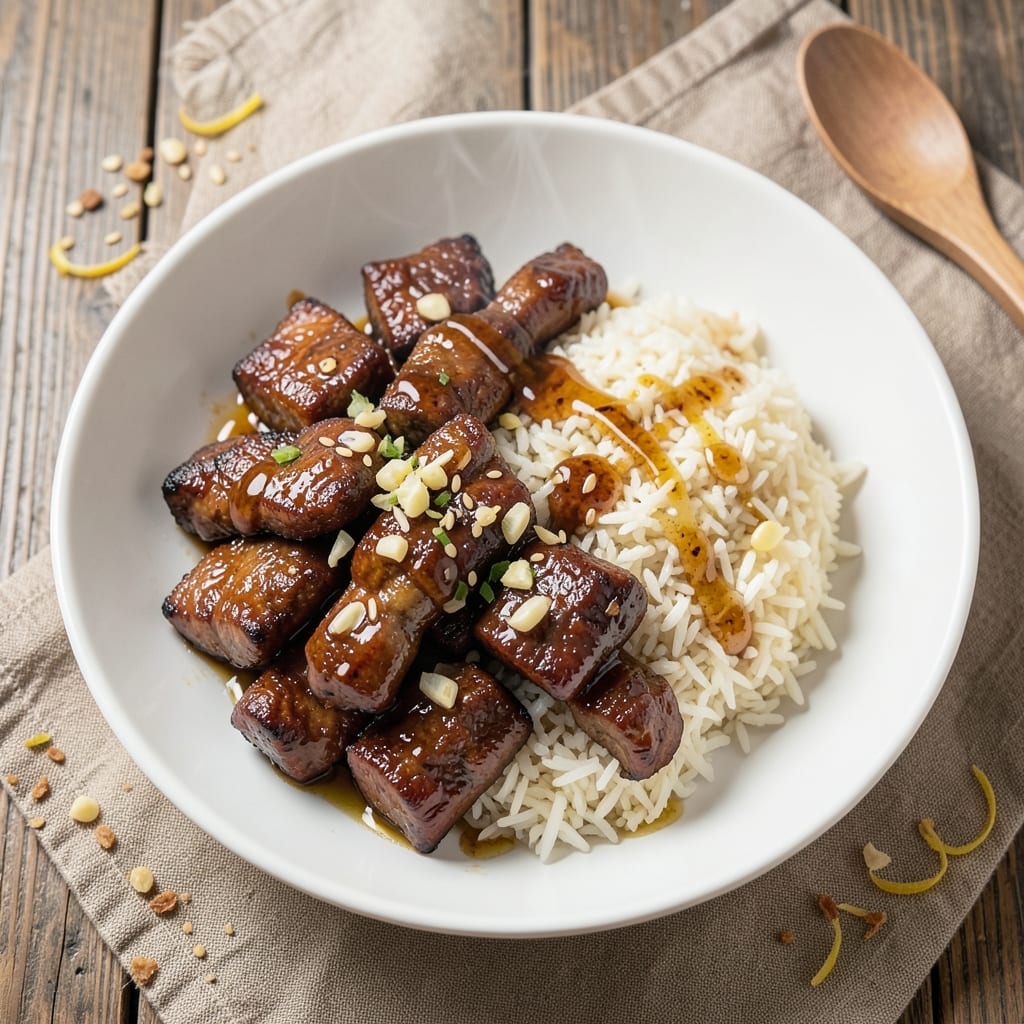
Asian beef tips and rice transforms simple ingredients into a restaurant-worthy meal with just 30 minutes of active time. The secret lies in quick marinating and high-heat searing to lock in juices, creating tender beef with a caramelized crust. Fragrant jasmine rice soaks up the savory sauce while staying perfectly fluffy—no sticky, mushy results here.
This recipe balances traditional wok techniques with modern convenience. You’ll start with a simple soy-ginger marinade that tenderizes the beef while building deep umami flavor. The stir-fry happens in one hot pan, where beef develops that signature wok-hei smokiness, while aromatics like garlic and ginger infuse the air with warmth. The rice cooks separately but absorbs the sauce’s essence when combined.
What you’ll end up with is a plate of perfectly seared beef tips—tender inside, crisp at the edges—nestled over fragrant jasmine rice. The sauce clings to both, creating a harmonious bite with every forkful. Garnish with fresh scallions and sesame seeds for texture, and serve with lime wedges to brighten the rich flavors. This is weeknight dining elevated without the fuss.
The beauty of this dish lies in its versatility. Use it as a quick weeknight meal or prepare ahead for meal prep. The flavors only deepen as it sits, making leftovers just as satisfying. Whether you’re feeding a family or treating yourself, this recipe delivers restaurant-quality results with minimal effort.
Ingredients for asian beef tips and rice
Simple yet sophisticated ingredients create restaurant-quality Asian beef tips and jasmine rice.
| Ingredient | Amount | Notes |
|---|---|---|
| Flank Steak 🥩 | 1 ½ lb | Cut into 1-inch strips, boneless |
| Jasmine Rice 🍚 | 1 ½ cups | Uncooked, long-grain preferred |
| Soy Sauce 🍶 | ½ cup | High-sodium preferred for marinade |
| Ginger Root 🌿 | 2 tbsp | Freshly grated, aromatic |
| Garlic Cloves 🧄 | 6 cloves | Minced, for marinade and stir-fry |
| Sesame Oil 🫒 | 1 tbsp | Toasted, for aroma |
| Vegetable Oil 🫒 | 2 tbsp | High smoke point for searing |
| Scallions 🧅 | 4 whole | Thinly sliced, for garnish |
| Toasted Sesame Seeds 🌾 | 1 tbsp | For garnish and crunch |
| Lime Wedges 🍋 | 2 whole | Fresh, for serving |
| Cornstarch 🌾 | 1 tbsp | For velveting beef |
| Honey 🍯 | 1 tbsp | For glaze, optional |
| Salt 🧂 | 1 ½ tsp | Kosher or sea salt |
| Black Pepper 🌶️ | ½ tsp | Freshly ground |
| Red Pepper Flakes 🌶️ | ½ tsp | Optional, for heat |
The flank steak is non-negotiable for this dish—its lean yet tender texture holds up perfectly to high-heat searing. Look for cuts with good marbling at Whole Foods or your local butcher; avoid pre-sliced packages that may include fat. For the best results, trim any visible fat before cutting into strips. Jasmine rice should be labeled as 'long-grain' and have a fragrant aroma when opened—Lotus Foods or Trader Joe's carry excellent options. The soy sauce should be high-sodium (like Lee Kum Kee) for marinating, while the sesame oil should be toasted, not flavored, for authentic aroma. Fresh ginger and garlic are essential; frozen won't deliver the same depth of flavor.
No flank steak? Sirloin or ribeye work as substitutes, though they may require slightly longer cooking. For the soy sauce, coconut aminos can replace half the amount if you're avoiding sodium. Fresh ginger unavailable? Ground ginger at half the quantity works, though texture differs. The sesame oil can be omitted entirely if you dislike its flavor, but add an extra 1/2 tbsp of vegetable oil to compensate. Honey can be swapped for maple syrup for a vegan option, though it alters the caramelization slightly. When cutting the beef, 1-inch strips ensure even cooking—no need to measure precisely, but consistency matters. The cornstarch is critical for velveting; arrowroot powder works equally well.
Marinated beef keeps for up to 24 hours in the fridge, though flavor peaks at 4-6 hours. Cooked beef tips reheat beautifully—2-3 minutes in a hot skillet with a splash of water revives the texture. Jasmine rice should be cooked separately and kept warm in a rice warmer or covered pot to prevent drying. Sesame seeds lose crispness after 2 weeks, so toast them fresh before serving. Leftovers store for 3-4 days in airtight containers, though the rice may dry out—reheat with a splash of water or soy sauce. For meal prep, portion sauce separately to maintain texture.
Why You'll Love This Recipe
- One-Pan Magic: I swear by this—just slice the steak thin, toss it in the pan with garlic and ginger while the rice cooks, and boom. No dirty dishes beyond one spatula. The soy sauce caramelizes right into those beef strips while you’re stirring, so you’re basically getting a flavor upgrade for doing nothing.
- Ginger-Garlic Kiss: That first bite of tender beef with the fresh hit of ginger and garlic? It’s like a tiny flavor explosion. The flank steak stays juicy, and the aromatics stick to every strand of rice—no dry, sad leftovers here. Honestly, I’ll take this over takeout any day.
- Lunchbox Hero: Between us, this is my go-to for meal prep. Double the rice, slice the cooled beef into strips, and pack it with some steamed veggies. My kids actually eat their lunch now—no complaints about "boring rice." (Yes, even on a Tuesday night.)
- Budget Win: Flank steak stretches for miles when sliced thin, and a single jar of soy sauce covers three batches. I make this twice a month, and it’s always cheaper than ordering in. Plus, the leftovers? Just as good reheated—crispy edges, all the flavor. My wallet and taste buds thank me.
Step-by-step instructions for wok-seared beef tips with jasmine rice
Here's the professional method for achieving perfectly seared beef tips with fragrant rice—every element balanced for maximum umami and texture.
Prepare the Beef Marinade and Velveting Process
In a medium bowl, combine the 1.5 lb flank steak cut into 1-inch strips, the 0.5 cup soy sauce, 2 tbsp freshly grated ginger root, 6 minced garlic cloves, 1 tbsp cornstarch, 1.5 tsp salt, and 0.5 tsp black pepper. Mix thoroughly until the cornstarch coats all surfaces evenly. This velveting technique ensures tender beef with a velvety texture rather than tough fibers.
Cover the bowl and refrigerate for at least 30 minutes—this allows the marinade to penetrate deeply. The cornstarch will begin breaking down the muscle proteins, creating that signature silky texture when seared. For best results, marinate up to 4 hours, but don't exceed this time to prevent the beef from becoming mushy.
Cook the Jasmine Rice to Perfection
Rinse the 1.5 cups jasmine rice thoroughly under cold water until the water runs clear—this removes excess starch that would make the rice gummy. Combine the rice with 2 cups water in a pot and bring to a boil over medium-high heat. Once boiling, reduce heat to low, cover tightly with a lid, and simmer for 15 minutes without lifting the lid.
After 15 minutes, remove the pot from heat and let it steam undisturbed for an additional 10 minutes. This resting period allows the rice to absorb all the moisture evenly, resulting in fluffy, separate grains. Fluff the rice gently with a fork before serving—never stir it while hot as this can make the grains sticky.
Wok-Sear the Beef Tips to Golden Crispness
Heat a wok or large skillet over high heat until a drop of water sizzles and evaporates instantly. Add 2 tbsp vegetable oil and swirl to coat the pan evenly. Working in batches to avoid overcrowding, add the marinated beef strips and sear for 1-2 minutes per side until they develop a deep golden-brown crust with caramelized edges.
As the beef sears, you'll notice the cornstarch mixture turning into a glossy, sticky coating—this creates the velvety texture while locking in juices. Remove the beef to a plate and set aside. In the same pan, add 1 tbsp sesame oil and 1 tbsp honey, scraping up any browned bits from the bottom. This creates a glossy glaze that will coat the beef when combined.
Finish with Aromatics and Garnish
Return the seared beef to the pan and add 4 thinly sliced scallions and 0.5 tsp red pepper flakes (if using). Toss everything together for 30 seconds until the scallions soften slightly and the red pepper flakes bloom their heat. The beef should be coated in a glossy, caramelized glaze with visible char marks—this indicates perfect doneness.
Divide the cooked jasmine rice among serving plates, then arrange the wok-seared beef tips artfully on top. Drizzle any remaining sauce from the pan over the beef, then sprinkle with 1 tbsp toasted sesame seeds for added texture. Serve immediately with the 2 whole lime wedges on the side for a bright contrast to the rich umami flavors.
Pro Tips For Making Asian Beef Tips And Rice
- Slice Against the Grain: Flank steak’s fibers run long—cutting perpendicular to them turns chewy strips into tender bites. A sharp knife and 1/4-inch thickness makes all the difference, especially when you’re tossing them in sauce later.
- Marinate Overnight (Not 30 Minutes): I used to rush this, thinking soy sauce would do its work in an hour. Wrong. Let the beef soak in soy, minced garlic, and grated ginger for at least 8 hours—preferably overnight. The acid and enzymes break down the meat, and the flavors seep in deep.
- Don’t Overcrowd the Pan: Start with half the beef in a screaming-hot wok or skillet. Piling it all in will steam the meat instead of searing it, leaving you with soggy tips instead of caramelized edges. Work in batches—your future self will notice the difference.
- Use Day-Old Rice: Fresh jasmine rice? Too sticky. Cook a batch the day before, spread it on a tray to dry out, then reheat with a splash of water or soy sauce when serving. The grains stay separate, soaking up the beef’s juices instead of turning to glue. (Yes, even if you’re impatient like me.)
Troubleshooting great asian beef tips and rice
Overcooked Beef Fix
If your beef tips turn out tough or dry, it’s likely overcooked or not marinated long enough. First, check your internal temperature—beef should reach 135-140°F for perfect tenderness. If it’s overcooked, slice it thinly against the grain and serve immediately with extra sauce or a splash of 1 tbsp soy sauce to restore moisture. For future batches, reduce cooking time by 30 seconds per side and avoid overcrowding the pan. 🔥
Rice Too Dry or Mushy
Mushy rice usually means too much water or insufficient resting time. If your rice is gummy, fluff it gently with a fork and add 1 tbsp sesame oil while serving to enrich the texture. For dry rice, try the absorption method: cook rice with 1.5 cups water instead of 2 cups and use a rice cooker for consistent results. Always let rice steam 10 minutes off heat—this is non-negotiable! ✨
Sauce Too Thin or Thick
If your sauce is watery, reduce it by simmering uncovered for 2-3 minutes until slightly thickened. For a thicker sauce, add 1 tsp cornstarch mixed with 1 tbsp water and stir until glossy. Pro tip: Deglaze the pan with 1 tbsp soy sauce + 1 tbsp water after searing to create a richer base. Adjust seasoning with salt or a pinch of sugar if needed. 💫
Beef Not Tender Enough
Tough beef often stems from skipping the velveting step or using the wrong cut. For next time, ensure your beef is 1-inch strips and marinate for at least 30 minutes with the cornstarch mixture. If using a tougher cut like sirloin, slice it ¼-inch thick and cook at medium-high heat for 1 minute per side max. A quick fix for tough beef? Shred it slightly and serve over rice with extra sauce. 💪
Lacking Umami Depth
If your dish tastes flat, boost umami with 1 tsp fish sauce or ½ tsp MSG (optional) during the marinade or sauce step. For extra richness, add 1 tbsp oyster sauce or a splash of dark soy sauce when deglazing the pan. Fresh ingredients matter—always use high-quality soy sauce (like Lee Kum Kee) and fresh ginger/garlic for maximum flavor. 🌟
Nutrition facts
Frequently asked questions
Can I use a different cut of beef besides flank steak?
Yes! Sirloin or ribeye work well, but slice them ¼-inch thick and cook for only 1 minute per side to prevent toughness. Avoid fatty cuts like chuck—they won’t sear as nicely. For extra tenderness, marinate for 4 hours instead of 30 minutes.
How do I make this recipe gluten-free?
Replace the soy sauce with tamari or coconut aminos, and use gluten-free cornstarch for velveting. Check all ingredients (like sesame oil) for hidden gluten. The dish will still taste rich and savory—just skip the traditional soy-based depth.
Can I cook the rice in the same pan as the beef?
Not recommended! Rice requires low heat and constant moisture, while beef needs high heat and quick searing. Cook the rice separately in a pot with water, then combine the sauce afterward. For a one-pan shortcut, use microwaveable rice cooked in a separate bowl.
What’s the best way to reheat leftovers?
Reheat beef tips in a hot skillet with 1 tsp soy sauce + 1 tbsp water for 2-3 minutes until steaming. Keep rice covered in a rice warmer or microwave with a damp paper towel for 30 seconds**. Never reheat dry—add a splash of water or sauce to restore moisture.
Can I make this spicier?
Add 1 tsp gochujang (Korean chili paste) to the marinade or ½ tsp cayenne pepper to the sauce. For heat lovers, toss in 1 tbsp sriracha when combining everything at the end. Balance with lime wedges to cut through the spice.