
Main Courses
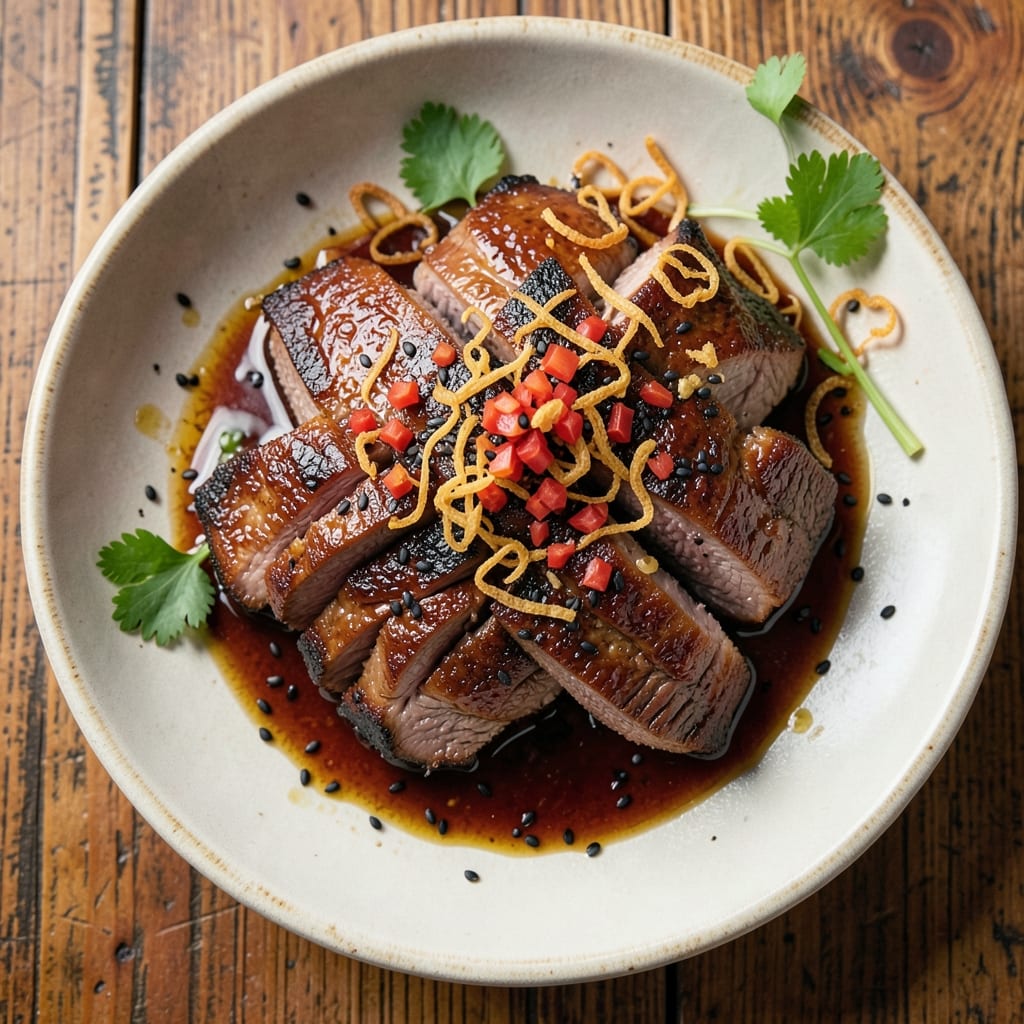
This Asian style beef cheek recipe transforms tough cuts into melt-in-your-mouth perfection through slow braising—a technique that unlocks deep, savory flavors and silky texture. The secret lies in marinating the beef overnight with a blend of soy sauce, five-spice powder, and aromatic ginger, which tenderizes the meat while building complex umami layers. Unlike quick-cook methods, this slow approach breaks down collagen-rich cheek into rich, velvety bites that practically dissolve on your tongue.
The process begins with a high-heat sear to develop a caramelized crust, followed by hours of gentle simmering in a soy-based broth until the beef becomes fork-tender. Traditional Asian methods often incorporate fermented ingredients like doubanjiang or miso for added depth, while star anise and cinnamon contribute warmth. What sets this dish apart is its ability to deliver restaurant-quality results with simple pantry staples—no specialty equipment required.
By the time your beef cheek emerges from the pot, it will be transformed into a luxurious centerpiece with a glossy sheen and aroma that fills your kitchen. The sauce thickens into a glossy, umami-rich glaze that clings to every bite, balancing sweet, salty, and spicy notes. Serve it over steamed jasmine rice or with quick-pickled vegetables to cut through the richness, creating a harmonious meal that’s both comforting and sophisticated.
This recipe isn’t just about the beef—it’s about the technique. The slow braising method ensures maximum tenderness while developing layers of flavor that quick-cook methods simply can’t match. Whether you’re preparing for a special occasion or a cozy weeknight dinner, this method delivers results that will impress even the most discerning guests. Let’s get started on creating your own umami bomb.
Ingredients for asian style beef cheek
Pantry staples meet restaurant-quality technique in this umami-rich beef cheek masterpiece.
| Ingredient | Amount | Notes |
|---|---|---|
| Beef Cheek 🥩 | 2 lb | Tough cut, marbled for tenderness |
| Kosher Salt 🧂 | 2 tbsp | Diamond Crystal preferred |
| Black Peppercorns 🌶️ | 1 tbsp | Freshly cracked, coarse grind |
| Soy Sauce 🥢 | ½ cup | Japanese-style, reduced variety |
| Five-Spice Powder 🌿 | 1 tbsp | Authentic blend, toasted |
| Fresh Ginger 🧄 | ½ cup | Julienned, 1/4-inch matchsticks |
| Garlic Cloves 🧄 | 8 cloves | Peeled, smashed for infusion |
| Star Anise Pods 🌟 | 2 whole | Whole, for subtle aroma |
| Cinnamon Sticks 🍃 | 2 whole | 1-inch pieces, toasted |
| Doubanjiang 🌶️ | 2 tbsp | Fermented chili bean paste |
| Honey 🍯 | 2 tbsp | Wildflower preferred |
| Water 💧 | 2 cups | Filtered for clarity |
| Jasmine Rice 🍚 | 1 ½ cups | Uncooked, long-grain |
| Sesame Oil 🫒 | 1 tbsp | Toasted, for finishing |
| Green Onions 🧅 | 4 whole | Thinly sliced, for garnish |
The beef cheek is the star—look for well-marbled cuts at specialty butchers or Asian markets. Costco often carries pre-cut beef cheek, but if buying whole, ask for the jowl portion. Fresh ginger and garlic should be vibrant and firm; no soft spots or sprouting. Five-spice powder is non-negotiable—Penzeys or Asian grocery stores carry authentic blends. The doubanjiang adds depth; Lao Gan Ma is a reliable brand, but any fermented chili bean paste works. Toast your cinnamon sticks and star anise in a dry pan for 30 seconds to release their aromatics before adding to the marinade.
No five-spice powder? Substitute 1/2 tsp each of ground cloves, cinnamon, fennel, and pepper. Short on doubanjiang? Mix 1 tbsp gochujang with 1 tbsp soy sauce as a quick alternative. The honey can be swapped for maple syrup or agave, though it won't caramelize as beautifully. For a deeper umami punch, add 1 tbsp fish sauce or 1 tsp miso paste to the braising liquid. If your ginger has sprouted, peel it thoroughly—the root is still usable. The beef doesn't need trimming; the fat renders down for flavor and moisture during braising.
Marinate the beef overnight in the fridge—24 hours maximum to prevent over-tenderizing. The braising liquid can be made a day ahead and reheated gently. Store cooked beef cheek in its sauce for 4-5 days in the fridge; it actually improves in flavor. For longer storage, freeze portions with sauce in airtight containers for up to 3 months. Reheat slowly on the stove with a splash of water to maintain moisture. The rice can be cooked separately or made in bulk ahead—steam it with a splash of sesame oil for extra aroma.
Why You'll Love This Recipe
- Here’s what sold me: The first night is amazing, but the second? Even better. That beef cheek gets richer as it sits, soaking up flavors like a sponge. I’ve turned it into tacos, ramen, and even a quick fried rice—no waste, all wins.
- Five-Spice Magic: Honestly, that earthy five-spice powder transforms beef cheek into something ridiculously good—warm, aromatic, and just a little mysterious. It’s the kind of flavor that makes you pause mid-bite, like, "Wait, how did they do that?" (Spoiler: Just sprinkle it on.)
- One-Pot Wonder: Between us, this recipe barely counts as cooking. Toss the beef cheek in soy sauce and spices, let it slow-simmer until it’s fall-apart tender, and boom—done. No flipping, no fussing, no watching the clock. My lazy Sundays just got an upgrade.
- Leftovers That Shine: Here’s what sold me: The first night is amazing, but the second? Even better. That beef cheek gets richer as it sits, soaking up flavors like a sponge. I’ve turned it into tacos, ramen, and even a quick fried rice—no waste, all wins.
Step-by-step instructions for slow-braised beef cheek
Transform tough beef cheek into melt-in-your-mouth perfection using this precise braising method.
Prepare and Season the Beef Cheek
Begin by rinsing the 2 lb beef cheek under cold water and patting it completely dry with paper towels. This step is crucial—any moisture left on the surface will prevent proper browning and flavor development. Place the beef cheek in a large bowl and massage it with the 2 tbsp kosher salt and 1 tbsp freshly cracked black peppercorns for 2-3 minutes. The goal is to create a salt crust that will help tenderize the meat during the long braise.
Next, create your spice blend by combining the 1 tbsp five-spice powder, 2 whole star anise pods, and 2 whole cinnamon sticks (broken into 1-inch pieces) in a small bowl. Sprinkle this aromatic mixture evenly over the beef cheek, pressing it gently into the surface. This ensures the spices will infuse deeply during the braising process. Let the seasoned beef cheek sit at room temperature for 30 minutes before cooking—this allows the spices to adhere and the meat to come to a uniform temperature.
Sear the Beef Cheek for Depth of Flavor
Heat a heavy-bottomed Dutch oven over medium-high heat until it's smoking hot. Add the beef cheek fat-side down and sear undisturbed for 4-5 minutes until a deep golden brown crust forms. This step is where the Maillard reaction happens, creating complex flavors that will carry through the entire dish. Flip the beef cheek and sear the other side for another 3-4 minutes until evenly browned.
Remove the beef cheek from the pot and set it aside. The seared crust will continue to develop as it braises, so don't rush this step. The pot will have a dark, flavorful fond at the bottom—this is pure umami gold that we'll deglaze in the next step. Never wipe out the fond; it's essential for building layer upon layer of flavor in your braising liquid.
Build the Braising Liquid
In the same Dutch oven, reduce the heat to medium and add the 0.5 cup julienned fresh ginger and 8 smashed garlic cloves. Sauté for 1-2 minutes until the ginger softens slightly and becomes fragrant. Pour in the 0.5 cup soy sauce and 2 tbsp doubanjiang, scraping up all those flavorful browned bits from the bottom of the pot. This deglazing step captures all the caramelized goodness that would otherwise burn off.
Add the 2 tbsp honey and 2 cups water to the pot, stirring to combine. The honey will add a subtle sweetness that balances the umami flavors while helping to tenderize the tough beef cheek. Bring the liquid to a gentle simmer, then return the beef cheek to the pot, placing it fat-side up. This positioning allows the rendered fat to baste the meat continuously during the braise, ensuring maximum tenderness and flavor infusion.
Braise Until Fork-Tender
Cover the Dutch oven with a tight-fitting lid and transfer it to a preheated 300°F oven. The low and slow cooking method is essential for breaking down the collagen in the beef cheek—this is what transforms tough meat into silky, melt-in-your-mouth perfection. Braise for 3-4 hours, checking the liquid level occasionally and adding a splash of water if it reduces too much.
After 3 hours, the beef cheek should be fork-tender but may still have some resistance. This is normal—we want it to reach that perfect texture where it's just shy of falling apart. If you pierce the thickest part with a fork and it slides in easily with slight resistance, it's ready. If not, return it to the oven for another 30-60 minutes. The internal temperature should reach 195-200°F when done—this is the magical range where collagen fully converts to gelatin, creating that luxurious texture.
Finish and Serve with Jasmine Rice
Once the beef cheek is fork-tender, remove it from the pot and let it rest on a cutting board for 10-15 minutes. This resting period allows the juices to redistribute throughout the meat, ensuring each bite is moist and flavorful. While the beef cheek rests, skim any excess fat from the braising liquid and return the pot to medium heat. Stir in the 1 tbsp toasted sesame oil and reduce the sauce by half to create a glossy, concentrated glaze.
Slice the beef cheek against the grain into ¼-inch thick pieces and arrange it over a bed of steamed 1.5 cups jasmine rice. Ladle the reduced braising sauce over the top and garnish with thinly sliced 4 whole green onions. The contrast between the silky beef cheek, fragrant rice, and aromatic sauce creates a harmonious balance of textures and flavors. Serve immediately while the beef cheek is still steaming hot—this dish tastes best straight from the pot when all the components are at their peak.
Pro Tips For Making Asian Style Beef Cheek
- CRACK THE CHEEK FIRST: Beef cheek is tough—no way around it. But before you even think about braising, score the fat cap in a crosshatch pattern with a sharp knife. This lets the five-spice powder and soy sauce penetrate deeper, and the fat renders out cleaner. I learned this the hard way after biting into a chewy, unyielding slab that looked like it came from a dinosaur.
- SALT THE MEAT TWICE: Don’t just salt the beef cheek once and call it a day. Start with a dry rub of kosher salt and five-spice powder the night before—let it sit uncovered in the fridge. Then, when you sear it, hit it with another pinch of salt and cracked black peppercorns. The first salt breaks down the muscle fibers; the second locks in flavor. Skimp here, and your dish tastes like it’s missing something.
- BRAISE LOW AND LONG: Asian-style beef cheek isn’t about speed—it’s about patience. After searing, drop the heat to a true simmer (180°F/82°C), not a rolling boil. Cover the pot and let it cook until the meat falls apart with a fork, which can take 3–4 hours. I used to rush it, and the result was tough, stringy beef that tasted more like shoe leather than anything else.
- USE AROUND 2 TABLESPOONS OF SOY SAUCE: Too much soy sauce makes the dish taste salty and one-dimensional. For a 2-pound beef cheek, stick to about 2 tablespoons—enough to coat the bottom of the pan when you deglaze. If you’re worried about saltiness, add a splash of rice vinegar or a pinch of sugar to balance it out. I was skeptical until I tried it; the flavor is richer and more nuanced.
Best sauces and condiments for asian style beef cheek
Classic Soy-Ginger Glaze
This foundational sauce transforms your beef cheek into a restaurant-worthy centerpiece. Simmer ½ cup soy sauce, 2 tbsp honey, 1 tbsp toasted sesame oil, and 1 tsp five-spice powder with the braising liquid until reduced by half. The result is a glossy, umami-rich glaze that clings beautifully to the silky meat. For extra depth, add 1 tsp grated fresh ginger and 1 minced garlic clove while reducing. 🥢
Spicy Doubanjiang Sauce
For heat lovers, create a fiery companion by blending 2 tbsp doubanjiang, 1 tbsp soy sauce, 1 tsp rice vinegar, and ½ tsp chili crisp with 1 tsp water. This fermented chili bean paste adds a smoky, funky dimension that cuts through the richness. Drizzle over sliced beef cheek or serve as a dipping sauce with steamed rice. I like to finish with a sprinkle of toasted sesame seeds for texture. 🌶️
Sweet and Tangy Hoisin Drizzle
Balance the deep umami with a bright hoisin glaze made by simmering 2 tbsp hoisin sauce, 1 tbsp rice vinegar, and 1 tsp grated ginger until slightly thickened. The sweetness of hoisin complements the beef's richness while the acidity brightens the plate. For extra flair, add ½ tsp Sichuan peppercorns (lightly toasted) for a subtle numbing spice. This works beautifully as a finishing sauce or mixed into the braising liquid during the last 30 minutes of cooking. 🍯
Creamy Coconut-Lime Sauce
For a tropical twist, blend ½ cup coconut milk, 1 tbsp lime juice, 1 tsp fish sauce, and ½ tsp grated lime zest until smooth. This lighter sauce pairs perfectly with the rich beef cheek, offering a refreshing contrast. Thin with 1-2 tbsp water if needed, then drizzle over sliced beef with thinly sliced scallions and crushed peanuts for crunch. Perfect for balancing the meal's heartiness. 🥥
Fermented Miso Butter
Elevate your dish with a luxurious miso butter by mixing 2 tbsp softened butter with 1 tbsp white miso paste and ½ tsp toasted garlic. Spread dollops over the beef cheek before serving or use to baste the meat during the last 15 minutes of braising. The umami depth from miso enhances the beef's natural flavors while adding a velvety texture. For extra richness, top with toasted nori strips. 🧈
Quick Pickled Vegetables
While not a sauce, these vibrant pickles cut through the richness perfectly. Toss 1 cup thinly sliced cucumber, ½ cup shredded carrot, and 2 green onions with 2 tbsp rice vinegar, 1 tsp sugar, and ½ tsp salt. Let sit for 15 minutes before serving. The crisp acidity balances the beef's depth while adding freshness to each bite. 🥒
Nutrition facts
Frequently asked questions
Can I substitute beef cheek with another cut of beef?
While beef cheek is ideal for its collagen-rich texture, you can use chuck roast or brisket as substitutes. These cuts have similar connective tissue that breaks down during slow cooking. For best results, increase braising time by 30-60 minutes and add 1 extra cup of liquid to the pot to prevent drying.
How do I know when the beef cheek is fully tender?
Use the fork test: pierce the thickest part of the beef cheek—it should slide in easily with just slight resistance. The internal temperature should reach 195-200°F. If it feels slightly rubbery, return it to the oven for another 30 minutes covered. Overcooking won't ruin it, but proper tenderness comes from patience!
Can I make this recipe in a slow cooker?
Sear the beef cheek first, then transfer it to a slow cooker with all ingredients. Cook on low for 8-10 hours or high for 5-6 hours. The slow cooker's gentle heat mimics oven braising. Add ½ cup water if the liquid reduces too much during cooking.
What's the best way to store and reheat leftovers?
Store cooked beef cheek in its sauce in an airtight container in the fridge for 4-5 days or freeze for 3 months. To reheat, warm gently on the stove with a splash of water or broth. Never microwave directly from frozen—thaw overnight in the fridge first for even heating.
Why does my beef cheek taste bland?
Bland flavor usually means insufficient seasoning or braising time. Double-check your soy sauce and five-spice powder amounts. For extra depth, add 1 tbsp fish sauce or 1 tsp miso paste to the braising liquid. Also ensure you're cooking until the internal temperature reaches 195-200°F—this is when collagen converts to flavorful gelatin!