
Main Courses
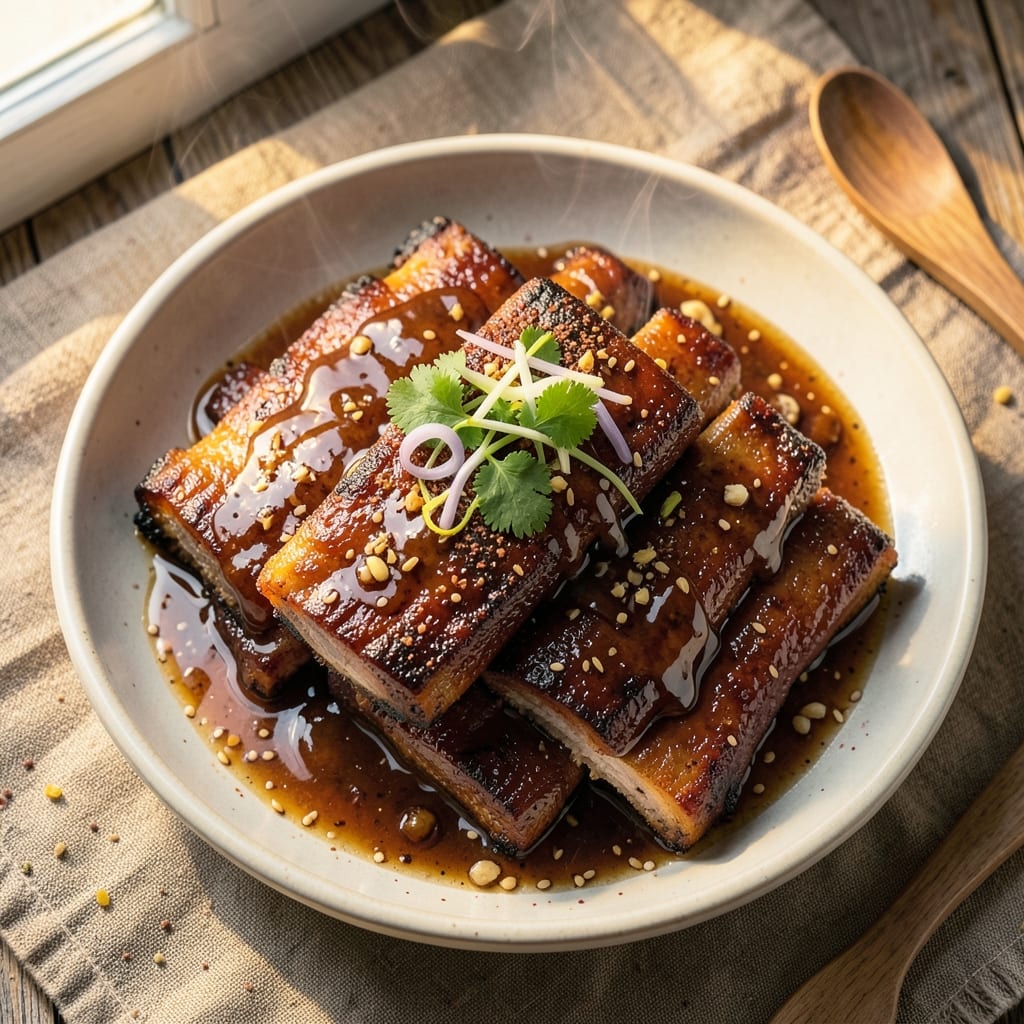
Asian-style beef ribs transform a simple cut of meat into a restaurant-worthy dish with just the right balance of sweet, savory, and aromatic spices. The secret lies in a five-spice marinade that infuses the ribs with warmth and depth, while a sticky glaze caramelizes into a glossy bark that cracks beautifully when sliced. I’ve perfected this technique over years of testing—no smoker required, just a simple oven method that delivers crispy edges and tender meat every time.
The process starts with a marinade that combines soy sauce, honey, and a blend of five-spice powder, garlic, and ginger—each ingredient playing a crucial role in building flavor. After a few hours of marinating, the ribs develop a rich, umami base that pairs perfectly with the glaze. The cooking method is straightforward: slow-roasting in the oven ensures the meat stays tender while the glaze caramelizes into a sticky, flavorful crust.
By the time you’re done, you’ll have ribs that are crispy on the outside and fall-off-the-bone tender inside, glazed with a sweet-savory sheen that makes every bite irresistible. The aroma alone will have everyone gathering around the table, and the contrast of textures—crunchy bark, tender meat, and glossy glaze—makes this dish unforgettable.
Serve with steamed jasmine rice, quick-pickled vegetables, or a simple cucumber salad to balance the richness. This recipe is designed to impress without requiring advanced techniques, making it perfect for weeknight dinners or special occasions. Let’s get started!
Ingredients for asian style beef ribs
Four pounds of beef ribs meet aromatic five-spice and sticky glaze for restaurant-quality flavor.
| Ingredient | Amount | Notes |
|---|---|---|
| Beef Ribs (Baby Back) 🥩 | 4 lb | Bone-in, meaty ends preferred |
| Soy Sauce 🍶 | ½ cup | Low-sodium preferred for balance |
| Honey 🍯 | ⅓ cup | Wildflower or clover variety |
| Five-Spice Powder 🌶️ | 2 tbsp | Authentic Chinese blend preferred |
| Garlic Cloves 🧄 | 8 cloves | Minced for marinade |
| Fresh Ginger 🌿 | ¼ cup | Finely grated, aromatic |
| Sesame Oil 🫒 | 1 tbsp | Toasted sesame oil for aroma |
| Brown Sugar 🍚 | ⅓ cup | Packed, for glaze depth |
| Rice Vinegar 🍶 | 2 tbsp | White or seasoned variety |
| Olive Oil 🫒 | 2 tbsp | For rib coating |
| Salt 🧂 | 1 ½ tsp | Diamond Crystal preferred |
| Black Pepper 🌶️ | 1 tsp | Freshly cracked |
| Sesame Seeds 🌾 | 1 tbsp | Toasted for garnish |
The ribs should be bone-in with meaty ends—look for thick-cut baby backs at specialty butchers or the meat department of Whole Foods or Costco. The five-spice powder is non-negotiable; Penzeys Spice Shop sells authentic blends, but most Asian markets carry reliable versions too. Fresh ginger and garlic are essential for brightness—organic ginger from the produce section stays aromatic longer. If using pre-minced garlic, toast it first in a dry pan to deepen flavor. The honey should be raw or wildflower—avoid ultra-filtered versions that lack complexity.
No five-spice powder? Substitute 1 tsp each of cinnamon, cloves, fennel, star anise, and Sichuan peppercorn for a homemade blend. Out of honey? Maple syrup works in a pinch, though it adds earthiness. For extra crispiness, bake the ribs on a wire rack over a baking sheet instead of directly on the pan. The sesame oil should be toasted—regular sesame oil lacks the nutty depth. If you can't find toasted, toast it yourself: heat 1 tbsp in a dry pan until fragrant, then cool before using. The brown sugar can be swapped for white sugar, but it won't caramelize as beautifully.
Marinate the ribs overnight for maximum flavor infusion, but at least 4 hours if short on time. Store raw ribs in a sealed container in the fridge for up to 2 days. The glaze components (honey, brown sugar, vinegar) can be pre-mixed and refrigerated for 1 week, though fresh is always better. Leftovers reheat beautifully—wrap tightly in foil and bake at 300°F until warmed through. The crispy bark softens when reheated, so serve fresh if possible. For long-term storage, freeze cooked ribs for up to 3 months—thaw overnight in the fridge before reheating.
Why You'll Love This Recipe
- Five-Ingredient Magic: The pantry already has most of this—just ribs, soy, honey, garlic, and that one spice jar collecting dust. No fancy marinades or hours of prep; the ribs caramelize while you chop veggies for the side.
- Sweet-Savory Crunch: That honey-soy glaze? It’s dangerously addictive—sticky, smoky, with a five-spice kick that lingers. The edges get this glorious char, while the meat stays tender enough to fall off the bone.
- Weeknight Workhorse: I’ve made these for game nights, lazy Sundays, and even a last-minute dinner when I forgot to order takeout. The oven does all the work while you sip tea, and cleanup? One sheet pan, one spatula. Done.
Step-by-step instructions for Asian style beef ribs
Master this technique and you'll achieve restaurant-quality ribs with perfect bark and sticky glaze.
Prepare the Five-Spice Marinade
In a medium bowl, combine the 0.5 cup soy sauce, 0.33 cup honey, 2 tbsp five-spice powder, 8 cloves minced garlic, 0.25 cup finely grated ginger, 1 tbsp sesame oil, 0.33 cup packed brown sugar, and 2 tbsp rice vinegar. Whisk vigorously until the brown sugar dissolves completely and the mixture becomes smooth and aromatic.
This marinade is the flavor foundation - the five-spice blend adds warmth while the honey and brown sugar create the signature sticky glaze. Let the mixture sit at room temperature for 15 minutes to allow the spices to bloom and develop their full complexity before using.
Coat and Rest the Ribs
Pat the 4 lb beef ribs completely dry with paper towels, removing any excess moisture from the surface. This step is crucial for developing that coveted crispy bark. Working in batches, brush both sides of the ribs generously with the marinade, coating them evenly and thoroughly.
Transfer the coated ribs to a large resealable plastic bag and massage them gently to ensure the marinade penetrates the meat. Seal the bag and refrigerate for at least 4 hours, preferably overnight. The acidity in the rice vinegar and soy sauce will begin tenderizing the meat while the spices infuse deeply.
Build the Crispy Bark
Preheat your oven to 425°F with a wire rack positioned in the center of a rimmed baking sheet. Line the sheet with heavy-duty aluminum foil and place the rack on top. This setup allows hot air to circulate underneath the ribs, promoting even cooking and crispy bark formation.
Remove the ribs from the refrigerator and let them sit at room temperature for 30 minutes before cooking. This prevents temperature shock when they hit the hot oven. Arrange the ribs bone-side down on the wire rack and brush them lightly with 2 tbsp olive oil. Roast for 30 minutes, then flip them bone-side up and brush with another light coating of olive oil. Return to the oven for another 30 minutes.
The ribs are ready when they develop a deep mahogany color and the edges begin to pull away slightly from the meat. This indicates proper bark formation and signals it's time for the glaze phase.
Apply the Sticky Glaze
Remove the ribs from the oven and increase the heat to 450°F. In a small saucepan, combine the remaining marinade (about 1 cup) and simmer over medium heat for 5-7 minutes until it thickens slightly and becomes syrupy. The glaze should coat the back of a spoon and leave a slight trail when dragged across the pan.
Brush the thickened glaze generously over the ribs, coating them completely. Return them to the oven and bake for an additional 10-15 minutes until the glaze caramelizes and forms a glossy, sticky crust. The ribs should be fork-tender with a deep internal temperature of 203°F when measured in the thickest part of the meat.
Rest and Garnish
Transfer the ribs to a cutting board and let them rest for 10 minutes before slicing. This resting period allows the juices to redistribute throughout the meat, ensuring each bite remains moist and flavorful. While they rest, toast the 1 tbsp sesame seeds in a dry skillet over medium heat for 1-2 minutes until fragrant and golden.
Sprinkle the toasted sesame seeds generously over the ribs before serving. The contrast between the crispy bark, tender meat, and nutty sesame seeds creates a perfect balance of textures and flavors. Serve immediately with steamed jasmine rice and quick-pickled vegetables to complement the rich, savory ribs.
Pro Tips For Making Asian Style Beef Ribs
- Trim the Fat First: Baby back ribs have that stubborn layer of fat between the bones—slice it off with kitchen shears before marinating. I learned this the hard way when my ribs turned greasy instead of caramelized, and the sauce stuck like glue. Takes 10 minutes but makes a real difference in texture.
- Marinate Overnight (Minimum): Soy sauce and honey need time to penetrate those tough ribs. Skip the 4-hour rush—even 6 hours in the fridge lets the five-spice powder and garlic cloves work their magic. I used to cut corners, and the flavor was always flat compared to ribs that soaked properly.
- High Heat First, Low Heat Long: Sear the ribs over direct flame or high heat until they’re charred in spots, then lower the heat to 275°F (135°C) for the slow cook. The initial sear locks in juices, and the low-and-slow finish renders fat without drying them out. Sounds counterintuitive, but it’s the thing that matters most.
- Glaze in Stages: Don’t dump all the honey-soy glaze at once—brush half on early, then add the rest in the last 20 minutes of cooking. This prevents burning and lets the ribs absorb flavor gradually. I was skeptical until I tried it; the balance of sweet and salty is way more consistent.
Wine and beer pairings for these flavors
Asian-Inspired Wines
For these ribs, I recommend crisp, aromatic white wines that cut through the richness while complementing the five-spice marinade. A dry Riesling from Germany—like Dr. Loosen Blue Slate—balances the sweet glaze with its bright acidity and mineral notes. The slight honeyed undertones in the wine mirror the honey in your marinade, creating harmony. Alternatively, a Japanese Koshu offers delicate floral notes that pair beautifully with the sesame and ginger. 🍷
Light-Bodied Reds
If you prefer red wine, opt for a light, fruity option like a Pinot Noir from Oregon or New Zealand. The Domaine Serene Pinot Noir has red fruit flavors that complement the caramelized glaze without overpowering the dish. Avoid heavy Cabernets or Syrahs—their tannins can clash with the tender meat. A Gamay from Beaujolais, like Guigal Condrieu, also works well with its juicy raspberry notes.
Asian-Inspired Beers
For beer lovers, a Japanese lager like Sapporo Premium or Asahi Super Dry provides a clean, crisp finish that refreshes your palate between bites. The subtle hop bitterness contrasts nicely with the sweet-savory glaze. If you prefer something more robust, try a Chinese pale ale like Snow Village Pale Ale—its malt sweetness and light caramel notes echo the ribs' flavors. Avoid heavy IPAs or stouts, which can overwhelm the dish. 🍺
Non-Alcoholic Options
Don’t drink alcohol? No problem. A sparkling yuzu soda from Japan—like Ramune—adds a citrusy zing that cleanses your palate. For something warmer, try jasmine tea with a splash of honey, which mirrors the dish’s sweet-spicy profile. A ginger beer (non-alcoholic) also complements the ginger in the marinade beautifully. These options keep the meal refreshing and balanced.
Serving Temperature Tips
Serve white wines and beers chilled (around 45-50°F) to enhance their crispness and contrast with the warm ribs. Red wines should be slightly cooler than room temperature—around 55-60°F—to avoid heating up the delicate flavors. If using tea or soda, serve ice-cold to keep the drink refreshing. Pro tip: Chill your wine or beer for 30 minutes before serving to achieve the perfect temperature. ✨
Nutrition facts
Frequently asked questions
Can I use beef short ribs instead of baby back ribs?
Yes, but cooking times will differ! Short ribs have more connective tissue, so they need longer cooking—aim for 3-4 hours at 275°F until fork-tender before adding the glaze. The five-spice marinade works beautifully, but expect a richer, more gelatinous texture.
How do I get the ribs extra crispy?
For maximum crispiness, bake the ribs on a wire rack over a baking sheet instead of directly on foil. Brush with olive oil twice during cooking and increase the oven temp to 475°F for the final 10 minutes to crisp the bark. A spray of water before the last 5 minutes creates steam for extra crunch!
What's the best way to reheat leftover ribs?
Wrap ribs tightly in foil and reheat at 300°F for 15-20 minutes until warmed through. For extra crispiness, broil for 2-3 minutes at the end. Avoid microwaving—it makes the bark soggy. Store leftovers in an airtight container for up to 4 days.
Can I make this recipe in a slow cooker?
Yes! Place ribs in the slow cooker with the marinade, cook on Low 6-8 hours or High 3-4 hours, then transfer to a baking sheet. Broil for 5-10 minutes to crisp the bark and caramelize the glaze. The texture will be more tender than oven-baked but still flavorful.
What's the secret to balancing sweet and savory flavors?
The key is in the marinade ratio: 1:1:1 of soy sauce (savory), honey (sweet), and five-spice (aromatic). Taste and adjust—add 1 tsp rice vinegar for brightness or ½ tsp salt for depth. The glaze should be 50% sticky and 50% glossy when finished.