
Sauces & Condiments
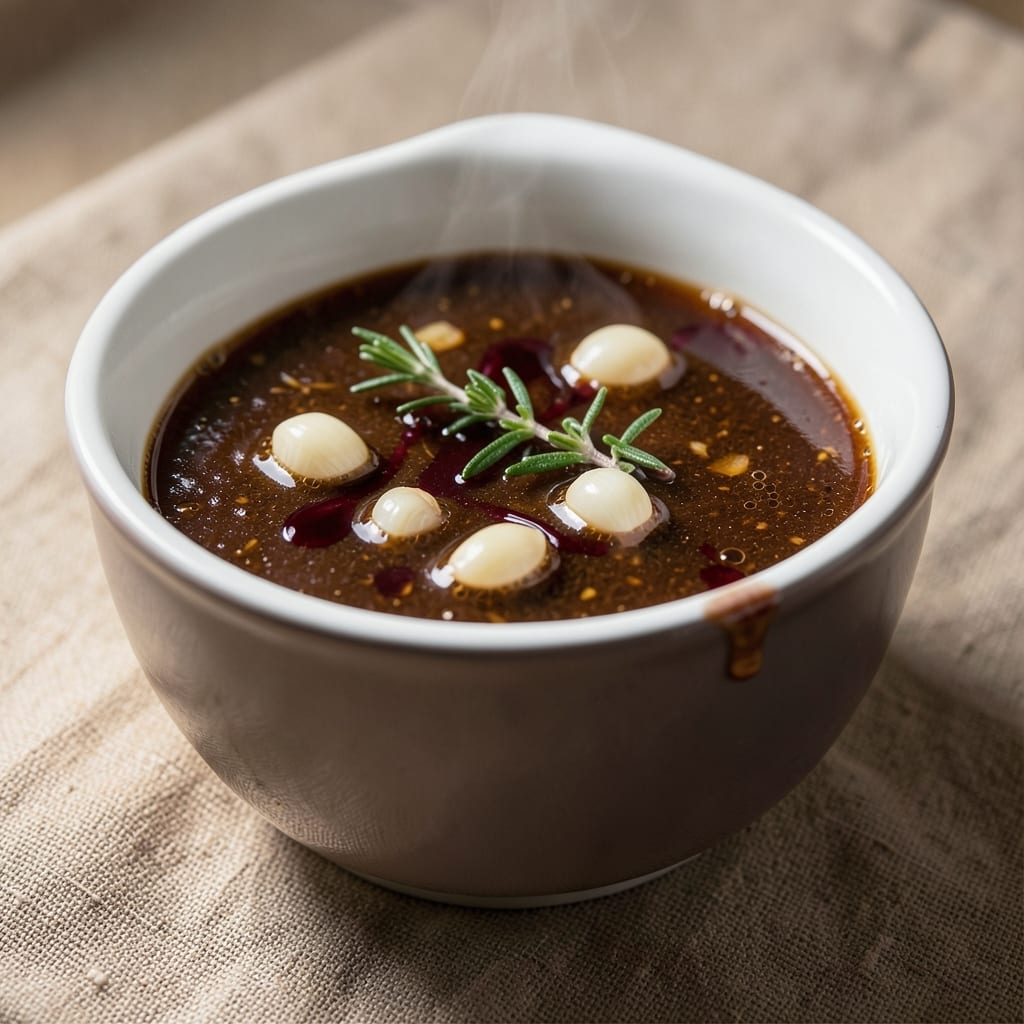
This au jus sauce recipe transforms simple beef broth into a deep, umami-rich sauce that elevates any beef dish. The secret lies in a slow reduction with red wine, aromatics, and a touch of cornstarch for perfect thickness—no fancy ingredients required. I developed this version after realizing how much better homemade au jus tastes compared to store-bought, with layers of flavor that come from proper technique rather than shortcuts.
The process is straightforward but precise: simmering the broth with shallots, garlic, and thyme until deeply aromatic, then deglazing with red wine to build complexity. A light cornstarch slurry thickens the sauce just enough to coat without overpowering the beefy richness. What makes this recipe stand out is how it balances simplicity with professional results—no roux, no complicated steps, just a sauce that delivers restaurant-quality depth.
By the time you're done, you'll have a glossy, velvety sauce with intense umami flavor and just the right body to cling to meat. It's the kind of sauce that turns a simple beef roast into a showstopper, or transforms grilled steaks into a meal worth celebrating. The best part? It keeps well in the fridge for up to 5 days, so you can make a big batch and use it all week.
This au jus works perfectly with roasted beef, grilled steaks, or even as a dipping sauce for fries. The key is letting it reduce slowly to concentrate those rich flavors—patience pays off here. Let's make this sauce that'll have everyone asking for seconds.
Ingredients for au jus sauce recipe with beef broth
Pantry staples meet umami magic for this restaurant-worthy au jus sauce.
| Ingredient | Amount | Notes |
|---|---|---|
| Beef Broth 🥩 | 4 cups | High-quality, homemade preferred |
| Shallots 🧅 | 2 whole | Finely minced for even distribution |
| Garlic Cloves 🧄 | 4 cloves | Peeled and minced finely |
| Fresh Thyme 🌿 | 1 tbsp | Leaves only, finely chopped |
| Red Wine 🍷 | 1 cup | Bold, dry variety like Cabernet |
| Cornstarch 🌾 | 1 tbsp | For smooth, glossy finish |
| Cold Water 💧 | 1 tbsp | For cornstarch slurry |
| Beef Drippings 🍖 | ½ cup | From roasted beef, optional |
| Salt 🧂 | 1 tsp | Diamond Crystal preferred |
| Black Pepper 🌶️ | ½ tsp | Freshly cracked for aroma |
The beef broth is your flavor foundation—homemade is ideal, but high-quality store-bought works in a pinch. Look for brands like Kettle & Fire or Pacific Foods that prioritize rich, well-seasoned broths. Shallots and garlic are non-negotiable for depth; freshly minced releases more flavor than pre-chopped. The thyme should be freshly picked from your garden or a trusted market—dried works but lacks that bright herbal note. For red wine, Cabernet Sauvignon or Merlot deliver bold fruitiness that complements the beefy richness without overpowering it.
No red wine? Beef stock plus 1 tbsp balsamic vinegar mimics the depth. Short on fresh thyme? Dried thyme at one-third the amount suffices, but toast it first in a dry pan for 30 seconds to wake up the flavors. The cornstarch slurry is critical—mixing it with cold water prevents lumps and ensures a silky finish. If you're missing beef drippings, 1 tbsp olive oil adds richness, though it won't replicate that caramelized depth. For salt, Diamond Crystal dissolves more easily than Morton's, giving you better control over seasoning.
This sauce peaks after 5 days in the fridge, developing even more complexity as flavors meld. Portion into airtight containers, leaving 1-inch headspace to prevent oxidation. Freezes beautifully for up to 3 months—thaw in the fridge overnight for best results. For restaurant-quality presentation, strain through a fine-mesh sieve before serving to achieve that velvety texture. The sauce thickens as it cools, so reheat gently over low heat, stirring constantly to prevent separation.
Why You'll Love This Recipe
- Five-Ingredient Magic: I swear, this sauce comes together with just a knife, a pan, and 10 minutes of my time. Sauté those shallots until they’re golden—no fancy technique, just patience—and the garlic and thyme transform everything.
- Wine-Infused Depth: That splash of red wine? It’s not just for flavor—it cuts through the richness of the beef broth and leaves behind this layered taste. Honestly, it’s the kind of sauce that makes you close your eyes and savor it.
- Dinner Party Ready: Serve it with roasted potatoes and steak, or drizzle it over grilled chicken for a restaurant-worthy meal. Between us, it’s my go-to when I need something impressive but still effortless.
- No-Waste Winner: Make a big batch—it freezes like a dream and turns last night’s leftovers into tomorrow’s lunch. I’ve had this sauce revive dry roasts and even glaze baked potatoes. It’s my budget-friendly secret weapon.
Step-by-step instructions for au jus sauce with beef broth
Transform simple pantry staples into a velvety, umami-rich au jus that elevates any beef dish.
Build the Flavor Base
In a medium saucepan, combine the 4 cups beef broth, 2 whole shallots (finely minced), 4 cloves garlic cloves (minced), and 1 tbsp fresh thyme leaves. Bring to a gentle simmer over medium heat, then reduce to a low boil. Let it cook uncovered for 10-12 minutes until the shallots and garlic are completely tender and the liquid has reduced by about one-third. You'll notice the aroma deepens as the flavors meld—this is when the sauce starts its transformation.
I like to stir occasionally but not constantly; the gentle simmer allows the aromatics to infuse without burning. If the mixture looks too thick before the time is up, add 1-2 tablespoons of water to maintain the proper consistency. The goal here is to develop a rich, aromatic base that will carry through the entire sauce.
Deglaze with Red Wine
Once the aromatics are tender, remove the pan from heat and let it cool slightly for 2-3 minutes. This prevents the wine from immediately boiling off when added. Pour in the 1 cup red wine, scraping the bottom of the pan with a wooden spoon to release any browned bits—they're packed with flavor. Return the pan to medium heat and bring to a simmer.
Simmer uncovered for 5-7 minutes, stirring occasionally, until the wine has reduced by half and the liquid is glossy. You'll see the color deepen to a rich, ruby hue—this indicates the alcohol has evaporated and the wine's essence is fully incorporated. If the sauce becomes too thick before the time is up, add 1 tablespoon of water to maintain the proper consistency for the next steps.
Thicken the Sauce
In a small bowl, whisk together the 1 tbsp cornstarch and 1 tbsp cold water until smooth—this creates a slurry that will thicken the sauce without clumping. Return the pan of reduced wine mixture to medium heat and slowly pour in the cornstarch slurry while whisking constantly. The sauce will begin to thicken immediately, so keep whisking for 1-2 minutes until it reaches a glossy, velvety consistency that coats the back of a spoon.
If the sauce thickens too quickly, add 1 tablespoon of water at a time until you achieve the desired texture. The goal is a smooth, spoonable sauce that clings beautifully to meat. Here's the thing—don't overcook it after adding the slurry. Once it reaches the right consistency, remove it from heat immediately to prevent it from becoming pasty.
Finish with Beef Drippings and Season
Stir in the 0.5 cup beef drippings (if using) and 1 tsp salt. The drippings add a luxurious richness that takes this sauce from good to exceptional. Taste and adjust the seasoning with 0.5 tsp black pepper—freshly cracked pepper adds a bright, aromatic finish that complements the deep umami flavors. The sauce should be well-balanced, with the wine's acidity cutting through the richness of the beef.
For best results, strain the sauce through a fine-mesh sieve to remove any remaining solids, then return it to the pan. Bring to a gentle simmer over low heat for 2-3 minutes to ensure everything is perfectly incorporated. The final sauce should be glossy, velvety, and rich enough to coat the back of a spoon while remaining light enough to drizzle over roasted beef or mashed potatoes.
Pro Tips For Making Au Jus Sauce Recipe With Beef Broth
- SWEEP THE PAN: After deglazing with wine, don’t just walk away—give that pan a good scrape with a wooden spoon while it simmers. The stuck-on bits (yes, even the dark ones) hold the deepest flavor, and you’ll end up with a richer sauce instead of a pale imitation.
- MINCE SHALLOTS FINE: I learned this the hard way—coarse shallot chunks just sit there while the garlic burns. Pulse them in a food processor for 2-3 seconds until they’re almost paste-like, but not quite. They’ll dissolve smoothly and infuse flavor evenly without turning to mush.
- REDUCED WINE? NO—COOK IT: Skipping the reduction step is the fastest way to a flat-tasting sauce. Let that wine bubble away until it’s cut in half—about 3-4 minutes on medium heat. The alcohol will cook off, leaving behind the bright, fruity notes that make the sauce sing.
- STRAIN THYME STEMS: Fresh thyme sprigs add aroma, but their woody stems turn the sauce bitter if left in. Strip the leaves off before adding them to the pan, then fish out the stems with tongs after 2 minutes. Your sauce will taste bright, not medicinal.
Serving suggestions for au jus sauce recipe with beef broth
Classic Beef Pairings
This au jus sauce is a game-changer for roasted beef tenderloin—simply drizzle it over the sliced meat during the last 5 minutes of roasting at 400°F to create a glossy, caramelized finish. For grilled steaks, serve it warm in a small sauce boat alongside. I love pairing it with garlic mashed potatoes or creamy scalloped potatoes to soak up every last drop. 🥩
Unexpected Uses
Think beyond beef! This sauce elevates corned beef hash by adding depth to the smoky flavors. Toss ½ cup with 2 cups diced potatoes, ½ lb corned beef, and a fried egg for a brunch showstopper. It also works as a dipping sauce for fries—just thin it slightly with a splash of beef broth if needed. The umami richness cuts through fried foods beautifully.
Vegetable Sides
For a lighter option, serve this au jus with roasted Brussels sprouts tossed in 1 tbsp olive oil and ½ tsp smoked paprika. The sauce's depth complements the sprouts' earthy flavor. Another favorite: creamy polenta with a sprinkle of Parmigiano-Reggiano—the sauce's acidity balances the richness perfectly. I often make a double batch so I can use half for the main and half for sides.
Bread & Cheese
Warm crusty baguette slices in the oven for 5 minutes at 375°F, then brush with garlic butter and drizzle with au jus. The contrast of crispy bread with the velvety sauce is pure magic. For a cheesy twist, serve with gruyère or cheddar fondue—the wine notes in the sauce add a sophisticated touch. Just 1 tbsp per slice is enough to make it irresistible. 🧀
Global Twists
For an Italian-inspired dish, serve this au jus with braised short ribs and a side of creamy polenta. The wine in the sauce mimics the depth of a classic red wine reduction. In a French bistro style, pair it with duck confit and haricots verts—the duck's fat enhances the sauce's richness. I've even used it as a glaze for grilled lamb chops**, adding 1 tsp rosemary to the sauce for a Mediterranean flair.
Nutrition facts
Frequently asked questions
Can I make this au jus sauce without red wine?
For a wine-free version, replace the 1 cup red wine with 1 cup beef broth plus 1 tbsp balsamic vinegar. The vinegar adds acidity to mimic the wine's depth. For even more richness, add 1 tsp soy sauce to enhance umami. The flavor will be slightly different but still delicious and balanced.
How do I fix an au jus sauce that's too thick or too thin?
For a sauce that's too thick, thin it with 1 tbsp warm beef broth at a time while stirring constantly. If it's too thin, whisk in ½ tsp cornstarch mixed with 1 tsp cold water and simmer for 1-2 minutes. Never add dry cornstarch directly to the pan—it'll clump. The goal is a sauce that coats the back of a spoon but remains silky.
Can I use this sauce for dishes other than beef?
Yes! While it's perfect for beef, this sauce works beautifully with lamb chops (add 1 tsp rosemary), duck confit, or even grilled mushrooms for a vegetarian twist. The umami richness pairs well with hearty ingredients. Just adjust seasoning—duck benefits from a pinch of smoked paprika, while mushrooms might need a splash of soy sauce for depth.
How long can I store this au jus sauce?
Store in an airtight container in the fridge for up to 5 days. For longer storage, freeze for up to 3 months. Thaw overnight in the fridge—never at room temperature. The sauce thickens slightly when chilled, so reheat gently over low heat, stirring constantly to restore its glossy texture. The flavors actually improve over time!
Why did my au jus sauce turn cloudy?
Cloudiness usually means the sauce separated due to rapid temperature changes or overcooking after thickening. To fix it, whisk in 1 tsp cold water while heating gently on low heat until smooth. For prevention, always thicken the sauce off the heat and avoid boiling after adding cornstarch. The ideal finish is glossy and velvety, not streaky.