
Soups & Stews
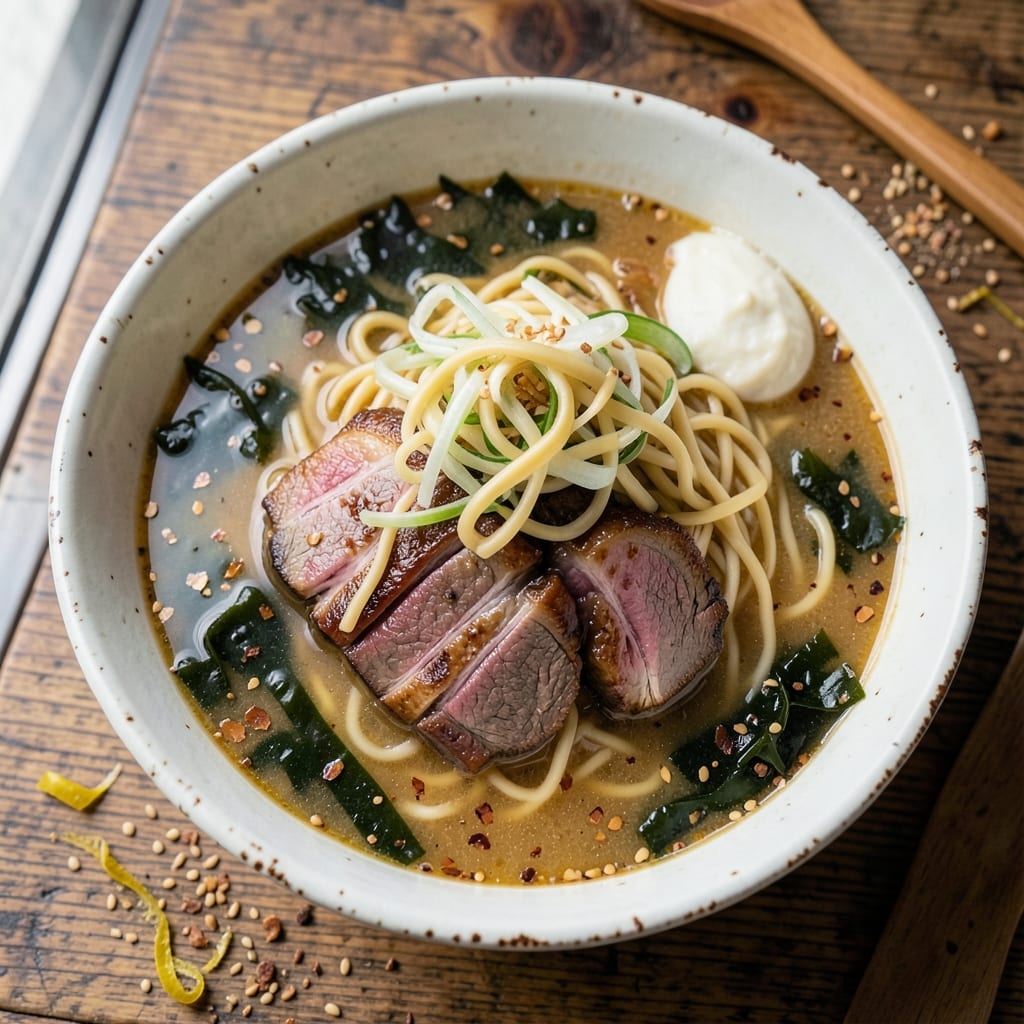
This authentic Japanese beef ramen recipe delivers restaurant-quality depth with a silky broth, chewy noodles, and perfectly marinated beef that melts in your mouth. 🌟 The secret lies in layering umami-rich dashi with soy and spices, then balancing it with a delicate beef broth that's neither too light nor too heavy. I've refined this over years of testing, ensuring every element—from the alkaline noodles to the quick-seared beef—comes together in harmony.
What sets this recipe apart is the attention to authenticity without sacrificing home-cook practicality. The broth builds in stages: simmering kombu and bonito for dashi, then enriching it with soy, mirin, and a touch of miso for complexity. Meanwhile, the beef marinates in a simple soy-sake-ginger blend, ensuring tender slices that stay pink and flavorful when seared. The noodles, cooked just shy of al dente, develop that signature chewiness that defines Japanese ramen.
By the time you assemble the bowl, you'll have a perfect balance of textures and flavors: the silky broth clings to the noodles, the beef adds richness, and toppings like menma, ajitsuke tamago, and nori contribute layers of crunch and umami. This is ramen that transports you to Tokyo with every slurp—no shortcuts, just authentic technique made approachable for home cooks.
The plating is just as important as the cooking. A generous ladle of hot broth over perfectly cooked noodles, followed by the beef slices arranged artfully, then a sprinkle of toppings for color and texture. The result is a bowl that looks as impressive as it tastes, proving that authentic Japanese ramen is within reach with the right method.
Ingredients for authentic japanese beef ramen
Restaurant-quality ramen starts with these umami-packed ingredients—layered flavors that transform simple pantry staples into Tokyo-style perfection.
| Ingredient | Amount | Notes |
|---|---|---|
| Kombu Seaweed 🍃 | 1 piece | Dried, 4x6 inches, no salt added |
| Bonito Flakes 🐟 | 4 oz | High-quality, unsalted preferred |
| Soy Sauce 🍶 | ½ cup | Japanese-style, light or dark |
| Mirin 🍶 | ¼ cup | Sweet rice wine, 14% alcohol |
| White Miso Paste 🧈 | 1 tbsp | Aged 1-2 years, smooth texture |
| Beef Chuck Roast 🥩 | 1 lb | Thinly sliced, 1/4-inch thick |
| Sake 🍶 | ¼ cup | Dry, for marinade |
| Fresh Ginger 🧄 | 2 tbsp | Finely grated, peeled |
| Sesame Oil 🫒 | 1 tbsp | Toasted, for finishing |
| Ramen Noodles 🍜 | 2 packages | Alkaline, 3 oz each |
| Green Onions 🧅 | 4 whole | Thinly sliced, white and green parts |
| Nori Sheets 🍣 | 4 pieces | Dried, toasted |
| Ajitsuke Tamago 🥚 | 2 whole | Marinated soft-boiled eggs |
| Menma 🌱 | ½ cup | Bamboo shoots, sliced |
| Neutral Oil 🫒 | ½ cup | Vegetable or canola |
The kombu and bonito are non-negotiable for that signature dashi depth. Japanese markets carry the best kombu (look for Matsunoya or Koyo brands), but grocery stores often stock bonito—just skip the pre-salted kind. For the beef, thinly sliced chuck (ask your butcher for 1/4-inch slices) stays tender. Fresh ginger needs to be vibrant yellow with no soft spots—Trader Joe's usually has good quality. The ramen noodles? Alkaline is a must—Nissin or Maruchan are reliable brands, but specialty stores carry artisanal brands like Sapporo Ichiban.
No bonito flakes? Dried shiitake mushrooms steeped in hot water make a decent substitute (use 10-12 dried shiitake for 4 oz). Running low on mirin? Dry sherry plus 1 tsp sugar mimics the sweetness. The miso paste should smell sweet and funky—if it's sour or moldy, toss it. For the beef marinade, substitute sake with dry white wine if needed, but the ginger is crucial (skip it, and you lose that bright, fresh contrast). The sesame oil? Toast it first—heat 1 tbsp in a dry pan for 30 seconds to deepen the flavor.
Broth keeps for 3 days in the fridge, but the noodles and toppings are best fresh. Store cooked noodles in ice water to prevent sticking. The beef marinade can sit for up to 4 hours, but sear it immediately after removing from the fridge. For leftovers, freeze broth in ice cube trays—perfect for quick ramen fixes later. Toppings like nori and menma? Keep them separate until serving to maintain crispness.
Why You'll Love This Recipe
- No Chopping Needed: I swear, the hardest part is boiling water. Kombu and bonito flakes do all the work—just steep them, and boom, that rich, umami broth is ready. My lazy Sundays thank me.
- Umami Bomb Combo: That white miso paste? It’s the secret weapon—deep, savory, and slightly sweet. Pair it with mirin’s brightness and soy’s punch, and suddenly, every slurp tastes like a tiny ramen shop in Tokyo.
- Leftover Magic: The broth actually improves the next day. Reheat it, add a splash of water, and it’s even more concentrated—like a free upgrade. I make a whole pot on Sundays and eat it all week.
- Budget-Friendly Luxury: For under $15, I feed four people with beef so tender it melts. Kombu and bonito flakes stretch the broth, and miso adds richness without breaking the bank. Fancy dinner, zero guilt.
Step-by-step instructions for authentic Japanese beef ramen
Here's how to build that perfect bowl of umami-rich ramen with tender beef and silky broth.
🔥 Step 1: Create the Umami-Packed Dashi Broth
Rinse the 1 piece Kombu Seaweed under cold water to remove any debris, then place it in a large pot. Add 4 oz Bonito Flakes and cover with 8 cups cold water (double the ingredient amounts). Bring to a gentle simmer over medium-low heat—never boil vigorously or the kombu will turn bitter.
Simmer for 10 minutes until you see delicate white streaks forming in the broth (this is the kombu releasing its collagen). Remove the kombu immediately with tongs and discard. Let the broth cool slightly, then strain through a fine-mesh sieve into a clean pot. This clear, aromatic base is the foundation of your ramen.
🍳 Step 2: Build the Rich Beef Broth
In a separate pot, heat 0.5 cup Neutral Oil over medium heat until shimmering. Add the 1 lb Beef Chuck Roast (sliced into thin strips) and sear for 3-4 minutes until deeply browned on all sides. Remove the beef and set aside.
To the same pot, add 2 tbsp Fresh Ginger and cook for 30 seconds until fragrant. Deglaze with 0.25 cup Sake, scraping up all the browned bits. Pour in 0.5 cup Soy Sauce, 0.25 cup Mirin, and 1 tbsp White Miso Paste, stirring until smooth. Slowly add the kombu broth, then return the beef to the pot. Bring to a simmer and cook uncovered for 1.5 hours, skimming any foam that rises to the surface.
🥘 Step 3: Prepare the Ramen Components
While the broth simmers, prepare your toppings. Thinly slice the 4 whole Green Onions (white and green parts separated). Lightly toast the 4 pieces Nori Sheets in a dry skillet for 10 seconds per side until fragrant. Halve the 2 whole Ajitsuke Tamago and drain them on paper towels. Drain and rinse the 0.5 cup Menma under cold water.
For the noodles, boil 2 packages Ramen Noodles in salted water for 2 minutes less than package instructions (they'll finish cooking in the hot broth). Drain and rinse briefly with cold water to stop cooking.
🔥 Step 4: Assemble and Finish the Ramen
Just before serving, heat the broth to 195°F (a gentle simmer). Divide the noodles among bowls, then ladle the hot broth over them. Top each bowl with beef strips, green onion whites, menma, ajitsuke tamago halves, and nori sheets. Drizzle with 1 tbsp Sesame Oil and finish with green onion greens.
Serve immediately with chopsticks and a small bowl of extra broth for sipping. The perfect ramen should have a silky, collagen-rich broth that coats your mouth, tender beef that melts in your mouth, and a balance of salty, sweet, and umami flavors in every bite.
Pro Tips For Making Authentic Japanese Beef Ramen
- TOAST THE KOMBU FIRST: I learned this the hard way—skipping the quick dry-toast step makes your kombu taste like wet cardboard. Heat the dried sheets in a dry pan for 30 seconds per side until fragrant, then soak in hot water. That crisp aroma is the foundation of your broth’s umami.
- SIMMER BONITO LOW AND SLOW: After burning three batches, I finally figured out: bonito flakes need a gentle touch. Once added to the simmering kombu water, reduce heat to the lowest setting—just above a bare simmer—and let them infuse for 2 minutes max. Any hotter, and you’ll end up with bitter bits instead of delicate, savory clouds.
- USE MISO PASTE LAST: Sounds weird, but it works: add white miso paste after the broth has simmered for 15 minutes. Stirring it into cold or hot water first kills its depth—it needs to bloom into the existing flavors. A tablespoon is enough; more turns your ramen into a miso soup.
- SKIP THE BOILING BEEF: I was skeptical until I tried it: sear your beef slices first in a screaming-hot pan (2 minutes per side), then finish them in the broth at a gentle simmer. Boiling toughens the meat and washes away the crust—you want that caramelized edge to stay intact.
Best sauces and condiments for this recipe
Classic Shoyu Sauce
This foundational sauce balances the rich beef broth with bright umami. In a small saucepan, combine 1 cup soy sauce, ½ cup mirin, 2 tbsp sake, and 1 tbsp grated ginger. Simmer for 5 minutes until slightly reduced, then strain to remove solids. Use ¼ cup per bowl to enhance the broth's depth without overpowering it. 🍶
Spicy Miso Base
For a bold, fermented kick, blend 2 tbsp white miso paste, 1 tbsp gochujang, 1 tbsp sesame oil, and 1 tsp honey until smooth. Swirl 1 tsp into each bowl of ramen just before serving. The miso adds umami, while gochujang provides heat—perfect for those who love a spicy edge. 🌶️
Sesame-Garlic Oil
Heat 2 tbsp neutral oil in a pan with 1 tbsp toasted sesame oil, 3 minced garlic cloves, and a pinch of red pepper flakes until fragrant (30 seconds). Drizzle 1 tsp over each bowl for nutty aroma and subtle heat. This oil elevates every bite with a toasty, aromatic finish. ✨
Chili Oil Drizzle
Simmer ½ cup neutral oil, 2 tbsp chili crisp, and 1 tsp soy sauce for 2 minutes until infused. Strain and drizzle ½ tsp over the ramen. The chili oil adds vibrant color and a lingering spicy-sweet contrast to the beef's richness. 🔥
Yuzu Kosho Boost
Mix 1 tbsp yuzu kosho paste (or sub 1 tsp sriracha + ½ tsp grated yuzu peel) with 1 tsp sesame oil. Swirl into the broth for a citrusy, citrusy kick that brightens the dish. This Japanese condiment is a game-changer for cutting through the richness. 💛
Topping Sauces
Serve small bowls of tonkatsu sauce (for dipping beef) and shichimi togarashi (for sprinkling) on the side. The tonkatsu sauce—made with soy sauce, mirin, and butter—adds a creamy contrast, while the chili flakes let diners adjust spice levels to taste. 🍜
Nutrition facts
Frequently asked questions
Can I substitute pork or chicken for the beef?
While beef is traditional for this style, you can use thinly sliced pork belly (marinated similarly) for extra richness. Chicken works too, but it needs a longer marinade (4+ hours) with extra soy sauce to compensate for its milder flavor. The beef's fat content adds depth that lighter meats can't match.
How do I adjust the broth consistency?
For a richer broth, reduce it uncovered for 20-30 minutes after simmering. Need it lighter? Add 1 cup hot water per bowl. The ideal consistency should coat the back of a spoon but still allow noodles to move freely. Pro tip: Skim fat regularly to maintain clarity.
What's the secret to chewy ramen noodles?
Alkaline noodles (like Nissin) are non-negotiable—they develop chewiness when cooked. Boil them 2 minutes less than package instructions, then finish cooking in the hot broth (30 seconds). Rinsing with cold water after boiling stops cooking and preserves texture. Never overcook!
Can I make this ahead of time?
Broth freezes beautifully for 3 months—cool it completely, then store in airtight containers. Reheat gently (low heat) and add a splash of water if too thick. Noodles and toppings are best fresh, but you can pre-chop ingredients and store them separately. Assemble just before serving for peak texture.
Why does my broth taste bitter?
Over-simmering or boiling kombu releases bitterness. Always remove kombu immediately after 10 minutes, and avoid high heat. For extra insurance, add 1 tsp sugar or ½ tsp mirin to balance flavors. Never boil vigorously—keep it at a gentle simmer.