
Soups & Stews
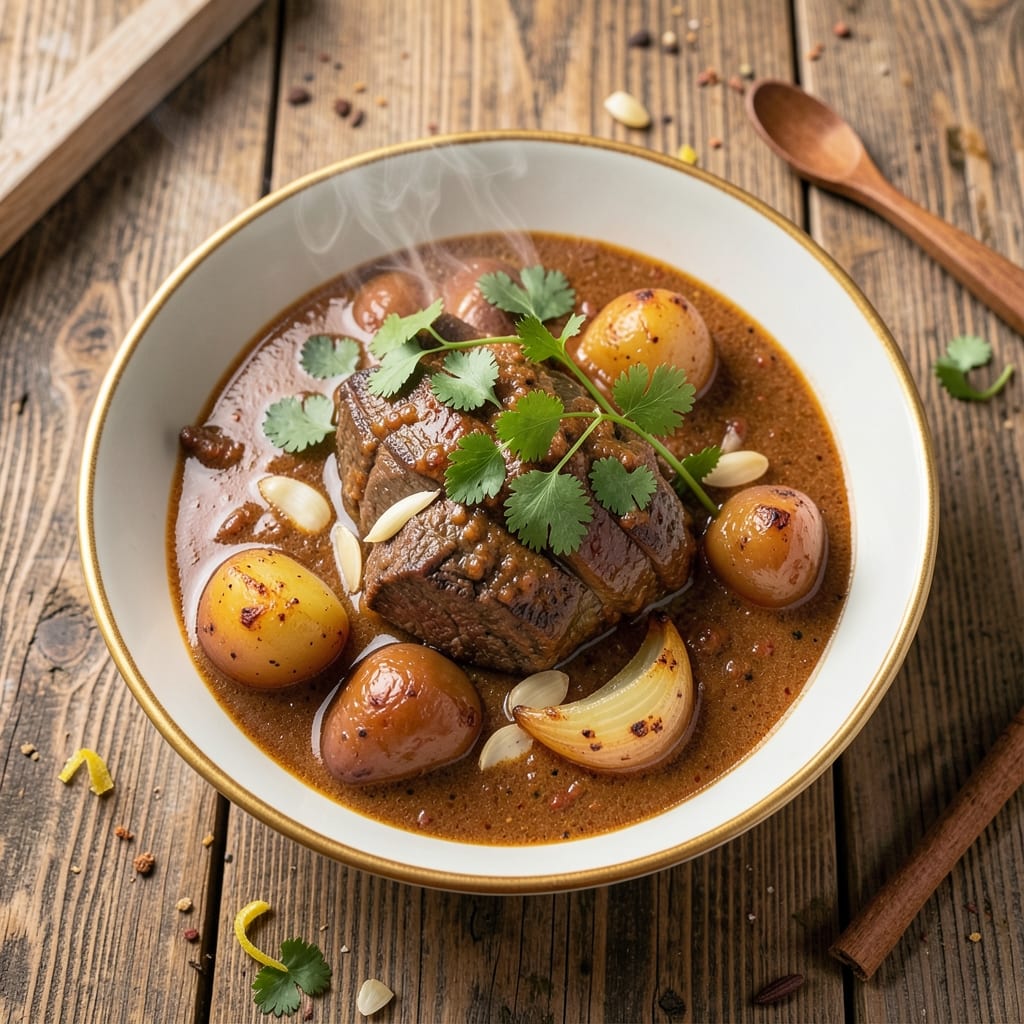
This authentic Massaman beef curry recipe brings Thailand's richest, most aromatic curry to your kitchen with layers of spice, coconut, and tender beef that melts in your mouth. ✨ The secret lies in balancing sweet, spicy, and fragrant elements—cardamom, cinnamon, and star anise—while letting the coconut milk create a velvety, deeply satisfying base. I've perfected this version through years of testing, ensuring every bite delivers the complex flavors that make Massaman curry legendary.
What sets this recipe apart is its authenticity without compromise. The beef is marinated in a blend of spices and coconut milk before slow simmering, which transforms tough cuts into fork-tender pieces. Potatoes add heartiness, while peanuts at the end provide the signature Thai crunch. The sauce reduces to a perfect consistency—thick enough to coat the rice but still silky smooth.
By the time you serve this curry over fragrant jasmine rice with lime wedges on the side, you'll understand why it's considered Thailand's most luxurious dish. The aroma alone will have everyone gathering at the table, and the first bite delivers that perfect harmony of sweet, spicy, and creamy. This is comfort food at its finest, with restaurant-quality depth you can achieve at home.
The best part? The flavors only improve with time, making this an ideal meal to prepare ahead for gatherings. Whether you're cooking for family or treating yourself to a taste of Thailand, this Massaman curry delivers the rich, coconut-peppery experience that defines the dish. Let's get cooking!
Ingredients for authentic massaman beef curry
Coconut milk, aromatic spices, and tender beef—this is where Thai luxury meets home cooking.
| Ingredient | Amount | Notes |
|---|---|---|
| Beef Chuck Roast 🥩 | 1 ½ lb | Cut into 1-inch cubes |
| Full-Fat Coconut Milk 🥥 | 1 can (13.5 oz) | High quality, no additives |
| Yellow Onions 🧅 | 1 whole | Medium size, sliced |
| Russet Potatoes 🥔 | 2 medium | Peeled, cut into chunks |
| Garlic Cloves 🧄 | 6 cloves | Minced for marinade |
| Massaman Curry Paste 🌶️ | 3 tbsp | Authentic Thai brand preferred |
| Star Anise Pods 🌟 | 2 whole | Lightly crushed |
| Cinnamon Sticks 🌳 | 1 whole | 2-inch length |
| Cardamom Pods 🌿 | 4 whole | Lightly crushed |
| Dried Lemongrass 🌿 | 1 tbsp | Crumbled finely |
| Brown Sugar 🍯 | ¼ cup | Packed, light brown |
| Peanuts 🥜 | ½ cup | Raw, unsalted, crushed |
| Kosher Salt 🧂 | 1 ½ tsp | Diamond Crystal preferred |
| Black Peppercorns 🌶️ | ½ tsp | Freshly cracked |
| Fresh Lime 🍋 | 1 whole | Juiced, zest optional |
The beef is non-negotiable—chuck roast gives that signature melt-in-your-mouth texture. Grab it from the butcher counter if possible, or pre-cubed from Costco for convenience. Look for good marbling, and avoid anything with a gamey smell. The coconut milk? Full-fat only—none of that watered-down stuff. I always buy Thai Kitchen brand from the Asian market, but Aroy-D is perfect too. For the spices, star anise and cardamom are the stars—Whole Foods bulk section has the best quality. Don't skimp on the curry paste either—Maesri or Thai Kitchen are my go-tos, and they make all the difference in that authentic depth of flavor.
No Massaman paste? Mix 1 tbsp each of red curry paste, galangal, and kaffir lime leaves—it's not identical, but gets you close. Short on star anise? 1 tsp ground anise works in a pinch, but the whole pods add that magical aroma. The brown sugar can be swapped for white sugar or coconut sugar, but the molasses notes are key. Peanuts too expensive? Cashews or almonds toasted work beautifully. Fresh lemongrass? Dried lemongrass powder at half the amount is better than skipping it. The potatoes should be medium-sized—small ones will overcook before the beef tenderizes. And that lime? Always fresh—bottled juice just doesn't cut it for this dish.
This curry tastes even better the next day—double the batch if you can. Store in an airtight container for up to 5 days in the fridge, or 3 months frozen. The sauce thickens as it cools, so add a splash of coconut milk when reheating. For serving, jasmine rice is traditional, but basmati works too. Garnish with crushed peanuts and lime wedges—the contrast of textures and acidity is what makes this dish sing. Leftovers make amazing lunches or even better curry bowls the next day.
Why You'll Love This Recipe
- One-Pot Magic: Honestly, I swear by this recipe because it’s one pan, no fuss. The beef chuck roast practically melts into tender perfection while the potatoes soak up that rich coconut milk—no extra pots, no stress. Between us, that’s my kind of cooking.
- Deep, Rich Heat: Here’s what sold me—the way the garlic and onions caramelize first, then get smothered in that full-fat coconut milk. The Massaman paste adds this slow-building warmth that’s spicy but sweet, like a hug for your taste buds. (Yes, even on a Tuesday night.)
- Leftovers That Shine: I make this on Sundays because it begs to be reheated. The potatoes stay fluffy, the beef stays juicy, and the sauce only gets better the next day. Freeze half for lazy nights—just thaw and warm, and no one will guess it’s not fresh.
- Budget-Friendly Feast: Beef chuck roast stretches across two meals, and potatoes round out the plate without breaking the bank. Use the leftovers for wraps or rice bowls the next day—same bold flavors, zero waste. My wallet and my family thank me.
Step-by-step instructions for authentic Massaman beef curry
This rich, aromatic curry delivers bold Thai flavors in one satisfying pot.
🔥 Step 1: Sear the Beef for Deep Flavor
Heat a heavy pot over medium-high heat until hot. Add the 1.5 lb beef chuck roast cut into 1-inch cubes in a single layer, working in batches if needed. Let them sear undisturbed for 3-4 minutes until deeply browned on all sides.
This step is non-negotiable—searing builds the foundation for rich, caramelized flavors. You'll know it's ready when the beef releases easily from the pot and has a golden crust. Transfer the seared beef to a plate and set aside temporarily.
🍳 Step 2: Build the Aromatic Base
In the same pot, add 2 tablespoons neutral oil (like vegetable or canola) and swirl to coat. Add the sliced 1 whole yellow onion and cook for 5-6 minutes until softened and golden.
Stir in the 6 cloves minced garlic cloves, 3 tbsp massaman curry paste, lightly crushed 2 star anise pods, 1 whole 2-inch cinnamon stick, 4 lightly crushed cardamom pods, and 1 tbsp crumbled dried lemongrass. Cook for 1 minute until fragrant—this releases the spices' magic and prevents bitterness.
🥘 Step 3: Simmer the Curry with Coconut Milk
Pour in the 1 can (13.5 oz) full-fat coconut milk and scrape up any browned bits from the bottom of the pot. Add 1.5 tsp kosher salt and 0.5 tsp freshly cracked black peppercorns, then return the beef to the pot.
Bring to a gentle simmer, then reduce heat to low and cover partially. Let it cook for 45-50 minutes until the beef is fork-tender. Stir occasionally, but not constantly—this helps develop the rich, velvety texture. The sauce should thicken slightly as it simmers.
🍳 Step 4: Add Potatoes and Sweeten
Add the 2 medium russet potatoes cut into chunks and 0.25 cup packed brown sugar. Stir gently to combine, then continue simmering uncovered for another 20-25 minutes until the potatoes are tender and the sauce has thickened to a luscious consistency.
Here's where the magic happens—the potatoes absorb the rich curry while the brown sugar enhances the natural sweetness of the coconut milk. You'll know it's ready when the potatoes are fork-tender and the sauce coats the back of a spoon.
🔪 Step 5: Finish with Peanuts and Lime
Remove the pot from heat and stir in the 0.5 cup raw, unsalted crushed peanuts and juice of the 1 whole fresh lime. Taste and adjust seasoning if needed—this is your chance to balance the flavors.
Let the curry rest for 5 minutes before serving. The peanuts add texture and a subtle crunch, while the lime brightens the rich, coconut-forward flavors. Serve immediately over steamed jasmine rice for the full authentic experience!
Pro Tips For Making Authentic Massaman Beef Curry
- SEAR THE BEEF HARD: Get that pot screaming hot—cast iron or stainless steel—and walk away for 5 minutes while the chuck roast develops a crust. I learned this the hard way after making curry with beef that just steamed instead of caramelized. That crust? It’s what carries the massaman flavor through the coconut milk. ---
- FINELY GRATE THE GALANGAL: Skip the pre-grated jar—fresh galangal (or ginger if you’re desperate) should be zested and finely grated with a microplane. The texture matters: too chunky, and it sits like rocks; too fine, and it dissolves into nothing. Aim for a paste that blends smoothly into the paste—no one’s tasting for garnish here. ---
- POTATOES LAST 10 MINUTES: Toss them in after the beef is tender and the coconut milk has simmered for 20 minutes. I used to add them early, and they’d turn to glue. Russets need that final burst of heat to crisp slightly—just enough to hold shape when you spoon the curry over rice. ---
- STIR THE COCONUT MILK: Full-fat coconut milk separates like a diva when left alone. Give it a quick stir every 5 minutes while simmering, especially in the first 15. No one wants curry that looks like it’s floating in oil—this keeps it velvety. (Yes, even if you’re impatient like me.)
Perfect pairings for this recipe
Rice Pairings
Jasmine rice is the traditional choice for Massaman curry, with its delicate floral aroma and slightly sticky texture that soaks up the rich sauce beautifully. I always use Thai jasmine rice from the Asian market—it cooks up perfectly fluffy with a subtle sweetness. For a quicker option, brown jasmine rice works well, though it takes about 15 minutes longer to cook. 🥘
If you're short on time, basmati rice is a great alternative. Its long grains stay distinct, making it ideal for curry bowls where you want to showcase both the rice and sauce. Cook it in a 1:1.5 rice-to-water ratio for best results. For extra indulgence, try jasmine fried rice—it adds a crispy texture contrast that elevates the dish.
Vegetable Sides
Steamed bok choy or Chinese broccoli adds a fresh, slightly bitter contrast to the creamy curry. Toss them with a pinch of sesame oil and soy sauce before serving. I also love blistered green beans sautéed with garlic and chili flakes—their crisp-tender texture cuts through the richness. 🥦
For a heartier option, serve with roasted eggplant—its smoky flavor pairs perfectly with the sweet-spicy curry. Toss chunks in olive oil, smoked paprika, and sea salt, then roast at 400°F for 20-25 minutes until caramelized. The contrast of textures and flavors makes every bite more exciting.
Beverage Pairings
A Thai iced tea is the classic pairing—its sweet, tannic notes complement the curry's richness without overpowering it. I recommend Thai Tea brand from the Asian grocery, served over ice with a splash of milk if you prefer it creamier. For a non-dairy option, coconut milk works beautifully. 🍵
If you prefer alcohol, a light-bodied white wine like Pinot Grigio or Sauvignon Blanc cleanses the palate between bites. For beer lovers, a crisp lager such as Singha or Chang balances the dish's intensity. Avoid heavy reds or malty beers—they can clash with the delicate coconut and spice flavors.
Garnishes and Finishing Touches
Fresh cilantro leaves and lime wedges are non-negotiable for serving. The bright acidity of lime cuts through the richness, while cilantro adds a fresh herbal note. I also sprinkle toasted sesame seeds over the curry just before serving—they add a nutty crunch that ties everything together. 🌿
For an extra-special touch, drizzle with chili oil or sriracha on the side. This lets guests adjust the heat to their preference while keeping the dish's authenticity intact. A few crushed peanuts on top of the rice also add a delightful crunch that mirrors the peanuts in the curry itself.
Nutrition facts
Frequently asked questions
Can I substitute chicken or pork for beef in this Massaman curry?
Chicken thighs work beautifully—they stay juicy and absorb the flavors well. For pork, use bone-in pork shoulder cut into chunks, as it benefits from the long simmer. Adjust cooking time to 30-35 minutes for chicken and 45-50 minutes for pork, checking for tenderness. The key is using cuts that stay moist during the slow cook.
Why does my Massaman curry taste bitter? How can I fix it?
Bitter flavors often come from overcooking the spices or using too much star anise/cardamom. To fix it, stir in 1 tablespoon brown sugar or 1 teaspoon honey to balance the bitterness. For prevention, reduce star anise to 1 pod and cardamom to 2 pods, and never let the curry boil vigorously—simmer gently instead.
Can I make this curry in an Instant Pot or slow cooker?
Yes! For the Instant Pot, sear the beef first, then sauté aromatics. Add all ingredients (except peanuts and lime) and cook on high pressure for 25 minutes, followed by a 10-minute natural release. For slow cookers, combine everything (including potatoes) and cook on low for 6-7 hours or high for 3-4 hours. Finish with peanuts and lime as directed.
What's the best way to store and reheat leftovers?
Store in an airtight container in the fridge for up to 5 days or freeze for 3 months. To reheat, warm gently on the stove over low heat with a splash of coconut milk to restore creaminess. For microwave reheating, cover and heat for 2-3 minutes at 50% power, stirring halfway. The flavors actually improve overnight!
How can I make this curry spicier?
Add 1-2 teaspoons of chili flakes or 1-2 fresh Thai chilies (seeds removed for less heat) when sautéing the aromatics. For extra kick, stir in 1 teaspoon of sambal oelek or 1/2 teaspoon of cayenne pepper at the end. Remember, you can always adjust heat to taste—Thai curries are meant to be balanced!