
Soups & Stews
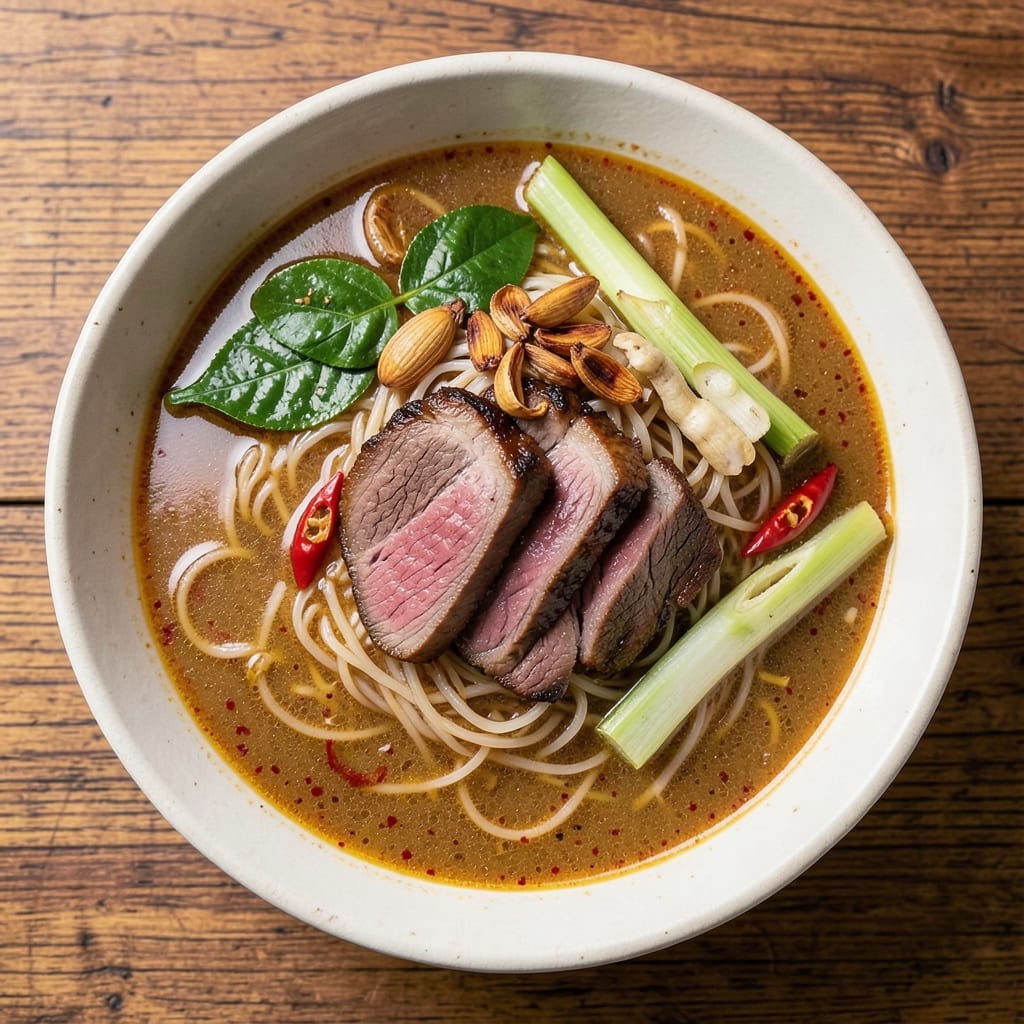
This authentic Thai beef noodle soup recipe brings the vibrant flavors of Bangkok to your kitchen with its fragrant lemongrass and galangal broth. The secret lies in balancing sour, spicy, and umami notes—just like street vendors in Thailand do. I've perfected this recipe after years of testing, ensuring every spoonful delivers that perfect harmony of bold flavors and comforting warmth.
The broth is the heart of this dish, simmered low and slow with aromatic herbs like lemongrass, galangal, and kaffir lime leaves. Tender beef slices and chewy rice noodles come together in a symphony of textures and tastes. What sets this apart is the careful balance—just enough heat from chili, tang from lime, and richness from coconut milk (if using the creamy Tom Kha version).
What you'll achieve is a steaming bowl of restaurant-quality soup with rich, fragrant broth, tender beef, and perfectly cooked noodles. The aroma alone will have everyone gathering around the table. Garnishes like fresh cilantro, Thai basil, and a squeeze of lime add brightness and freshness to every bite.
This recipe serves 4 and takes about 45 minutes of active time, with most of that being hands-off simmering. The result is a dish that feels like a warm hug on a chilly day—authentic, comforting, and impossible to resist. Let's get started on creating this Thai classic at home.
Ingredients for authentic thai beef noodle soup
Fragrant herbs and tender beef create this restaurant-quality Thai beef noodle soup.
| Ingredient | Amount | Notes |
|---|---|---|
| Beef Sirloin 🥩 | 1 ½ lb | Thinly sliced against grain |
| Fresh Lemongrass 🌿 | 1 whole | Lower stems removed, bruised |
| Galangal 🍃 | 1 piece | About 3 inches, peeled |
| Kaffir Lime Leaves 🍋 | 4 whole | Bruised for aroma |
| Shallots 🧅 | 6 whole | Peeled, halved lengthwise |
| Garlic Cloves 🧄 | 6 cloves | Peeled, smashed |
| Thai Chili 🌶️ | 3 whole | Seeds removed for mild heat |
| Coconut Milk 🥥 | 1 can | Full-fat, 13.5 oz total |
| Fish Sauce 🍶 | 2 tbsp | Red Boat preferred |
| Palm Sugar 🍯 | 2 tbsp | Or light brown sugar |
| Rice Noodles 🍜 | 8 oz | Flat, medium width |
| Fresh Cilantro 🌿 | ½ cup | Chopped, for garnish |
| Thai Basil 🌿 | ¼ cup | Whole leaves, for garnish |
| Lime Wedges 🍋 | 2 whole | Freshly squeezed |
| Salt 🧂 | 1 tsp | Adjust to taste |
The herbs are non-negotiable for authentic flavor. Thai markets have the best selection of galangal and kaffir lime leaves—look for vibrant, unbruised pieces. If you can't find galangal, ginger at half the amount works in a pinch, but it's not the same. For lemongrass, grab the whole stalks and bruise them with the side of your knife before using. The beef should be sirloin or flank steak—thinly sliced against the grain for tender results. Costco often carries pre-sliced beef for stir-fry, which saves time. If using frozen, thaw completely before slicing.
No fish sauce? Soy sauce plus a dash of oyster sauce mimics the umami punch, but it won't be identical. Palm sugar unavailable? Light brown sugar is the next best thing—just dissolve it first. The coconut milk can be swapped for light cream if you're avoiding dairy, though the flavor will shift slightly. For the noodles, rice vermicelli is traditional, but egg noodles work too if that's what you have. The chili can be adjusted—remove seeds for mild heat or keep them for a kick. Fresh herbs are ideal, but dried basil at one-third the amount gets you close if needed.
Prep the aromatics first—they need time to infuse. Store fresh herbs like lemongrass and galangal wrapped in damp paper towels in the fridge for up to 5 days. The broth keeps well for 3 days in the fridge, so make extra. Noodles should be cooked just before serving—they turn mushy if reheated. Freeze broth portions for up to 3 months. Garnishes like Thai basil and lime should be added fresh right before serving to keep them vibrant.
Why You'll Love This Recipe
- No Fuss, Big Payoff: I swear by this—just slice the beef thin, toss in the lemongrass and galangal (no peeling required, just bruise it), and let the broth work its magic. The hardest part? Finding the galangal at the store. Worth it.
- Herb Magic in Every Bowl: That first sip? Pure alchemy. The lime leaves and shallots sing when simmered with the beef—bright, citrusy, but with this deep, earthy warmth. Honestly, I’ve tried "simpler" soups, but this one sticks with you.
- Lunchbox Hero: Between us, this is my go-to for meal prep. The broth stays rich for days, and the beef stays tender. Pack it in thermoses or reheat it—either way, it’s the kind of lunch that makes coworkers ask, "What’s in this?"
- Budget Beef Boost: A pound of sirloin stretches further here than in any other dish. The aromatics (shallots, lemongrass) make it feel luxurious, but the real win? Leftovers taste just as good the next day—sometimes even better. My wallet and taste buds agree.
Step-by-step instructions for authentic Thai beef noodle soup
Here's how to build a soup that captures Thailand's aromatic soul—layered with lemongrass and galangal.
Prepare the Aromatic Base
In a large pot, combine the 1 piece galangal (peeled and sliced into ½-inch pieces), 1 whole lemongrass (lower stems removed and bruised), 4 whole kaffir lime leaves (bruised), 6 whole shallots (peeled and halved), 6 cloves garlic (peeled and smashed), and 3 whole Thai chili (seeds removed). Add 2 tablespoons palm sugar and 1 teaspoon salt. This aromatic bundle forms the foundation of your broth.
Pour in 2 cups water and bring to a boil over medium-high heat. Once boiling, reduce heat to medium-low and let it simmer for 10 minutes. You'll notice the galangal and lemongrass release their citrusy, peppery aromas—this is the essence of authentic Thai flavor. Keep the heat gentle to prevent burning these delicate ingredients.
Build the Fragrant Broth
Add the 1.5 lb beef sirloin (thinly sliced against the grain) to the simmering aromatics. Pour in 1 can coconut milk (full-fat) and 2 tablespoons fish sauce. The coconut milk will create a rich, velvety texture while the fish sauce adds depth of umami. Stir gently to combine all ingredients.
Bring the mixture back to a simmer over medium heat. Let it cook uncovered for 20-25 minutes, stirring occasionally. The broth should reduce slightly, becoming more concentrated in flavor. You'll know it's ready when the beef is tender but still holds its shape—it should pull apart easily with chopsticks. Skim off any foam that rises to the surface to keep the broth clear.
Prepare the Noodles
While the broth simmers, prepare the 8 oz rice noodles according to package instructions. Typically, this means soaking them in hot water for 5-7 minutes until pliable but still firm. Drain and rinse briefly under cold water to stop the cooking process. The noodles should be tender but not mushy—you'll finish cooking them in the hot soup.
Real talk: Don't overcook the noodles here. They'll absorb heat from the soup and become perfectly tender. Over-soaking makes them gummy, and that's a flavor killer in this dish. Keep them separate until the final step to maintain their texture.
Assemble and Finish
Return the pot with the beef and broth to medium heat. Add the drained rice noodles and gently stir to coat them evenly with the fragrant broth. Let the soup heat through for 2-3 minutes—just enough to warm the noodles without turning them to mush. The noodles should be hot but still hold their shape when you lift a spoonful.
Taste and adjust seasoning if needed. You might want to add a splash more fish sauce for saltiness or a touch more palm sugar for sweetness. The balance should be harmonious—savory, slightly sweet, with bright citrus notes from the galangal and lemongrass. This is where the magic happens: the interplay of all these flavors creates the authentic Thai experience.
Serve with Fresh Garnishes
Ladle the hot beef noodle soup into bowls, dividing the noodles and beef evenly among 4 servings. Garnish each serving with 0.5 cup fresh cilantro (chopped) and 0.25 cup Thai basil (whole leaves). The basil adds a peppery freshness that cuts through the richness of the coconut milk.
Serve immediately with 2 whole lime wedges on the side. Squeeze a little lime juice over each bowl just before eating—this brightens the flavors and adds that final authentic touch. The soup should be fragrant, with layers of aroma wafting up as you eat. Each bite should deliver tender beef, silky noodles, and a complex broth that's perfectly balanced.
Pro Tips For Making Authentic Thai Beef Noodle Soup
- CHAR THE SHALLOTS LOW: I used to burn them every time—now I cook the shallots in the broth over low heat for 10-12 minutes until they’re jammy and caramelized, not crisp. If they brown too fast, you’ve lost that sweet depth that balances the galangal’s bite.
- SLICE GALANGAL THIN: Skip the thick chunks unless you want a mouthful of chewy wood. Thin slices (about 1/8-inch) release flavor faster and dissolve into the broth without leaving texture. I learned this the hard way—my first attempt tasted like I’d boiled a root vegetable instead of seasoning.
- SIMMER BEEF TWICE: First sear the beef sirloin hot and fast (2-3 minutes per side), then pull it out. Return it to the broth after the aromatics are cooked, letting it poach gently for 15-20 minutes. This keeps it tender without turning the broth murky—no more rubbery beef or cloudy soup.
- USE LEMONGRASS STALKS: Toss the tough outer leaves and bruise the stalks with the side of your knife before adding them to the broth. The crushed fibers infuse flavor faster, and you can fish them out later—no need to strain the whole soup. (Yes, even if you’re impatient like me.)
Wine and beer pairings for this recipe
Thai White Wine
A crisp, aromatic Thai-inspired white wine like Sauvignon Blanc from Thailand or a Pinot Grigio from Italy is my go-to pairing. The citrusy notes from the wine complement the galangal and lemongrass in the broth, while its acidity cuts through the richness of the coconut milk. Look for wines with hints of lime and green apple—these flavors mirror the soup's bright, herbal profile. 🍷
Light Thai Beer
For beer lovers, a Thai Singha Light or Chang Beer offers a refreshing contrast. The light body and subtle malt sweetness won’t overpower the soup’s complex flavors, while the effervescence cleanses your palate between bites. If you prefer craft options, a Thai-style lager with citrusy hops works beautifully. 🍺
Rice Wine Alternative
If you're serving this soup at a Thai-themed gathering, consider offering Thai rice wine (Ruang Na) as a non-alcoholic option. Its delicate floral notes and subtle sweetness enhance the soup’s aromatic herbs without competing. For a non-alcoholic twist, a ginger beer with a squeeze of lime adds a zesty kick that pairs wonderfully. 🌿
Coconut Milk Pairing
The creamy coconut milk in this soup calls for a wine or beer with enough acidity to balance its richness. A dry Riesling or a light lager with citrus notes** (like Heineken) are excellent choices. Avoid heavy reds—they’ll clash with the soup’s delicate herbal flavors. 🥥
Garnish with Lime
No matter what you choose, always serve with fresh lime wedges on the side. A squeeze of lime juice over the soup just before drinking enhances the wine or beer’s acidity, creating a harmonious finish. The brightness of the lime ties all the flavors together beautifully. 🍋
Nutrition facts
Frequently asked questions
What's the difference between this recipe and regular beef noodle soup?
This is an authentic Thai version with key differences: the broth uses galangal and lemongrass instead of ginger, kaffir lime leaves add citrusy aroma, and fish sauce provides umami depth. The noodles are rice-based (not egg), and we finish with Thai basil and lime for that signature bright flavor. Regular beef noodle soup often uses soy sauce and lacks these aromatic herbs.
Can I make this soup without coconut milk?
Yes, but the flavor will change significantly. For a Tom Yum-inspired version, omit the coconut milk and add 1 extra tablespoon of lime juice and 1 more Thai chili to compensate. The broth will be lighter and more tangy. If you prefer creaminess, substitute with light cream (use half the amount) for a milder flavor.
How do I get the beef extra tender?
Slice the beef thinly against the grain and marinate it for 15-20 minutes in 1 tablespoon fish sauce + 1 tablespoon lime juice before cooking. The slow simmer in the broth will make it fork-tender. For even more tenderness, use flank steak or sirloin—these cuts stay juicy when cooked low and slow.
What if I can't find galangal?
Use ginger at half the amount (about ½-inch thick slices of 1-inch ginger) as a substitute. It won't be identical—galangal has a citrusy, peppery flavor—but it works in a pinch. For best results, add 1 extra kaffir lime leaf to boost the citrus notes. Avoid using more ginger, or the dish will taste too sharp.
Can I make this soup spicier?
Add 1 more Thai chili (seeds in for heat) or ½ teaspoon chili flakes to the broth. For extra kick, serve with sliced Thai chilies on the side so everyone can adjust to taste. The key is balancing the heat with lime juice—add a splash more if the spice feels overwhelming.