
Main Courses
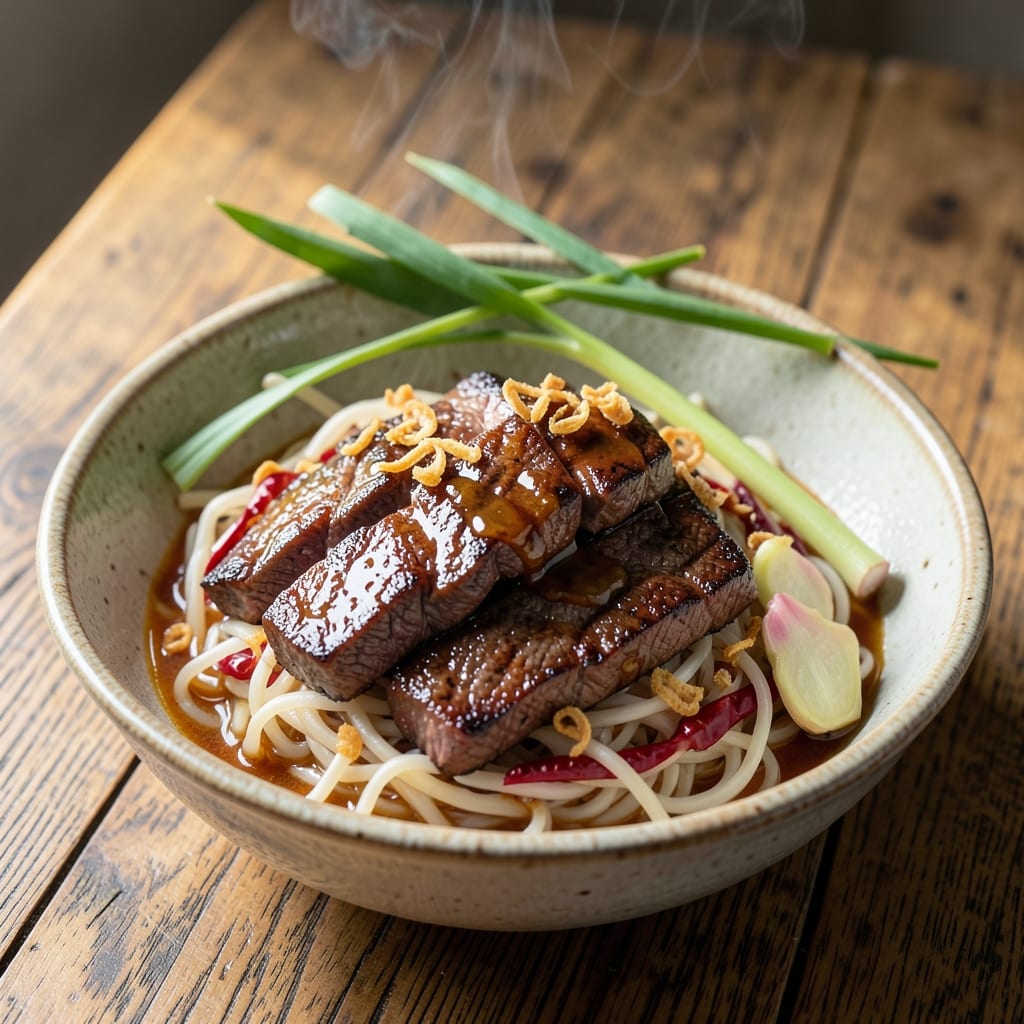
This authentic Thai beef recipe brings the vibrant flavors of Bangkok to your kitchen with its signature balance of sweet, sour, and spicy notes. The secret lies in marinating tender beef strips in a fragrant paste of lemongrass, galangal, and fish sauce, then stir-frying them until caramelized and tender. Every bite delivers that perfect harmony of aromatics and heat that defines Thai street food.
The dish centers around crispy rice noodles that soak up the rich, fragrant sauce while maintaining their satisfying chew. Traditional techniques like high-heat wok cooking ensure that signature "wok hei" smokiness, while fresh Thai basil and lime add brightness at the end. This isn't just a recipe—it's an experience that transforms your dinner table into a Thai eatery.
What makes this recipe truly authentic is the careful balance of flavors: the umami depth from fish sauce, the citrusy tang of lime, and the earthy warmth of galangal and lemongrass. The beef develops a beautiful caramelized crust while staying tender inside, and the noodles achieve that perfect crisp-tender texture that Thai cuisine is known for.
Serve this dish with a side of fresh cucumber salad or steamed jasmine rice to complement the bold flavors. The presentation is just as important—garnish with sliced Thai chilies and fresh herbs for that restaurant-quality finish. Let's bring the flavors of Thailand to your kitchen today.
Ingredients for authentic thai beef
Authentic Thai flavors start with these essential ingredients—lemongrass, galangal, and fish sauce form the aromatic base.
| Ingredient | Amount | Notes |
|---|---|---|
| Thinly Sliced Beef Sirloin 🥩 | 1 ½ lb | Cut into 2-inch strips |
| Rice Noodles 🍜 | 8 oz | Flat, medium-width preferred |
| Fresh Lemongrass 🌿 | 4 whole | Stalks, bottom 4 inches only |
| Galangal 🌿 | 2 oz | Fresh, peeled, sliced thin |
| Fish Sauce 🍶 | 3 tbsp | Red Boat preferred |
| Thai Chili Paste 🌶️ | 2 tbsp | Maesri or similar |
| Brown Sugar 🍚 | 2 tbsp | Packed, light variety |
| Lime Juice 🍋 | ¼ cup | Freshly squeezed |
| Vegetable Oil 🫒 | ½ cup | High smoke point |
| Fresh Thai Basil 🌿 | ½ cup | Stems removed |
| Bird's Eye Chilies 🔥 | 4 whole | Sliced lengthwise |
| Garlic Cloves 🧄 | 6 cloves | Minced |
| Salt 🧂 | 1 tsp | Kosher or sea salt |
| Black Pepper 🌶️ | ½ tsp | Freshly ground |
| Vegetable Broth 💧 | ½ cup | Low-sodium preferred |
The beef should be tender but not overly lean—sirloin works perfectly. For the lemongrass and galangal, Asian markets are your best bet; they carry fresh, vibrant stalks that grocery stores often lack. Look for bright green lemongrass with no brown spots and firm galangal with a citrusy aroma. If you can't find galangal, ginger at half the amount works in a pinch, though it won't replicate the exact flavor. The fish sauce is non-negotiable—Red Boat or Tiparos brands deliver authentic umami depth that store-brand versions can't match.
No Thai chilies? Serrano or jalapeño peppers add heat, though they won't have the same fruity bite. Fresh Thai basil is ideal, but regular basil or cilantro can substitute if needed—just double the amount. The rice noodles should be medium-width and flat (like Sen Lek or Pad Thai noodles); wider noodles get too chewy. For the marinade, balance is key: if your fish sauce is particularly salty, reduce the sugar slightly. And always taste as you go—Thai flavors build gradually, so adjust to your preference.
Prep the aromatics first—the lemongrass and galangal bruise easily, so slice them just before using. The beef marinade keeps for 6 hours in the fridge, but the full dish reheats best if you wait 15 minutes after cooking. Store leftovers in an airtight container with a damp paper towel to prevent drying. This dish tastes even better the next day as flavors meld, so double the recipe if you're feeding a crowd—it disappears fast.
Why You'll Love This Recipe
- No Chopping Nightmare: The beef sirloin slices so thinly they practically cook in minutes—no tedious knife work, just quick searing. Honestly, I’ve made this after work when my hands were still sticky from fixing the car, and it still turned out perfect.
- Herb Bomb Flavor: That galangal and lemongrass paste? It’s the secret weapon—earthy, citrusy, with just enough heat to linger. Between us, the fish sauce ties it all together like a flavor glue you’ll want to bottle.
- Leftover Goldmine: This dish reheats like a dream, so I always double the batch. Cold noodles the next day? Still delicious with a squeeze of lime and extra chili flakes—my lazy Sunday brunch staple.
- Budget Flexible: A single sirloin goes a long way, and rice noodles cost pennies. I’ll be real: this is the kind of meal that makes me feel fancy without draining my wallet—especially when I swap in cheaper cuts.
Step-by-step instructions for authentic Thai beef stir-fry
Master this restaurant-quality Thai dish with crispy rice noodles and aromatic lemongrass marinade.
Prepare the Lemongrass-Galangal Paste
Using the bottom 4 inches of the 4 whole fresh lemongrass stalks, pound them with the 2 oz galangal in a mortar until you achieve a thick, fragrant paste. If you don't have a mortar, pulse in a food processor until finely minced. This aromatic base forms the flavor foundation of the dish.
Transfer the paste to a small bowl and mix in the 6 cloves minced garlic cloves, 2 tbsp thai chili paste, 2 tbsp packed brown sugar, and 1 tsp salt. The mixture should be sticky and vibrant—this ensures maximum flavor infusion when combined with the beef later. Set aside while you prepare the remaining ingredients.
Marinate and Sear the Beef
In a large mixing bowl, combine the 1.5 lb thinly sliced beef sirloin with the lemongrass-galangal paste. Massage the mixture into the beef using your hands, ensuring each strip is thoroughly coated. Let it marinate for at least 15 minutes—this allows the aromatic flavors to penetrate the meat.
Heat 2 tablespoons of the vegetable oil in a wok or large skillet over high heat until shimmering. Working in batches to avoid crowding, add the marinated beef and sear for 1-2 minutes per side until the edges turn deep golden brown and the meat develops a slight char. Remove the beef and set aside on a plate.
Stir-Fry the Aromatics and Build the Sauce
In the same wok, add the remaining 3 tablespoons vegetable oil and swirl to coat the bottom. Add the 4 whole bird's eye chilies (sliced lengthwise) and 6 cloves minced garlic cloves, stirring constantly for 30 seconds until fragrant. Be careful not to burn the garlic—it should sizzle but not brown.
Pour in the 3 tbsp fish sauce and 0.5 cup vegetable broth, scraping up any browned bits from the bottom of the wok. Let the mixture simmer for 2 minutes until slightly reduced. Then add the 0.25 cup lime juice and 0.5 tsp black pepper, stirring to combine. The sauce should be glossy and slightly thickened—this is your flavor base.
Cook the Beef and Noodles Together
Return the seared beef to the wok and stir to coat evenly in the sauce. Cook for 1-2 minutes until the beef is heated through and the sauce clings to the strips. Remove the beef and set aside temporarily.
In a separate pot, bring 4 cups water to a boil and add the 8 oz rice noodles. Cook for 2-3 minutes until the noodles are just tender but still slightly firm—overcooking makes them mushy. Drain and rinse briefly under cold water to stop the cooking process, then drain again thoroughly.
Assemble and Finish with Fresh Basil
Return the cooked noodles to the wok with the beef and sauce. Toss everything together over medium heat for 1 minute until the noodles are evenly coated and heated through. The noodles should be crispy at the edges while remaining tender in the center—this texture contrast is key to authentic Thai street food.
Remove from heat and immediately stir in the 0.5 cup fresh thai basil. Garnish with additional basil leaves and serve while hot. The dish should be aromatic with bright citrus notes, a balance of sweet, spicy, and umami flavors, and that perfect crisp-tender texture in every bite.
Pro Tips For Making Authentic Thai Beef
- CHAR THE BEEF FAST: I learned this the hard way—thinly sliced beef needs a screaming-hot wok or cast-iron pan. If the pan isn’t smoking when you toss in the meat, you’ll end up with chewy strips instead of tender, caramelized edges. Two tablespoons of oil, high heat, and 30 seconds max per side—any longer and you’ll overcook it.
- SLICE GALANGAL THIN: Galangal’s tough and fibrous, so chop it like you’re angry at it—about 1/8-inch thick slices. If you use thick chunks, they’ll turn to mush and ruin the broth’s texture. (Yes, even if you’re impatient like me, resist the urge to skip this.)
- TASTE BEFORE YOU SAUCE: Fish sauce is salty, and Thai recipes often call for "to taste." Instead of eyeballing it, mix 1 teaspoon into your sauce first, then adjust. I’ve ruined batches by adding too much upfront—now I always taste as I go.
- SOAK NOODLES JUST BEFORE: Rice noodles go soggy fast, but soaking them in warm water for 10-15 minutes before cooking makes them tender without turning to mush. Drain well—wet noodles steam instead of sear, and that’s a flavor killer. (Your future self will thank you.)
Serving suggestions for leftovers
Classic Thai Sides
No Thai meal is complete without steamed jasmine rice—its delicate floral aroma complements the bold flavors perfectly. I always serve a generous portion on the side, letting guests scoop up the beef and noodles. For extra authenticity, try Thai cucumber salad with shredded cucumbers, red curry powder, lime juice, and a pinch of sugar—it’s refreshing and balances the richness. 🥗
Spicy Dipping Sauces
Create a quick nam prik pao (Thai chili jam) by simmering 2 tbsp Thai chili paste, 1 tbsp brown sugar, and 1 tbsp lime juice for 5 minutes. Serve it alongside for dipping—it adds a sweet-spicy kick that elevates every bite. For a tangier option, mix 2 tbsp fish sauce, 1 tbsp lime juice, and 1 minced garlic clove for a zesty nam jim sauce. 🌶️
Garnishes That Elevate
Fresh Thai basil leaves and sliced bird’s eye chilies are non-negotiable—toss them on top just before serving to keep their vibrant colors and aromas intact. I also love adding crushed peanuts for crunch and lime wedges on the side, so everyone can squeeze fresh juice over their dish. These finishing touches make the dish feel restaurant-quality. 💫
Drink Pairings
A cold Thai iced tea (sweetened with condensed milk) is the classic choice—its creamy sweetness cuts through the spice beautifully. For something lighter, try a mango lassi or even a crisp Singha beer, which balances the dish’s bold flavors without overpowering them. Avoid heavy wines; they clash with the dish’s aromatic complexity. 🍹
Presentation Tips
Serve the beef and noodles in a wide, shallow bowl to showcase the colors and textures. I like to arrange the beef strips in a circular pattern around the noodles, then scatter fresh basil and chilies on top. For extra flair, drizzle a little fish sauce reduction (simmer 1 tbsp fish sauce with 1 tsp sugar) over the dish before serving. The presentation should be as vibrant as the flavors! ✨
Nutrition facts
Frequently asked questions
What makes this recipe truly authentic compared to other Thai beef dishes?
This recipe captures authentic Thai flavors through three key elements: the lemongrass-galangal paste, which forms the aromatic base, the precise balance of sweet (brown sugar), sour (lime), and spicy (chili paste) elements, and the high-heat wok technique that creates that signature "wok hei" smokiness. The use of fish sauce and Thai basil at the end are also essential for that restaurant-quality taste.
Can I substitute galangal if I can't find it?
Yes, but expect slightly different flavors. Use ginger at half the amount (1 oz instead of 2 oz) as a substitute, though it won't replicate galangal's citrusy, peppery notes. For best results, try to find galangal at an Asian market—it's worth the search for that authentic Thai depth.
How do I adjust the spice level for kids or sensitive eaters?
Remove the bird's eye chilies before cooking and reduce the Thai chili paste to just 1 tbsp. For extra mildness, you can also serve the dish with a side of plain jasmine rice and let each person add their own chili flakes. The natural sweetness from the brown sugar will still shine through.
Can I make this dish ahead of time?
The beef marinade can be prepared 6 hours ahead and stored in the fridge. For the full dish, cook it fresh and let it rest for 15 minutes before serving to allow flavors to meld. If reheating leftovers, use low heat and add a splash of water to prevent drying. The noodles are best served fresh but can be reheated briefly with a little oil.
What's the best way to store leftovers?
Store leftovers in an airtight container with a damp paper towel to prevent drying. This dish keeps well in the fridge for 3 days and freezes beautifully for up to 3 months. When reheating, use a steamer basket over boiling water to maintain that crisp-tender texture. The flavors actually improve overnight as the aromatics meld further.