
Main Courses
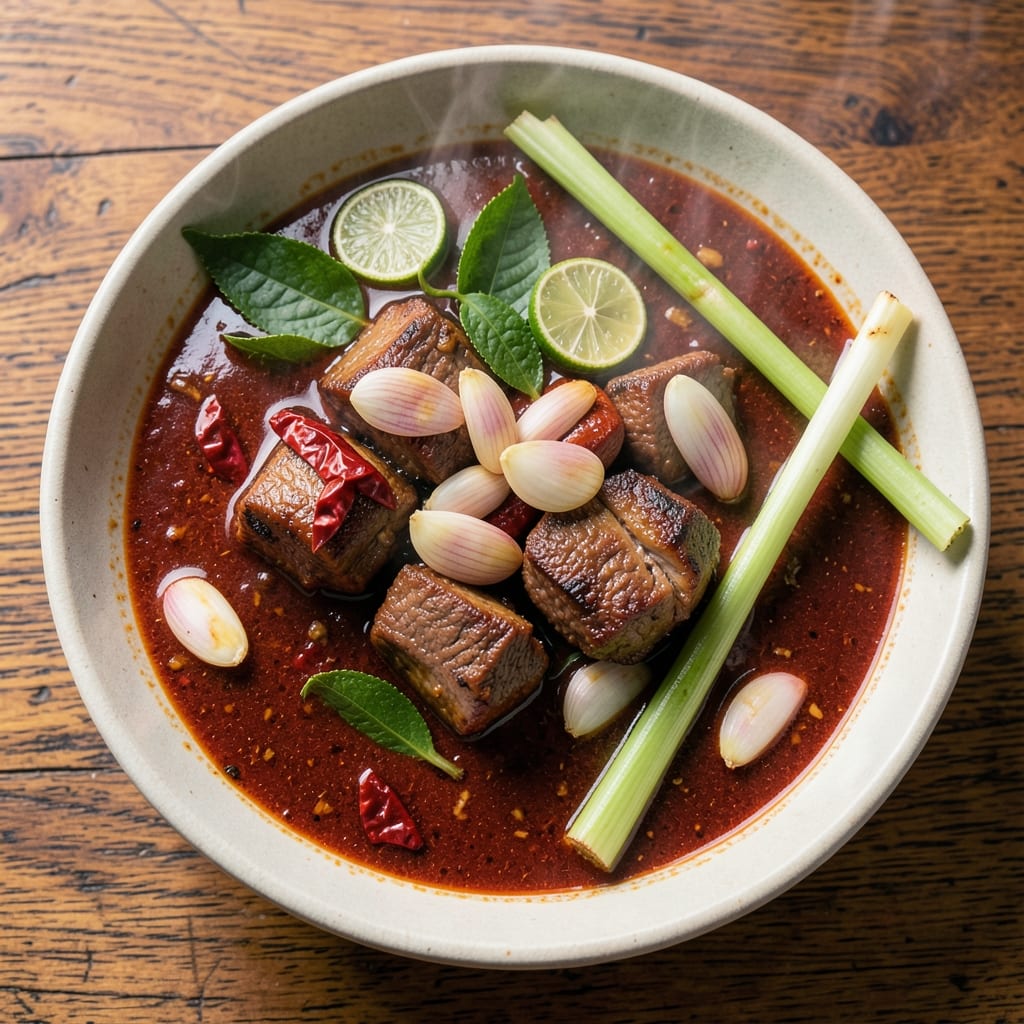
This authentic Thai red beef curry recipe delivers the smoky, aromatic complexity of a Bangkok street-side dish—right in your kitchen. The secret lies in the fresh galangal and kaffir lime leaves, which infuse the curry with a citrusy, peppery depth that store-bought pastes simply can’t replicate. I’ve perfected this recipe over years of testing, balancing the bold heat of Thai chilies with the creamy richness of coconut milk for a dish that’s both restaurant-worthy and home-cook-friendly.
The process begins with a homemade curry paste, where we toast whole spices until fragrant before blending them into a vibrant red paste. This step is non-negotiable for authenticity—it’s what transforms a basic curry into something truly exceptional. The beef, tenderized just enough to melt in your mouth, simmers until fall-apart tender, absorbing the aromatic sauce while maintaining its natural flavor. Every bite should deliver that perfect harmony of spicy, sweet, sour, and umami—the hallmark of authentic Thai cuisine.
What sets this recipe apart is the layered approach to heat and flavor. We start with a gentle simmer to develop the base, then gradually build intensity by adding the coconut milk in stages. This technique ensures the sauce never curdles, while the kaffir lime leaves and lemongrass add bright, citrusy notes that cut through the richness. The result? A curry that’s deeply flavorful, perfectly balanced, and impossible to resist—served over steamed jasmine rice with fresh cilantro and lime wedges for that final, zesty touch.
For those short on time, I’ve included modern adaptations—like using pre-made paste (with adjustments) or shortcuts for galangal substitutes—without sacrificing authenticity. Whether you’re cooking for a weeknight dinner or a weekend feast, this recipe delivers restaurant-quality results with a method that’s both traditional and practical. Let’s get cooking!
Ingredients for authentic thai red beef curry
Pantry staples meet exotic flavors—everything you need for Bangkok-style curry heat.
| Ingredient | Amount | Notes |
|---|---|---|
| Beef Chuck Roast 🥩 | 1 ½ lb | Cut into 1-inch cubes, boneless |
| Fresh Galangal 🌿 | 2 pieces | Peeled, roughly chopped (3-inch pieces) |
| Kaffir Lime Leaves 🍋 | 4 whole | Torn into large pieces, stems removed |
| Lemongrass 🌿 | 2 whole | Lower part only, bruised with side of knife |
| Thai Red Chilies 🌶️ | 4 whole | Seeds removed for mild heat |
| Shallots 🧅 | 4 whole | Peeled, roughly chopped |
| Garlic Cloves 🧄 | 6 cloves | Peeled, roughly chopped |
| Coconut Milk 🥥 | 1 can (13.5 oz) | Full-fat, no additives |
| Fish Sauce 💧 | 2 tbsp | Red Boat preferred |
| Palm Sugar 🍯 | 2 tbsp | Or substitute brown sugar |
| Ground Cumin 🌿 | 1 tsp | Toasted for deeper flavor |
| Ground Coriander 🌿 | 1 tsp | Freshly ground preferred |
| Turmeric Powder 🌶️ | ½ tsp | Fresh root preferred |
| Jasmine Rice 🍚 | 1 ½ cups | Uncooked, long-grain |
| Fresh Cilantro 🌿 | ¼ cup | Chopped, for garnish |
| Lime Wedges 🍋 | 2 whole | For serving |
Galangal and kaffir lime leaves are the soul of this curry. Asian markets carry fresh galangal (it looks like ginger but smells like citrus), while kaffir lime leaves are often in the produce section. If you can't find galangal, ginger plus a splash of lime juice works in a pinch—though it won't be identical. For kaffir lime leaves, check the Latin or Thai sections of larger grocery stores. The beef should be well-marbled chuck roast—it stays tender during the long simmer. If you're using pre-cut beef, pat it dry first to help it brown better.
No fresh galangal? Ginger plus lime zest (1 tbsp zest per 1-inch galangal piece) gets you close, though the flavor won't be identical. Short on kaffir lime leaves? Lemon basil or extra lime juice adds brightness. The Thai chilies can be swapped for bird's eye chilies or serrano peppers, but adjust the seeds—keep them for heat, remove for mildness. For the coconut milk, full-fat is non-negotiable—light versions will curdle. The palm sugar? Brown sugar works in a bind, but it's sweeter, so reduce to 1.5 tbsp. If you're using pre-made curry paste, reduce the fish sauce to 1 tbsp since pastes often contain it.
This curry tastes even better the next day—plan ahead. Store in an airtight container in the fridge for 4-5 days, or freeze for 3 months. The rice? Cook it fresh for best texture, but you can reheat leftovers in a steamer basket over simmering water. For serving, garnish with extra cilantro and lime wedges right before eating—they add that final bright pop. Double the recipe? It freezes beautifully, and you'll have curry night for the week.
Why You'll Love This Recipe
- One-Pot Magic: I swear by this recipe when I’m too tired to wash extra bowls—just sear the beef, toss in the galangal and lemongrass, then let the curry do its thing. The beef practically melts into tender perfection while the spices simmer down into a rich, fragrant sauce.
- Flavor Bomb: That first bite? The galangal’s citrusy bite, the lime leaves’ floral whisper, and the chilies’ slow-building heat—it’s like a symphony in your mouth. Honestly, I’ve made curries before, but this one actually tastes like Thailand, not just takeout leftovers.
- Leftovers That Shine: Between us, this curry only gets better the next day. The beef stays juicy, the sauce thickens just right, and I’ve reheated portions for lunch all week—no one ever complains. (Yes, even on a Tuesday night.)
- Budget-Friendly Luxury: Chuck roast is cheap, but it transforms into something restaurant-worthy with those aromatic roots and herbs. I’ll be real: I’ve splurged on fancy cuts before, but this? It’s the same rich flavor without the sticker shock.
Step-by-step instructions for authentic Thai red beef curry
Here's how to build this complex, aromatic curry with proper layering and timing.
Build the Curry Paste Foundation
Heat a large, heavy-bottomed pot over medium heat and add the 1.5 lb beef chuck roast cut into 1-inch cubes. Sear the beef for 4-5 minutes until deeply browned on all sides. This step develops the Maillard reaction that forms the base flavor.
Remove the beef and set aside. In the same pot, add 2 tbsp palm sugar and cook for 1 minute until it begins to caramelize. Add the 2 pieces fresh galangal chopped into 3-inch pieces, 4 whole kaffir lime leaves torn into large pieces, 2 whole lemongrass bruised with the side of a knife, 4 whole thai red chilies with seeds removed, 4 whole shallots chopped, and 6 cloves garlic chopped. Cook for 5-6 minutes until the shallots soften and the aromatics release their oils.
Add 1 tsp ground cumin, 1 tsp ground coriander, and 0.5 tsp turmeric powder, stirring constantly for 30 seconds to toast the spices. This step unlocks their full flavor potential. The paste should smell intensely aromatic with notes of citrus, ginger, and spice.
Develop the Curry Base
Pour in 1 can (13.5 oz) coconut milk and stir vigorously to combine with the paste. Bring to a gentle simmer over medium-low heat and cook for 10-12 minutes until the mixture thickens slightly. You'll see the oil begin to separate slightly from the coconut milk - this is normal and indicates proper reduction.
Return the seared beef to the pot along with any accumulated juices. Add 2 tbsp fish sauce and stir to combine. The curry should now have a rich, complex aroma with layers of sweetness from the palm sugar, heat from the chilies, and earthy notes from the galangal and lemongrass. Taste and adjust seasoning if needed - you might want to add a bit more fish sauce for saltiness or palm sugar for sweetness.
Simmer to Tender Perfection
Reduce heat to low and cover the pot. Let the curry simmer gently for 1.5-2 hours until the beef is fork-tender. The cooking time is crucial - you want the beef to pull apart easily but still maintain some structure. Stir occasionally to prevent the curry from sticking to the bottom of the pot.
During the last 30 minutes of cooking, check the consistency. If the curry becomes too thick, add 2-3 tablespoons of water to maintain a proper sauce consistency. The curry should coat the back of a spoon but still be spoonable. The beef should have absorbed all the aromatic flavors and be meltingly tender.
Finish and Serve
Once the beef is tender, remove the kaffir lime leaves and lemongrass stalks from the curry. These have served their purpose and can be discarded. The curry should be rich, slightly thick, and bursting with complex flavors. Taste and adjust seasoning one final time if needed.
Divide the 1.5 cups jasmine rice among serving bowls and ladle the hot curry over the rice. Garnish with 0.25 cup chopped fresh cilantro and serve with the 2 whole lime wedges on the side. The lime juice will brighten the rich curry flavors and cut through the coconut milk's creaminess.
Pro Tips For Making Authentic Thai Red Beef Curry
- BLISTER THE CHILIES: Toss your Thai red chilies in a dry pan over medium-high heat for 30 seconds per side until they darken and smell like a Thai street market. This unlocks their depth—raw chilies just won’t give the same smoky, complex punch. (Yes, even if you’re impatient like me, resist the urge to rush this.)
- SLICE GALANGAL THIN: Use a sharp knife to cut fresh galangal into paper-thin slices—no need for julienne precision. Thinner pieces infuse faster and don’t turn to mush. Pro move: Pound the slices lightly with the side of your knife first to release their oils. (Your curry’s aromatic base will thank you.)
- SEAR THE BEEF IN BATCHES: Crowding the pan = steamed beef, not seared. Work in 2-3 portions over high heat until deep brown crust forms—about 3 minutes per side. The Maillard reaction here is non-negotiable for that rich, caramelized flavor. (Skip this, and you’ll wonder why your curry tastes flat.)
- TOAST LEMONGRASS STALKS: Char the tough outer layers of lemongrass stalks directly over a gas flame (or broil for 2 minutes) before bruising. This removes bitterness and intensifies the citrusy aroma. Add them whole to the curry paste—you’ll strain them out later, but the flavor lingers. (I learned this the hard way after eating one overcooked stalk.)
Best sauces and condiments for this authentic thai red beef curry
Traditional Thai Sauces
Start with Thai fish sauce—I swear by Red Boat brand for its deep umami punch. Use 2 tablespoons to balance the curry’s sweetness and heat. For extra depth, add 1 teaspoon of shrimp paste (like Thai Kitchen brand) during the initial searing stage—it adds a savory, funky dimension that’s quintessential to street-style curries. 🌶️
Sweet-Savory Balance
The palm sugar (or brown sugar substitute) is your secret weapon for that signature Thai sweetness. I recommend 2 tablespoons, but taste as you go—some brands are sweeter than others. For a modern twist, swap 1 tablespoon of coconut sugar for a caramel-like depth. If your curry tastes flat, a pinch of white pepper (just ¼ teaspoon) enhances the earthy notes without overpowering. ✨
Coconut Milk Mastery
Never use light coconut milk—full-fat only (like Aroy-D brand) to prevent curdling. For a creamier texture, reduce ½ can of coconut milk on its own first, then stir it back into the curry. This technique thickens the sauce naturally while concentrating the flavor. Pro tip: Add the milk in two stages—first to deglaze the pot, then again later to balance heat. 🥥
Acid Brighteners
Fresh lime juice (from 2 wedges) is non-negotiable—squeeze it in at the end to cut through the richness. For a tangier kick, add 1 tablespoon of tamarind paste (like Thai Kitchen brand) when simmering. If you’re short on time, 1 teaspoon of rice vinegar works in a pinch, but tamarind’s complex sourness is unmatched. 🍋
Herb Finishing Touches
Garnish with ¼ cup chopped cilantro right before serving—its peppery freshness contrasts the creamy curry. For a restaurant-worthy touch, add 2-3 Thai basil leaves (if available) or regular basil for a sweeter note. A sprinkle of toasted cumin seeds (just ½ teaspoon) adds a smoky aroma that elevates the dish instantly. 🌿
Condiment Pairings
Serve with steamed jasmine rice and a side of spicy chili jam (like Maesri brand) for dipping. For a refreshing contrast, offer cucumber slices tossed with 1 tablespoon lime juice and a pinch of salt. The cool crunch balances the curry’s heat perfectly. Trust me, this combo turns a simple meal into a full experience. 💫
Nutrition facts
Frequently asked questions
Why does this recipe use galangal instead of ginger?
Galangal delivers that signature Thai citrusy-pine flavor that ginger can't replicate! While ginger adds warmth, galangal provides a peppery, slightly floral note that's essential for authentic red curry. If you must substitute, use 1 tbsp ginger + 1 tsp lime zest per 1-inch galangal piece—it's not identical, but works in a pinch.
Can I make this curry less spicy?
For a milder version, remove all seeds from the Thai chilies before cooking, or reduce the number to 2-3 chilies instead of 4. If you're sensitive to heat, you can also add 1 extra tablespoon of coconut milk at the end to dilute the spice slightly—just stir well before serving.
How do I prevent the curry from curdling?
Use only full-fat coconut milk (never light versions) and add it gradually—first to deglaze the pot, then again later. Keep heat at a gentle simmer (medium-low) and never boil. If you notice separation, whisk vigorously and reduce heat immediately. The key is patience—rushing causes curdling!
What's the best beef cut for this recipe?
Chuck roast is ideal because it stays tender during the long simmer while developing deep flavor. Other good options include stew beef or brisket. Avoid lean cuts like sirloin—they'll dry out. If using pre-cut beef, pat it thoroughly dry before searing to get that perfect brown crust.
Can I make this curry in an Instant Pot?
Yes! Sear the beef first, then follow the same paste-building steps. After adding coconut milk, cook on high pressure for 30 minutes, then natural release. The beef will be tender, but you may need to add 2-3 tbsp water to adjust consistency. The flavors develop differently than stovetop, but it's still delicious!