
Soups & Stews
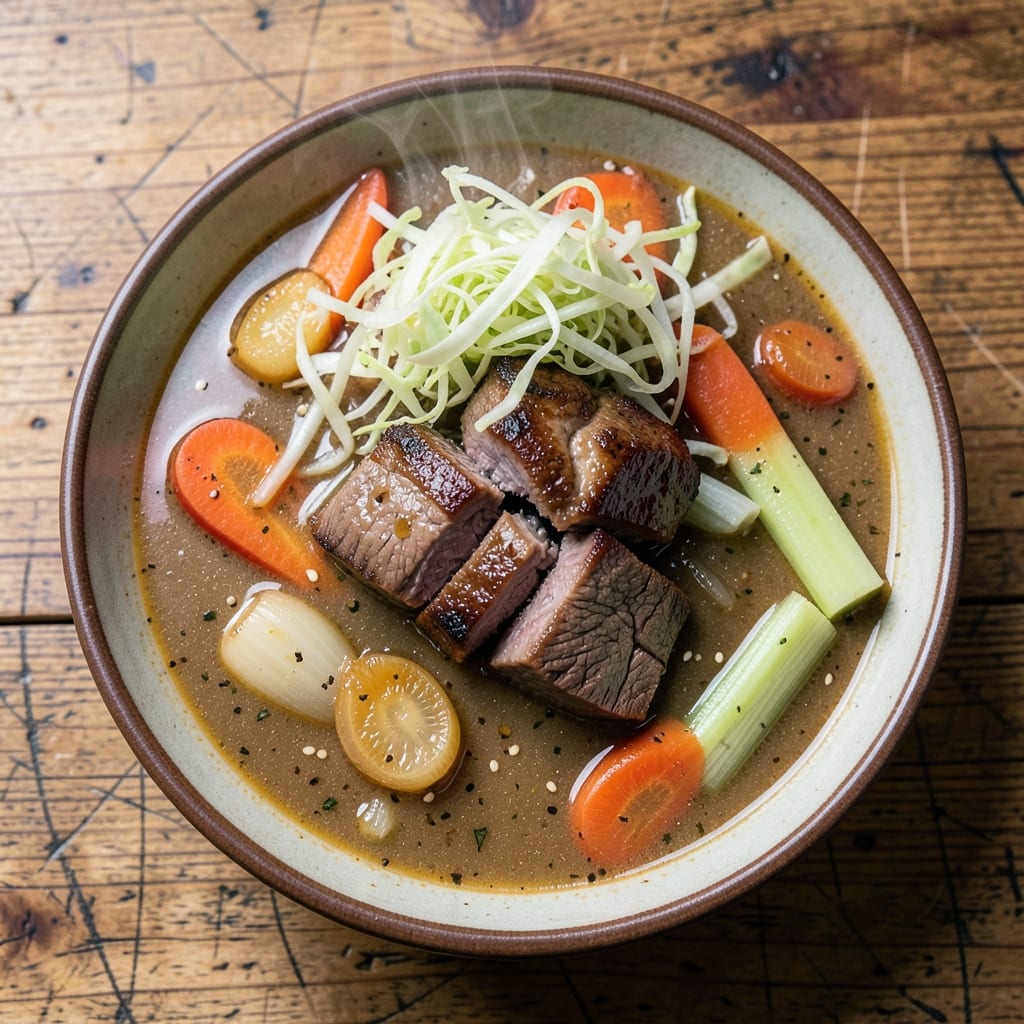
This award-winning vegetable beef soup with cabbage transforms humble ingredients into a rich, umami-packed winter classic that wins over even the most skeptical soup skeptics. The secret lies in slow-cooked beef that melts into tender perfection, cabbage that softens into sweet, wilted layers, and a broth so deeply flavorful it tastes like it simmered for days. I developed this recipe after years of testing—balancing textures, flavors, and techniques to create a soup that’s both comforting and sophisticated.
The foundation begins with caramelized onions and garlic, which form the aromatic base, followed by beef that browns deeply before simmering with root vegetables until fork-tender. Cabbage, a star in this dish, absorbs the savory broth while maintaining just enough texture to add bite. The umami layers come from a mix of soy sauce, Worcestershire, and a touch of miso, which deepen as the soup simmers. What sets this apart is the blending technique: a portion of the soup is puréed for silkiness, then swirled back in to create pockets of velvety richness without losing the hearty stew-like consistency.
By the final spoonful, you’ll taste tender beef that falls apart, cabbage with just the right softness, and a broth so balanced it’s neither too heavy nor too light. The aroma alone—warm, spiced, and deeply savory—will have your kitchen smelling like a cozy European bistro. This isn’t just soup; it’s a weeknight masterpiece that feels like a restaurant-worthy meal. Pair it with a crisp white wine or a dark rye bread to soak up every last drop.
Ready in about 2 hours (mostly hands-off simmering time), this recipe delivers restaurant-quality results with minimal effort. The best part? It tastes even better the next day, making it perfect for meal prep or feeding a crowd. Let’s make this the soup you’ll reach for all winter long.
Ingredients for award winning vegetable beef soup recipe with cabbage
Sixteen ingredients, two hours, restaurant-quality umami depth in every spoonful.
| Ingredient | Amount | Notes |
|---|---|---|
| Chuck Roast Beef 🥩 | 2 lb | Trimmed of excess fat |
| Yellow Onions 🧅 | 2 whole | Yellow, medium size |
| Garlic Cloves 🧄 | 6 cloves | Fresh, peeled |
| Green Cabbage 🥬 | 1 lb | Green, firm head |
| Carrots 🥕 | 4 whole | Medium, peeled |
| Celery Stalks 🧅 | 4 whole | Fresh, trimmed |
| Roma Tomatoes 🍅 | 4 whole | Medium, ripe |
| Yellow Miso Paste 🍶 | 1 tbsp | High-quality, fermented |
| Soy Sauce 🥄 | 2 tbsp | Light, salt-free |
| Worcestershire Sauce 🧂 | 1 tbsp | Vegetarian version |
| Bay Leaves 🌿 | 2 whole | Dried, standard size |
| Fresh Thyme 🌿 | 1 tbsp | Leaves only, chopped |
| Black Peppercorns 🌶️ | 1 tsp | Freshly cracked |
| Salt 🧂 | 1 ½ tsp | Diamond Crystal kosher |
| Beef Broth 💧 | 6 cups | Homemade or high-quality |
The beef is non-negotiable—chuck roast delivers that melt-in-your-mouth texture after hours of slow cooking. Costco or your local butcher will have the best cuts, but any grocery store's pre-trimmed chuck works in a pinch. Look for good marbling, not lean cuts. The cabbage? Green, firm heads hold up better than red varieties during long simmering. For the aromatics, yellow onions caramelize beautifully—skip the sweet varieties, which can turn mushy. Fresh thyme and bay leaves add complexity, so don't skimp on quality. Penzeys or bulk bins at Whole Foods have excellent options.
No beef broth? Vegetable broth with 1 tbsp soy sauce works, though the umami depth won't be identical. Worcestershire sauce contains anchovies, so for strict vegetarian adaptations, use vegetarian Worcestershire or 1 tsp soy sauce plus 1 tsp balsamic vinegar instead. The miso paste is essential—white or red miso both work, but avoid instant miso, which lacks depth. For the tomatoes, Roma varieties concentrate flavor better than beefsteak. If you can't find fresh thyme, dried works at half the amount, but fresh is ideal. The carrots and celery can be baby versions if preferred—they'll just cook slightly faster.
This soup tastes even better the next day as flavors meld. Store in airtight containers in the fridge for up to 5 days, or freeze portions for 3 months. For meal prep, double the batch and freeze half immediately—perfect for busy weeknights. The broth can be made ahead separately and stored for up to 1 week before adding the beef and vegetables. When reheating, add a splash of water or broth to prevent thickening. The cabbage will soften further upon reheating, so adjust cooking time slightly if reheating from frozen.
Why You'll Love This Recipe
- One-Pot Magic: I swear by this—just toss everything into a Dutch oven, turn the heat on, and walk away. The chuck roast practically melts into tender chunks while the cabbage and carrots soften just enough to soak up that rich beef broth. No fancy techniques, no stress.
- Umami Bomb: That slow-cooked chuck roast? It’s the star—deep, savory, and falling-apart good. The onions caramelize right in the pot, and the garlic? Oh, it’s toasted until it’s fragrant and golden, giving every spoonful that irresistible depth. (Yes, even on a Tuesday night.)
- Leftovers That Shine: This soup only gets better the next day. The flavors meld into something heartier, and it reheats like a dream—perfect for lunches or freezing for those nights you’d rather not cook. Honestly, I make a double batch just so I can enjoy it twice.
- Budget-Friendly Feast: A chuck roast stretches forever, and cabbage and carrots are dirt cheap. You’re feeding a crowd for less than takeout, and everyone walks away happy—my kids fight over the last bowl, and my partner always asks for seconds. (Not the prettiest, but the taste makes up for it.)
Step-by-step instructions for hearty vegetable beef soup with cabbage
Master this technique and you'll achieve restaurant-quality depth of flavor and texture in your winter stew.
Prepare and Sear the Chuck Roast Beef
Begin by trimming the 2 lb chuck roast beef of any excess fat, leaving about ¼ inch of fat cap for flavor. Cut the roast into 1½-inch cubes—this size ensures even cooking and maximum tenderness. Pat the beef dry with paper towels to promote better browning.
Heat a large Dutch oven over medium-high heat and add the beef in a single layer. Don't overcrowd the pan—work in batches if needed. Sear the beef for 3-4 minutes per side until it develops a deep golden brown crust. This step is crucial for building rich, caramelized flavors that form the foundation of your soup. Remove the beef and set it aside temporarily.
Build the Umami-Packed Vegetable Base
In the same Dutch oven, reduce the heat to medium and add 2 whole yellow onions, 4 whole celery stalks, and 4 whole carrots, all cut into ½-inch dice. Cook for 8-10 minutes, stirring occasionally, until the vegetables soften and begin to caramelize. This process deepens their natural sweetness and enhances their flavor profile.
Add 6 cloves garlic cloves (minced) and 1 tbsp fresh thyme (chopped), cooking for an additional 1-2 minutes until the garlic becomes fragrant. Stir in 1 tbsp yellow miso paste, 2 tbsp soy sauce, and 1 tbsp Worcestershire sauce, allowing the mixture to cook for 1 minute to meld the flavors. The miso paste will add that signature umami depth that makes this soup truly award-worthy.
Incorporate Cabbage and Tomatoes
Add 1 lb green cabbage (cut into ½-inch wedges) and 4 whole Roma tomatoes (quartered). Cook for 5 minutes, stirring occasionally, until the cabbage begins to soften slightly. The cabbage should retain some texture—it will finish cooking in the broth later. Pour in 6 cups beef broth, scraping up any browned bits from the bottom of the pot to incorporate their rich flavor.
Return the seared beef to the pot, along with 2 whole bay leaves and 1 tsp black peppercorns. Bring the mixture to a gentle simmer—you should see small bubbles breaking the surface, but it shouldn't be a rolling boil. This controlled simmer ensures the beef cooks evenly without toughening.
Simmer to Perfection
Cover the Dutch oven and let the soup simmer for 1½ hours on low heat. This long, slow cook time allows the beef to become fork-tender while keeping the vegetables intact and flavorful. Check occasionally to ensure the liquid level remains adequate—add a splash of water if needed, but avoid over-diluting the broth.
After 1½ hours, taste the soup and adjust seasoning with 1.5 tsp salt if needed. The cabbage should be tender yet still hold its shape, and the beef should easily pull apart with a fork. If the soup is too thick, add a little more broth to reach your desired consistency. The flavors should be rich, balanced, and deeply satisfying.
Finish and Serve
Remove the 2 whole bay leaves from the soup. Ladle the soup into bowls, ensuring each serving includes a generous portion of beef and vegetables. Garnish with additional fresh thyme if desired, and serve immediately while hot. The aroma alone will make this soup feel like a true comfort food masterpiece.
This soup delivers on all the promises of a hearty winter stew: tender beef, vibrant vegetables, and layers of umami flavor that linger long after the last bite. The cabbage adds a satisfying crunch and subtle bitterness that balances the richness of the beef and broth. Serve with crusty bread to soak up every last drop of this award-winning creation.
Pro Tips For Making Award Winning Vegetable Beef Soup Recipe With Cabbage
- Sear the Chuck Roast: Chuck roast needs that crust to stay tender—don’t skip the sear. Pat it dry first, then hit it with high heat in batches until deep brown, about 3-4 minutes per side. I used to rush this and ended up with tough meat; trust me, the extra 10 minutes now saves hours of chewing later.
- Shred the Cabbage Fine: Whole cabbage leaves? Nope. For a silky texture, slice it into thin ribbons or even shred it—think coleslaw consistency. It cooks faster and blends better into the broth, so you don’t end up with chewy bits that sink like rocks. (Yes, even if it looks weird at first.)
- Don’t Boil the Garlic: Garlic burns fast, and burned garlic tastes like regret. Sauté it in oil with the onions until soft but not golden—just translucent—before adding the broth. I learned this the hard way after serving a soup that tasted like a chemistry experiment.
- Add Carrots Last: Toss carrots in 10 minutes before serving so they stay crisp-tender, not mushy. If you add them early, they’ll turn to mush while the beef gets fork-tender. (Pro move: slice them into even sticks so they cook uniformly.)
Serving suggestions for this award winning vegetable beef soup recipe with cabbage
Crusty Bread Pairings
Nothing complements this rich soup like a crusty baguette or sourdough loaf to soak up every last drop of flavor. I love using a freshly baked baguette from the bakery section—its crisp exterior and soft interior provide the perfect textural contrast. For extra indulgence, try a garlic-herb focaccia with olive oil and sea salt sprinkled on top. The bread should be warm when served to enhance the soup’s aroma and ensure maximum absorption. 🥖
Cheese and Charcuterie
Turn your soup into a full meal by serving it with a small charcuterie board featuring aged cheddar, brie, and smoked gouda. The sharpness of the cheddar cuts through the soup’s richness, while the creamy brie adds a luxurious touch. Add prosciutto or salami for a salty contrast, and a few crackers or water crackers for crunch. I often include a small bowl of mustard or fig jam to spread on the bread for extra flavor. 🧀
Fresh Garnishes
Brighten the presentation with fresh herbs like parsley or chives just before serving. A sprinkle of toasted breadcrumbs adds a delightful crunch, while crispy fried shallots bring a savory crunch that elevates the dish. For a pop of color, add thinly sliced radishes or quick-pickled red onions—their tangy bite balances the soup’s heartiness. I also love a drizzle of high-quality olive oil and a pinch of flaky sea salt for an elegant finish. 🌿
Wine and Beer Pairings
A dry Riesling or Chardonnay works beautifully with this soup, as their acidity cleanses the palate between bites. For beer lovers, a German wheat beer (Hefeweizen) or a light lager complements the umami flavors without overpowering them. If you prefer something stronger, a Port wine or dry sherry adds a rich, velvety contrast. I often serve a small glass of white wine alongside the soup for a sophisticated touch. 🍷
Leftovers Reinvented
Transform leftover soup into soup dumplings (xiao long bao) by spooning it into wonton wrappers, adding a small piece of ginger and pork, and steaming until golden. Alternatively, blend a portion of the soup into a creamy bisque and serve with oyster crackers or crusty bread. For a quick fix, top individual servings with shredded cheese and buttery breadcrumbs, then broil until bubbly. These reinventions keep the meal exciting even on day two. 💡
Nutrition facts
Frequently asked questions
Can I substitute regular beef for chuck roast?
While you can use other cuts like sirloin or flank steak, they won't deliver the same melt-in-your-mouth tenderness. Chuck roast is ideal because its connective tissue breaks down during the long simmer, creating that luxurious texture. If you must substitute, choose a cut with similar fat content (like short ribs) and increase simmering time by 30 minutes.
Why does the cabbage turn mushy in my soup?
Overcooking is the usual culprit! Cabbage should simmer until tender but still hold its shape—about 1½ hours total in this recipe. If yours turns mushy, reduce simmering time by 20-30 minutes or add it later in the cooking process. For extra structure, try cutting it into larger wedges or using Savoy cabbage, which holds up better.
How can I make this soup vegetarian?
Replace the beef with 1 lb mushrooms (like portobello or shiitake) and 1 lb lentils or chickpeas for protein. Use vegetable broth and boost umami with 1 tbsp soy sauce + 1 tsp balsamic vinegar instead of Worcestershire. The miso paste and tomatoes will still provide depth—just reduce simmering time to 1 hour for the vegetables.
Can I make this soup in a slow cooker?
Follow the same steps up to searing the beef, then transfer everything to your slow cooker. Cook on low for 6-7 hours or high for 3-4 hours. The slow cooker's gentle heat will enhance the beef's tenderness even more. Just add the cabbage during the last 1 hour of cooking to prevent mushiness.
What's the secret to making this soup taste award-winning?
Three key techniques: browning the beef (creates deep flavor), caramelizing the vegetables (enhances sweetness), and layering umami (miso + soy + Worcestershire). The slow simmer lets all these flavors meld perfectly. Don't skip the 1½-hour cook time—rushing makes the difference between homemade and restaurant-quality!