
Main Courses
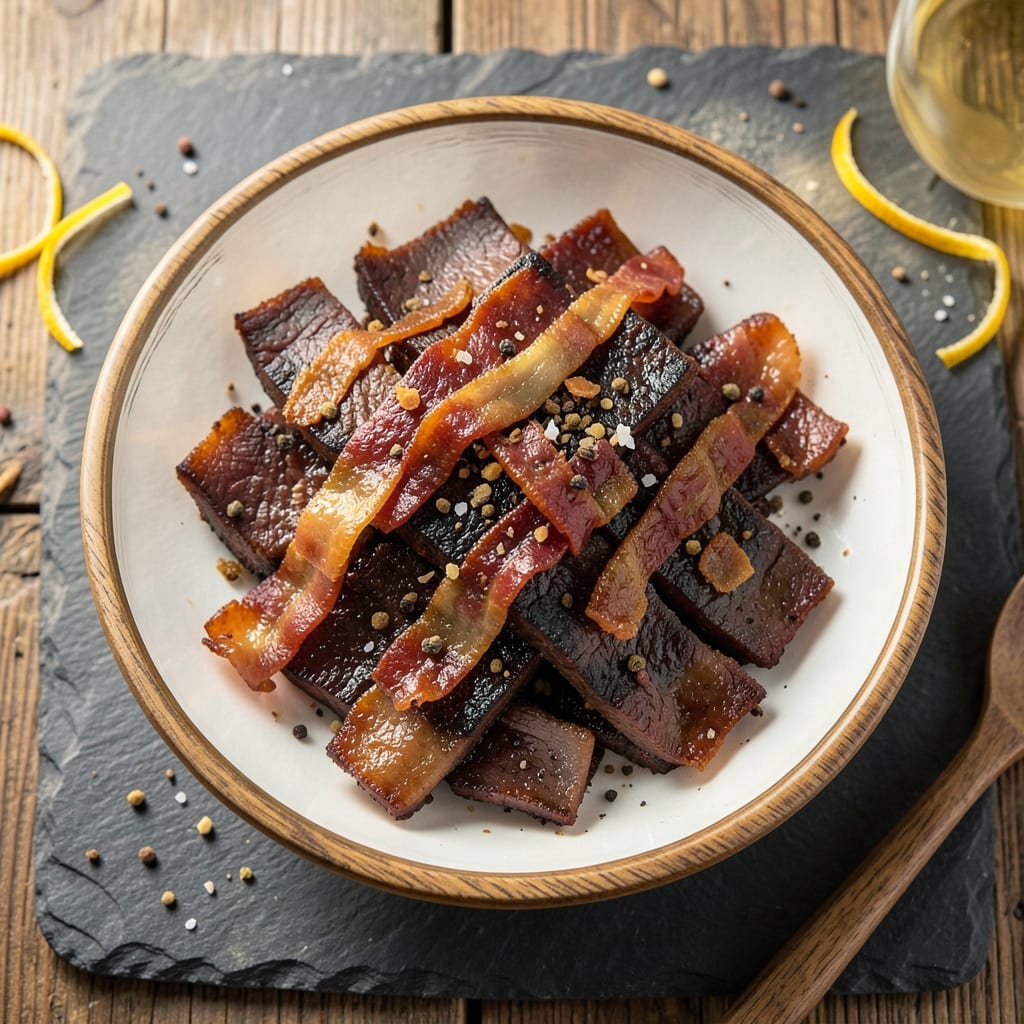
This bacon-flavored beef jerky recipe transforms tough cuts into chewy, smoky-sweet strips that taste like a cross between jerky and bacon. The secret lies in a marinade that infuses deep, savory flavors while the slow dehydrating process locks in that perfect texture—crispy edges, tender bite. I’ve tested this recipe countless times, and it never fails to deliver restaurant-quality results at home. No fancy equipment needed, just patience and a few key ingredients.
The process starts with selecting the right cut—lean but not too tough—then marinating it in a blend of liquid smoke, brown sugar, and bacon seasoning for maximum flavor penetration. After that, it’s all about the drying method: whether you use a dehydrator, oven, or even a smoker, the goal is consistent airflow to create that signature chewy texture. This isn’t just jerky; it’s a snack that’s dangerously addictive, with a smoky depth that pairs perfectly with a cold beer or a sharp cheddar.
By the time you’re done, you’ll have a batch of jerky that’s rich, flavorful, and packed with that unmistakable bacon essence. The strips hold their shape, stay chewy without being rubbery, and deliver a satisfying crunch with every bite. What’s even better? It keeps well in the fridge for weeks, making it the ultimate snack for road trips, camping, or just satisfying that late-night craving.
Whether you’re a jerky enthusiast or just love the idea of bacon flavor without the mess, this recipe delivers. Let’s get started—your taste buds (and your snack stash) will thank you.
Ingredients for bacon flavored beef jerky
Lean beef, smoky flavors, and just 12 simple ingredients for restaurant-quality jerky at home.
| Ingredient | Amount | Notes |
|---|---|---|
| Top Round Roast Beef 🥩 | 1 ½ lb | Thinly sliced against grain |
| Liquid Smoke 💨 | 2 tbsp | For authentic smoky flavor |
| Brown Sugar 🍯 | ½ cup | Light or dark works |
| Bacon Seasoning 🥓 | 2 tbsp | Or sub 1 tbsp smoked paprika + 1 tsp garlic powder |
| Worcestershire Sauce 🍶 | 1 tbsp | Ensure anchovy-free version |
| Apple Cider Vinegar 🍎 | ½ cup | Tenderizes the meat |
| Black Pepper 🌶️ | 1 tbsp | Freshly cracked preferred |
| Garlic Powder 🧄 | 1 tbsp | For extra depth |
| Onion Powder 🧅 | 1 tbsp | Adds savory base |
| Salt 🧂 | 1 tbsp | Kosher or sea salt |
| Black Coffee ☕ | 1 cup | Cold, enhances drying |
| Vegetable Oil 🫒 | 1 tbsp | For slicing ease |
The beef makes all the difference here. Top round roast is ideal—lean but not too tough, with just enough fat for flavor. Grab it from the butcher section at Kroger or Whole Foods for the best quality, or use pre-sliced deli beef if you're in a hurry. Look for slices about 1/4-inch thick—thinner strips dehydrate faster but risk drying out. If you're using a whole roast, slice it against the grain for maximum chewiness. For extra bacon flavor, ask your butcher to trim any visible fat—the less fat, the better the jerky turns out.
No liquid smoke? Smoked paprika plus a splash of soy sauce works in a pinch. Running short on Worcestershire? Substitute with 1 tbsp soy sauce plus 1 tsp vinegar. The coffee is non-negotiable though—it helps the jerky dry faster and adds depth. No coffee? Strong black tea works too. For the bacon seasoning, I like McCormick's but any brand with smoked paprika and salt will do. Freshly cracked black pepper is worth the extra minute—pre-ground loses its punch fast. And if you're worried about the vinegar smell, don't be—the dehydrating process burns it off completely.
This jerky keeps for 2-3 weeks in the fridge, packed in an airtight container with parchment paper between layers. For longer storage, freeze it for up to 6 months—just thaw overnight in the fridge before eating. Pro tip: Store it in quart-sized mason jars for easy snacking. The flavor actually improves after a few days as the marinade sets in. Double the batch if you can—once you try homemade, store-bought jerky won't cut it anymore.
Why You'll Love This Recipe
- No-Slice Hassle: I slice the top round into strips once—no repeat cutting later. The liquid smoke and Worcestershire do the rest while I’m scrolling through my phone.
- Smoky-Sweet Magic: That brown sugar and bacon seasoning? It’s like biting into crispy bacon but with a deep, smoky-sweet kick—no actual bacon needed. Honestly, I’ve fooled my carnivore friends.
- Snack Attack Ready: Stash it in the fridge for grab-and-go lunches or toss it in backpacks for kids’ school snacks. It’s my go-to when I need something that won’t spoil fast.
- Budget Stretch: A pound of top round goes a long way—this recipe feeds me for days. Plus, the ingredients cost less than half what pre-packaged jerky does, and it tastes way better.
Step-by-step instructions for bacon-flavored beef jerky
Here's how to make jerky with bold bacon flavor and perfect texture in just four hours.
Prep the Beef for Even Drying
Start by slicing the 1.5 lb Top Round Roast Beef thinly against the grain using a sharp knife. You want strips about ¼-inch thick—this ensures tender jerky that chews easily. Place the beef in a large bowl and toss with 1 tbsp Vegetable Oil to help distribute the marinade evenly. I like to work in batches if needed, keeping the meat in a single layer so it absorbs the marinade properly.
This is where the magic begins. The thin slices maximize surface area for flavor penetration and drying. If your slices vary in thickness, separate the thinner pieces—they'll dry faster and might end up chewier. Trust me, this step makes all the difference in the final texture.
Mix the Flavor-Packed Marinade
In a separate bowl, whisk together the 0.5 cup Brown Sugar, 2 tbsp Bacon Seasoning, 1 tbsp Worcestershire Sauce, 0.5 cup Apple Cider Vinegar, 1 tbsp Black Pepper, 1 tbsp Garlic Powder, 1 tbsp Onion Powder, 1 tbsp Salt, and 2 tbsp Liquid Smoke. This blend creates that perfect balance of smoky, sweet, and savory flavors we're after. The vinegar and coffee will tenderize the meat while adding depth.
Pour the marinade over the beef and use your hands to massage it into every slice. Make sure each piece is fully coated—this ensures consistent flavor and texture throughout. Let the beef marinate for at least 30 minutes at room temperature. The longer it sits, the deeper the flavor will penetrate, but don't exceed 2 hours or the meat might start to cook.
Dry the Jerky Properly
Preheat your dehydrator to 160°F—this is the perfect temperature for jerky that's fully dried but still tender. Line the trays with parchment paper and arrange the beef slices in a single layer, leaving about ½-inch between each piece for proper air circulation. This spacing prevents soggy jerky and ensures even drying.
Place the trays in the dehydrator and let the beef dry for 4-6 hours, checking periodically. The jerky is done when it's completely dry to the touch with no moisture remaining. You'll know it's ready when the edges curl slightly and the texture becomes leathery. Don't rush this step—proper drying prevents spoilage and ensures that perfect jerky texture.
Add the Coffee Boost for Extra Flavor
Once the jerky is fully dried, remove it from the dehydrator and let it cool completely. While it's cooling, pour the 1 cup Black Coffee into a small saucepan and bring it to a simmer over medium heat. Reduce the heat to low and let it simmer for 5 minutes to concentrate the flavors.
Use a brush to lightly coat each piece of jerky with the coffee mixture. This step adds a subtle depth of flavor that enhances the bacon notes and creates that signature jerky taste. Let the jerky cool completely on a wire rack before storing. The coffee not only adds flavor but also helps preserve the jerky by preventing moisture buildup.
Store and Enjoy Your Homemade Jerky
Once the jerky is completely cool, transfer it to an airtight container or resealable bag. Store it in the refrigerator for up to 2 weeks or in the freezer for up to 6 months. The bacon seasoning and coffee infusion will keep getting better over time, making this jerky perfect for snacks, hiking trips, or adding to salads and charcuterie boards.
Break off a piece and taste it—you should get a perfect balance of smoky, sweet, and savory flavors with a satisfying chew. The thin slices ensure it's tender, not tough, and the coffee gives it that authentic jerky taste. Now you've got a batch of jerky that rivals anything you'd buy at the store, but with the added bonus of knowing exactly what went into it.
Pro Tips For Making Bacon Flavored Beef Jerky
- CHILL THE MARINADE: I learned this the hard way—mixing Worcestershire, brown sugar, and liquid smoke in a warm bowl? It’ll turn into syrup faster than you can say "sticky mess." Pop that bowl in the fridge for 10 minutes first, then stir. The sugar dissolves evenly, and the liquid smoke won’t separate like a bad salad dressing.
- SLICE THIN AND EVEN: Top round’s tough—don’t fight it. Cut slices paper-thin (⅛-inch or less) against the grain, and use a sharp knife or meat slicer. Uneven slices dry at different rates, and you’ll end up with chewy jerky and crispy jerky in the same batch. (Yes, even if you’re impatient like me.)
- DON’T OVERLOAD THE LIQUID SMOKE: A splash is enough—start with 1 teaspoon per pound of meat, max. Too much, and your jerky tastes like a campfire forgot to put out. After the first coat, let it dry completely before adding more. Trust me, you’ll smell it when it’s right.
- USE A DEHYDRATOR OR LOW OVEN: Skip the crowded dehydrator tray—it traps moisture and turns your jerky into sad, gummy strips. If using an oven, prop the door open 1–2 inches with a wooden spoon. It’s slower but guarantees consistent drying, no matter how many slices you’re making. (Your future self will thank you.)
Pro cooking tips for this dish
Slice Against the Grain
This is the single most important step for texture—always slice your beef against the grain for maximum chewiness. The grain runs lengthwise along the muscle fibers, so cutting perpendicular creates shorter fibers that break apart more easily. Use a sharp boning knife or electric meat slicer for even strips about ¼-inch thick. If your slices vary in thickness, separate the thinner pieces—they’ll dry faster and become extra chewy. I’ve ruined batches by slicing with the grain, so don’t skip this step! 🔪
Marinate at Room Temp
Never marinate beef jerky in the fridge—room temperature allows the flavors to penetrate deeply in just 30-60 minutes. Cold marinades slow flavor absorption and can leave your jerky tasting bland. Work in batches if needed, but keep the beef in a single layer so every slice gets coated. The apple cider vinegar and liquid smoke need time to work their magic, so resist the urge to rush this step. Trust me, the patience pays off with restaurant-quality flavor. ⏱️
Dehydrator vs. Oven
For perfect results, use a dehydrator set to 160°F—it provides consistent airflow and even drying. No dehydrator? A low oven with the door slightly ajar works too. Place a wire rack over a baking sheet and bake for 4-6 hours, checking every hour. The key is low and slow—high heat creates rubbery jerky. If using an oven, prop the door open with a wooden spoon to allow moisture to escape. 🌡️
Coffee Infusion Secret
The black coffee isn’t just for flavor—it speeds up drying and adds depth. Simmer it for 5 minutes to concentrate the flavors, then brush it lightly over the cooled jerky. This step is non-negotiable for that authentic jerky taste. The caffeine in coffee also acts as a natural preservative, extending shelf life. I like to use cold brew concentrate for an even stronger effect—just dilute it with a splash of water before brushing. ☕
Storage Like a Pro
Store your jerky in airtight containers with parchment paper between layers to prevent sticking. In the fridge, it keeps for 2-3 weeks, while freezing extends shelf life to 6 months. For easy snacking, portion into quart-sized mason jars—they’re perfect for road trips or hiking. The flavors actually improve over time as the marinade sets in, so make a big batch and enjoy it all month. 📦
Avoid Common Mistakes
Don’t overcrowd the dehydrator—½-inch spacing ensures even drying. Skipping the vegetable oil step? Your marinade won’t stick properly. And for the love of jerky, don’t skip the coffee boost—it’s the secret to that signature taste. I’ve learned these lessons the hard way, so follow these tips to avoid jerky disasters! ⚠️
Nutrition facts
Frequently asked questions
Can I use pork or venison instead of beef?
This recipe works well with lean pork tenderloin or venison, but adjust marinating times slightly. Pork needs 20-30 minutes at room temperature, while venison benefits from 45-60 minutes due to its density. Always slice against the grain for best texture.
Why does my jerky turn out rubbery?
Rubbery jerky usually means overcooking or uneven drying. Keep your dehydrator at 160°F max and check every 1-2 hours. Remove it when edges curl slightly—it should bend but not break. For oven drying, prop the door open to release moisture. Thin slices dry faster than thick ones.
Can I make this without a dehydrator?
Yes! Use a low oven (160°F) with the door slightly open or a smoker set to 145°F. Line a baking sheet with parchment and place strips on a wire rack. Rotate trays halfway through for even drying. Expect 4-6 hours total. A fan helps circulate air for faster results.
How do I get extra crispy edges?
For crispier edges, dehydrate at 170°F for the final 30 minutes after the jerky is mostly dry. Alternatively, lightly brush with 1 tsp vegetable oil before drying. The higher temp creates a subtle crisp while keeping the center tender. Store in airtight containers to maintain crispness.
What's the best way to pack jerky for travel?
Use quart-sized mason jars with tight lids for road trips—they're vacuum-sealed when opened. For backpacking, pack in resealable mylar bags with oxygen absorbers to extend shelf life. Keep in a cooler with ice packs for hot climates. Portion into single-serving bags for easy access.