
Main Courses
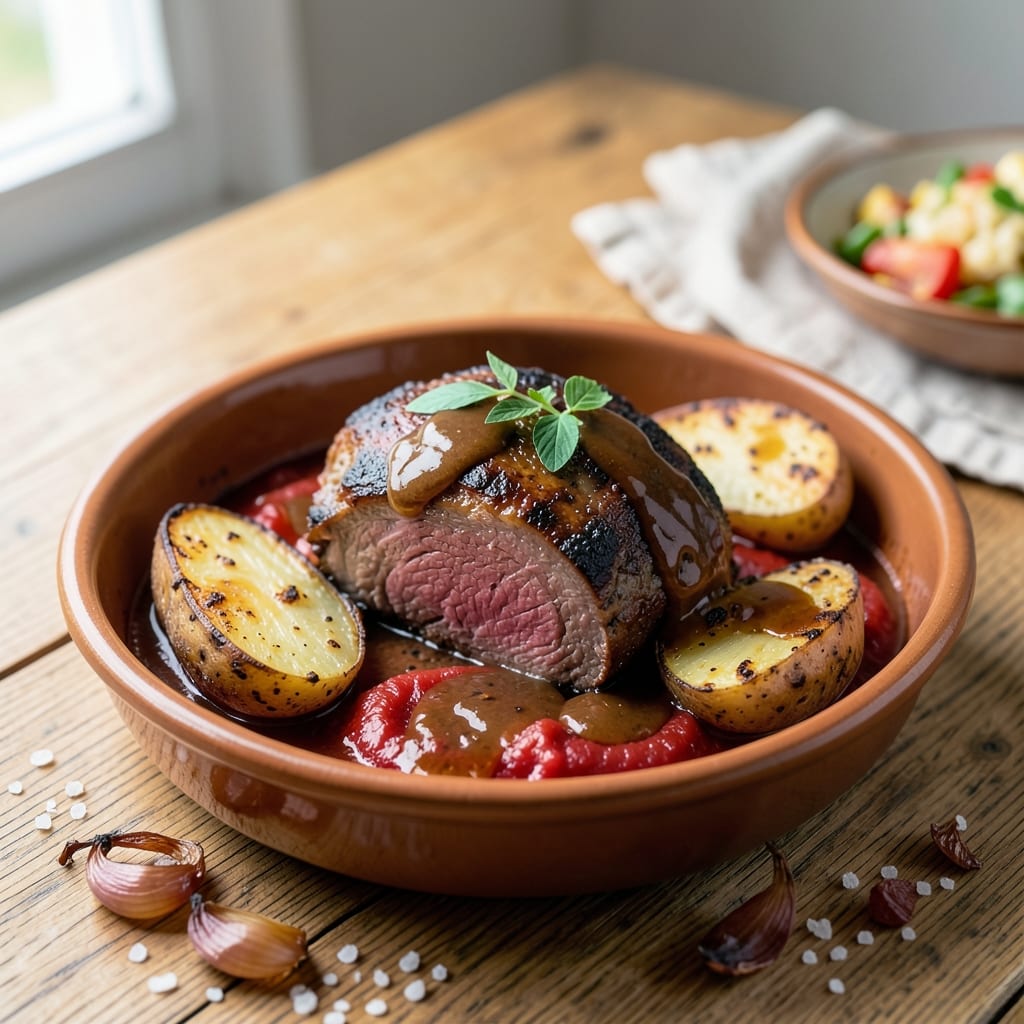
This baked potato beef recipe transforms a simple dinner into a hearty, restaurant-worthy meal where tender beef and crispy potatoes take center stage. The secret lies in slow-cooking the beef until it's fork-tender while baking the potatoes until their skins crackle with golden perfection. Every bite delivers juicy, savory beef paired with fluffy, buttery potatoes that soak up rich flavors effortlessly.
The beef cooks low and slow, ensuring it stays moist and packed with deep, smoky notes from the seasoning. Meanwhile, the potatoes develop a crispy crust outside while remaining tender inside—no peeling or pre-boiling required. This method guarantees a meal that feels indulgent yet remains straightforward to prepare, perfect for weeknight dinners or special occasions when you want comfort food done right.
What you’ll end up with is a plate that’s equal parts satisfying and elegant: perfectly seasoned beef that falls apart easily and potatoes with skins so crisp they shatter at the first bite. The contrast between the tender beef and the flaky potato texture makes every forkful worth savoring. This recipe delivers a complete, cohesive meal without the fuss of multiple dishes.
Serve with a side of garlic butter or sour cream for dipping, and you’ve got a dinner that’s hearty enough for a family gathering but simple enough for a quiet night in. The best part? Leftovers reheat beautifully, making this a go-to recipe for busy schedules. Let’s get cooking!
Ingredients for baked potato beef
Four hearty potatoes and tender beef create a smoky, satisfying meal with minimal effort.
| Ingredient | Amount | Notes |
|---|---|---|
| Russet Potatoes 🥔 | 4 whole | Medium-sized, unpeeled |
| Chuck Roast 🥩 | 2 lb | Well-marbled for tenderness |
| Beef Broth 💧 | 2 cups | Low-sodium preferred |
| Tomato Paste 🍅 | 2 tbsp | Smooth, not chunky |
| Worcestershire Sauce 🥫 | 1 tbsp | Vegetarian if needed |
| Brown Sugar 🍯 | 1 tbsp | Light or dark variety |
| Smoked Paprika 🌶️ | 1 tsp | For deep smoky flavor |
| Ground Black Pepper 🌶️ | 1 tsp | Freshly cracked preferred |
| Garlic Powder 🧄 | 1 tsp | Freshly ground preferred |
| Onion Powder 🧅 | 1 tsp | For aromatic depth |
| Olive Oil 🫒 | 2 tbsp | Extra-virgin for richness |
| Salt 🧂 | 1 ½ tsp | Kosher or sea salt |
| Fresh Rosemary 🌿 | 1 tbsp | Chopped, for aroma |
| Fresh Thyme 🌿 | 1 tbsp | Leaves only preferred |
| Butter 🧈 | 4 tbsp | Unsalted, cubed |
The chuck roast is the backbone of this dish—look for well-marbled cuts at your butcher or Costco for the best value. If pre-cut, check for even-sized pieces; if buying whole, ask for it to be cubed. Russet potatoes are ideal—their thick skins hold up to baking while staying crispy. For extra convenience, grab pre-washed potatoes from the grocery store, but scrub them well if they're dirty. The beef broth should be low-sodium to control seasoning balance, and Worcestershire sauce adds that umami depth without overpowering.
No smoked paprika? Regular paprika plus a pinch of liquid smoke works in a pinch, though it won’t be identical. Fresh rosemary and thyme are worth hunting down—they make a bigger flavor impact than dried. If you’re short on time, dried herbs at half the amount will suffice, but toast them in the pan first for extra aroma. The tomato paste can be any brand, but San Marzano or Muir Glen are reliable choices. For the potatoes, if you can’t find russets, Yukon Golds work too—just expect slightly creamier interiors. The butter should be unsalted to avoid over-salting the final dish.
The beef mixture keeps well in the fridge for 4-5 days—portion it into containers for easy reheating. The potatoes should be prepped the same day to maintain crispiness, but you can wrap them in foil and refrigerate for up to 24 hours before baking. For longer storage, freeze the beef filling in airtight containers for up to 3 months. When reheating, add a splash of broth to keep it moist. The potatoes reheat best in the oven at 350°F for 15-20 minutes, covered loosely with foil.
Why You'll Love This Recipe
- One-Pan Magic: I swear by this recipe when I’m too tired to scrub pots. The chuck roast and potatoes bake together—no flipping, no fuss—just a single sheet pan that turns your kitchen into a set-it-and-forget-it dream. (Yes, even on a Tuesday night.)
- Deep, Rich Bite: That tomato paste and Worcestershire sauce combo? It’s the secret weapon here. The beef comes out tender with a glossy, slightly tangy crust, while the potatoes soak up all the savory broth—like a hug in mashed-potato form.
- Budget Feeds Crowd: Honestly, this recipe stretches my grocery budget further than takeout ever could. A single chuck roast and a few potatoes feed four, with leftovers that taste just as good reheated. My college roommate still talks about the time I made this for our broke-but-happy dinner nights.
- Leftovers That Lie: Between us, I’ll often make extra just to have it for lunch. The flavors only get better the next day—especially when I toss the reheated beef over toasted bread with a sprinkle of cheese. (Don’t tell my dietitian.)
Step-by-step instructions for smoky crust baked potatoes with beef filling
Here's how to create perfectly tender baked potatoes with a rich, smoky beef filling that delivers juicy satisfaction every time.
🔥 Step 1: Prepare the Potatoes for Crispy Crusts
Preheat your oven to 425°F. Scrub the 4 whole Russet Potatoes thoroughly under cold water to remove any dirt, but leave them unpeeled—the skin adds texture and nutrients. Pierce each potato all over with a fork, about 8-10 times, to allow steam to escape and prevent bursting.
Place the potatoes on a baking sheet and drizzle with 2 tablespoons olive oil. Toss them gently to coat evenly, then sprinkle with 1.5 teaspoons salt. Roast for 45-50 minutes until the skin is deep golden brown and the potatoes feel soft when gently squeezed. The internal temperature should reach 205°F—this ensures they're fully cooked through but still creamy inside.
🍳 Step 2: Create the Smoky Beef Filling
While the potatoes bake, heat 2 tablespoons olive oil in a large skillet over medium-high heat. Add the 2 lb Chuck Roast, cut into 1-inch cubes, and sear until browned on all sides, about 5-6 minutes. Remove the beef from the skillet and set aside.
In the same skillet, add the 2 tablespoons tomato paste, 1 tablespoon brown sugar, 1 teaspoon smoked paprika, 1 teaspoon garlic powder, 1 teaspoon onion powder, and 1 teaspoon ground black pepper. Stir to combine and cook for 1-2 minutes until fragrant. Pour in 2 cups beef broth and 1 tablespoon Worcestershire sauce, scraping up any browned bits from the bottom of the pan.
🍳 Step 3: Simmer the Beef to Tender Perfection
Return the seared beef to the skillet, reduce the heat to low, and cover with a lid. Let it simmer for 1.5-2 hours until the beef is fork-tender and the sauce has thickened. Stir occasionally and add a splash of water if the sauce becomes too dry.
Once the beef is tender, stir in 1 tablespoon chopped fresh rosemary and 1 tablespoon fresh thyme, along with 4 tablespoons cubed butter. Let it melt into the sauce, creating a rich, flavorful base for the filling. The mixture should be moist but not soupy—it should coat the back of a spoon when stirred.
🥘 Step 4: Assemble and Bake to Juicy Perfection
Carefully slice open the baked potatoes and use a spoon to scoop out about ½ cup of the fluffy interior from each potato, leaving the skins intact. Mix the scooped potato flesh with the beef filling in a bowl, ensuring each bite is packed with flavor.
Spoon the beef-potato mixture back into the potato skins, pressing down gently to compact the filling. Place the assembled potatoes on a baking sheet and broil for 3-5 minutes until the tops are lightly browned and the filling is heated through. Watch closely to avoid burning, as broilers can be intense.
🍽️ Step 5: Serve Immediately for Maximum Juiciness
Let the potatoes rest for 2-3 minutes before serving to allow the filling to set slightly. The result should be a crispy, smoky crust on the outside and a creamy, juicy filling inside, perfectly balanced with the rich beef and aromatic herbs.
Serve each portion with a sprinkle of extra chopped fresh thyme and a side of steamed green vegetables to complement the hearty flavors. The contrast of the crispy potato skin with the tender, savory beef filling makes every bite unforgettable.
Pro Tips For Making Baked Potato Beef
- Sear the Chuck First: That chuck roast won’t caramelize properly if you skip this step. Hit it with a hot pan—no oil needed—until deep brown crusts form. I used to rush this, and the sauce always tasted flat until I learned to let those Maillard reactions do their magic.
- Poke the Potatoes: Russets need air to steam, not a sealed trap. Pierce each potato 3-4 times with a fork before baking—yes, even if they’re already scored. I learned this the hard way when my first batch turned out soggy instead of fluffy.
- Deglaze with Broth: Don’t just dump tomato paste and Worcestershire into the pot. After browning the beef, splash in ½ cup beef broth first, scrape up those browned bits, then add the rest of the sauce. That’s where the flavor hides.
- Rest Before Slicing: Cutting that chuck too soon turns it into a mushy pile. Tent it with foil and let it sit 10 minutes—no peeking. I was skeptical until I tried it, and now I never skip this step. The fibers stay intact, and the sauce clings better.
Troubleshooting your baked potato beef
Potatoes Too Dry
If your baked potatoes emerge dry and crumbly instead of creamy, they likely didn't bake long enough or lost moisture during cooking. Always check for an internal temperature of 205°F—this ensures they're fully cooked but still moist. For extra insurance, wrap the potatoes in foil during the first 30 minutes of baking to trap steam, then uncover to crisp up the skin in the final 15-20 minutes. 🥔
Beef Overcooked
Tender beef is all about patience and timing. If your chuck roast turns out tough, it probably cooked too long at high heat. Keep the simmer at low heat and cover the skillet to retain moisture. Use a meat thermometer to check for 195°F internal temperature—this guarantees fork-tender results without drying out. I recommend the ThermoWorks Smoke for accuracy.
Filling Too Watery
A soupy filling usually means too much liquid was added during simmering. To fix this, reduce the heat to lowest setting and let the sauce thicken uncovered for 5-10 minutes, stirring occasionally. If the beef is already tender, transfer it to a bowl and simmer the sauce alone until it reduces. For future attempts, measure the broth carefully—2 cups is plenty for 2 lbs of beef.
Crust Not Crispy
For that perfect golden crust, high heat is key. Bake potatoes at 425°F and avoid crowding them on the sheet—leave 1 inch of space between each potato. If your oven runs hot, reduce to 400°F and bake for 5-10 minutes longer. A quick broil for 2-3 minutes at the end can also help crisp up the skin without overcooking the interior.
Beef Too Salty
Over-salting often happens when using high-sodium broth or adding extra salt during cooking. Taste the beef broth before adding it to the pan—if it's too salty, dilute with water or unsalted broth. For the filling, balance flavors with 1 tablespoon of brown sugar and 1 teaspoon of Worcestershire sauce, which adds umami depth without extra salt. Always season gradually and adjust as you go.
Uneven Cooking
Large or irregularly shaped potatoes can cook unevenly, leading to some spots being underdone while others burn. For consistent results, choose potatoes of similar size and pierce them evenly. If using a convection oven, reduce the temperature by 25°F and check for doneness 5-10 minutes earlier than the recipe suggests. Rotate the baking sheet halfway through cooking for even heat distribution. ⚡
Nutrition facts
Frequently asked questions
Can I use ground beef instead of chuck roast?
You can, but the texture will differ. Ground beef cooks much faster and won't develop the same tender, fork-shreddable quality. For best results, stick with chuck roast or brisket, which slow-cook beautifully. If you must use ground beef, reduce cooking time to 30-40 minutes on low heat and add 1 tablespoon tomato paste to help thicken the mixture.
How do I make this recipe ahead of time?
Prepare the beef filling up to 3 days ahead—store it in an airtight container in the fridge. The potatoes should be baked fresh for best texture, but you can wrap them in foil and refrigerate for 24 hours before baking. Reheat the filling in a skillet with a splash of broth, then stuff the cooled potatoes and broil for 5 minutes to crisp the skins.
What’s the best way to reheat leftovers?
Reheat stuffed potatoes in a 350°F oven for 15-20 minutes, covered loosely with foil, until warmed through. For the filling alone, warm it in a skillet over low heat with 1-2 tablespoons beef broth to restore moisture. Microwaving can make the skins soggy, so oven reheating is ideal for maintaining texture.
Can I make this dish in a slow cooker?
Brown the beef first, then transfer everything (including potatoes) to a slow cooker. Cook on low for 6-8 hours or high for 3-4 hours. The potatoes will soften more than when baked, so they’re better suited for mashing into the filling. For crispy skins, broil the assembled potatoes for 3-5 minutes after slow cooking.
What sides pair well with this dish?
This hearty meal pairs perfectly with simple, fresh sides like a crisp green salad with a tangy vinaigrette, steamed asparagus with lemon, or roasted carrots with thyme. For extra indulgence, serve with a dollop of sour cream or garlic butter for dipping. The smoky flavors also complement a cool cucumber salad or cornbread.