
Main Courses
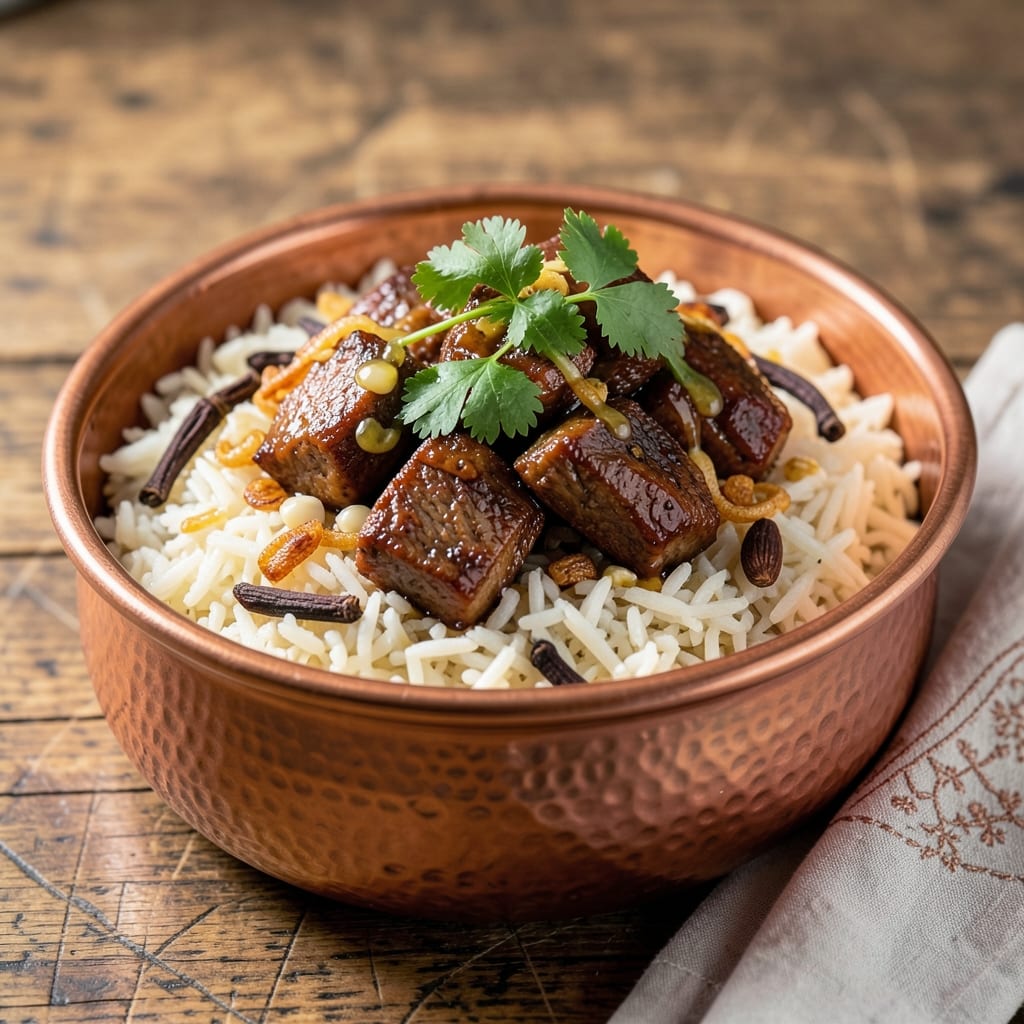
This Bannu beef pulao recipe brings the heart of Pakistani cuisine to your kitchen, where tender beef and fragrant basmati rice blend into one unforgettable dish. The secret lies in slow-cooking beef until it's melt-in-your-mouth tender, then layering it with parboiled rice infused with warm spices like cardamom and cinnamon. What makes this recipe special is the balance—rich, aromatic, yet never heavy, with each bite offering a perfect harmony of flavors.
The process begins with parboiling the basmati rice to maintain its signature texture, while the beef simmers in a spiced broth until it practically falls apart. This method ensures the rice stays fluffy and separate, never mushy, and the beef remains juicy and deeply flavorful. The dish is elevated further by finishing touches like crispy fried onions and fresh cilantro, adding both texture and freshness to every spoonful.
What you'll achieve is a restaurant-quality pulao that's as impressive to serve as it is delicious to eat. The aroma alone—warm spices mingling with caramelized beef—will have everyone gathered around the table. Perfect for special occasions or family dinners, this recipe delivers authenticity without sacrificing ease, making it a staple for any home cook.
Whether you're serving it with raita or a side of salad, this Bannu beef pulao is designed to be both comforting and sophisticated. The key is patience—letting the spices and flavors meld slowly for that perfect balance. Let's get cooking!
Ingredients for bannu beef pulao
Sixteen ingredients transform into a fragrant, restaurant-worthy Bannu beef pulao.
| Ingredient | Amount | Notes |
|---|---|---|
| Basmati Rice 🍚 | 2 cups | Long-grain, rinsed thoroughly |
| Beef Chuck Roast 🥩 | 2 lb | Cut into 1.5-inch cubes |
| Ghee 🧈 | ½ cup | For authentic flavor |
| Yellow Onions 🧅 | 2 whole | Finely chopped, one for cooking |
| Garlic Cloves 🧄 | 8 cloves | Minced finely |
| Fresh Ginger 🌿 | 2 tbsp | Grated, aromatic |
| Green Cardamom Pods 🌿 | 6 whole | Lightly crushed |
| Cinnamon Sticks 🌿 | 2 whole | 2-inch pieces |
| Bay Leaves 🌿 | 2 whole | Fresh preferred |
| Ground Cumin 🌶️ | 1 tbsp | Toasted for depth |
| Ground Coriander 🌶️ | 1 tbsp | Freshly ground |
| Turmeric Powder 🌶️ | ½ tsp | Bright yellow color |
| Red Chili Powder 🌶️ | 1 tsp | Adjust to heat preference |
| Fresh Cilantro 🌿 | ½ cup | Chopped, for garnish |
| Lemon Juice 🍋 | 2 tbsp | Freshly squeezed |
| Salt 🧂 | 1 ½ tsp | Kosher or sea salt |
| Water 💧 | 3 ½ cups | For rice parboiling |
| Fried Onions 🧅 | ¼ cup | For garnish, optional |
The beef chuck roast is non-negotiable for this dish—its marbling ensures melt-in-your-mouth tenderness. Look for well-marbled cuts at your local butcher or Costco's bulk section for the best value. If you can't find chuck, sirloin tips work in a pinch, but they'll be slightly less tender. The basmati rice should be Karachi or Pakistan Basmati if you can find it—it's longer-grained and stays fluffy. I always buy mine from Indian or Pakistani grocery stores (like Patel Brothers or Apna Bazaar), but any high-quality basmati will do. For the spices, Penzeys or local Indian spice shops carry the best whole spices—cardamom and cinnamon should smell vibrant, not dusty.
No ghee? Butter or neutral oil works, but the flavor won't be as authentic. Running out of cardamom? A pinch of nutmeg can mimic its warmth, though it's not the same. Fresh ginger and garlic are essential—dried won't cut it here. The fried onions are optional but add that crispy, golden crunch that takes this dish to the next level. Make a big batch and store them in the fridge for up to 2 weeks—they're perfect for garnishing other dishes too. For the red chili powder, adjust to your heat tolerance, but remember this is a fragrant dish, not a fiery one. The spices should sing, not burn.
This pulao tastes even better the next day as flavors meld. Store leftovers in an airtight container for up to 4 days in the fridge, or freeze for 3 months. The rice stays fluffy if you let it cool completely before sealing. For serving, I like to reheat gently with a splash of water to restore moisture. The fried onions can be made ahead and stored separately—they crisp up beautifully when reheated. Garnish with fresh cilantro right before serving, as it wilts quickly. This dish is a showstopper—serve it with raita or a simple cucumber salad for the full Pakistani experience.
Why You'll Love This Recipe
- One-Pot Magic: I swear by this recipe when I’m too tired to wash pots—just brown the beef, toss in the onions and garlic, layer the rice, and let it steam. The ghee does all the heavy lifting, turning that chuck roast into melt-in-your-mouth perfection without a single extra dish.
- Ghee-Garlic Bomb: That slow-cooked beef in ghee? It’s where the real magic happens—the onions caramelize until they’re sweet, and the garlic infuses the rice with a depth that makes store-bought pulao look sad. Honestly, the first bite makes me forget I’m even dieting.
- Weeknight Workhorse: Between us, this is my go-to when I’m feeding a crowd or just too busy to fuss. The rice absorbs all the beefy, spiced flavors, so every grain tastes like the main event. (Yes, even on a Tuesday night.) It’s the dish that actually feeds everyone—no sad leftovers for me.
- Budget Stretch: I buy beef chuck on sale, slow-cook it until tender, and stretch it across three meals. The rice soaks up the juices, so you’re not eating dry beef—just rich, flavorful bites. My wallet and my freezer both thank me every time.
Step-by-step instructions for Bannu beef pulao
Here's the method for an aromatic, perfectly balanced pulao where tender beef meets fragrant basmati.
Parboil the Rice for Perfect Texture
Rinse the 2 cups basmati rice thoroughly under cold water until the water runs clear. This removes excess starch that would otherwise make the rice mushy. In a large pot, combine the rinsed rice with the 3.5 cups water and bring to a rolling boil over high heat. Once boiling vigorously, reduce heat to medium-low and let it simmer uncovered for exactly 5 minutes.
You'll notice the rice will absorb some water but won't be fully cooked yet. This partial cooking step is crucial for the final texture—it prevents the rice from becoming gummy during the longer cooking process with the beef. Drain the rice immediately in a fine-mesh strainer and spread it on a clean kitchen towel to stop any further cooking and remove excess moisture.
Caramelize the Beef and Aromatics
Heat the 0.5 cup ghee in a heavy-bottomed pot over medium heat until it shimmers but doesn't smoke. Add the 2 lb beef chuck roast cut into 1.5-inch cubes and cook undisturbed for 5 minutes to develop a deep golden crust. This initial searing locks in juices and builds flavor.
Add one of the finely chopped yellow onions and cook for 8-10 minutes until deeply caramelized and golden brown. This is where the magic happens—the concentrated sweetness from the onions will infuse the entire dish. Stir in the 8 minced garlic cloves and 2 tbsp grated fresh ginger, cooking for another 1 minute until fragrant. The aroma should be rich and complex, with notes of garlic and ginger that will permeate the pulao.
Build the Spice Base and Cook the Beef
Add the lightly crushed 6 green cardamom pods, 2 cinnamon sticks (cut into 2-inch pieces), and 2 bay leaves to the pot. Stir for 30 seconds to toast the spices gently—this releases their essential oils and deepens their flavor. Add the 1 tbsp ground cumin, 1 tbsp ground coriander, 0.5 tsp turmeric powder, and 1 tsp red chili powder, stirring constantly for 1 minute to bloom the spices fully.
Pour in 1.5 cups water and bring to a gentle simmer. The beef should be mostly submerged but not swimming in liquid. Cover the pot and cook on low heat for 45 minutes to 1 hour, stirring occasionally, until the beef is fork-tender. You'll know it's ready when the meat easily pulls apart with minimal resistance and the cooking liquid has reduced significantly but still clings to the beef.
Layer and Steam the Pulao
Remove the beef from the pot and set aside. In the same pot, add the drained rice in an even layer, spreading it out gently. Pour the remaining 2 cups water over the rice, ensuring it's evenly distributed. The rice should be just covered by the water.
Arrange the beef cubes evenly on top of the rice, then sprinkle the chopped fresh cilantro and 2 tbsp lemon juice over everything. The lemon juice adds a bright contrast to the rich beef and spices. Cover the pot tightly with a lid or foil and cook on low heat for 15 minutes. Then increase heat to medium-low and cook for another 10 minutes, allowing the rice to absorb the remaining liquid and steam through.
Rest and Garnish for Maximum Flavor
Turn off the heat and let the pulao rest, covered, for 10 minutes. This resting period allows the flavors to meld and the rice to absorb any remaining juices. Gently fluff the rice with a fork, being careful not to break the beef pieces. The rice should be tender with a slight bite, and the beef should be juicy and infused with the aromatic spices.
Transfer to a serving platter and garnish with the 0.25 cup fried onions for a crispy contrast. Serve immediately while still hot, with the fragrant steam rising from each bite. The pulao should have a perfect balance of tender beef, aromatic rice, and the bright acidity from the lemon juice cutting through the richness. Each mouthful should deliver layers of flavor—spicy, sweet, tangy, and savory—all coming together in this classic Bannu-style dish.
Pro Tips For Making Bannu Beef Pulao
- Sear the Beef in Batches: I learned this the hard way—crowding the pan makes the beef steam instead of brown. Cut the chuck roast into large, even chunks and cook them in two rounds if needed. A deep, golden crust on the beef is what carries the flavor through the long simmer.
- Soak Rice for 30 Minutes: Yes, even basmati needs a quick soak—just 30 minutes in warm water. This prevents the rice from turning mushy later, especially when layered with the beef and spices. Drain well before adding to the pot, but don’t rinse it afterward (that washes away the starch you need for that perfect cling).
- Layer Ghee, Not Drown: The recipe calls for ghee, but I used to pour it all in at once, thinking more was better. Instead, add half at the start for searing, then drizzle the rest in thin layers while cooking the beef. This coats every surface without making the dish greasy—trust me, your taste buds will notice.
- Finish with Raw Onions: Save a handful of thinly sliced raw onions for the very end. Toss them in with the rice just as it’s done, off the heat. They’ll soften slightly but stay crisp enough to cut through the richness of the beef and ghee—like a fresh finish to a rich painting. (And yes, it’s worth the extra 2 minutes.)
Serving suggestions for this dish
Traditional Garnishes
Finish your Bannu beef pulao with 0.25 cup fried onions for that signature golden crunch and aroma—this is non-negotiable for authenticity. I like to fry thin onion slices in ghee until deep golden brown, then sprinkle them over the top right before serving. Fresh cilantro adds a bright pop of color and freshness, balancing the rich spices. For extra flair, add a few lemon wedges on the side so guests can squeeze fresh juice over their portions. 🌟
Classic Pakistani Sides
Serve this pulao with raita—a cooling yogurt dip made with 1 cup plain yogurt, 1 tbsp grated cucumber, 1 tsp roasted cumin powder, and a pinch of salt. The creamy, tangy contrast cuts through the richness beautifully. Another must-try is mirchi ka salan, a spicy green chili curry that pairs perfectly with the mild yet aromatic beef. For a lighter option, a simple cucumber salad with lemon juice and mint leaves keeps the meal balanced.
Beverage Pairings
Traditionally, this dish is served with mango lassi—a sweet, creamy yogurt drink that complements the spiced beef. For a non-dairy option, try Pakistani chai (black tea with cardamom, cinnamon, and milk) for warmth. If you prefer alcohol, a crisp dry white wine like Sauvignon Blanc or a light rosé enhances the dish's bright citrus notes. For a local twist, thandai (a spiced milk drink) adds a festive touch during celebrations. 🍷
Serving Presentation
Use a large, shallow serving platter to showcase the layered beauty of this pulao. Arrange the beef and rice in an even pattern, then garnish with fried onions in a circular pattern for visual appeal. Serve family-style in the center of the table so everyone can scoop their portions. For extra elegance, add a few whole cardamom pods or cinnamon sticks around the platter—they’ll infuse the air with fragrance as guests serve themselves. 💫
Make-Ahead Serving Tips
This pulao tastes even better the next day as flavors meld, so prepare it ahead for gatherings. Store leftovers in an airtight container in the fridge for up to 4 days. When reheating, cover with a damp paper towel and warm on low heat with a splash of water to restore moisture. Garnish with fresh cilantro and fried onions just before serving to keep them crisp. For large parties, pre-cook the beef and rice separately, then assemble and steam just before serving to maintain texture. ⏰
Nutrition facts
Frequently asked questions
Why does this recipe use parboiled rice?
Parboiling rice for just 5 minutes before cooking it with the beef ensures it stays fluffy and separate in the final dish. This traditional technique prevents the rice from becoming mushy when simmered alongside the slow-cooked beef. The partial cooking also helps the rice absorb flavors more evenly while maintaining its signature texture.
Can I substitute beef chuck with another cut?
While beef chuck is ideal for its tenderness, you can use sirloin tips or stew meat in a pinch. For best results, cut the meat into 1.5-inch cubes and increase cooking time by 10-15 minutes to ensure tenderness. Avoid lean cuts like flank steak—they won't become as melt-in-your-mouth tender.
How do I know when the beef is fully cooked?
The beef is done when it easily pulls apart with minimal resistance and the internal temperature reaches 195°F (or 90°C). You'll also notice the cooking liquid has reduced significantly but still clings to the meat. If you're unsure, cut into a piece—it should be fork-tender with no pink center.
What if my pulao turns out too dry?
If the rice seems dry, simply cover the pot and add 2-3 tablespoons of hot water, then let it steam for 5 more minutes off the heat. The residual heat will restore moisture. For future batches, ensure the rice is just covered with water during the final steaming phase. Overcooking is the most common cause of dry pulao.
Can I make this recipe in a pressure cooker?
Yes! First, parboil the rice as directed, then sauté the beef and aromatics in the pressure cooker. Add the spices and 2 cups of water, then pressure cook for 20 minutes on high pressure. Quick-release the pressure, add the rice and lemon juice, then cook for another 5 minutes to steam. This cuts cooking time by nearly half while keeping the beef tender.