
Soups & Stews
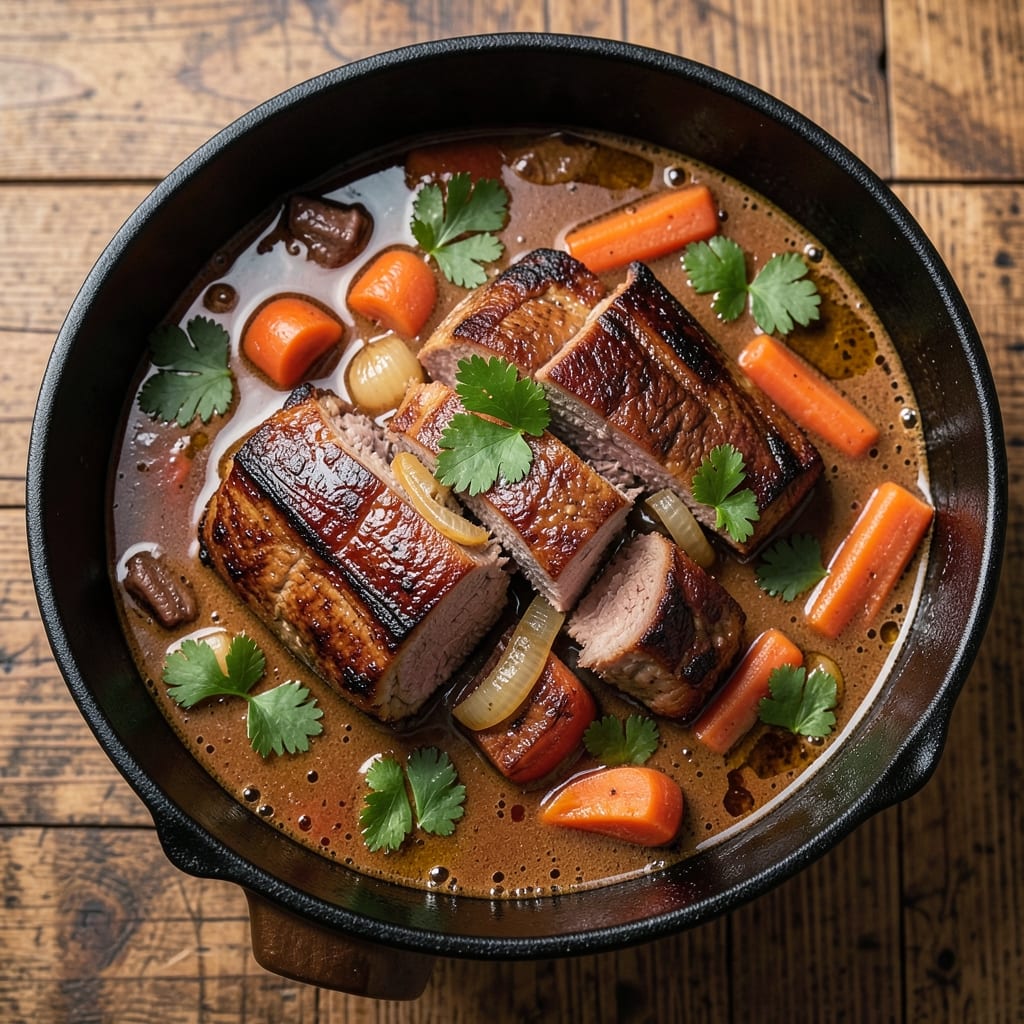
This Bavarian beef stew recipe delivers the hearty, comforting flavors of traditional German cuisine with tender beef, rich dark beer, and caramelized onions that create layers of umami depth. The slow-simmering process transforms tough cuts into melt-in-your-mouth perfection, while bay leaves and caraway seeds infuse the broth with authentic aromatic complexity. What makes this recipe special is the balance of sweetness from caramelized onions and the malty richness of beer, creating a dish that's both satisfying and deeply flavorful.
The key to achieving restaurant-quality results lies in the preparation: browning the beef first to develop deep flavor, then simmering it low and slow for hours until the meat becomes fork-tender. This method allows all the ingredients to meld together, resulting in a stew that's rich, hearty, and full of comforting textures. The caramelized onions add a touch of sweetness that perfectly complements the savory beef and aromatic spices.
By the time you serve this Bavarian beef stew, you'll have a dish that's perfect for chilly evenings or family gatherings. The tender beef, combined with the aromatic vegetables and flavorful broth, creates a meal that's both substantial and comforting. It's the kind of dish that warms the soul and brings people together, making it a staple for any home cook looking to recreate authentic German flavors.
Serve this stew with crusty bread to soak up every last drop of the rich broth, or pair it with buttered potatoes and steamed vegetables for a complete meal. The leftovers reheat beautifully, making it an ideal dish for meal prep. Here's how to create this classic Bavarian beef stew in your own kitchen.
Ingredients for bavarian beef stew
Authentic Bavarian flavors start with these carefully selected, umami-rich ingredients.
| Ingredient | Amount | Notes |
|---|---|---|
| Beef Chuck Roast 🥩 | 3 lb | Tough cut for slow cooking |
| Yellow Onions 🧅 | 3 whole | Sliced thin for caramelization |
| Carrots 🥕 | 4 medium | Peeled and cut into chunks |
| Dark Beer 🍺 | 2 cups | Dortmunder or Munich Dunkel preferred |
| Beef Broth 💧 | 2 cups | Homemade or high-quality store-bought |
| Tomato Paste 🍅 | 2 tbsp | For depth of flavor |
| Bay Leaves 🍃 | 2 whole | Fresh for optimal aroma |
| Caraway Seeds 🌿 | 1 tsp | Ground for authentic flavor |
| Garlic Cloves 🧄 | 4 cloves | Minced for even distribution |
| All-Purpose Flour 🌾 | 2 tbsp | For browning beef |
| Carrots 🥕 | 4 pieces | Peeled and cut into chunks |
| Salt 🧂 | 1 ½ tsp | Kosher or sea salt |
| Black Pepper 🌶️ | 1 tsp | Freshly ground preferred |
| Thyme 🌿 | 1 tsp | Dried or 1 tbsp fresh |
| Olive Oil 🫒 | 2 tbsp | For initial searing |
The beef chuck roast is non-negotiable—its tough fibers break down beautifully during slow cooking, creating that signature melt-in-your-mouth texture. Costco or Whole Foods typically carry high-quality cuts with good marbling, which is essential for flavor. If you're buying a whole roast, ask your butcher to trim excess fat but leave some for rendering during cooking. The dark beer should be malty and robust—Dortmunder or Munich Dunkel are ideal, but any German-style lager will work. For the onions, yellow onions caramelize best, and slicing them thin speeds up the process. If you're short on time, pre-sliced frozen onions from the grocery store freezer section work surprisingly well.
No dark beer? Substitute with beef broth plus 1 tbsp molasses for a similar malty depth. Fresh thyme is ideal, but dried thyme at one-third the amount works in a pinch. The tomato paste can be replaced with 1/4 cup crushed tomatoes if you prefer a smoother texture. For the carrots, baby carrots save chopping time, though they won't caramelize as much. If you're using pre-sliced onions, pat them dry first to prevent excess moisture in the stew. The caraway seeds are crucial for authenticity—Penzeys or bulk bins at natural food stores carry high-quality whole seeds that you can grind fresh for maximum flavor.
This stew tastes even better the next day as flavors meld further. Store in an airtight container in the fridge for up to 5 days, or freeze for 3 months in portion-sized containers. For meal prep, double the recipe and freeze half immediately—perfect for busy weeknights. The beef will continue tenderizing in the fridge, so plan to reheat gently on the stove with a splash of broth. If storing for longer than 2 days, add a thin layer of beef broth on top before sealing to prevent a skin from forming.
Why You'll Love This Recipe
- One-Pot Magic: The beef chuck roast practically cooks itself while you chop onions and carrots—just brown it, dump in the beer and broth, and let it simmer. No fancy techniques, no stress, just hands-off goodness.
- Beer-Kissed Richness: That dark beer doesn’t just add depth—it transforms the stew into something ridiculously flavorful, with a malty sweetness that caramelizes into the beef. Honestly, the first bite makes you forget you’re eating leftovers.
- Weeknight Workhorse: Serve it over mashed potatoes for a hearty dinner, pack it in lunchboxes for tomorrow, or freeze half for when you’re too tired to cook. It’s the kind of stew that actually works for everything.
- Budget-Friendly Feast: A single chuck roast stretches to feed four (or five if you’re feeding teenagers). Between us, this is the recipe that makes grocery money stretch without sacrificing taste—no sad, watery stew here.
Step-by-step instructions for Bavarian beef stew
Master this German classic with slow-cooked beef and aromatic vegetables for rich umami depth.
Sear the Beef Chuck Roast for Deep Flavor
Pat the 3 lb beef chuck roast dry with paper towels and season generously with 1.5 tsp salt and 1 tsp black pepper on all sides. Heat 2 tbsp olive oil in a heavy Dutch oven over medium-high heat until shimmering. Place the beef in the pot and sear for 4-5 minutes per side until deeply browned—this creates the Maillard reaction that forms the stew's foundation.
Remove the beef and set it aside. If the oil isn't dark brown from the searing, wipe out the pot with a paper towel to remove excess oil before proceeding. This step is non-negotiable for maximum flavor development. The beef should have a rich, caramelized crust when you're done.
Develop the Caramelized Onion Base
Add the 3 whole yellow onions, sliced into thin rounds, to the Dutch oven. Cook over medium heat for 15-20 minutes, stirring occasionally, until the onions transform from pale yellow to deep amber brown. This slow caramelization builds sweetness and depth—don't rush this step or you'll miss the flavor.
When the onions are nearly done, add the 4 cloves garlic cloves, minced, and cook for an additional 1 minute until fragrant. Remove the onions and garlic from the pot and set aside with the beef. The onions should be soft enough to mash between your fingers but still hold their shape slightly.
Brown the Flour and Build the Stew Foundation
Return the Dutch oven to the stove over medium heat and add the 2 tbsp all-purpose flour. Stir constantly for 1-2 minutes until the flour turns golden brown and nutty—this creates a roux that will thicken the stew. Immediately pour in the 2 cups dark beer and scrape up any browned bits from the bottom of the pot with a wooden spoon.
Bring the mixture to a gentle simmer and cook for 3-4 minutes until slightly reduced. Stir in the 2 tbsp tomato paste, 1 tsp thyme, 1 tsp caraway seeds, 2 whole bay leaves, 2 cups beef broth, and the reserved onions and garlic. Return the beef to the pot, making sure it's fully submerged in the liquid.
Slow-Simmer for Tender Perfection
Bring the stew to a gentle boil, then reduce heat to low and cover partially with a lid. Simmer for 2.5-3 hours until the beef is fork-tender—you should be able to pierce it easily with a fork, and it should pull apart cleanly. The liquid should have reduced slightly but still coat the beef.
Check the stew occasionally and add hot water in ¼ cup increments if it reduces too much. The beef should be falling apart at the touch, and the flavors should meld beautifully. Real talk: this is where patience pays off—don't skip the full cooking time or you'll end up with tough meat.
Finish and Adjust Seasoning
Remove the 2 whole bay leaves from the stew. Taste and adjust seasoning with additional salt or black pepper as needed. The stew should be rich and savory with a balance of beer's malty notes and the caramelized onions' sweetness. If it's too thick, add ¼ cup hot water to reach your desired consistency.
Serve the Bavarian beef stew hot, ladled over mashed potatoes or egg noodles, with the rich broth spooned over the top. Each bite should deliver tender beef, sweet onions, and complex flavors from the slow cooking process. The aroma alone should make your kitchen smell like a Bavarian beer garden.
Pro Tips For Making Bavarian Beef Stew
- SEAR THE ROAST HARD: That beef chuck needs a deep, dark crust to hold up in the long simmer—don’t be shy with the heat. After patting it completely dry (yes, even the edges), sear it for 4-5 minutes per side in a hot Dutch oven until it’s got a crust that looks like it could double as armor. I used to rush this, and the stew always tasted underwhelming—now I treat it like a steak.
- PEEL AND SLICE CARROTS THIN: Bavarian stew isn’t about chunky carrots—it’s about silky, melt-in-your-mouth texture. Peel them first, then slice them paper-thin (about 1/8-inch) so they cook down without turning to mush. If you’re impatient, use a mandoline, but keep your fingers clear—this isn’t the time for heroics.
- DEGLAZE WITH BEER FIRST: That dark beer isn’t just flavor—it’s your crust insurance. As soon as you remove the roast, pour in all the beer (no broth yet) and scrape the browned bits off the bottom aggressively with a wooden spoon. Let it bubble for 2-3 minutes before adding broth; this step locks in all the caramelized goodness you just worked so hard to create.
- DON’T SKIP THE ONION BASE: Sauté those onions until they’re golden-brown and slightly jammy—not just soft. I learned this the hard way when I rushed them, and the stew lacked depth. Use medium heat and stir often; if they start to stick, add a splash of beer to loosen them. Patience here makes the difference between "meh" and "wow."
Essential equipment for perfect results
Dutch Oven Essentials
A heavy-duty Dutch oven with a tight-fitting lid is non-negotiable for this recipe—I use my Lodge 5.5-quart cast iron because it retains heat beautifully and develops deep, caramelized flavors on the bottom. The lid should lock in moisture while allowing steam to escape, ensuring the beef stays tender without drying out. If you don't own one, a Le Creuset stoneware Dutch oven is another excellent choice that's easier to clean. 🔥
Measuring Tools
Precision matters when balancing flavors in stews. I recommend a stainless steel measuring cups set (like OXO Good Grips) for accurate liquid measurements and a digital kitchen scale (I use the Escali Primo) for weighing the beef—this helps ensure you're using exactly 3 lbs of chuck roast. A fine-mesh strainer also comes in handy for rinsing caraway seeds or straining broth if needed. These tools make all the difference in consistency.
Knife & Cutting Board
Invest in a sharp chef's knife (I prefer the Wüsthof Classic 8-inch) for cleanly slicing onions and mincing garlic—this ensures even cooking and better flavor distribution. Pair it with a cutting board with non-slip feet (like John Boos end-grain boards) to prevent accidents. For the beef, a meat mallet (optional but helpful) can tenderize the surface slightly before searing, creating more surface area for flavor development. 💪
Wooden Spoon & Tongs
A heat-resistant wooden spoon (I love the De Buyer Silicone Spoon) is perfect for stirring the stew without scratching your Dutch oven. For handling the beef, a pair of long-handled tongs (like Tramontina) helps you safely turn the roast without burning yourself. These tools make the entire process smoother and safer, especially during the long simmering phase.
Slow Cooker Option
If you prefer hands-off cooking, a 6-quart slow cooker (I use the Hamilton Beach Programmable) works beautifully for the simmering phase. After searing the beef and caramelizing the onions in the Dutch oven, transfer everything to the slow cooker, cover, and cook on LOW for 8 hours or HIGH for 5 hours. The key is maintaining the same liquid ratio—just add 1 cup of water to compensate for the slow cooker's less efficient heat retention. This method is perfect for busy days but still delivers incredible results. ✨
Nutrition facts
Frequently asked questions about Bavarian beef stew
Why does this recipe use dark beer instead of regular beer?
The dark beer adds essential malty depth and richness that lighter beers can't match. The higher alcohol content helps tenderize the beef during simmering, while the caramel and roasted malt flavors create that signature Bavarian taste. For a comparable flavor without alcohol, substitute with beef broth plus 1 tbsp molasses.
Can I make this stew in a slow cooker?
Sear the beef and caramelize the onions in a Dutch oven first, then transfer everything to a 6-quart slow cooker. Cook on LOW for 8 hours or HIGH for 5 hours, adding 1 cup water to maintain liquid levels. The slow cooker method is perfect for busy days while still delivering tender beef and rich flavors.
What's the secret to getting the beef perfectly tender?
The key is low-and-slow cooking for the full 2.5-3 hours—never rush this step! The beef should be fork-tender and pull apart easily. Start with a chuck roast (not too lean) and sear it deeply first to build flavor. If you're short on time, use a meat mallet to tenderize the surface slightly before cooking.
How do I store and reheat leftovers?
Store in an airtight container in the fridge for up to 5 days or freeze for 3 months. To reheat, warm gently on the stove with a splash of beef broth or water—never microwave directly from frozen. The flavors actually improve after the first day as everything melds together. Pro tip: Add a thin layer of broth on top before sealing to prevent skin formation.
What's the best way to serve Bavarian beef stew?
Ladle the stew over creamy mashed potatoes or egg noodles to soak up the rich broth. For a complete meal, serve with steamed green beans or a crisp dark rye bread. The contrast of textures makes each bite even more satisfying. The stew also reheats beautifully, making it perfect for meal prep.