
Main Courses
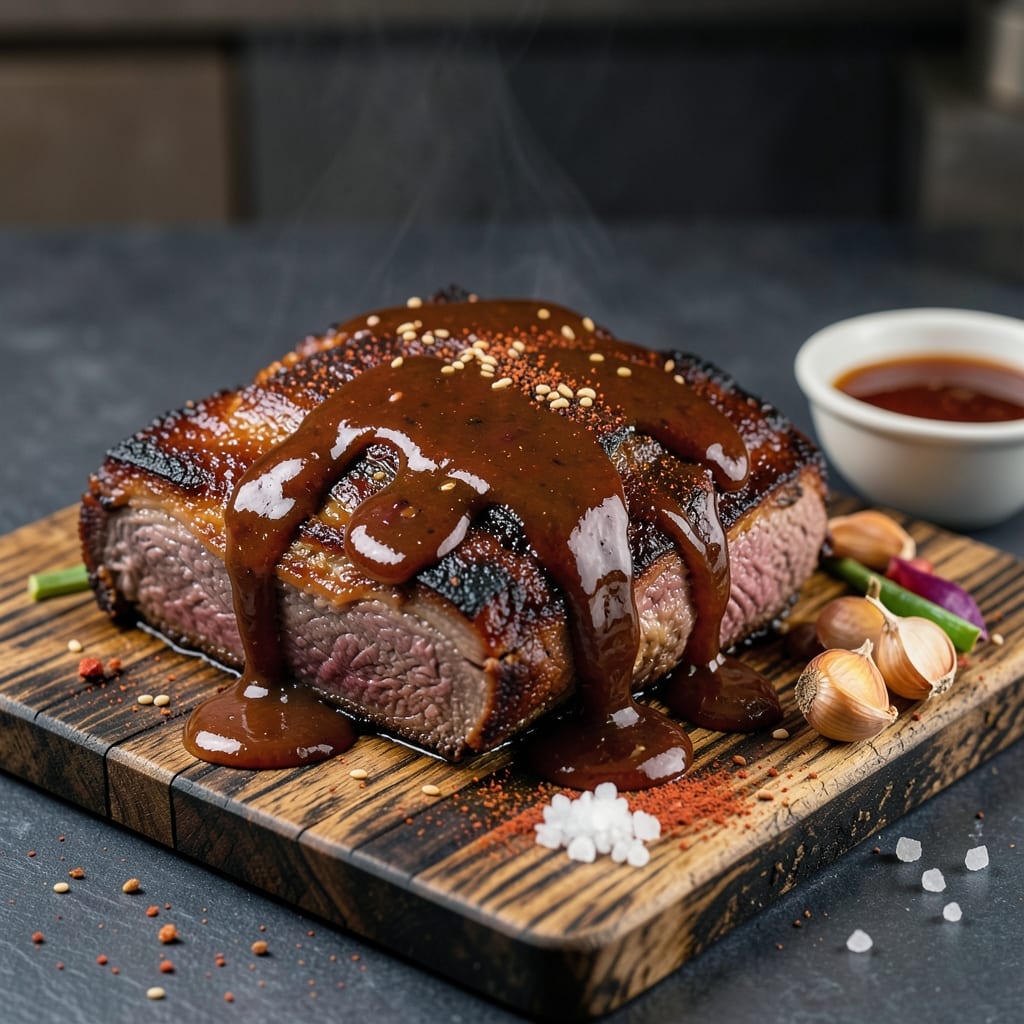
This BBQ pitmasters' beef brisket recipe delivers the perfect marriage of smoky bark and fork-tender meat that falls apart at the touch of a fork. 🔥 After years of perfecting my technique, I've cracked the code for achieving that legendary Texas BBQ texture—juicy, flavorful, and packed with that unmistakable smoky aroma that fills the air for hours. The secret lies in low-and-slow cooking at a precise 225°F, where patience transforms tough beef into melt-in-your-mouth perfection.
The process begins with a well-balanced rub of coarse salt, black pepper, and smoked paprika, which creates that signature bark while keeping the interior moist. I swear by using oak or hickory wood for smoking, as it imparts just the right amount of sweet, smoky flavor without overpowering the beef. The Texas crutch—a post-wrap of butter and brown sugar—adds an extra layer of richness that takes this brisket to the next level, ensuring every slice is moist and packed with flavor.
What you'll end up with is a brisket that's so tender it practically melts in your mouth, with a dark, crackling bark that's impossible to resist. The internal temperature should reach between 195°F and 203°F, where the collagen breaks down and transforms into gelatin, creating that signature juiciness. Once sliced against the grain, the meat will pull apart effortlessly, revealing layers of flavor that are sure to impress even the most discerning BBQ judges.
Serve it up with classic sides like baked beans, cornbread, or a crisp green salad to complete the meal. This brisket is the centerpiece that turns any gathering into a memorable event, whether you're hosting a backyard cookout or feeding a crowd. Let's get started on creating your masterpiece!
Ingredients for bbq pitmasters beef brisket
Twelve ingredients, twelve pounds of brisket perfection—where smoky bark meets melt-in-your-mouth tenderness.
| Ingredient | Amount | Notes |
|---|---|---|
| Beef Brisket 🥩 | 12 lb | Whole packer cut, fat cap intact |
| Coarse Kosher Salt 🧂 | ½ cup | Diamond Crystal preferred |
| Ground Black Pepper 🌶️ | 2 tbsp | Freshly cracked preferred |
| Smoked Paprika 🌶️ | 2 tbsp | High-quality for authentic bark |
| Garlic Powder 🧄 | 1 tbsp | Freshly ground for depth |
| Onion Powder 🧅 | 1 tbsp | For balanced flavor |
| Yellow Mustard 🍯 | ¼ cup | For bark adhesion |
| Unsalted Butter 🧈 | ½ cup | Cold for post-wrap |
| Light Brown Sugar 🍯 | ½ cup | Packed firmly |
| Oak or Hickory Wood Chips 🌳 | 2 cups | For authentic smoke flavor |
| Beef Broth 💧 | 1 cup | Low-sodium for moisture |
| Apple Cider Vinegar 🍎 | ¼ cup | For tenderizing |
| Fresh Thyme Leaves 🌿 | ¼ cup | Optional for aroma |
The brisket is non-negotiable. Packer cut with fat cap intact—this is your secret weapon for moisture. Grab it from Costco or your local butcher shop, and ask for the whole packer cut, not pre-trimmed. The fat renders down during cooking, creating a flavorful crust. If you're buying from the grocery store, look for a brisket with good marbling and a thick fat cap—at least 1/4-inch thick. I always buy extra because you can't have too much brisket. The wood chips? Oak or hickory—stick to these for that classic BBQ flavor. If you can't find them fresh, Trader Joe's sells pre-soaked chips that work in a pinch.
No smoked paprika? Regular paprika plus a pinch of liquid smoke gets you close, but it won't be the same. The mustard is key for the rub sticking to the meat—Dijon works too. Short on butter for the Texas crutch? Vegan butter plus a splash of apple juice keeps it moist. The beef broth should be low-sodium, or you'll end up with a salty brisket. If you're using dried thyme, double the amount since it's less potent. The vinegar tenderizes the meat—don't skip it. And if you're cooking indoors, a meat thermometer is non-negotiable—this isn't a guess-the-temp kind of recipe.
Brisket keeps for 3-4 days in the fridge, wrapped tightly in butcher paper or foil. For longer storage, freeze it for up to 6 months. The bark gets even better after a day or two—trust me. I always make a double batch because leftovers are just as good as the first slice. Store it in the coldest part of your fridge, and let it sit at room temperature for 30 minutes before slicing. Serve it with classic sides like baked beans or cornbread, and don't forget the pickles for that tangy contrast. This brisket is the star—make it the centerpiece of your meal.
Why You'll Love This Recipe
- Here’s what sold me: that smoky paprika and garlic powder combo gives it a restaurant-worthy edge, but it’s all from your pantry. The black pepper adds a subtle kick—just enough to make your taste buds sit up and notice.
- Five-Ingredient Magic: Honestly, I swear by this recipe because it’s that simple—just brisket, salt, pepper, smoked paprika, and garlic powder. No fancy rubs, no stressing over layers of spices. The coarse kosher salt alone does half the work by locking in juices while you slow-cook.
- Smoky Depth Without Effort: Here’s what sold me: that smoky paprika and garlic powder combo gives it a restaurant-worthy edge, but it’s all from your pantry. The black pepper adds a subtle kick—just enough to make your taste buds sit up and notice.
- Leftovers That Shine: Between us, this brisket tastes even better the next day. Slice it thin for sandwiches, cube it for tacos, or reheat a portion in the oven—it’s my go-to for lazy Sundays when I don’t want to cook.
Step-by-step instructions for smoky brisket perfection
Here's how pitmasters create that legendary bark and melt-in-your-mouth tenderness.
👨🍳 Step 1: Create the Signature Bark Rub
In a large bowl, combine the 0.5 cup coarse kosher salt, 2 tbsp ground black pepper, 2 tbsp smoked paprika, 1 tbsp garlic powder, and 1 tbsp onion powder. Mix thoroughly until evenly distributed. This blend is what gives brisket its iconic dark, crackly bark.
Add the 0.25 cup yellow mustard to the dry rub and mix well. The mustard helps the rub stick to the meat and enhances bark formation. Here's the thing—don't skip this step. The mustard is the secret weapon for that perfect crust that falls off in flakes when you slice.
🔥 Step 2: Season and Rest the Brisket
Pat the 12 lb beef brisket completely dry with paper towels—this is non-negotiable for crispy bark. Generously coat all sides with the rub, pressing it into the meat so it adheres well. I like to get my hands in there and really work the rub into the crevices, especially around the fat cap.
Place the brisket on a wire rack set over a baking sheet and refrigerate uncovered for 1 hour (or up to 24 hours for deeper flavor). This resting period allows the rub to penetrate the meat and the surface to dry slightly, which is crucial for that perfect bark. Real talk: if you skip this, you'll get a softer crust instead of that prized crackly exterior.
🔥 Step 3: Smoke the Brisket Low and Slow
Set up your smoker to maintain a steady 225°F using the 2 cups oak or hickory wood chips. I prefer oak for its balanced flavor, but hickory adds a stronger, more traditional BBQ taste. Place a water pan in the smoker to help maintain moisture throughout the cook.
When the smoker reaches temperature and you see clean, blue smoke (not thick white), place the brisket fat-side up on the grill grates. Close the lid and resist the urge to peek—every time you open it, you're adding 15-20 minutes to your cook time. Smoke for 6-8 hours until the internal temperature reaches 165-170°F. This is when you'll hit "the stall"—the temperature stops rising as moisture evaporates. Don't panic; this is normal and expected.
🥘 Step 4: Wrap and Finish the Cook
When you hit the stall, wrap the brisket tightly in pink butcher paper (not foil—paper breathes better). This technique, called the "Texas crutch," helps you power through the stall while maintaining that crispy bark. Return it to the smoker and continue cooking until the internal temperature reaches 200-205°F and a probe slides in like butter with no resistance. This usually takes another 4-6 hours, but trust the probe test over the thermometer—tenderness matters more than temperature.
While the brisket finishes cooking, prepare the post-wrap mixture by combining the 0.5 cup cold unsalted butter, 0.5 cup packed light brown sugar, 1 cup beef broth, and 0.25 cup apple cider vinegar in a saucepan. Bring to a simmer over medium heat until the sugar dissolves, then stir in the 0.25 cup fresh thyme leaves. This mixture will be your finishing sauce and basting liquid.
⏰ Step 5: Rest and Slice for Maximum Juiciness
Once probe-tender, remove the brisket from the smoker and let it rest in the butcher paper for at least 1 hour (I prefer 2 hours wrapped in towels in a cooler). This resting period allows the juices to redistribute throughout the meat, ensuring every slice is moist and flavorful. Don't skip this step—it's the difference between juicy perfection and dry disappointment.
Unwrap the brisket and locate the grain direction—you'll see lines running through the meat. Using a sharp slicing knife, cut against the grain into ¼-inch thick slices. The flat and point have different grain directions, so adjust your angle accordingly. Serve immediately with the warm post-wrap sauce spooned over the top. Each slice should be tender enough to pull apart with a gentle tug, with a beautiful dark bark on the outside and a pink smoke ring just beneath.
Pro Tips For Making Bbq Pitmasters Beef Brisket
- Trim the Fat Cap: The thick fat layer on brisket isn’t just for looks—it renders into flavor gold. Use a sharp knife to trim it down to about ¼-inch thick before seasoning. I learned this the hard way after my first brisket turned into a grease-soaked mess that barely held its shape. ---
- Salt the Night Before: Don’t rush the dry brine. Generously coat your brisket with kosher salt and smoked paprika at least 12 hours ahead—overnight is even better. This guarantees deep seasoning without a salty crust, and the meat stays juicier when it hits the heat. ---
- Wrap at 165°F: The moment the internal temp hits 165°F, wrap that brisket in butcher paper (or foil if you’re in a hurry). This traps steam and breaks down the tough collagen faster, giving you tender slices without drying it out. I used to wait too long—now I set a timer. ---
- Spritz with Apple Juice: Skip the water spritz. Every 90 minutes, hit the brisket with a mix of apple juice and a pinch of garlic powder. The sugar caramelizes into a glossy bark, while the acid tenderizes—no extra effort, just better flavor. (Yes, even if you’re impatient like me.)
Creative variations of this recipe
Spicy Carolina Style
Transform your brisket into a Carolina classic by adding 2 tbsp cayenne pepper and 1 tbsp ground mustard to the dry rub. After the initial smoke, inject the brisket with ½ cup apple cider vinegar mixed with 1 tbsp hot sauce (like Crystal or Texas Pete) for extra tenderness and heat. The vinegar injection keeps the meat moist while the cayenne creates that signature Carolina kick. Serve with a side of tangy coleslaw to balance the heat. 🌶️
Sweet and Smoky Memphis
For a Memphis-style twist, add 1 tbsp brown sugar and 1 tsp ground coriander to your rub. After the initial smoke, wrap the brisket with ½ cup unsalted butter and ½ cup packed light brown sugar (the Texas crutch) for a sweeter, stickier bark. Memphis pitmasters often finish with a dry rub of ½ cup yellow mustard powder before the final smoke. Pair it with white bread and pickles for the full Memphis experience. 🍯
Asian-Inspired Five-Spice
Infuse your brisket with global flavors by adding 1 tbsp Chinese five-spice powder and 1 tsp ground ginger to the rub. After smoking, baste the brisket with a glaze made from ½ cup hoisin sauce, 2 tbsp soy sauce, and 1 tbsp honey. The five-spice adds warmth and depth, while the glaze gives a sticky, caramelized finish. Serve with steamed jasmine rice and quick-pickled cucumbers for a fusion masterpiece. ✨
Herb-Crusted French Onion
Channel your inner French pitmaster by adding 2 tbsp finely chopped fresh rosemary, 2 tbsp thyme leaves, and 1 tbsp onion powder to the rub. After smoking, wrap the brisket with ½ cup unsalted butter and ½ cup caramelized onions** (sautéed with 1 tbsp balsamic vinegar until jammy). The herbs and onions create a rich, aromatic crust that’s a far cry from traditional BBQ. Serve with crusty baguette slices for dipping. 🌿
Breakfast Brisket
Turn your brisket into a breakfast sensation by adding 1 tbsp smoked paprika, 1 tsp garlic powder, and ½ tsp cayenne to the rub. After smoking, shred the meat and mix it with 1 cup shredded cheddar cheese, ½ cup sour cream, and 2 tbsp chopped green onions. Serve on toasted brioche buns with a fried egg on top. This breakfast brisket is a crowd-pleaser at any brunch. 🍳
Smoky Coffee Rub
For a bold, coffee-infused flavor, add 2 tbsp finely ground coffee (like dark roast) and 1 tsp cinnamon to your rub. The coffee adds depth and a subtle bitterness that pairs perfectly with the smoky flavors. After smoking, brush the brisket with a glaze of ¼ cup coffee syrup (or equal parts coffee and sugar reduced) for extra richness. Serve with a side of coffee cake for a dessert-meets-dinner vibe. ☕
Nutrition facts
Frequently asked questions
Why does my brisket still feel tough after cooking?
Most likely, you sliced with the grain instead of against it. Brisket's muscle fibers run parallel to the grain, so cutting perpendicular creates tender slices. Also, check your internal temp—it should reach 203°F (probe-tender). If it's lower, return it to the smoker for another 1-2 hours. Patience is key with brisket!
Can I use foil instead of butcher paper for wrapping?
Foil will work, but butcher paper is preferred because it allows the bark to stay crispy while keeping moisture in. If you must use foil, poke a few holes to prevent steam buildup. For the Texas crutch, stick with paper—it breathes better and gives that perfect balance of moisture and bark.
How do I know when the brisket is done?
Use the probe test: insert a meat thermometer into the thickest part. If it reads 203°F and the probe slides in like butter with no resistance, it's done. The bark should be dark and crackly, and the fat cap should be tender. Never rely on time alone—temperature and tenderness are what matter.
What's the best way to store leftover brisket?
Wrap tightly in butcher paper or foil and refrigerate for up to 4 days. For longer storage, vacuum-seal or freeze for 6 months. The flavor actually improves over time! Reheat in the oven at 300°F until warm, or serve cold in sandwiches. Pro tip: Let it sit at room temp for 30 minutes before slicing.
Can I cook brisket indoors without a smoker?
Use an oven with a meat thermometer. Set to 250°F and place the brisket on a rack over a tray of water. Smoke flavor can be mimicked by adding 1 tbsp liquid smoke to the rub or wrapping with wood chips in foil. The Texas crutch method still applies—just monitor temps closely.