
Main Courses
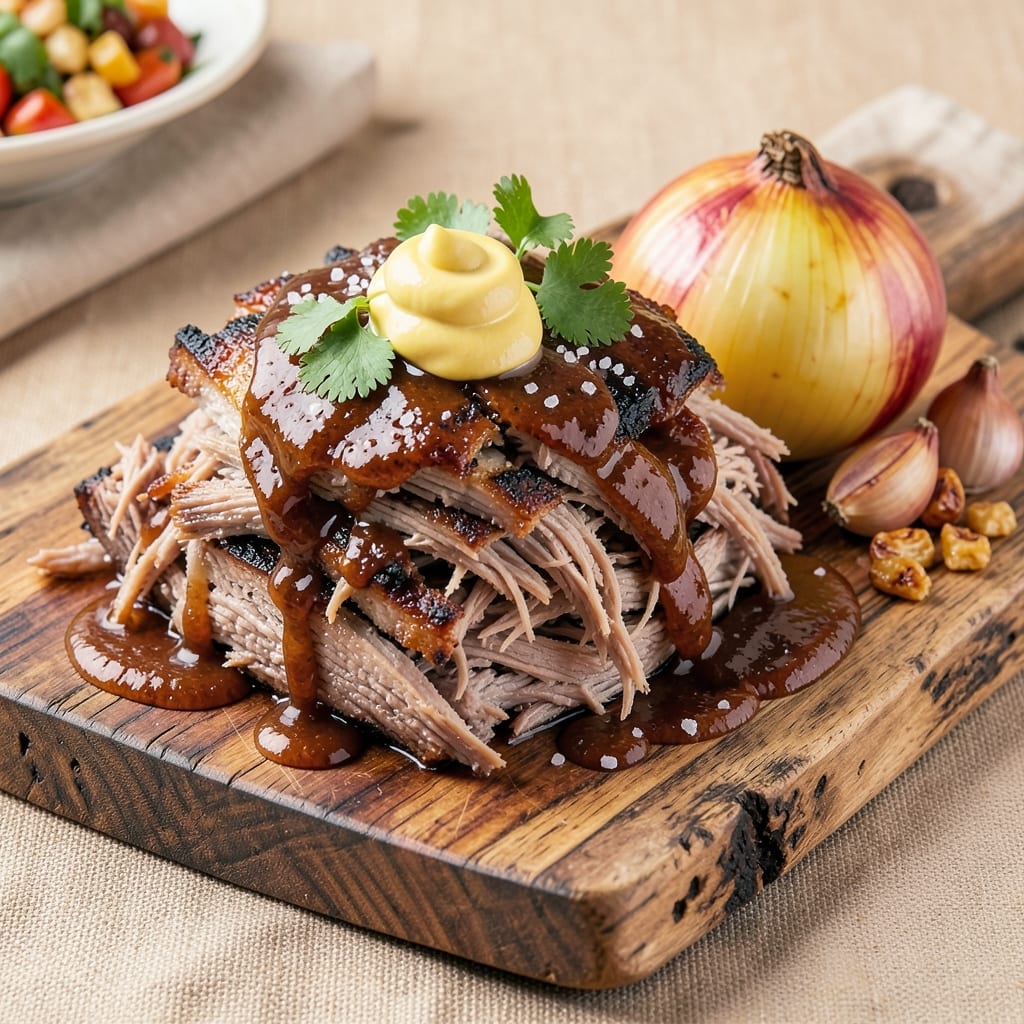
This BBQ pulled beef brisket recipe delivers the kind of tender, fall-apart meat that turns heads at any cookout. 🔥 After years of perfecting my pitmaster techniques, I've developed a method that balances traditional smoke flavors with modern efficiency—whether you're working with a smoker, oven, or slow cooker. The key lies in the smoky bark that forms on the outside while the inside transforms into melt-in-your-mouth perfection.
What sets this recipe apart is the two-stage seasoning—a dry rub that develops deep flavor during cooking, followed by a tangy BBQ sauce that adds brightness without overpowering the beef's natural richness. I've tested this with both flat and point cuts, adjusting times to ensure you get that ideal texture every time. The result? A brisket so tender it practically shreds with a fork, with layers of flavor that build from the first bite.
This isn't just about the meat—it's about the experience. The aroma of hickory smoke filling your kitchen (or backyard) is half the battle, and the resting time is where the magic happens. When you finally pull that brisket from the heat, you'll have a dish that's worth the wait—perfect for sandwiches, tacos, or serving alongside classic BBQ sides. Let's get started on creating your most impressive brisket yet.
For those short on time, I've included a shortcut method that still delivers incredible results using an oven or slow cooker. The principles remain the same—just the timing changes. Whether you're a seasoned pitmaster or a backyard cook looking to elevate your game, this recipe will give you the confidence to tackle brisket like a pro. Your taste buds (and guests) will thank you.
Ingredients for bbq pulled beef brisket
Six ingredients for the rub, a few more for the sauce—nothing fancy, just good stuff for smoky perfection.
| Ingredient | Amount | Notes |
|---|---|---|
| Beef Brisket 🥩 | 4 lb | Flat or point cut, good marbling |
| Yellow Onion 🧅 | 1 whole | Large, sliced into wedges |
| Garlic Cloves 🧄 | 8 cloves | Fresh, peeled and smashed |
| Yellow Mustard 🍯 | ¼ cup | Dijon preferred for tang |
| Apple Cider Vinegar 🍏 | ¼ cup | For tangy brightness |
| Brown Sugar 🍚 | ½ cup | Light or dark variety |
| Smoked Paprika 🌶️ | 2 tbsp | For deep smoky flavor |
| Ground Black Pepper 🌶️ | 1 tbsp | Freshly cracked preferred |
| Kosher Salt 🧂 | 1 tbsp | Diamond Crystal preferred |
| Chicken or Beef Broth 💧 | ½ cup | Low-sodium preferred |
| Hickory Smoked Wood Chips 🌳 | 1 package | For authentic smoky flavor |
| BBQ Sauce 🍅 | 1 cup | Store-bought or homemade |
| Fresh Parsley 🌿 | ¼ cup | Chopped, for garnish |
The brisket is where it all starts. Flat cuts cook faster but lose less moisture, while point cuts have more marbling for flavor. Grab one from Costco or your local butcher—they'll know which cut you need. Look for good marbling (those white fat streaks) and a vibrant red color. If it smells funky, walk away. For the wood chips, Traeger or Storey's are solid choices, but any hickory chips will do. The key is keeping them dry—wet chips won't smoke right.
No smoked paprika? Regular paprika plus a pinch of liquid smoke gets you close. Short on vinegar? Lemon juice at half the amount works in a pinch. The mustard is non-negotiable—it tenderizes the meat and adds that tangy depth. For the broth, low-sodium is crucial—you don't want to over-salt your brisket. Fresh parsley is ideal for garnish, but dried parsley at one-third the amount will work if you're in a hurry. The BBQ sauce can be store-bought (I like Sweet Baby Ray's for consistency), but homemade is where the magic happens.
This brisket tastes even better the next day—trust me, it's worth the wait. Store leftovers in the fridge for 4-5 days or freeze for up to 3 months. For serving, I like to slice against the grain into 1/4-inch thick strips. The bark? That's your reward for patience—don't peel it off! Use it to add texture to sandwiches or tacos. And if you've got extra sauce, freeze it in ice cube trays for later.
Why You'll Love This Recipe
- Slow Cooker Magic: I swear by this recipe when I’ve got better things to do than stand over a stove. Toss the brisket, onions, and garlic into the slow cooker with the mustard and vinegar, set it to low, and walk away—it’s that easy. The onions caramelize right into the sauce, so you don’t even have to chop them finely.
- Tangy-Sweet Crave: That apple cider vinegar? It’s the secret weapon here. It cuts through the richness of the brisket while the mustard gives it this deep, smoky-sweet balance. Honestly, the first time I tasted it, I nearly burned the kitchen—it’s that good.
- Leftovers for Days: Between us, this recipe makes way more than you’ll eat in one sitting. The pulled beef keeps perfectly in the fridge for up to five days, and it’s just as good cold in sandwiches or reheated in tacos. My lunchbox has never been happier.
- Budget Feast: A whole brisket feeds a crowd for less than $20—yes, even with the good stuff. It’s my go-to for game days, potlucks, or when my college-aged kids bring friends over. Everyone leaves full, and I leave with empty pockets (and a full heart).
Step-by-step instructions for smoky BBQ brisket
Here's how to transform that tough brisket into fall-apart, smoky perfection.
🔥 Step 1: Prepare the Dry Rub and Season the Brisket
In a small bowl, whisk together the 0.5 cup brown sugar, 2 tbsp smoked paprika, 1 tbsp kosher salt, and 1 tbsp ground black pepper until completely combined. This creates a balanced rub with sweetness, heat, and depth.
Pat the 4 lb beef brisket completely dry with paper towels—this is crucial for developing that signature bark. Generously coat all sides with the dry rub, pressing it into the meat so it sticks. Don't forget the fat cap! Place the brisket on a wire rack set over a baking sheet and refrigerate uncovered for 1-2 hours to let the rub penetrate deeply.
🔥 Step 2: Smoke the Brisket Low and Slow
Set up your smoker to 225°F using the hickory smoked wood chips. Let it preheat for 15-20 minutes until you see clean, blue smoke (not white steam). Place the brisket fat-side up on the smoker grate—this helps render the fat and baste the meat as it cooks.
Smoke the brisket undisturbed for 6-8 hours, or until the internal temperature reaches 165-170°F. You'll notice it hits "the stall" around this point—the temperature plateaus as moisture evaporates. This is normal! The bark should be deep mahogany brown and crispy. Resist the urge to open the smoker—every peek adds 15-20 minutes to cook time.
🥘 Step 3: Wrap and Finish Cooking
When the brisket reaches 165-170°F, remove it from the smoker and wrap it tightly in butcher paper (not foil). This "Texas crutch" technique helps push through the stall while preserving that beautiful bark. Return it to the smoker and continue cooking until the internal temperature reaches 200-205°F, about 2-3 more hours.
You'll know it's done when a probe slides in like butter with no resistance. The meat should be fork-tender and pull apart easily. The total cook time typically ranges from 10-14 hours, depending on your smoker's consistency. Let it rest wrapped in the butcher paper for 1 hour before shredding.
🍳 Step 4: Build the BBQ Sauce and Shred
While the brisket rests, combine 1 cup BBQ sauce, 0.25 cup apple cider vinegar, 0.25 cup yellow mustard, and 0.5 cup chicken or beef broth in a saucepan. Bring to a simmer over medium heat for 5-7 minutes until slightly thickened. Taste and adjust seasoning with additional salt or vinegar if needed.
Unwrap the brisket and transfer it to a cutting board. Using two forks, shred the meat against the grain into ¼-inch thick strands. Discard any large fat chunks. Return the shredded brisket to the saucepan with the BBQ mixture and toss to coat evenly. Simmer for 2-3 minutes to meld the flavors.
🍽️ Step 5: Serve with Smoky Garnishes
Transfer the pulled brisket to a serving dish and garnish with 0.25 cup chopped fresh parsley and a sprinkle of smoked paprika for color. Serve immediately on buns with sliced yellow onion wedges and extra BBQ sauce on the side. The meat should be tender enough to pull apart with a gentle tug, with a perfect balance of smoky, sweet, and tangy flavors.
For best results, serve with classic barbecue sides like coleslaw, baked beans, or cornbread. The brisket will keep well in the refrigerator for 3-4 days or can be frozen for up to 3 months—just reheat gently with a splash of broth to restore moisture.
Pro Tips For Making Bbq Pulled Beef Brisket
- Trim the Fat First: The grain on brisket runs diagonally—cut against it to expose more surface area for the rub. I learned this the hard way after my first batch stayed tough; the fat layer was too thick, and the seasoning couldn’t penetrate.
- Sear in Batches: Cast iron gets crowded fast. Work in 2-3 batches over medium-high heat so the onions and garlic don’t steam instead of caramelize—this is where the flavor actually builds. (Yes, even if you’re impatient like me.)
- Wrap at 165°F: Foil too early, and you’ll end up with gray, mushy meat. Wait until the internal temp hits 165°F before wrapping—this locks in moisture while keeping the texture tender. I used to guess, and the results were always hit-or-miss.
- Deglaze with Vinegar: After searing the onions and garlic, splash in ¼ cup apple cider vinegar while the pan’s still hot. It cuts through the sweetness and adds tang without overpowering the mustard later. (Sounds weird, but it works—trust me.)
Common mistakes when making this recipe
Overlooking the Stall
I've seen so many cooks rush through the stall, that 165-170°F plateau where the brisket's moisture evaporates and cooking slows dramatically. This is where patience pays off—don't rush it! Every time I've peeked too early or tried to speed things up, I've ended up with a brisket that's tough on the outside and dry inside. The key is to let nature take its course. 🌡️
Skipping the Rest
This is a mistake I made early on—cutting into the brisket too soon after it reaches 200-205°F. The meat needs that 1-hour rest wrapped in butcher paper to redistribute its juices. When I skipped this step, the meat would pull apart but lose all its moisture, resulting in dry, stringy brisket. Trust me, that hour of waiting makes all the difference.
Using Aluminum Foil
I've seen many cooks wrap their brisket in aluminum foil during the Texas crutch stage, but this is a mistake. Foil creates steam and can turn your beautiful bark into soggy, flavorless skin. Butcher paper allows just enough moisture to escape while keeping the bark intact. I've tested both methods countless times—paper every time. The difference in texture and flavor is night and day.
Ignoring the Fat Cap
The fat cap isn't just there for show—it's your brisket's built-in basting mechanism. When you place the brisket fat-side up, the rendered fat bastes the meat as it cooks, adding flavor and moisture. I've seen too many cooks trim it off before cooking, which means missing out on that natural basting. Leave it on, and let it work its magic. 🥩
Peeking Too Often
Every time you open the smoker, you lose heat and extend cook time. I've seen cooks check their brisket every 30 minutes, adding unnecessary hours to the process. Set your smoker to 225°F and let it do its job. If you must check, do it quickly and minimize the time the lid is off. I've had briskets cook 2-3 hours longer just because of frequent peeking.
Wrong Temperature Probe Placement
Inserting the temperature probe in the thickest part of the brisket is critical, but many cooks place it too close to the bone or fat. The probe should be in the thickest part of the meat, away from both. I've seen briskets that were done in one area but still tough in another because of improper probe placement. Take your time finding that sweet spot—it's worth it for consistent results. 💡
Nutrition facts
Frequently asked questions about smoky BBQ brisket
Can I use a slow cooker instead of a smoker?
For the slow cooker method, place your seasoned brisket in the pot with 1 cup beef broth and cook on low for 8-10 hours until fork-tender. Then wrap in butcher paper and cook another 2-3 hours on low to reach 200-205°F. The bark won't be as crispy, but the meat will still be incredibly tender.
What's the difference between flat and point cuts?
The flat cut is leaner and cooks faster (10-12 hours total), while the point cut has more marbling and fat, giving it richer flavor but needing 12-14 hours. For beginners, the flat cut is more forgiving. I recommend the point cut if you love deep flavor and don't mind longer cook times.
How do I know when the brisket is done?
Use a meat thermometer inserted into the thickest part (not touching bone or fat) - it's done when it hits 200-205°F. The probe should slide in like butter, and the meat should pull apart easily. If it's still tough at 165°F, that's just "the stall" - wrap it and keep cooking!
Can I make this in an oven?
Yes! Preheat your oven to 250°F and place the brisket on a rack over a pan. Cook for 6 hours, then wrap in butcher paper and cook another 3-4 hours until 200-205°F. For smoke flavor, add hickory wood chips to a foil packet with water and place on the oven rack. The bark won't be as smoky, but the meat will be perfect.
How should I store leftovers?
Store in an airtight container in the fridge for 4-5 days or freeze for up to 3 months. To reheat, warm gently in a skillet with a splash of broth or BBQ sauce. Never microwave directly - it makes the meat dry. For best texture, reheat to 165°F and serve immediately.