
Soups & Stews
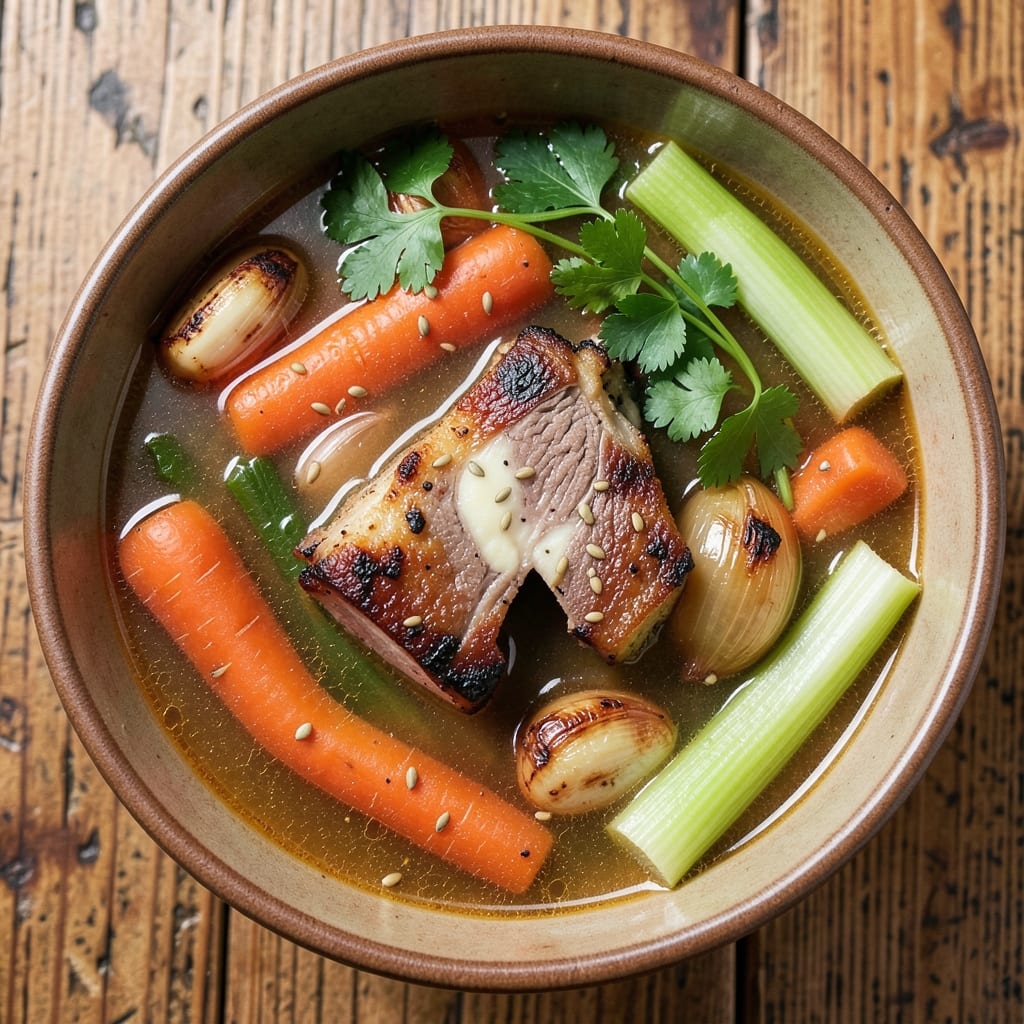
This beef bone broth vegetable soup recipe delivers restaurant-quality depth with homemade broth that transforms simple vegetables into a nourishing, flavor-packed meal. The secret lies in slow-simmering beef bones and aromatic vegetables for hours, extracting rich, gelatinous goodness that elevates every spoonful. What starts as a humble pot of ingredients becomes a deeply satisfying soup with layers of savory complexity—perfect for chilly days or when you crave comfort in a bowl.
The process begins with building the broth: beef bones, onions, carrots, and celery simmer for 12-24 hours, creating a velvety foundation packed with collagen and minerals. This isn’t just any vegetable soup—it’s a homemade experience where every ingredient contributes to the final depth of flavor. The vegetables are sautéed separately to preserve their texture before being gently folded into the finished broth, ensuring each bite is both hearty and balanced.
What you’ll end up with is a rich, golden soup where tender vegetables float in a glossy broth that coats your spoon with every sip. The aroma alone—warm, meaty, and herbaceous—will draw everyone to the table. This recipe isn’t just about nourishment; it’s about transforming basic ingredients into something extraordinary with minimal effort but maximum reward.
Serve with crusty bread to soak up every last drop of that flavorful broth, or pair it with a simple green salad for a complete meal. The beauty of this soup lies in its versatility—it’s equally comforting as a light lunch or a filling dinner. Let’s get started on creating something truly special from scratch.
Ingredients for beef bone broth vegetable soup
Six pounds of bones and aromatic vegetables transform into a deeply satisfying, restaurant-quality beef bone broth vegetable soup.
| Ingredient | Amount | Notes |
|---|---|---|
| Beef Bones (Kneecaps or Marrow Bones) 🦴 | 4 lb | Raw, uncooked, organic preferred |
| Yellow Onions 🧅 | 2 whole | Medium size, roughly chopped |
| Carrots 🥕 | 4 whole | Medium size, roughly chopped |
| Celery Stalk 🧄 | 4 whole | Roughly chopped, including leaves |
| Garlic Cloves 🧄 | 6 cloves | Peeled, smashed |
| Fresh Parsley 🌿 | ½ cup | Stems included, roughly chopped |
| Fresh Thyme 🌿 | 2 sprigs | Stems intact |
| Bay Leaves 🌿 | 2 whole | Dried or fresh |
| Apple Cider Vinegar 🍎 | ¼ cup | Raw, unfiltered preferred |
| Sea Salt 🧂 | 1 ½ tbsp | Diamond Crystal preferred |
| Black Peppercorns 🌶️ | 1 tbsp | Freshly cracked |
| Potatoes 🥔 | 2 lb | Russet or Yukon Gold, peeled |
| Sweet Potatoes 🍠 | 1 lb | Peeled, cubed |
| Turnips 🥬 | 1 lb | Peeled, cubed |
| Extra-Virgin Olive Oil 🫒 | ¼ cup | For sautéing vegetables |
The bones are the foundation—kneecaps or marrow bones deliver the richest gelatin and flavor. Local butchers often sell them at a fraction of grocery store prices, and organic options from Whole Foods or Trader Joe's ensure higher quality. Avoid bones with meat still attached, as they can make the broth cloudy. For extra depth, include a few beef marrow bones—their soft centers melt into luxurious richness. The vegetables—onions, carrots, and celery—form the classic 'mirepoix' base, but don’t skimp on quantity; their slow simmering extracts maximum flavor. Fresh herbs like thyme and parsley add aromatic complexity, while bay leaves lend subtle earthiness.
No beef bones? Pork or chicken bones work in a pinch, though flavor will differ. Short on carrots? Substitute parsnips or leeks for a slightly sweeter profile. The apple cider vinegar is non-negotiable—it helps extract collagen and brightens the broth. For a vegetarian version, use mushroom stems or kombu instead of bones, simmering for 6+ hours. The potatoes, sweet potatoes, and turnips should be cubed evenly to ensure consistent cooking. If using pre-chopped frozen vegetables, thaw and pat dry first to prevent dilution. For extra umami, add 1 tbsp soy sauce or 1 piece of kombu to the broth during simmering.
This soup tastes even better the next day as flavors meld. Store the broth in glass jars in the fridge for up to 5 days or freeze for 6 months. The vegetables can be sautéed ahead and refrigerated for 3 days before folding into the broth. For meal prep, portion the soup into soup crocks and reheat on the stove—never microwave, as it can make the broth cloudy. The bones can be roasted at 400°F for 30 minutes before simmering to deepen flavor, but this step is optional. Leftovers? Freeze in ice cube trays for easy portioning later.
Why You'll Love This Recipe
- No-Chop Nightmare: I swear by the "rough chop" method here—the carrots don’t need julienne precision, and the celery can stay in big hunks. Between us, my knife skills are questionable, and this soup still tastes like a hug from a French grandmother.
- Umami Bomb: That marrow bone? It turns the broth into liquid gold—deep, rich, and slightly sweet without any fancy seasoning. Honestly, the first sip makes me forget I even own a slow cooker, let alone how to use it.
- Leftovers That Beg: This soup actually improves overnight. The flavors meld into something so good, I’ll eat it cold straight from the fridge when I’m too tired to reheat. (Yes, even on a Tuesday night.)
- Budget Magic: Kneecap bones are cheaper than you think, and they stretch into days of meals. I’ve fed my whole family for under $15—plus, the veggies are the basic pantry trio. Minimal cost, maximum satisfaction.
Step-by-step instructions for rich beef bone broth vegetable soup
Transform simple ingredients into a deeply flavorful soup using slow-cooked broth as the foundation.
Prepare and Roast the Beef Bones for Maximum Flavor
Preheat your oven to 425°F. Pat the 4 lb beef bones (kneecaps or marrow bones) completely dry with paper towels—this ensures maximum browning and flavor extraction. Place them on a baking sheet in a single layer.
Rub each bone generously with 0.25 cup extra-virgin olive oil, then sprinkle with 1.5 tbsp sea salt and 1 tbsp black peppercorns. Roast for 30-40 minutes until deeply browned and crispy in spots. This caramelization forms the flavor base for your broth. Flip the bones halfway through roasting for even browning.
While the bones roast, roughly chop the 2 whole yellow onions, 4 whole carrots, and 4 whole celery stalks (including leaves). These will form the aromatic vegetable base for your soup. Set them aside—they'll join the broth later.
Build the Broth with Slow Cooking and Acidic Balance
Transfer the roasted bones to a large stockpot or Dutch oven. Add 8-10 cups cold water (enough to cover the bones by 2 inches) and bring to a boil over high heat. Once boiling, reduce heat to low and skim off any foam that rises to the surface for the first 15 minutes. This removes impurities for a clearer broth.
Add the 6 peeled, smashed garlic cloves, 2 sprigs fresh thyme, 2 whole bay leaves, and 0.25 cup apple cider vinegar. The vinegar helps extract collagen from the bones, creating a richer, gelatinous broth. Simmer uncovered for 3-4 hours—this long cook time is essential for developing deep flavor and extracting nutrients from the bones.
After 3 hours, add the roughly chopped vegetables and continue simmering for another 30-45 minutes until the vegetables are tender. The broth should now have a rich, amber color and a deep, savory aroma. If it reduces too much, add hot water to maintain the 2-inch liquid level above the bones.
Strain and Prepare the Vegetable Mixture
Line a large colander with cheesecloth or a fine-mesh strainer and place it over a large bowl or pot. Carefully ladle the broth through the strainer, pressing gently on the bones and vegetables to extract all the flavorful liquid. Discard the solids, but save the strained broth—this is the heart of your soup.
While the broth strains, peel and cube the 2 lb potatoes, 1 lb sweet potatoes, and 1 lb turnips into 1-inch pieces. Heat 0.25 cup extra-virgin olive oil in a large pot over medium heat. Add the cubed vegetables and sauté for 8-10 minutes until they begin to soften and develop a slight golden color. This step enhances their natural sweetness and adds depth to the soup.
Combine and Simmer the Soup to Perfection
Return the strained broth to the pot with the sautéed vegetables. Bring the mixture to a gentle boil, then reduce heat to medium-low and simmer uncovered for 20-25 minutes until the vegetables are fork-tender. The soup should have a velvety texture with the vegetables fully cooked but not mushy.
Season to taste with additional sea salt and black peppercorns if needed. Stir in the 0.5 cup fresh parsley (stems included) just before serving to brighten the soup with fresh herbs. The parsley adds a vibrant contrast to the rich, umami depth of the broth.
Serve with Garnishes for a Restaurant-Quality Finish
Ladle the soup into bowls and garnish each serving with a sprinkle of fresh parsley and a drizzle of extra-virgin olive oil. The oil adds a final layer of richness, while the parsley provides a pop of color and freshness. Serve immediately while hot, as the flavors are at their peak.
This soup delivers a harmonious balance of deep, savory broth and tender vegetables. The homemade broth infuses every bite with a richness that store-bought versions simply can't match. The combination of marrow bones and kneecaps ensures a perfect balance of gelatinous body and robust flavor, making this soup a nourishing centerpiece for any meal.
Pro Tips For Making Beef Bone Broth Vegetable Soup
- Char the Bones First: I learned this the hard way—skipping the quick sear on high heat means flavor gets stuck in the pot instead of infusing the broth. Pat the bones dry, then hit them with a blowtorch or broiler for 3-4 minutes per side until they’re deep brown. That crust is where the depth lives.
- Cut Onions in Half: Whole onions burn before they soften, turning your broth bitter. Instead, slice them into 6 uneven wedges—thick at the root, thin at the stem. They’ll cook faster without falling apart, and you’ll taste their sweetness instead of ash.
- Simmer, Don’t Boil: After the initial 30 minutes of hard boiling, drop the heat so you’re seeing tiny bubbles at the edges, not a rolling frenzy. I used to ignore this, and my broth turned cloudy. Low and slow (2-3 hours minimum) pulls collagen into the liquid for real richness.
- Add Celery Last: Tossing celery in early makes it mushy and flavorless. Wait until the last 45 minutes to add it—same goes for carrots. You’ll get bright, crisp texture and none of that sad, limp veggie sludge at the bottom. (Yes, even if you’re impatient like me.)
Common mistakes when making your beef bone broth vegetable soup
Skipping the Roast
I’ve seen beginners skip roasting the bones entirely, thinking it’s optional. Big mistake! Roasting develops deep, caramelized flavors through the Maillard reaction, which you can’t replicate by just simmering raw bones. If you’re short on time, at least sear them in a dry pot over high heat for 5-10 minutes per side—this still adds significant depth. 🔥
Using Too Much Water
Drowning the bones in 12+ cups of water dilutes the flavor and weakens the gelatin extraction. Stick to 8-10 cups (just enough to cover bones by 2 inches). If you’re worried about reduction, add water in ½-cup increments later rather than starting with too much. The broth should be rich, not watery.
Ignoring the Skimming Step
Skipping the 15-minute skimming of foam lets impurities cloud your broth. Use a fine-mesh strainer or ladle to remove scum—this is especially critical in the first 10 minutes of simmering. Pro tip: Save the skimmed foam for compost or discard it entirely; it’s not useful for anything else. The clearer your broth, the more elegant the final soup.
Overcooking the Vegetables
Tossing all the vegetables into the broth at once risks turning them mushy. Instead, sauté the potatoes, sweet potatoes, and turnips separately for 8-10 minutes before adding them to the broth. This step preserves their texture while building flavor. If you’re in a rush, par-cook them in the microwave for 5 minutes first, then sauté—just don’t skip the oil and heat entirely. 🥔
Forgetting the Vinegar
The apple cider vinegar is non-negotiable—it helps break down collagen and brighten the broth. Without it, your soup will taste flat and lack the rich, gelatinous body that makes homemade broth exceptional. If you’re avoiding vinegar, try lemon juice (¼ cup) as a substitute, but it won’t extract collagen as effectively.
Rushing the Simmer Time
Simmering for less than 3 hours means your broth won’t develop enough depth or gelatin. If you’re pressed for time, extend the simmer to 4-6 hours for a truly luxurious result. The longer you cook, the more minerals and collagen dissolve into the liquid. For maximum flavor, aim for 8-12 hours—this is where the magic happens. ⏳
Nutrition facts
Frequently asked questions
Can I use chicken or pork bones instead of beef?
Yes, but the flavor will differ significantly. Chicken bones create a lighter broth perfect for poultry-based soups, while pork bones yield a slightly sweeter, richer result. For a beef-like depth, use pork neck bones or pork trotter bones. The key is to adjust simmering time—chicken broth needs only 6-8 hours, while pork benefits from 8-12 hours for maximum gelatin extraction.
How do I make this soup vegetarian?
Replace the beef bones with mushroom stems or kombu seaweed (½ sheet) for umami depth. Simmer with the same vegetables and herbs for 6-8 hours instead of 3-4. Add 1 tbsp soy sauce or miso paste for extra savory richness. The texture will be thinner but still deeply flavorful—perfect for hearty vegetarian meals.
Can I make this soup in a slow cooker? Roast the bones first, then transfer everything (bones, water, vegetables, aromatics) to your slow cooker. Cook on low for 12-16 hours or high for 8-10 hours. The slow cooker's gentle heat excels at extracting collagen. Just
Why does my broth look cloudy?
Cloudiness usually means unskimmed impurities or insufficient simmering. Always skim foam for the first 15 minutes, and simmer uncovered for at least 3 hours. For extra clarity, strain through a cheesecloth-lined colander twice. If using raw bones, roasting them first (or searing) helps prevent cloudiness by reducing impurities before cooking.
What vegetables can I substitute if I don't have turnips?
Turnips add earthy sweetness—replace them with rutabaga, parsnips, or fennel for similar texture. For extra heartiness, add 1 cup chopped kale or Swiss chard (add these last to prevent wilting). Avoid watery veggies like zucchini or cabbage—they can dilute the broth's richness. Stick to starchy or slightly sweet vegetables that hold up well in long simmers.