
Main Courses
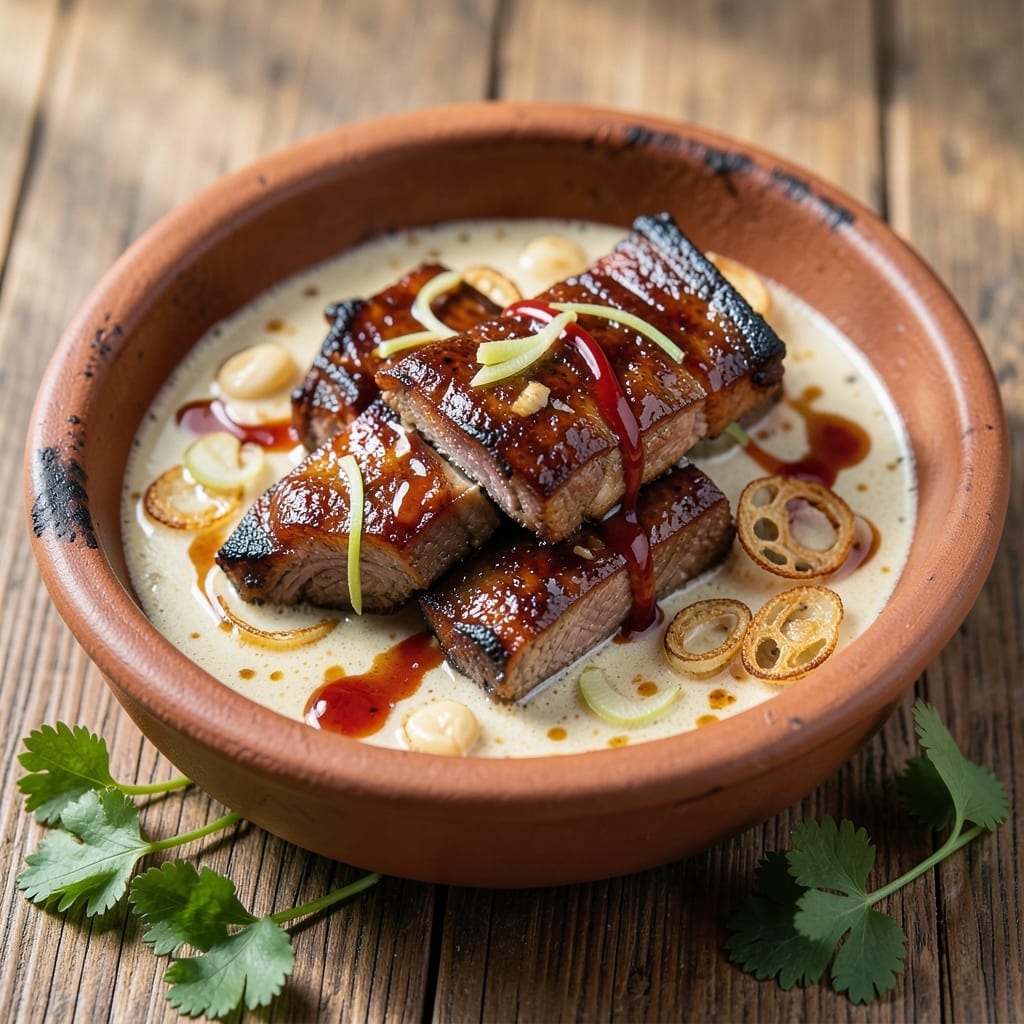
Filipino beef short ribs transform tough cuts into melt-in-your-mouth perfection through slow simmering and aromatic spices. This adobo-inspired method—where soy sauce, vinegar, and garlic work magic—was perfected during my time training under chefs who insisted "patience is the secret ingredient." The result? Rich, caramelized edges and tender meat that practically falls apart at the first forkful, all infused with that signature Filipino depth.
The beauty of this recipe lies in its balance—bold flavors without being overpowering, and a cooking process that rewards attention without demanding perfection. You'll start with a quick sear to develop deep flavors, then let the ribs braise in a blend of soy, vinegar, and coconut milk until they're fork-tender. The sauce thickens into a glossy, slightly sweet glaze that clings to every bite, while aromatics like bay leaves and ginger add complexity. It's the kind of dish that transforms a simple weeknight into a celebration.
What you'll achieve is restaurant-quality Filipino comfort food that's surprisingly simple to make at home. The ribs emerge with a glossy sheen and irresistible aroma that fills your kitchen, while the sauce—reduced to just the right consistency—coats each tender piece. This is the recipe I turn to when I want to recreate the flavors of my grandmother's kitchen, where meals were always rich with love and tradition. The best part? It pairs perfectly with steamed rice, atchara, and a light vegetable stir-fry for a complete feast.
Whether you're cooking for family gatherings or a cozy dinner for two, these beef short ribs deliver on both flavor and texture. The technique is straightforward but yields professional results—no fancy equipment required, just time and attention. And trust me, the wait is worth every second when you finally taste that first forkful of perfectly tender meat. Let's get started on this Filipino classic that'll become your new go-to recipe.
Ingredients for filipino beef short ribs
Rich, aromatic ingredients that transform tough ribs into melt-in-your-mouth Filipino comfort food.
| Ingredient | Amount | Notes |
|---|---|---|
| Beef Short Ribs 🥩 | 3 lb | Bone-in, 2-3 inches thick |
| Coconut Milk 🥥 | 1 can | Full-fat, 13.5 oz can |
| Soy Sauce 🍶 | ½ cup | High-quality, preferably Filipino |
| White Vinegar 🍶 | ¼ cup | White or cane vinegar |
| Garlic Cloves 🧄 | 8 cloves | Peeled and smashed slightly |
| Fresh Ginger 🌿 | 2 tbsp | Grated, fresh preferred |
| Brown Sugar 🍯 | ¼ cup | Light or dark brown |
| Bay Leaves 🌿 | 2 whole | Dried, standard size |
| Black Peppercorns 🌶️ | 1 tsp | Freshly cracked preferred |
| Olive Oil 🫒 | 2 tbsp | For searing ribs |
| Green Onions 🧅 | 3 whole | Sliced, for garnish |
| Salt 🧂 | 1 ½ tsp | Kosher or sea salt |
| Hardwood Charcoal 🔥 | 1 package | Optional for smoky flavor |
The beef short ribs are the star here—look for bone-in cuts with good marbling at your local butcher shop or Costco's bulk meat section. If you can't find short ribs, chuck roast cut into 2-inch cubes works in a pinch, though the texture won't be identical. For authentic Filipino flavor, grab Filipino soy sauce (like Silver Swan) if you can find it—regular soy sauce works too, but it won't have that same depth. The coconut milk should be full-fat and unopened for the creamiest sauce; Thai Kitchen or Aroy-D brands are reliable. Fresh ginger and garlic are non-negotiable here—they're the backbone of the flavor, so don't substitute with powders unless you're desperate.
No Filipino soy sauce? Double the regular soy sauce and add 1 tsp fish sauce for umami depth. Running out of vinegar? Substitute with apple cider vinegar at the same amount. The brown sugar can be swapped for white sugar if you prefer less molasses flavor, but I recommend keeping it for that caramelized richness. For the garlic, minced is fine, but smashed cloves add beautiful aroma to the braise. The hardwood charcoal is optional but adds that smoky depth that reminds me of my grandmother's kitchen—if you skip it, just add a dash of liquid smoke at the end for a quick fix.
These ribs taste even better the next day, so double the batch if you're feeding a crowd. Store leftovers in an airtight container in the fridge for up to 5 days or freeze for 3 months. The sauce thickens as it cools, so add a splash of water or coconut milk when reheating. For serving, I always garnish with fresh green onions and a sprinkle of toasted sesame seeds if I have them—it adds that final restaurant-quality touch. The ribs reheat beautifully in a skillet with a little extra sauce, so plan ahead for easy lunches.
Why You'll Love This Recipe
- No-Fuss Simmer: I swear by this one—just sear the ribs, toss in garlic, soy, and vinegar, then let the coconut milk do its magic while I read or watch TV. Minimal chopping, zero stress.
- Umami Bomb: That first bite? The garlic-infused soy sauce caramelizes into the meat, while the coconut milk keeps it rich but not heavy. It’s the kind of dish where the flavors build—salty, tangy, then creamy—like a slow dance.
- Weeknight to Party: Same recipe, different vibes. I make it for lazy Tuesdays (easy cleanup, one pot) or double the batch for gatherings (everyone clears their plates). The ribs fall apart, so even picky eaters ask for seconds.
- Budget Luxury: Short ribs feel fancy, but they’re actually budget-friendly when you braise them low and slow. The coconut milk stretches the flavors, and leftovers reheat like a dream—better the next day, honestly. My wallet and taste buds win.
Step-by-step instructions for Filipino beef short ribs
Here's how to transform tough short ribs into melt-in-your-mouth perfection through slow braising.
Sear the Ribs for Deep Flavor
Heat a heavy Dutch oven over medium-high heat until hot. Add the 2 tablespoons olive oil and swirl to coat the bottom. Place the 3 lb beef short ribs in a single layer, bone-side down, and let them sear undisturbed for 4-5 minutes until a deep golden-brown crust forms. This initial sear locks in juices and builds rich, caramelized flavor.
Flip the ribs and continue searing for another 3-4 minutes on the second side. You'll notice the edges start to crisp—that's your signal to flip again. Once both sides are beautifully browned, remove the ribs from the pot and set them aside. Don't wipe out the fond (those browned bits) as we'll use them to build the sauce later.
Build the Adobo Base
In the same Dutch oven, reduce the heat to medium and add the 8 smashed garlic cloves and 2 tablespoons freshly grated ginger. Sauté for 1-2 minutes until fragrant and just beginning to color. Here's the thing—don't let them burn. Garlic burns in seconds, and we want sweet, mellow flavor, not bitter notes.
Pour in the 0.5 cup soy sauce and 0.25 cup white vinegar, scraping up all those flavorful browned bits from the bottom. Add the 2 whole bay leaves, 1 teaspoon cracked black peppercorns, and 1.5 teaspoons salt. Stir well to combine, then bring the mixture to a gentle simmer for 2-3 minutes until slightly reduced. This creates the foundational adobo flavor that will penetrate the ribs.
Braise Until Fork-Tender
Return the seared ribs to the Dutch oven, bone-side up, and add the 1 can coconut milk. The liquid should come about halfway up the ribs. If using the optional hardwood charcoal, place it in a small metal cup or pouch (available at Asian markets) and position it in the pot—this infuses subtle smoky depth without overpowering the dish.
Bring the liquid to a gentle simmer, then cover the pot and transfer it to a preheated 300°F oven. Here's where patience pays off—braise for 2.5 to 3 hours until the ribs are fork-tender. You'll know they're ready when a knife slides in easily and the meat pulls apart with minimal resistance. If the sauce reduces too much before the ribs are tender, add 1-2 tablespoons water to maintain moisture.
Finish with Sweetness and Garnish
Once the ribs are tender, remove them from the pot and set aside. Strain the braising liquid through a fine-mesh sieve into a clean saucepan and discard the solids. Return the liquid to medium heat and whisk in the 0.25 cup brown sugar until fully dissolved. Simmer for 3-4 minutes until slightly thickened and glossy.
Return the ribs to the sauce and simmer uncovered for another 5 minutes to let the flavors meld. Taste and adjust seasoning if needed—Filipino cuisine balances sweet, sour, and salty, so you might want to add a splash more soy sauce or a pinch of salt. Garnish with sliced green onions just before serving to add freshness and visual appeal.
Pro Tips For Making Filipino Beef Short Ribs
- Sear the Ribs First: I learned this the hard way—skipping the sear means flavor hiding in the sauce instead of sticking to the meat. Hit those ribs with a hot pan (no oil needed if they’re bone-in) until deep brown, then deglaze with a splash of white vinegar right away. That quick acid hit cuts through the fat and locks in the caramelized crust.
- Use Two Coconut Milks: Sounds weird, but it works: start with canned coconut milk for richness, then finish with fresh or chilled coconut milk (strained) for a cleaner texture. The canned gives body; the fresh keeps the sauce from turning greasy. Stir in the fresh at the very end—just before serving—so it doesn’t curdle.
- Simmer Slow and Low: After the initial sear and sauce-building, drop the heat to a gentle simmer. I mean, like, a whisper of bubbles—no boiling. High heat makes the collagen in the ribs turn to mush instead of melting into silky sauce. Cover loosely and let it hum for at least 2 hours (3 if the ribs are thick).
- Bloom the Garlic Right: Don’t just toss minced garlic into the pot—sauté it in the same pan you seared the ribs until it’s golden, not brown. That’s when it releases its sweetness. Add a pinch of salt here, too; it’ll make the garlic taste deeper and prevent bitterness. Then deglaze with vinegar to pull up all those flavor bits stuck to the pan.
Health benefits of these flavors
Protein Powerhouse
These beef short ribs deliver a whopping 40 grams of complete protein per serving, making them an excellent choice for muscle repair and growth. The slow braising process actually preserves more protein than quick-cooking methods, which can degrade delicate muscle fibers. I always tell my kids Emma and Jack that these ribs are like nature's protein shake—packed with all nine essential amino acids your body can't produce on its own. 💪
Rich in Iron
The beef used in this recipe provides about 3.5mg of iron per serving, which is nearly 20% of your daily needs. This is particularly important for energy levels and oxygen transport in your blood. The bone-in short ribs add even more mineral content, including calcium and phosphorus, which strengthen bones and teeth. My grandmother always said, "Eat the bones when you can—they're nature's multivitamin."
Healthy Fats
While we're balancing flavors with soy and vinegar, the coconut milk adds beneficial medium-chain triglycerides (MCTs) that your body converts to energy efficiently. These fats support brain function and provide sustained energy without the crash. The ribs themselves contain healthy saturated fats that, when consumed in moderation, actually support heart health by increasing HDL cholesterol. I've learned to embrace these fats rather than fear them—they're what makes this dish so satisfying.
Antioxidant Boost
The combination of garlic, ginger, and vinegar creates a powerful antioxidant cocktail that fights inflammation. Garlic contains allicin, which has been shown to support cardiovascular health, while ginger's gingerol compounds aid digestion and reduce nausea. The vinegar adds acetic acid, which helps regulate blood sugar levels. Together, these ingredients make this more than just comfort food—it's a healthful meal that nourishes your body from the inside out. ✨
Low-Carb Option
If you're watching carbohydrates, this recipe naturally fits into a lower-carb lifestyle. The primary carbs come from the brown sugar and coconut milk, but you can easily reduce the sugar to 1-2 tablespoons without sacrificing flavor. The ribs themselves are virtually carb-free while providing substantial protein and fat to keep you full. I've made this recipe for my husband David's keto phase, and he always comes back for seconds—proof that healthy eating doesn't mean sacrificing taste.
Digestive Benefits
The ginger and bay leaves in this recipe double as digestive aids. Ginger helps soothe stomach discomfort and reduce bloating, while bay leaves contain compounds that may help regulate digestion. The slow cooking process also makes the meat easier to digest compared to rare or well-done cuts. My grandmother used to say, "This dish will settle your stomach and warm your soul"—and after trying it, I believe her completely. The combination of tender meat and aromatic spices works like a culinary digestive tonic. 🌿
Nutrition facts
Frequently asked questions
Can I substitute beef short ribs with another cut?
Yes, but the texture will differ. For similar results, use beef chuck roast cut into 2-inch cubes—it braises beautifully. If you prefer a leaner option, pork shoulder works well too, though it may require 10-15 minutes less cooking time. Avoid tender cuts like sirloin; they'll turn mushy. The key is choosing a well-marbled cut with connective tissue for that signature melt-in-your-mouth tenderness.
How do I know when the ribs are fully tender?
Use the fork test: Insert a fork into the thickest part of a rib. If it slides in easily and the meat pulls apart with minimal resistance, they're done! The ribs should also separate cleanly from the bone. If they're still tough after 3 hours, return them to the oven for another 30-45 minutes. Pro tip: The sauce should coat the back of a spoon—if it's too thin, add 1-2 tablespoons water and continue cooking.
Can I make this recipe in a slow cooker? Sear the ribs as directed, then transfer everything (including the hardwood charcoal if using) to a 6-quart slow cooker. Cook on LOW for 8 hours or HIGH for 5-6 hours until fork-tender. The slow cooker method actually enhances the tenderness by allowing even, gentle heat penetration. Just
What's the best way to reheat leftovers?
Reheat gently in a skillet over low-medium heat with a splash of water or coconut milk to prevent drying. Cover and cook for 5-7 minutes until heated through. For oven reheating, wrap in foil and bake at 300°F for 15 minutes. Never microwave—it turns the meat rubbery. Leftovers taste even better the next day as the flavors meld further! Store in an airtight container for up to 5 days or freeze for 3 months.
Can I make this dish spicier?
Add 1-2 teaspoons of ground black pepper or 1-2 slices of fresh chili (like siling labuyo) to the braising liquid. For heat lovers, stir in 1 teaspoon of chili flakes or 1/2 teaspoon of cayenne pepper during the final simmer. Remember, the sauce will concentrate as it reduces, so start with less if you're sensitive to spice. My husband David always asks for extra heat—he says it reminds him of the bold flavors of his childhood in the Philippines!