
Main Courses
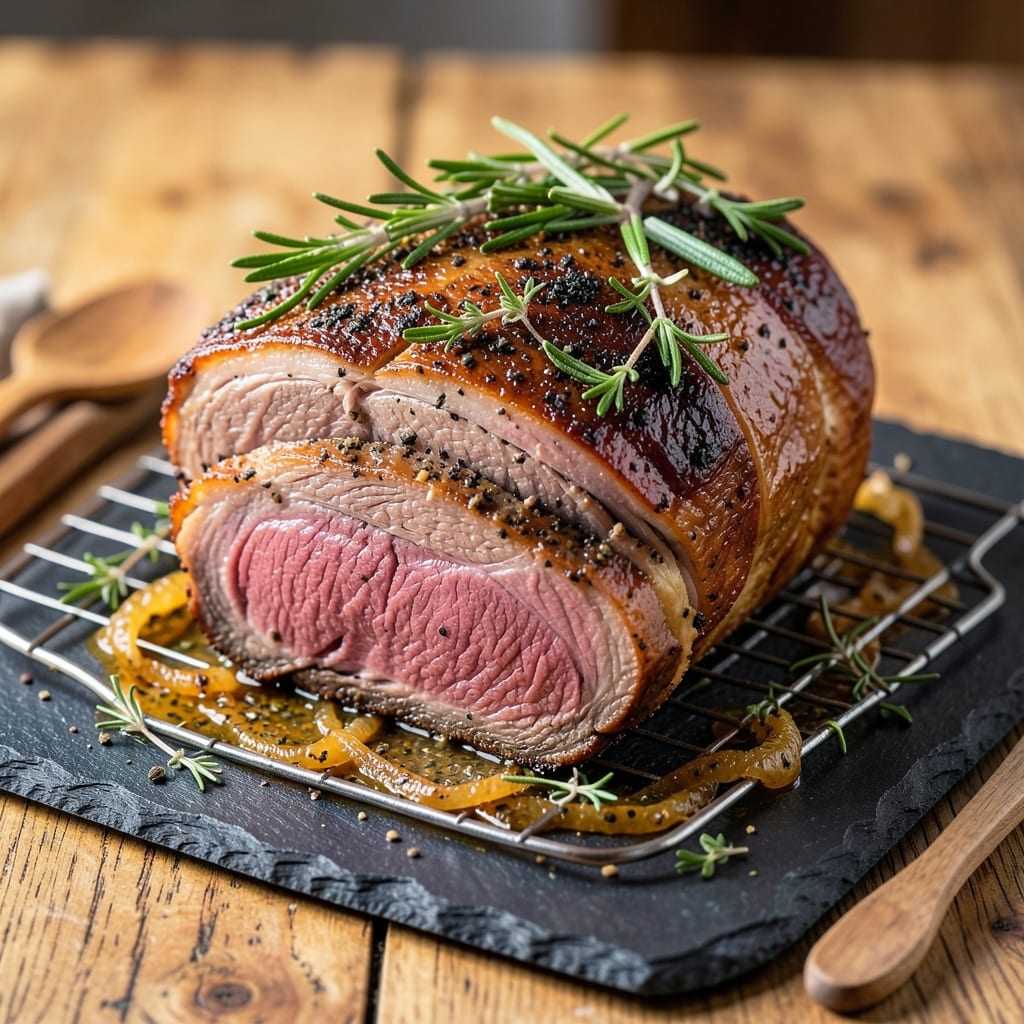
A 500-gram roast beef cooked to medium-rare perfection transforms an ordinary dinner into a showstopping centerpiece. This reverse-sear method ensures a juicy, tender interior with a beautifully caramelized crust—every slice reveals the ideal balance of pink center and rich, savory depth. The key lies in patience and precision, where low-and-slow cooking meets a final high-heat sear for restaurant-quality results at home.
What sets this recipe apart is the dry-brine technique, which enhances flavor and tenderness without altering texture. You'll work with a single high-quality cut, seasoned simply yet effectively, and cooked to an exact internal temperature before achieving that coveted crust. The resting period is just as critical—it allows juices to redistribute, ensuring every bite stays succulent.
By the time you carve into this roast, you'll reveal a perfectly pink center surrounded by a deep mahogany crust, with a glossy sheen that signals perfect doneness. The aroma alone will have everyone anticipating the first bite, while the presentation elevates it from home-cooked to something worthy of a fine-dining table.
Pair this masterpiece with classic sides like roasted root vegetables, creamy mashed potatoes, or a fresh green salad to complete the meal. The right beverage—whether a bold red wine or a crisp lager—will complement the beef's richness and depth, making this a dinner to remember.
Ingredients for 500 roast beef
Precision-crafted ingredients deliver a restaurant-quality roast with perfect medium-rare balance.
| Ingredient | Amount | Notes |
|---|---|---|
| Ribeye Roast Beef 🥩 | 1.1 lb | Bone-in, center-cut preferred |
| Kosher Salt 🧂 | 1 ½ tbsp | Diamond Crystal preferred |
| Freshly Ground Black Pepper 🌶️ | 1 tsp | Coarse grind preferred |
| Extra-Virgin Olive Oil 🫒 | 1 tbsp | For crust development |
| Fresh Thyme Leaves 🌿 | ¼ cup | Stems removed, loosely packed |
| Fresh Rosemary Sprigs 🌿 | 2 whole | Needs removed, chopped |
| Garlic Cloves 🧄 | 3 cloves | Peeled, smashed slightly |
| Unsalted Butter 🧈 | 2 tbsp | Cold, cubed for sear |
| Red Wine 🍷 | ½ cup | Bold, dry variety |
| Beef Tallow or Duck Fat 🧈 | 1 tbsp | For high-heat sear |
| Yellow Onion 🧅 | 1 whole | Thinly sliced, for garnish |
| Fresh Parsley 🌿 | 0.1 cup | Chopped, for garnish |
The ribeye roast is non-negotiable for this technique—its marbling ensures juiciness while the bone-in cut adds flavor depth. Source from a trusted butcher or Costco's prepped roasts for consistency. Look for vibrant red color and visible fat marbling; avoid cuts with grayish hues. The 1.1 lb size serves four generously, allowing for leftovers. For the dry brine, Diamond Crystal kosher salt dissolves more easily than table salt, enhancing tenderness without altering texture. Fresh herbs should be aromatic and vibrant—Whole Foods or local farmers markets often carry the best quality. Prep the garlic by smashing cloves with the flat side of your knife to release flavor without mincing.
No fresh thyme? Dried thyme at one-third the amount works, but fresh imparts superior aroma. Substitute rosemary with sage if needed, though the flavor profile shifts slightly. For the red wine, Cabernet Sauvignon or Malbec add depth, but any bold, dry red will suffice. If you lack tallow, duck fat or high-smoke-point oil like avocado oil works for the sear. The butter must be cold—soft butter won't create the desired crust. For presentation, red onion adds a sharp contrast, while flat-leaf parsley brightens the plate. Store fresh herbs wrapped in damp paper towels in a sealed container for up to 5 days to maintain freshness.
The roast should rest at room temperature for 30 minutes before cooking to ensure even doneness. Preheat your oven to 250°F for the low-and-slow phase, then crank to 450°F for the final sear. Use a meat thermometer for precision—125°F internal temperature for medium-rare. Leftovers keep for 3-4 days in the fridge, though reheating may affect the crust. For longer storage, vacuum-seal portions and freeze for up to 3 months. The dry-brine mixture can be prepped 24 hours ahead, stored in an airtight container.
Why You'll Love This Recipe
- Foolproof Timing: I swear by this—just season the ribeye with kosher salt and black pepper, slap it on a rack in the oven, and walk away. The thyme leaves release their aroma right as it hits that perfect medium-rare, and honestly? No thermometer required if you’ve got a meaty instinct.
- Rich, Simple Magic: That first bite—juicy, peppery crust with the olive oil’s golden sheen—is all thanks to the ribeye’s natural richness and the thyme’s earthy whisper. Between us, it’s the kind of flavor that makes you forget you didn’t spend hours marinating.
- Sunday Supper Star: I’ve served this for holidays, game days, and even lazy Sundays when I didn’t want to fuss. Slice it thin for sandwiches, cube it for salads, or just eat it straight off the bone—it’s the kind of roast that doesn’t beg for an excuse to be made.
- Leftovers That Don’t Lie: The best part? The next day, it’s even better. Cold slices in a charcuterie board, melted into a hash, or tossed into pasta—it’s my go-to for when I’m too tired to cook. And yes, even on a Tuesday night.
Step-by-step instructions for reverse-sear ribeye roast beef
Master this precision technique for restaurant-quality beef every time.
Prep and Season the Ribeye Roast
Pat the 1.1 lb ribeye roast beef completely dry with paper towels, focusing on the fat cap and any crevices. This drying step is non-negotiable—moisture prevents proper crust formation. Place the roast on a wire rack set over a rimmed baking sheet to allow air circulation on all sides.
In a small bowl, combine the 1.5 tbsp kosher salt and 1 tsp freshly ground black pepper. Generously coat the roast with this seasoning blend, pressing it into the meat to ensure even distribution. Let it sit at room temperature for 30 minutes while you prepare the oven. This resting period allows the seasoning to penetrate and the meat to cook more evenly from the center.
Low-Temperature Oven Cook to Internal Temperature
Preheat your oven to 225°F. Place the seasoned roast on the wire rack and insert a meat thermometer into the thickest part of the roast, avoiding any bone contact. Cook until the internal temperature reaches 110°F—this typically takes 1 to 1.5 hours, depending on your oven's accuracy.
I recommend checking the temperature every 15 minutes after the 45-minute mark to account for oven variations. The meat should feel slightly springy when pressed gently with your finger—this confirms it's ready for the searing phase. Remove the roast from the oven and let it rest on a cutting board while you prepare the searing station.
High-Heat Sear for Crust Development
Heat a heavy skillet over high heat until it's screaming hot. Add 1 tbsp beef tallow or duck fat and 1 tbsp extra-virgin olive oil, letting them shimmer for 30 seconds. Place the roast in the skillet fat-side down and sear for 2 minutes without moving it. You'll hear a satisfying sizzle and see the fat render beautifully.
Flip the roast and add the 2 tbsp cold cubed unsalted butter. Tilt the pan to coat the roast with the melted butter, then sear for another 2 minutes. The butter should foam and turn golden brown, creating a rich crust. Remove the roast from the pan and let it rest for 10 minutes before slicing—this resting period ensures the juices redistribute throughout the meat.
Create the Red Wine Reduction
While the roast rests, return the skillet to high heat and deglaze with the 0.5 cup red wine, scraping up all the browned bits from the bottom of the pan. Let the wine reduce by half, which should take about 2-3 minutes. Add the 3 smashed garlic cloves and cook for 30 seconds until fragrant.
Remove the garlic and stir in the 0.25 cup fresh thyme leaves and 2 chopped fresh rosemary sprigs. Simmer for 1 minute to infuse the flavors, then strain the reduction through a fine-mesh sieve into a small sauceboat. This aromatic reduction will elevate your roast beef presentation and add depth of flavor.
Slice and Garnish for Presentation
Slice the roast against the grain into 0.5-inch thick slices. Arrange the slices on a warm platter and drizzle generously with the red wine reduction. Garnish with the thinly sliced 1 whole yellow onion and 0.1 cup chopped fresh parsley for a professional finish.
Serve immediately with your choice of sides. The beef should be medium-rare throughout with a perfect crust, and each slice should be tender enough to pull apart with gentle pressure. The red wine reduction adds a sophisticated touch that complements the rich beef flavor beautifully.
Pro Tips For Making 500 Roast Beef
- CRANK THE HEAT FIRST: I learned this the hard way—starting a ribeye roast on medium heat means a bland, gray center. Sear it hard over high heat for 2-3 minutes per side until deep brown. That crust locks in flavor and keeps the meat juicy.
- SALT THE THYME: Fresh thyme leaves need a little help sticking. Lightly coat them in a pinch of kosher salt before sprinkling over the beef—it clings better and releases aroma faster when the oil hits. (Yes, even if you’re impatient like me.)
- SKIP THE CROWDING: If your pan isn’t big enough, the beef will steam instead of sear. Use a cast-iron skillet or heavy pan, and don’t overfill it—give that ribeye room to breathe. Overcrowding turns a perfect crust into sad, soggy meat.
- REST UNDER FOIL: After roasting, tent the beef with foil and let it sit for 5-10 minutes. I know, I know—you want to cut into it immediately. But rushing this step means dry slices. The heat redistributes, and the juices return to the meat where they belong.
Make-ahead tips for this recipe
Dry-Brine Ahead
Prepare your roast up to 24 hours in advance by applying the dry brine (salt and pepper) and letting it rest in the refrigerator. This extended brining enhances tenderness and flavor penetration without altering texture. Store the seasoned roast in an airtight container on a wire rack to allow airflow. When ready to cook, remove it from the fridge 30 minutes before starting the reverse-sear process. This step transforms tougher cuts into melt-in-your-mouth perfection. 💪
Prep Components Early
Chop your fresh parsley, thyme, and rosemary ahead of time and store them in separate airtight containers in the refrigerator. Thinly slice the yellow onion and keep it in a sealed container with a paper towel to absorb excess moisture. The red wine reduction can also be made 1 day ahead and stored in the fridge—simply reheat it gently before drizzling over the sliced beef. This prep work ensures a seamless cooking experience. ✨
Oven Temperature Prep
Preheat your oven to 225°F at least 30 minutes before cooking to ensure stable temperature control. Use an oven thermometer to verify accuracy—many home ovens fluctuate by 25°F or more. If you're short on time, you can use a cast-iron Dutch oven on the stovetop over low heat for the low-temperature phase, but monitor closely to avoid temperature swings. This step is critical for achieving the perfect medium-rare interior. 🌡️
Resting Strategy
After searing, let the roast rest for the full 10 minutes on a cutting board before slicing—this is non-negotiable for juicy results. For make-ahead meals, slice the beef after resting, then store it in an airtight container with the red wine reduction spooned over the top. Reheat gently in a 350°F oven for 10-15 minutes to maintain moisture and crust integrity. The resting phase ensures every bite stays succulent, even when reheated. 💫
Garnish Prep
Keep your thinly sliced red onion and chopped parsley in separate containers until ready to plate. For a restaurant-worthy finish, toast the onion slices in a dry skillet over medium heat for 2-3 minutes until just softened—this adds a subtle sweetness that complements the beef. Store the toasted onions in a warm oven-safe dish until serving to maintain their crispness. This final touch elevates your presentation effortlessly. 🍽️
Leftovers Plan
Slice any remaining roast beef into ½-inch thick slices and store them in a single layer in an airtight container with parchment paper between slices to prevent sticking. Reheat individual portions in a skillet over medium heat for 2-3 minutes per side until warmed through. For sandwiches, use the reheated beef with provolone cheese and horseradish cream for a classic Reuben-style experience. Proper storage keeps leftovers fresh for 3-4 days. 🍴
Nutrition facts
Frequently asked questions about perfecting your 500g roast beef
Can I use this recipe for a different beef cut?
This recipe is optimized for a bone-in ribeye roast due to its marbling and flavor profile. For other cuts like top round or sirloin tip, you'll need to adjust cooking times and temperatures—leaner cuts benefit from longer low-temperature cooking. A chuck roast would require the full 24-hour dry-brine for maximum tenderness. Always use a meat thermometer to guide doneness.
What if my oven doesn't go below 250°F?
No problem! Use a cast-iron Dutch oven on the stovetop over low heat for the low-temperature phase. Monitor the internal temperature closely—it may take 2-3 hours to reach 110°F. For even more control, place the Dutch oven in a 300°F oven with the door slightly ajar to maintain gentle heat. Just be patient and check frequently with your thermometer.
How do I know when the roast is perfectly medium-rare?
Use a meat thermometer for precision: 125°F internal temperature equals perfect medium-rare. The reverse-sear method ensures even cooking—press the meat gently with your finger: it should feel slightly springy but yield to gentle pressure. The crust should be deep mahogany brown with a glossy sheen from the butter. If in doubt, pull it out 5°F below target and let it rest—it'll rise slightly while resting.
Can I make this ahead of time for a dinner party?
Prepare the dry brine up to 24 hours ahead and store the roast in an airtight container on a wire rack. Cook it 4-6 hours before serving, then slice and store the beef in the fridge with the red wine reduction spooned over the top. Reheat gently in a 350°F oven for 10-15 minutes—this maintains juiciness and crust integrity. The wine reduction can also be made 1 day ahead.
What's the best way to reheat leftovers without drying them out?
Slice leftovers into ½-inch thick portions and store them in a single layer with parchment paper between slices. Reheat in a skillet over medium heat for 2-3 minutes per side with a splash of beef broth or red wine. For sandwiches, use a panini press at medium heat for 2 minutes—this creates a crispy exterior while keeping the inside juicy. Avoid microwaving, as it creates a rubbery texture.