
Main Courses
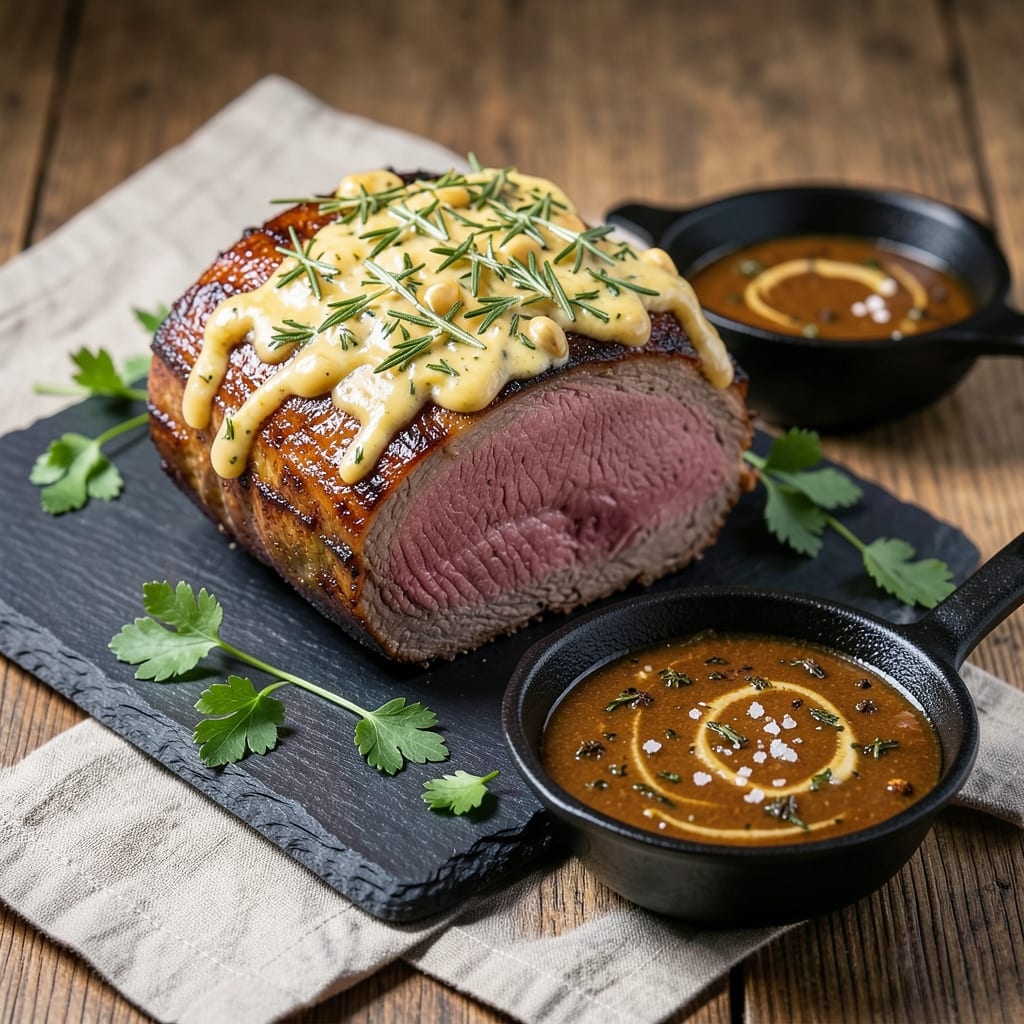
This 6-lb beef tenderloin roast delivers melt-in-your-mouth perfection with a crisp herb crust and juicy center—ideal for special occasions or Sunday dinners. The secret lies in precise temperature control: starting at 450°F for a golden sear, then lowering to 325°F for even cooking. Resting the meat properly ensures every slice stays tender, while a simple herb crust adds depth without overpowering the beef’s natural richness.
Mastering this cut requires attention to detail—like hitting an internal temperature of 125–130°F for medium-rare—paired with complementary sides such as garlic mashed potatoes or roasted asparagus. The optional red wine reduction or chimichurri sauce elevates the dish to restaurant-quality, balancing the beef’s richness with bright acidity. Each step, from searing to resting, is designed to guarantee a flawless result.
What sets this recipe apart is the foolproof technique that transforms a simple roast into a showstopper. The herb crust locks in moisture while creating a fragrant, aromatic crust, and the slow finish ensures consistent doneness throughout. Whether serving a crowd or treating yourself, this method delivers a beef tenderloin that’s worth every minute of effort.
Pair with a bold red wine and serve with your favorite sides for a meal that feels like a celebration. The presentation—sliced at a slight angle with a sauce drizzle—turns a home-cooked roast into an elegant centerpiece. Here’s how to achieve it every time.
Ingredients for 6 lb beef tenderloin roast
Six pounds of premium beef paired with aromatic herbs and precise technique create a restaurant-worthy centerpiece.
| Ingredient | Amount | Notes |
|---|---|---|
| Center-Cut Beef Tenderloin Roast 🥩 | 6 lb | Trimmed of silver skin, bone-in preferred |
| Fresh Rosemary 🌿 | ½ cup | Finely chopped, organic preferred |
| Fresh Thyme 🌿 | ¼ cup | Leaves only, stems removed |
| Fresh Parsley 🌿 | ¼ cup | Flat-leaf, finely chopped |
| Garlic Cloves 🧄 | 8 cloves | Minced, skin-on for flavor |
| Extra-Virgin Olive Oil 🫒 | ½ cup | High-quality, fruity variety |
| Diamond Crystal Kosher Salt 🧂 | 2 tbsp | Coarse grain preferred |
| Freshly Ground Black Pepper 🌶️ | 1 tbsp | Coarsely ground |
| Unsalted Butter 🧈 | ½ cup | Cold, cubed for crust |
| Red Wine Reduction 🍷 | 1 cup | Optional, for drizzling |
| Chimichurri Sauce 🌿 | ½ cup | Optional, for serving |
| Butterfly Peas (Optional) 🌸 | 1 tbsp | For vibrant presentation |
The center-cut beef tenderloin is the foundation—look for a roast with even marbling and vibrant red color at your butcher shop or high-end grocer like Whole Foods or D'Agostino. The herb crust transforms this simple roast into a showstopper, so prioritize fresh, organic herbs from the market if possible. For the garlic, skin-on cloves add extra depth of flavor, and mincing them with the skin ensures no waste. The olive oil should be extra-virgin with noticeable fruitiness—avoid the cheap supermarket brands that taste like soap. Pre-portion your kosher salt and pepper for even distribution on the crust.
No fresh rosemary? Dried rosemary works at one-third the amount, but fresh is ideal for that bright, piney aroma. Running short on butter? Olive oil or avocado oil can substitute in the crust, though butter creates the best golden-brown sear. The optional red wine reduction can be made from any bold red—Cabernet Sauvignon or Merlot work beautifully. For chimichurri, if you can't find fresh oregano, dried oregano at half the amount will suffice. The butterfly peas add a stunning visual contrast—skip them if you're serving this to kids who might find them unusual.
Store the uncooked roast in its original packaging on the bottom shelf of your fridge for up to 5 days—the coldest part preserves tenderness. Once cooked, slice against the grain and serve immediately for the most dramatic presentation. Leftovers keep for 3-4 days in the fridge, but reheating can dry out the beef, so portion and freeze individual slices for later if needed. The herb crust reheats beautifully, though the texture will soften slightly—plan to serve this as a centerpiece rather than a leftovers dish.
Why You'll Love This Recipe
- Foolproof Prep: I swear by this—just a quick rub of olive oil, crushed garlic, and those fresh herbs (rosemary, thyme, parsley) tied around the roast like a little flavor bouquet. No fancy techniques, no stress, and honestly? The hardest part is waiting for it to cook.
- Juicy Magic: That center-cut tenderloin? It’s the star—so tender it melts in your mouth while the crust stays perfectly golden. Between us, the garlic and rosemary make it taste like a fancy dinner, even when I’m just feeding my family on a Tuesday.
- Leftovers Heaven: A 6 lb roast means I get days of lunches—sliced thin for sandwiches, chopped for tacos, or even tossed into pasta. My kids fight over the scraps, and I’m not even kidding.
- Weekend Showstopper: This is my go-to for gatherings—impresses guests without me standing in the kitchen for hours. The aroma alone makes the house feel like a restaurant, and the leftovers? Free meals for the next week. Win-win.
Step-by-step instructions for herb-crusted beef tenderloin roast
Master this technique and you'll achieve a perfectly tender, herb-crusted center-cut roast with a golden crust every time.
Prepare the Herb Butter Crust
In a food processor, combine the 0.5 cup fresh rosemary, 0.25 cup fresh thyme, 0.25 cup fresh parsley, 8 cloves minced garlic, 2 tablespoons diamond crystal kosher salt, and 1 tablespoon freshly ground black pepper. Pulse until finely chopped. Add the 0.5 cup cold unsalted butter and pulse until the mixture resembles coarse sand. The texture should be moist but not pasty—this ensures even distribution on the meat.
Spread the herb butter mixture evenly over the entire surface of the 6 lb center-cut beef tenderloin roast, pressing firmly so it adheres. Place the roast on a wire rack set inside a rimmed baking sheet. Refrigerate uncovered for at least 2 hours (or up to 24 hours) to allow the flavors to penetrate deeply. This step is crucial for maximum tenderness and flavor infusion.
Preheat and Sear the Roast
Preheat your oven to 450°F with the rack positioned in the center. Remove the roast from the refrigerator and let it sit at room temperature for 30 minutes before cooking. This ensures even cooking throughout. Place the roast on the wire rack and sear in the oven for 20 minutes, turning occasionally, until the herb crust is deep golden brown and the exterior reaches 160°F internally. The high heat creates a flavorful crust while jumpstarting the cooking process.
Real talk: Don't skip this searing step. It develops complex flavors through the Maillard reaction that you simply can't achieve with gentle cooking alone. If your oven runs hot, reduce the temperature to 425°F and extend the time slightly to prevent over-browning.
Finish with Low and Slow Cooking
Reduce the oven temperature to 325°F after the initial sear. Return the roast to the oven and cook until the internal temperature reaches 125°F for medium-rare (or 130°F for medium). This typically takes 30-45 minutes, but use a meat thermometer for accuracy—it's the only reliable way to judge doneness. The roast should feel firm but still yield slightly to gentle pressure when tested with your fingers.
Here's the thing—beef tenderloin benefits from this reverse sear method. The initial high heat creates the perfect crust while the low and slow finish ensures perfect doneness without overcooking. If you prefer rare, remove it at 120°F internal temperature and let it rest before slicing.
Rest and Slice for Maximum Juiciness
Transfer the roast to a cutting board and tent loosely with aluminum foil. Let it rest for 15-20 minutes before slicing. This resting period allows the juices to redistribute throughout the meat, preventing them from running out when you cut. The temperature will rise about 5°F during resting, so plan accordingly if you're aiming for a specific doneness level.
Slice the roast against the grain into 1-inch thick portions. The grain runs lengthwise along the roast, so you'll need to rotate your cutting board as you work. Serve immediately with 1 cup red wine reduction drizzled over the top and 0.5 cup chimichurri sauce on the side. For a vibrant presentation, sprinkle with 1 tablespoon butterfly peas just before serving.
Pro Tips For Making 6 Lb Beef Tenderloin Roast
- Use a Meat Thermometer: I learned this the hard way—guessing medium-rare on a 6-pound roast leads to disaster. A high-quality thermometer (inserted sideways into the thickest part) guarantees perfect doneness at 125°F for medium-rare, without overcooking the outside while the center stays cold.
- Trim the Fat Patch First: That little white fat cap on the tenderloin? It’s not your friend. Trim it away before seasoning—it melts unevenly and makes the crust patchy. Use a sharp knife and work quickly; the meat stays cooler and more even when you’re done.
- Salt the Meat 24 Hours Early: Fresh herbs and garlic smell amazing, but they can’t compete with salt’s magic if you skip this. Sprinkle kosher salt all over the roast (about 1 teaspoon per pound) and let it sit uncovered in the fridge. The seasoning penetrates deeper, and the crust forms better—no last-minute scrambling.
- Sear in Batches: A 6-pound roast won’t fit snugly in most pans, and crowding = steam = soggy crust. Sear half the roast first, then flip and repeat. Use a cast-iron skillet or heavy pan, and don’t rush—2-3 minutes per side until deep golden. The payoff? A restaurant-quality crust without flipping the whole thing like a nervous first-timer.
Wine and beer pairings for 6 lb beef tenderloin roast
Bold Red Wine
A Cabernet Sauvignon from Napa Valley or a Malbec from Argentina stands up beautifully to the beef's richness. I love opening a bottle of Caymus Vineyards Cabernet—its dark fruit and earthy notes complement the herb crust. For a more affordable option, try Louis M. Martini Cabernet from California. The wine's tannins cut through the fat, while its acidity refreshes your palate between bites. 🍷
Full-Bodied Shiraz
If you prefer Syrah-based wines, a Shiraz from Australia or South Africa delivers bold flavors that mirror the roast's intensity. Penfolds Bin 28 or Kirkland Signature Shiraz both offer excellent value while providing dark berry and spice notes that harmonize with the herb crust. The wine's smoky undertones enhance the roasted beef experience. 🌶️
Malbec for Medium Rare
For those serving the beef medium-rare, a Mendoza Malbec like Catena Zapata or Trapiche provides the perfect balance. Its velvety texture and black fruit flavors won't overpower the delicate herb notes. The wine's lower tannins make it more approachable with the tenderloin's natural juiciness. I often serve this pairing for special occasions when we want to highlight the beef's natural qualities. 💫
Beer Pairings
For beer lovers, a Belgian Dubbel like Westmalle Trappist or an American Barleywine such as Founders Kentucky Breakfast Stout (if you prefer something richer) works surprisingly well. The malty sweetness and caramel notes in these beers contrast nicely with the herb crust, while their alcohol content helps cut through the fat. For a lighter option, try a German Helles Lager like Weihenstephaner Original. 🍺
Port Wine Reduction
If you're making a port wine reduction instead of red wine, pair it with a Ruby Port from Portugal like Graham's 10-Year-Old. The wine's fruity, slightly spicy notes enhance the sauce's depth while complementing the beef's herbaceous crust. The bold flavors in both the wine and sauce create a cohesive dining experience. 💛
Non-Alcoholic Options
For non-alcoholic pairings, a sparkling cranberry juice like Ocean Spray or a hibiscus iced tea with a splash of lime provides refreshing acidity. I also enjoy serving ginger beer with a slice of lime—its spicy kick balances the beef's richness. These options work well for guests who prefer not to drink alcohol but still want a sophisticated pairing. 🌿
Nutrition facts
Frequently asked questions
How do I know if my 6 lb beef tenderloin is center-cut?
The center-cut portion is the most tender and flavorful section of the tenderloin, located in the middle of the roast. Ask your butcher to show you the "eye of the roast" - this central section should be uniform in diameter and free of large fat deposits. A true center-cut will have a consistent shape and minimal silver skin.
Can I cook this recipe without a meat thermometer?
While challenging, you can estimate doneness by using the "touch test" method. For medium-rare, the meat should feel slightly springy when pressed firmly with your fingers. However, beef tenderloin cooks unevenly, so a thermometer is the only reliable way to ensure perfect results throughout. A 125°F internal temperature guarantees medium-rare every time.
What sides complement this herb-crusted beef best?
Classic pairings include garlic mashed potatoes, roasted asparagus with lemon zest, or creamy polenta. For a lighter option, try a mixed green salad with balsamic vinaigrette. The herb crust's flavors work especially well with earthy root vegetables like carrots or parsnips. Don't forget a rich red wine reduction to tie everything together!
Why does my beef tenderloin turn out dry?
Overcooking is the most common cause - beef tenderloin is lean and dries out quickly when exposed to high heat for too long. Always use a meat thermometer and remove it 5°F below your target temperature (it will rise during resting). Also, avoid cutting into the meat immediately after cooking - the 15-20 minute rest is crucial for redistributing juices.
How far ahead can I prepare the herb butter crust?
You can prepare the herb butter mixture up to 24 hours in advance and store it in the refrigerator. For best flavor penetration, spread it on the roast and refrigerate uncovered for at least 2 hours (or up to 12 hours). The herbs will release more aroma when exposed to air. Just