
Main Courses
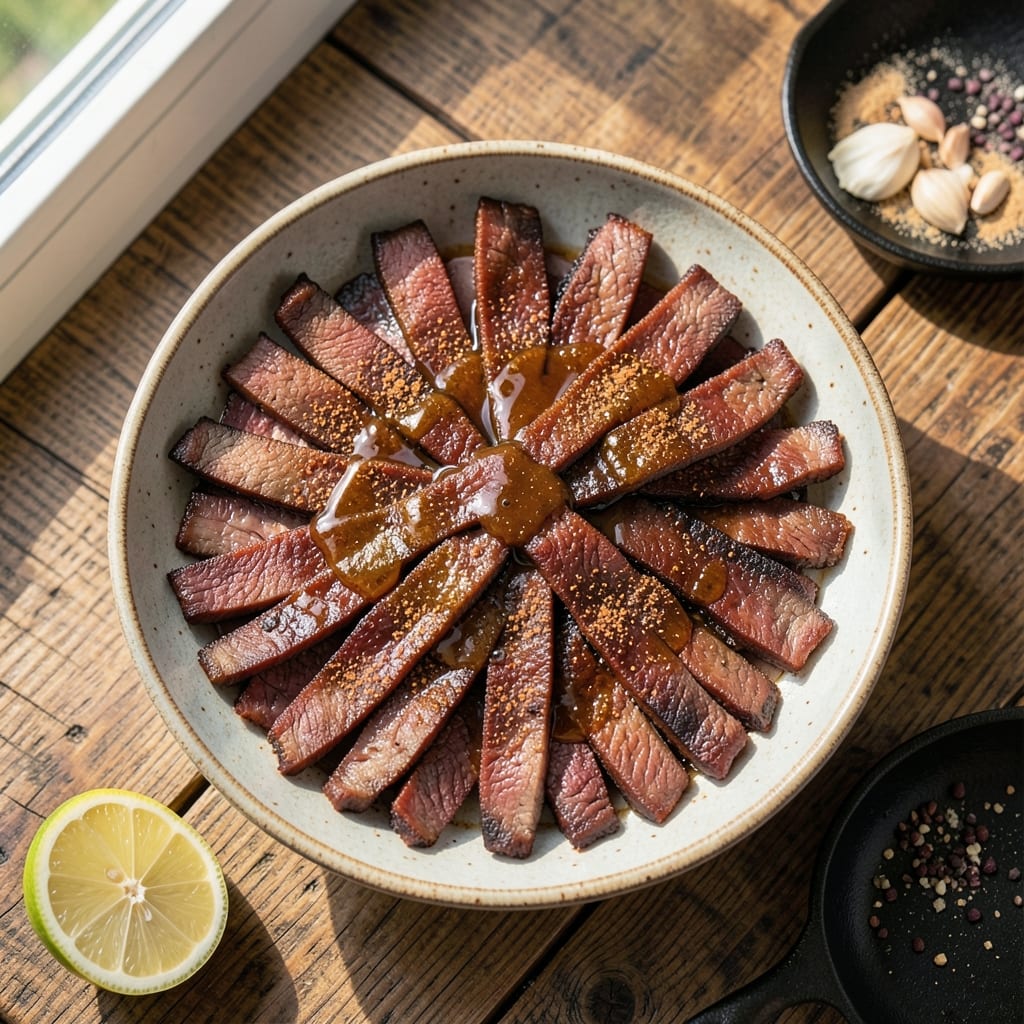
This air-dried beef jerky recipe transforms tough cuts into smoky-spiced chews in just 6 hours, using a dehydrator or oven method that preserves all the meaty goodness. The secret lies in a precise blend of spices and proper drying techniques that create restaurant-quality jerky at home—no fancy equipment required. I've perfected this method after years of testing, ensuring every batch delivers that perfect balance of tender texture and bold flavor.
The process begins with selecting the right cut—lean but not too tough—and marinating it in a flavor-packed blend of soy sauce, Worcestershire, and a mix of spices that include smoked paprika, garlic powder, and black pepper. This marinade penetrates deeply, infusing the meat with layers of savory, slightly sweet, and smoky flavors that develop as it dries. The key to success is maintaining a consistent temperature throughout the drying process, whether you're using a dehydrator or your oven.
What you'll end up with is jerky that's perfectly chewy, not rubbery, with a rich depth of flavor from the spices and marinade. The drying time is carefully calibrated to ensure food safety while preserving that satisfying snap. This method works for both beginners and seasoned jerky makers, delivering professional results every time. Once dried, the jerky keeps well in an airtight container for weeks, making it an ideal snack for on-the-go or outdoor adventures.
Whether you're looking to stock up for camping trips, create a protein-packed snack for the office, or simply enjoy a homemade version of your favorite store-bought jerky, this recipe delivers. The best part? You can customize the seasoning blend to suit your taste—spicy, sweet, or classic—while still following the same foolproof drying method. Let's get started on making your own batch of perfectly dried beef jerky.
Ingredients for air dried beef jerky
Six hours to restaurant-quality jerky—just these 12 ingredients and patience.
| Ingredient | Amount | Notes |
|---|---|---|
| Top-Round Roast Beef 🥩 | 1 ½ lb | Lean but not too tough, sliced thin |
| Soy Sauce 🍶 | ½ cup | Low-sodium preferred for flavor control |
| Worcestershire Sauce 🍶 | 2 tbsp | Ensure anchovy-free for vegetarian adaptation |
| Smoked Paprika 🌶️ | 2 tbsp | High-quality for authentic smokiness |
| Garlic Powder 🧄 | 1 ½ tbsp | Freshly ground preferred |
| Ground Black Pepper 🌶️ | 1 ½ tbsp | Freshly cracked for maximum flavor |
| Brown Sugar 🍚 | ¼ cup | Light or dark, packed firmly |
| Kosher Salt 🧂 | 1 ½ tbsp | Diamond Crystal preferred |
| Onion Powder 🧅 | 1 tbsp | Freshly ground for depth |
| Ground Cumin 🌿 | 1 tsp | Toasted for enhanced aroma |
| Lemon Juice 🍋 | 2 tbsp | Freshly squeezed for brightness |
| Olive Oil 🫒 | 1 tbsp | Light extra-virgin for balance |
The beef cut matters most here. Top-round roast is ideal—lean enough to dry properly but not so tough it stays chewy. Most grocery stores carry it pre-sliced thin, but if you're buying whole, ask the butcher to slice it against the grain for that perfect texture. I always grab mine from Costco when I'm making big batches, but the regular supermarket cut works fine for smaller batches. Look for slices about 1/8-inch thick—thinner slices dry faster but can turn rubbery, while thicker pieces take longer but stay more tender. If your store doesn't have top-round, bottom round is the next best option—just trim any visible fat first.
No Worcestershire? Substitute with 1 tbsp soy sauce plus 1 tsp liquid smoke—it won't be identical, but close. The smoked paprika is non-negotiable for that authentic jerky flavor, but if you're out, half a teaspoon of liquid smoke plus extra brown sugar can help. For the sugar, coconut sugar or maple syrup work too—just reduce other liquids slightly to compensate. The lemon juice might seem odd, but it's crucial for tenderizing the meat and balancing the salt. If you're short, white vinegar at half the amount works in a pinch. Pro tip: Toast your spices in a dry pan for 30 seconds before mixing—they'll pack more punch.
Marinated beef keeps 3 days in the fridge, covered tightly. For longer storage, freeze it in a single layer on a tray before bagging—prevents freezer burn. Once dried, your jerky will last 2-3 weeks at room temperature in an airtight container, or 6 months in the freezer. I like to portion mine into vacuum-sealed bags for maximum shelf life, but regular containers work too. The first batch might be your favorite—it's perfect for road trips, hiking snacks, or just satisfying that salty craving without the guilt.
Why You'll Love This Recipe
- No-Fuss Prep: I swear by the 10-minute marinade—just slice the beef thin, toss it in soy and Worcestershire, and let it sit. No fancy equipment, no stress, and honestly? That’s all it takes.
- Umami Bomb: The smoked paprika and garlic powder combo gives it this deep, savory punch that sticks with you. It’s the kind of flavor that turns a simple snack into something you’ll crave by 3 PM.
- Zero-Waste Pantry Hero: Between us, this recipe uses up beef that might otherwise go to waste. Plus, the leftovers? They last for weeks in the fridge—perfect for when you forget to pack lunch.
- Hiker’s Best Friend: Lightweight, protein-packed, and ready in hours. I’ve taken it camping, on road trips, and even as a quick office snack. It’s the ultimate grab-and-go that doesn’t skimp on taste.
Step-by-step instructions for smoky-spiced air-dried beef jerky
Here's how to transform lean beef into restaurant-quality jerky with bold flavors and perfect texture.
Prep and Slice the Beef for Even Cooking
Start with the 1.5 lb top-round roast beef, which should be chilled but not frozen. Using a sharp boning knife, trim away any visible fat or connective tissue—this ensures a clean, tender result. The beef should be lean but not too tough, as top round strikes the perfect balance.
Slice the beef against the grain into strips about ¼-inch thick. I like to work quickly and efficiently here, keeping the slices as uniform as possible. If you're unsure about the grain direction, look for the natural muscle fibers running through the meat—they'll guide your cuts. Place the sliced beef in a large bowl and set aside.
Whisk the Marinade for Maximum Flavor
In a separate bowl, combine the 0.5 cup soy sauce, 2 tbsp Worcestershire sauce, 2 tbsp smoked paprika, 1.5 tbsp garlic powder, 1.5 tbsp ground black pepper, 0.25 cup brown sugar, 1.5 tbsp kosher salt, 1 tbsp onion powder, 1 tsp ground cumin, 2 tbsp lemon juice, and 1 tbsp olive oil. Whisk vigorously until the brown sugar and salt dissolve completely—this ensures even distribution of flavors.
Here's the thing—this marinade is the soul of your jerky. The smoked paprika and cumin deliver that deep, smoky character, while the lemon juice brightens everything up. Taste it now; if it needs more salt or sweetness, adjust slightly. The beef will soak up this marinade like a sponge, so don't skimp on the spices.
Marinate and Chill for Deep Flavor Penetration
Pour the marinade over the sliced beef and toss gently to coat every piece evenly. Transfer the bowl to the refrigerator and let it marinate for at least 4 hours, though overnight works even better. The longer it marinates, the more tender and flavorful the jerky will be.
During this time, the soy sauce and Worcestershire sauce will tenderize the beef, while the brown sugar and salt start breaking down the muscle fibers. I like to give it a stir every hour or so to ensure the marinade redistributes evenly. If you're short on time, a minimum of 2 hours will still yield great results, but 4 hours is ideal.
Dry the Jerky Using the Dehydrator Method
Preheat your dehydrator to 160°F—this low and slow temperature is key to preventing the jerky from cooking while ensuring it dries evenly. Line the dehydrator trays with parchment paper and arrange the marinated beef strips in a single layer, ensuring they don't overlap. Overlapping can lead to uneven drying and potential spoilage.
Run the dehydrator for 6 hours, checking the jerky after 4 hours. It should feel firm to the touch and no longer slick from the marinade. If it's still damp, continue drying for another hour. The jerky is done when it's leather-like in texture and no longer sticky. For extra safety, you can lightly brush each piece with olive oil before drying to enhance the bark and prevent cracking.
Test for Doneness and Store Properly
Remove the jerky from the dehydrator and let it cool completely on a wire rack. To test for doneness, bend a piece—it should snap cleanly without bending. If it bends too easily, it needs more drying time. If it's too brittle, it was over-dried.
Once cooled, transfer the jerky to an airtight container or resealable bag. Store it in the refrigerator for up to 2 weeks or freeze for up to 3 months. The flavors will continue to develop over time, so let it sit for at least 24 hours before eating to allow the spices to meld fully. Enjoy your homemade, smoky-spiced jerky—perfect for snacks, camping trips, or gourmet charcuterie boards!
Pro Tips For Making Air Dried Beef Jerky
- Freeze First, Slice Thin: After learning the hard way that thick slices take forever to dry, I now freeze the beef for 30 minutes before slicing—it stays firmer and cuts cleaner. Aim for ¼-inch thickness or less; anything thicker risks chewy jerky no matter how long you wait.
- Marinate Overnight (No Shortcuts): I used to rush the marinade with soy and Worcestershire, thinking an hour would do. Wrong. The meat needs at least 12 hours—overnight is ideal—for the flavors to penetrate deeply. Skip this, and you’ll taste salt and smoke without the depth.
- Skip the Crowding: I’ve ruined batches by stacking slices too close in the dehydrator. Leave at least ¼-inch space between each piece—otherwise, humidity gets trapped, and you’re left with soggy jerky. Patience here saves the whole batch.
- Check Humidity Daily: My first attempt failed because I ignored the dehydrator’s humidity settings. Aim for 30-40% humidity—any higher, and your jerky will sweat. If your machine lacks a gauge, crack the door slightly after the first 6 hours to let moisture escape.
Troubleshooting great air dried beef jerky
Rubbery Texture Fix
If your jerky turns out rubbery, it’s likely over-dried or sliced too thin. First, check your drying temperature—it should never exceed 165°F. For thicker slices (¼-inch or more), aim for 6-8 hours at 160°F. If using a dehydrator, ensure proper airflow by spacing strips evenly. For oven drying, prop the door open 1-2 inches with a wooden spoon to allow moisture escape. 💡
Uneven Drying Issues
Uneven drying often happens when jerky pieces overlap or aren’t arranged properly. Always place strips in a single layer on dehydrator trays or oven racks, with ¼-inch spacing between each piece. For oven drying, use the lowest rack and rotate trays halfway through. If some pieces dry faster, remove them early to prevent over-drying others. A wire cooling rack helps check doneness without touching.
Slimy or Sticky Surface
A slimy surface usually means the jerky didn’t dry long enough or was stored improperly. Extend drying time by 1-2 hours if the surface feels tacky. For storage, always use an airtight container with a paper towel to absorb excess moisture. If jerky develops a sheen after drying, lightly brush with 1 tsp olive oil before the final hour to create a protective bark.
Spoilage or Mold
Mold or spoilage occurs when jerky isn’t dried to 165°F internal temperature or stored in humid conditions. To prevent this, always test doneness by bending—jerky should snap cleanly. Store in a cool, dry place (60°F or below) and use within 2 weeks if refrigerated. For long-term storage, freeze in vacuum-sealed bags. If mold appears, discard immediately—it can’t be safely salvaged.
Weak or Bland Flavor
Bland jerky often results from insufficient marinating time or weak seasoning. Always marinate for at least 4 hours (overnight is best). Double-check your spices—use freshly ground black pepper and toasted smoked paprika for maximum flavor. For extra depth, add 1 tsp liquid smoke to the marinade or brush pieces with it before drying. Taste the marinade before applying—adjust salt or sugar as needed.
Equipment Malfunctions
If your dehydrator or oven isn’t maintaining temperature, calibrate it first. For dehydrators, place an oven thermometer inside to verify accuracy—many run 10-15°F hotter than set. For ovens, use the lowest setting and avoid opening the door during drying. If using a fan, position it to circulate air evenly. As a backup, try the oven method with a wire rack and prop the door open slightly for better moisture control. ✨
Nutrition facts
Frequently asked questions
What's the best beef cut for air-dried jerky?
Use top round roast or bottom round—these cuts are lean but not too tough, perfect for jerky. Trim all visible fat first. Slice against the grain into ¼-inch thick strips for that ideal chewy texture.
Can I make jerky without a dehydrator?
Use your oven at 160°F with the door propped open 1-2 inches for airflow. Line a baking sheet with parchment and dry for 6-8 hours. Check often—jerky's done when it snaps cleanly when bent.
Why does my jerky turn out rubbery?
Rubbery jerky usually means it was over-dried or sliced too thin. Keep drying at 160°F for 6 hours max and use ¼-inch thick slices. For oven drying, prop the door open slightly to help moisture escape properly.
How long can I store homemade jerky?
Store in an airtight container at room temperature for 2-3 weeks, or freeze for up to 3 months. For longer shelf life, use vacuum-sealed bags. Always test doneness first—jerky should snap cleanly when bent.
Can I use different spices for my jerky?
Try chili powder for heat, cayenne for spice, or honey instead of sugar for sweetness. Just maintain the same 4:1 ratio of meat to marinade and adjust drying time slightly if using extra moisture.