
Side Dishes
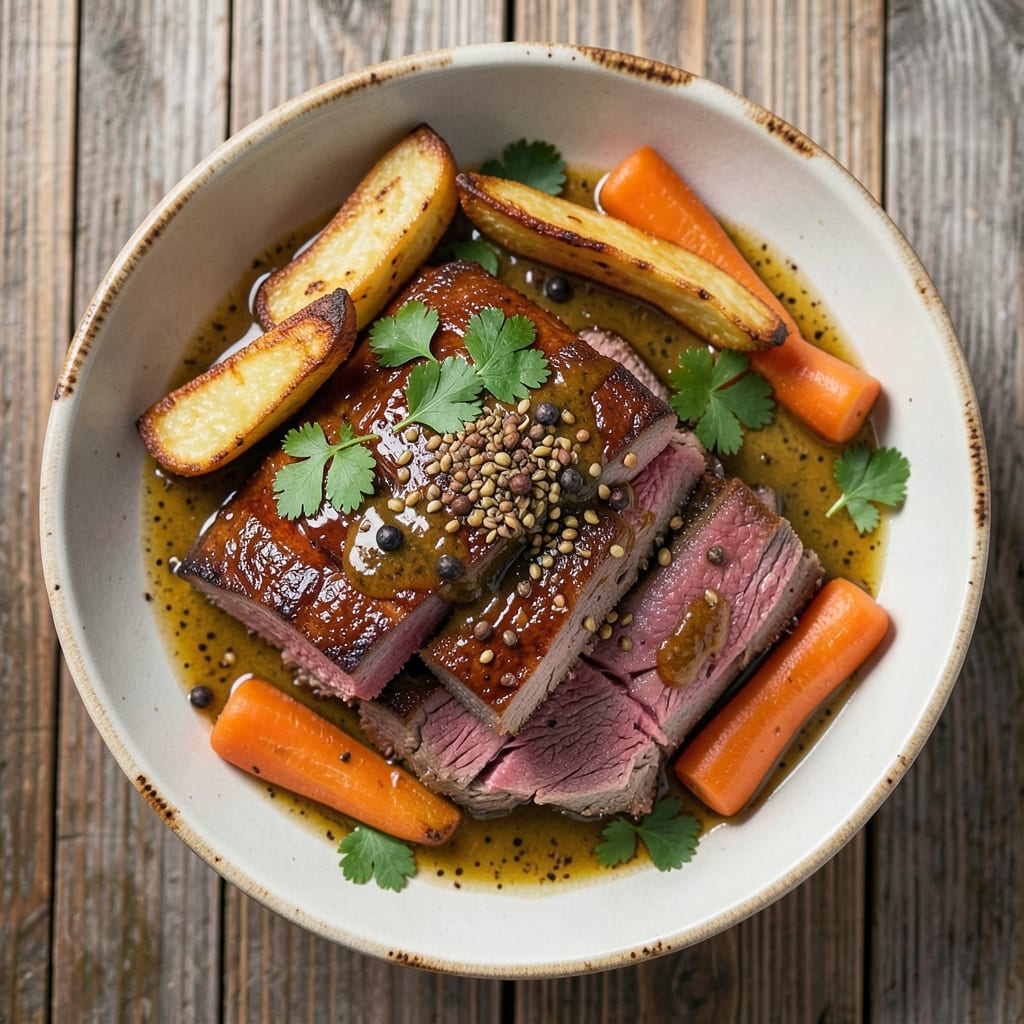
This American corned beef recipe transforms tough beef into melt-in-your-mouth perfection—ideal for Reubens or stand-alone sandwiches. The secret lies in a slow-cured brine packed with aromatic spices that penetrate deep into the meat, creating layers of flavor that build over time. Unlike quick-braised versions, this method delivers that classic, tangy-sweet taste that defines American deli-style corned beef.
The process begins with a 24-hour brine that tenderizes the beef while infusing it with cloves, mustard seeds, and bay leaves—each spice playing a crucial role in the final flavor profile. You’ll then choose between a stovetop boil (faster, 2 hours) or slow cooker method (hands-off, 6-8 hours), both yielding beef so tender it practically falls apart at the touch. The result? A spice-bomb centerpiece that commands attention at any table.
Pair it with classic sides like braised red cabbage, mustard potatoes, or crisp carrot salad to complete the meal. The beef’s rich, briny depth contrasts beautifully with the sweetness of caramelized onions and the creaminess of Swiss cheese in a Reuben sandwich. Every bite delivers that unmistakable American deli experience—bold, savory, and impossible to resist.
What sets this recipe apart is the balance of tradition and convenience. You can prep the brine the night before, then cook the beef while you handle sides—making it perfect for weekend feasts or game-day spreads. The slow-curing method ensures maximum flavor infusion, while the hands-off cooking keeps your day stress-free. Ready to master the art of corned beef?
Ingredients for american corned beef
Sixteen ingredients transform tough beef into melt-in-your-mouth American corned beef perfection.
| Ingredient | Amount | Notes |
|---|---|---|
| Beef Brisket 🥩 | 4 lb | Flat-cut, well-marbled preferred |
| Coarse Kosher Salt 🧂 | 3 cups | Diamond Crystal preferred |
| Brown Sugar 🍯 | ¾ cup | Light or dark variety |
| Mustard Seeds 🌶️ | 2 tbsp | Whole, yellow preferred |
| Black Peppercorns 🌶️ | 1 tbsp | Crushed coarsely |
| Garlic Cloves 🧄 | 6 whole | Smashed, not minced |
| Bay Leaves 🌿 | 4 whole | Fresh preferred |
| Allspice Berries 🌶️ | 1 tbsp | Crushed lightly |
| Cloves 🌶️ | 4 whole | Whole, not ground |
| Water 💧 | 4 cups | Filtered preferred |
| White Vinegar 🍶 | ½ cup | Distilled preferred |
| Onion Powder 🧅 | 1 tbsp | Freshly ground preferred |
| Coriander Seeds 🌿 | 1 tbsp | Toasted for depth |
| Beer 🍺 | 2 cups | Dark lager or stout |
The brisket is non-negotiable—look for a 4-pound flat cut with visible marbling at Whole Foods or your local butcher. Costco often carries pre-cut briskets, but inspect for even thickness. The Diamond Crystal kosher salt is crucial; it dissolves more easily than Morton's, ensuring even curing. Brown sugar should be light for a cleaner flavor, though dark adds molasses notes. For spices, Penzeys or bulk bins at Trader Joe's deliver the freshest, most potent varieties. The beer acts as a natural tenderizer—opt for a dark lager like Guinness for depth or a malty stout for richness.
No allspice berries? Cinnamon sticks at half the amount work in a pinch, though the flavor will differ subtly. Fresh bay leaves are ideal, but dried are fine if labeled culinary-grade. Crushed peppercorns should be coarsely ground—think course salt texture, not powder. White vinegar can be swapped for apple cider vinegar, though the flavor profile shifts slightly. Onion powder is non-negotiable for that classic deli taste; pre-ground is fine, but toasted coriander seeds elevate the spice blend. Beer substitutes include beef broth (1:1) or dark cola for a sweeter profile.
Prep the brine 24 hours ahead—this is where the magic happens. Store the brined brisket in its liquid in the fridge for up to 48 hours, though flavor peaks at 24. After cooking, the beef keeps 3-4 days refrigerated or 3 months frozen. For Reuben sandwiches, slice against the grain and reheat gently with a splash of broth to restore moisture. Leftovers reheat beautifully in a skillet with a bit of beer or broth to keep them tender.
Why You'll Love This Recipe
- Salt-Cured Magic: I’ll be real—curing the brisket overnight isn’t just easy, it’s almost hands-off. Toss in the salt, sugar, and spices, then forget it until morning. That’s it. No chopping, no fussing, just pure flavor waiting for you.
- Deep, Smoky Richness: Between us, the mustard seeds and peppercorns give this corned beef a tangy, slightly spicy bite that lingers. The brisket stays tender but develops that perfect crust when seared—crispy outside, melt-in-your-mouth inside. Honestly, it’s the kind of flavor that makes you slow down and savor every bite.
- Leftovers That Don’t Suck: I make a double batch on Sundays because reheated slices are still incredible. Toast them in a pan with a little butter, and suddenly you’ve got a quick breakfast or a lazy lunch. No sad, dry reheats here—just hearty, satisfying seconds.
- Budget-Friendly Crowd-Pleaser: A single brisket feeds my whole family and then some. The kosher salt and brown sugar stretch the cost, and the spices are cheap but pack a punch. Plus, it’s the kind of dish that makes guests feel special without breaking the bank. (Yes, even on a Tuesday night.)
Step-by-step instructions for American corned beef
This slow-cured method transforms tough brisket into tender, spice-infused perfection for Reubens or sandwiches.
Prepare the Spice Cure
In a large mixing bowl, combine the 3 cups coarse kosher salt, 0.75 cup brown sugar, 2 tbsp mustard seeds, 1 tbsp crushed black peppercorns, 6 smashed garlic cloves, 4 whole bay leaves, 1 tbsp lightly crushed allspice berries, 4 whole cloves, 1 tbsp onion powder, and 1 tbsp toasted coriander seeds. Mix thoroughly with your hands until the spices are evenly distributed through the salt mixture.
This blend creates the signature tangy, aromatic profile of American corned beef. The coarse salt ensures proper curing while the spices penetrate deeply. For best results, use freshly toasted coriander seeds—their warm, citrusy notes elevate the final product.
Cure the Brisket
Place the 4 lb beef brisket in a large non-reactive container (glass or food-grade plastic). Gently rub the spice mixture all over the meat, working it into the crevices and fat cap. This step is crucial—don't skip it, as the spices need direct contact with the meat.
Pour the 4 cups water and 0.5 cup white vinegar over the brisket, ensuring it's completely submerged. The vinegar helps tenderize the meat while adding acidity to the cure. Cover and refrigerate for 7 days, turning the brisket daily to ensure even curing. The refrigerator temperature of 38-40°F maintains safety while allowing the cure to work properly.
Rinse and Prepare for Cooking
After 7 days, remove the brisket from the refrigerator and rinse it thoroughly under cold water for 5 minutes to remove excess cure. This step prevents the meat from becoming overly salty during cooking. Pat the brisket dry with paper towels, removing as much moisture as possible to promote better browning.
In a large pot, combine 2 cups beer with 2 cups water (the same water used for rinsing). This liquid provides moisture during cooking while adding depth of flavor. The beer's maltiness complements the cured meat beautifully.
Simmer to Tender Perfection
Place the rinsed brisket in the pot with the beer-water mixture. Bring to a boil over high heat, then immediately reduce to a gentle simmer. Maintain a barely perceptible bubble at the surface—this ensures tender meat without toughening the exterior. Cover partially and simmer for 3 to 3.5 hours, turning the brisket occasionally.
You'll know it's done when the meat is fork-tender and easily separates at the thickest part. The internal temperature should reach 205-210°F—this is higher than usual because the curing process requires extra cooking to reach proper tenderness. The meat should have a rich, pink color and be infused with the spice cure's complex flavors.
Rest and Slice
Remove the brisket from the pot and let it rest at room temperature for 30 minutes before slicing. This resting period allows the juices to redistribute, ensuring each slice remains moist. During this time, you can reduce the cooking liquid for gravy if desired.
Slice the brisket against the grain into ¼-inch thick pieces. The meat should be tender enough to pull apart with minimal effort, with a beautiful pink hue throughout. Serve immediately for sandwiches or Reubens, or refrigerate for up to 5 days for later use. The flavors will continue to develop as the meat rests.
Pro Tips For Making American Corned Beef
- USE A THICK BRINE: I learned this the hard way—thin brine doesn’t penetrate. Mix your salt, sugar, and spices in enough water to fully submerge the brisket (about 1 gallon per pound of meat). The extra liquid ensures even curing and prevents dry spots, especially in the thickest parts.
- SALT THE MEAT 3 DAYS IN ADVANCE: Rushing the cure is how you end up with a bland, rubbery brisket. Three full days in the fridge lets the salt and spices work their magic. I know, I know—it’s tempting to skip—but trust the process. The flavor payoff is worth the wait.
- WATCH THE POT’S BOIL: Low and slow is key, but don’t let your corned beef simmer too gently. A gentle boil (small bubbles, not a rolling one) keeps the meat tender without falling apart. After 2 hours, reduce to a bare simmer—just enough to maintain heat. Over-boiling turns tough meat into mush.
- SKIP THE PEELING, EMBRACE THE CRUST: That dark, sticky crust on the outside? That’s flavor. After browning the brisket, resist the urge to scrape it off. Instead, let it caramelize in the pot—it adds depth. If it’s too thick, just scrape off the burnt bits, but leave the rest. It’s the thing that makes homemade taste so much better than store-bought.
Storing and reheating this dish
Refrigerator Storage
After cooking, let your corned beef cool to room temperature (about 1 hour) before storing. Transfer slices to an airtight container with a splash of the cooking liquid to keep them moist. Store in the fridge for up to 5 days—the flavors actually deepen over time. I like using glass Pyrex containers with snap-on lids because they prevent odors from seeping in. 💛
Freezer Preservation
For longer storage, slice the beef and freeze in single-serving portions wrapped tightly in plastic wrap, then placed in a freezer bag. This method preserves texture better than freezing whole. Label with the date—corned beef stays excellent for 3 months when frozen properly. I always leave ½ inch headspace to prevent freezer burn.
Reheating Methods
For sandwiches, I recommend reheating slices in a skillet over medium-low heat with a splash of beer or beef broth for 2-3 minutes per side. This prevents drying while restoring juiciness. Never microwave—it turns the meat rubbery. For leftovers, reheat the whole piece in a pot with fresh broth until warmed through (165°F internal temp).
Gravy Revival
Save the cooking liquid and reduce it by half for gravy. When reheating, add 1 cup fresh liquid (water or beer) to the reduced gravy and simmer until thickened. This works beautifully over mashed potatoes or as a sandwich sauce. I keep a small jar of the reduced gravy in the fridge for quick sandwich assembly. ✨
Sandwich Prep
For Reuben sandwiches, assemble with Swiss cheese and thousand island dressing the night before. Wrap tightly in plastic and refrigerate—this lets flavors meld perfectly. Toast the bread fresh when ready to eat. The corned beef reheats beautifully in the sandwich, absorbing all those delicious flavors. 🥪
Flavor Refresh
If stored beef tastes slightly dry, revive it by simmering in ½ cup beer with 1 tbsp mustard for 5 minutes. This restores moisture while adding tangy depth. I also keep a small bowl of hot mustard on the table for guests to customize their sandwiches. The key is never to overcook when reheating—just warm through gently. 💡
Nutrition facts
Frequently asked questions
Why does American corned beef need a 7-day cure?
The 7-day brine is essential for deep flavor infusion and proper tenderization. The spices and salt penetrate the meat slowly, creating that signature tangy-sweet taste. Rushing this step results in weaker flavor and tougher texture—worth the wait for authentic deli-style results!
Can I use a slow cooker instead of stovetop?
Place the rinsed brisket in the slow cooker with 2 cups beer and 2 cups water, then cook on low for 8 hours or high for 5-6 hours. The hands-off method yields equally tender meat with less monitoring. Just ensure the internal temp reaches 205-210°F for perfect doneness.
What's the best way to slice corned beef?
Always slice against the grain into ¼-inch thick pieces for maximum tenderness. Use a sharp knife and cut at a 45-degree angle for thicker sandwich slices. The grain runs diagonally across the flat cut—look for the muscle fibers to guide you.
Why does my corned beef taste too salty?
Over-salting usually means either skipping the 5-minute rinse or using too much salt in the cure. Stick to the 3 cups kosher salt measurement and rinse thoroughly. For extra insurance, soak the rinsed beef in cold water for 10 minutes before cooking. The beer in the cooking liquid also helps balance saltiness.
What are the best sides for corned beef?
Classic pairings include braised red cabbage, mustard potatoes, and crisp carrot salad. For sandwiches, add Swiss cheese and thousand island dressing. The sweet-tart contrast of caramelized onions with the briny beef is pure magic.