
Soups & Stews
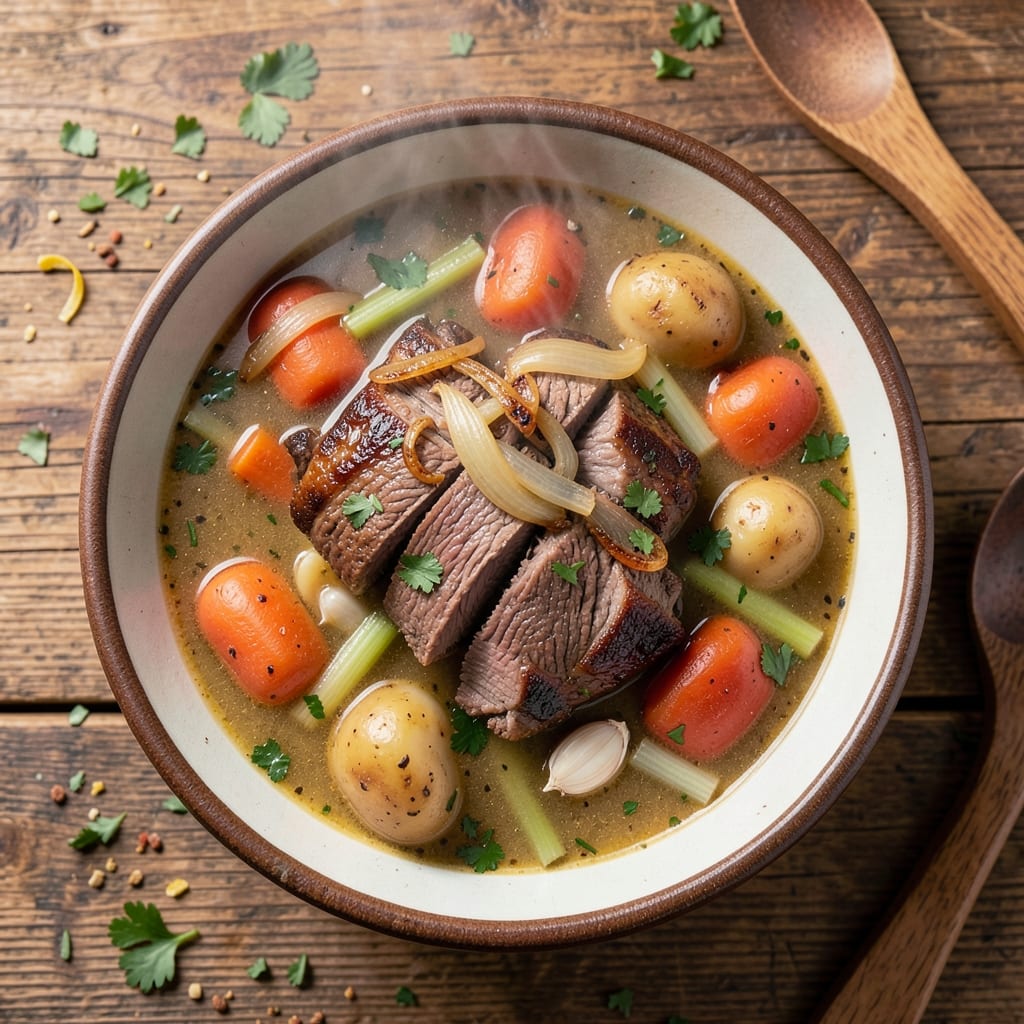
This Amish vegetable beef soup brings the warmth of a Pennsylvania homestead to your kitchen table, where every spoonful carries the slow-simmered richness of traditional Amish cooking. 🌟 The secret lies in tender beef and hearty vegetables that transform tough cuts into melt-in-your-mouth perfection through hours of gentle simmering—a method that respects the Amish value of simplicity and resourcefulness.
What sets this recipe apart is its foolproof technique for balancing flavors without relying on fancy ingredients. A simple broth base builds depth as it cooks, while root vegetables like carrots and potatoes absorb the savory essence of the beef. The Amish tradition of using every part of the ingredient—including vegetable scraps for stock—ensures nothing goes to waste, making this soup both economical and deeply satisfying.
The result is a hearty, comforting bowl with tender beef chunks, perfectly softened vegetables, and a broth so rich it begs for another helping. Whether served with crusty bread or over buttered noodles, this soup embodies the kind of home-cooked meal that turns ordinary days into memories. The best part? It tastes even better the next day, making it ideal for meal prep.
For those following a gluten-free diet, simply swap the bread for cornbread or serve with roasted vegetables. The recipe’s flexibility ensures everyone at the table can enjoy this taste of Amish country. Let’s get simmering—your kitchen will smell like home before the first bite.
Ingredients for amish vegetable beef soup
Six hearty servings of homestead comfort await with these carefully chosen ingredients.
| Ingredient | Amount | Notes |
|---|---|---|
| Chuck Roast Beef 🥩 | 2 lb | Cut into 1-inch cubes, boneless preferred |
| Yellow Onion 🧅 | 1 whole | Medium size, chopped into half-moons |
| Carrots 🥕 | 4 medium | Peeled, cut into 1-inch chunks |
| Russet Potatoes 🥔 | 3 medium | Peeled, cut into 1-inch cubes |
| Celery Stalk 🧆 | 3 whole | Chopped into 1-inch pieces |
| Garlic Cloves 🧄 | 4 cloves | Minced for depth of flavor |
| Tomato Paste 🍅 | ½ cup | For rich umami foundation |
| Beef Broth 💧 | 6 cups | Homemade or high-quality store-bought |
| Dried Thyme 🌿 | 1 tsp | Or 1 tbsp fresh thyme leaves |
| Dried Parsley 🌿 | 1 tsp | For fresh finish, chopped |
| Bay Leaves 🍃 | 2 whole | Remove before serving |
| Black Peppercorns 🌶️ | 1 tsp | Freshly cracked for intensity |
| Salt 🧂 | 1 ½ tsp | Kosher or sea salt, adjust to taste |
| Olive Oil 🫒 | 2 tbsp | For initial searing |
The beef selection is critical for authentic Amish texture. Chuck roast from a trusted butcher—like those at Whole Foods or your local Amish market—delivers the perfect balance of tenderness and flavor. Look for well-marbled cuts; the fat renders beautifully during simmering. For the vegetables, organic produce from the farmers market ensures superior flavor, though conventional store-bought works perfectly fine. The carrots and potatoes should be firm with no soft spots, as they'll absorb the broth's richness over hours of cooking. If you're feeling adventurous, save your vegetable scraps to build a homemade beef broth base—this is where the Amish tradition of using every part truly shines.
No chuck roast? Brisket or short ribs work beautifully, though cooking times may vary. The tomato paste can be substituted with 1 cup crushed tomatoes if you prefer a slightly different texture. Fresh thyme is ideal, but dried works at one-third the amount—just remember to toast it lightly in a dry pan for 30 seconds to release its essential oils. For the broth, homemade is best, but Swanson or Pacific Foods brands are reliable store-bought options. The celery can be swapped for additional carrots if you prefer a sweeter flavor profile. And if you're watching your sodium, reduce the salt to 1 teaspoon and add more at the end of cooking.
This soup tastes even better the next day as flavors meld together. Store in an airtight container in the refrigerator for up to 5 days, or freeze portions for up to 3 months—the broth will only concentrate and improve. For meal prep, double the recipe and freeze half immediately. When reheating, add a splash of water or broth to prevent thickening. The Amish tradition of serving soup with homemade cornbread or crusty rye bread completes the meal perfectly. If you're making this ahead for a gathering, the aromas alone will draw everyone to the table—just like at a Pennsylvania farmhouse.
Why You'll Love This Recipe
- No-Chop Nightmare: I swear, this soup only needs you to dice the onion—everything else chucks straight into the pot. That chuck roast practically melts itself, and the carrots and potatoes soften without babying.
- Deep, Slow Magic: The chuck roast breaks down into tender, pull-apart strands while the onions caramelize just enough to give that rich, homey base. Honestly? It tastes like a hug in a bowl—especially when the celery adds that bright, fresh crunch.
- Leftovers That Beg: This soup only gets better the next day, and I mean actually better. The flavors meld into something even heartier, so I always double the batch. My freezer’s full of portions I can grab when I’m too tired to cook.
- Budget Feeds Crowds: A single chuck roast stretches to feed six, and the veggies cost pennies at the farmers’ market. Between us, this is the kind of meal that makes grocery day exciting—because you’ll actually have leftovers to brag about.
Step-by-step instructions for hearty homestead-style beef soup
This method delivers deep flavor and perfect texture through precise timing and technique.
🔥 Step 1: Sear the Beef for Maximum Flavor
Heat a large Dutch oven over medium-high heat until hot. Add the 2 tbsp olive oil and swirl to coat the bottom evenly. Working in batches to avoid crowding, add the 2 lb chuck roast beef cut into 1-inch cubes and sear for 2-3 minutes per side until deeply browned.
This critical step develops the Maillard reaction, creating deep, caramelized flavors that form the soup's foundation. Don't rush—you'll know it's ready when the beef releases easily from the pan. Transfer the seared beef to a plate and set aside temporarily.
👨🍳 Step 2: Build the Vegetable Base
In the same Dutch oven, add the 1 whole yellow onion chopped into half-moons, 4 medium carrots cut into 1-inch chunks, 3 whole celery stalks chopped into 1-inch pieces, and 4 cloves garlic minced. Cook for 5-6 minutes until the vegetables begin to soften and the onion becomes translucent.
Here's the thing—don't stir constantly. Let the vegetables develop a light golden color on the bottom of the pan. This adds another layer of flavor complexity. When the garlic becomes fragrant (about 30 seconds before the vegetables soften), it's time to move to the next step.
🥘 Step 3: Develop Rich Umami with Tomato Paste
Reduce heat to medium-low and stir in the 0.5 cup tomato paste using a wooden spoon. Cook for 2 minutes until the tomato paste loses its raw taste and begins to darken slightly. This creates a rich, concentrated base that will carry through the entire soup.
I always add a pinch of salt at this stage to help draw out moisture from the vegetables and beef. This pre-seasoning ensures balanced flavor throughout the cooking process. The paste should coat the vegetables evenly—if it looks too thick, add 1-2 tablespoons of the beef broth to loosen it.
🍳 Step 4: Simmer the Soup to Perfection
Return the seared beef to the Dutch oven. Add the 6 cups beef broth, 1.5 tsp salt, 1 tsp dried thyme, 1 tsp dried parsley, 2 whole bay leaves, and 1 tsp black peppercorns. Bring to a gentle boil, then reduce heat to low and cover partially.
Simmer for 1.5 hours until the beef is fork-tender and the vegetables are completely soft. The soup should develop a rich, aromatic steam and the beef should pull apart easily. Real talk: This is where patience pays off. The long simmer allows all the flavors to meld together beautifully.
⏰ Step 5: Finish with Potatoes and Fresh Herbs
About 30 minutes before the soup is done, add the 3 medium russet potatoes cut into 1-inch cubes. The potatoes will absorb some of the broth and become tender without becoming mushy. When the potatoes are fork-tender (about 20-25 minutes of cooking time), remove the bay leaves.
Stir in the 1 tsp dried parsley at the end to brighten the flavors. Taste and adjust seasoning with additional salt or pepper if needed. The soup should be hearty and flavorful, with each spoonful delivering layers of beefy richness, vegetable sweetness, and aromatic herbs.
Pro Tips For Making Amish Vegetable Beef Soup
- Brown the Beef First: Chuck roast needs that deep, caramelized crust to build flavor—don’t skip searing it in batches if your pan’s too crowded. I used to rush this and ended up with bland soup; now I take my time, even if it means two rounds in the pot.
- Cut Potatoes Uniformly: Russet potatoes break apart when overcooked, so slice them into 1-inch chunks—not too thick, not too thin. My grandmother swore by this, and she was right: consistent size means even cooking and no mushy bits.
- Add Celery Late: Celery turns to mush if simmered too long, so toss it in during the last 15 minutes with the carrots. I learned this the hard way—my first batch had celery that looked like wallpaper paste.
- Use a Pressure Cooker for Potatoes: If you’re short on time, cook the potatoes in the pressure cooker for 5 minutes after the beef’s tender, then finish in the soup. It cuts the wait from hours to minutes—your future self will thank you.
Wine and beer pairings for these flavors
Red Wine Classics
For this hearty Amish beef soup, I reach for Cabernet Sauvignon from the Napa Valley—its bold tannins and dark fruit notes complement the rich beef flavors beautifully. A 2018 Robert Mondavi Reserve (around $30) is my go-to, offering blackcurrant and mocha undertones that mirror the soup's depth. If you prefer something lighter, a Merlot from Washington State like Chateau Ste. Michelle works wonders with its velvety texture and plum aromas. 🍷
Crisp White Options
Don't overlook whites for this soup! A dry Riesling from Germany's Mosel Valley (like Dr. Loosen Blue Slate) adds refreshing acidity that cuts through the richness. The mineral notes and citrus brightness make each spoonful feel lighter. For something more robust, try a Chardonnay from California's Sonoma Coast—look for unoaked versions like Kendall-Jackson Vintner's Reserve to avoid overpowering the soup's natural flavors.
Regional Beer Pairings
Amish country's love of beer makes this pairing natural. A Pennsylvania-style Lager like Yuengling (especially their Lager) is perfect—its malty sweetness and crisp finish balance the soup's heartiness. For craft beer lovers, a Belgian Dubbel from Allagash Brewing offers caramel and dark fruit notes that echo the beef's depth. Serve both chilled to 45°F for optimal contrast. 🍺
Cider Complements
Apple cider adds a rustic touch that feels right at home with Amish traditions. A dry hard cider like Strongbow Original or Angry Orchard provides subtle sweetness and tannic structure. For something more premium, try Woodchuck Hard Cider's Hopped Apple—its citrusy hop notes brighten the soup's richness. Serve slightly chilled (50°F) to enhance its refreshing qualities.
Non-Alcoholic Choices
Don't worry if you're avoiding alcohol! A sparkling ginger beer like Feather's Original adds effervescence that cleanses the palate between bites. For a more traditional option, try Mott's Apple Cider—its crisp sweetness and slight tartness mirror the soup's natural flavors. Both options work beautifully with the soup's hearty profile without overpowering it. 💛
Nutrition facts
Frequently asked questions
Why does this recipe use chuck roast instead of tender cuts?
The Amish tradition favors tougher, flavorful cuts like chuck roast because they become incredibly tender through slow simmering. The long cooking time breaks down connective tissue, creating melt-in-your-mouth beef with deep, rich flavor that leaner cuts simply can't match. Plus, it's more economical and resourceful—core Amish values!
Can I make this soup in a slow cooker?
Brown the beef and vegetables first in a skillet, then transfer everything to your slow cooker. Cook on low for 6-8 hours or high for 3-4 hours, adding potatoes during the last 1 hour of cooking. The slow cooker maintains the same tender results with minimal effort—perfect for busy days!
What if I don't have tomato paste?
No problem! Substitute with 1 cup crushed tomatoes or 2 tablespoons tomato powder mixed with ¼ cup water. The paste adds concentrated umami flavor, but these alternatives work well too. If using crushed tomatoes, add them with the broth to avoid thickening the soup too much.
How can I make this gluten-free?
This recipe is naturally gluten-free! Just serve with cornbread, rice, or gluten-free bread instead of wheat-based options. The soup itself contains no gluten ingredients—just hearty vegetables, beef, and simple seasonings. Always check your broth label to ensure it's gluten-free if you're highly sensitive.
Can I freeze leftovers?
Yes! Store in an airtight container for up to 3 months. The flavors actually improve with freezing as the broth concentrates. Thaw overnight in the fridge and reheat on the stove with a splash of water or broth to restore texture. Never microwave directly from frozen to prevent uneven heating.