
Main Courses
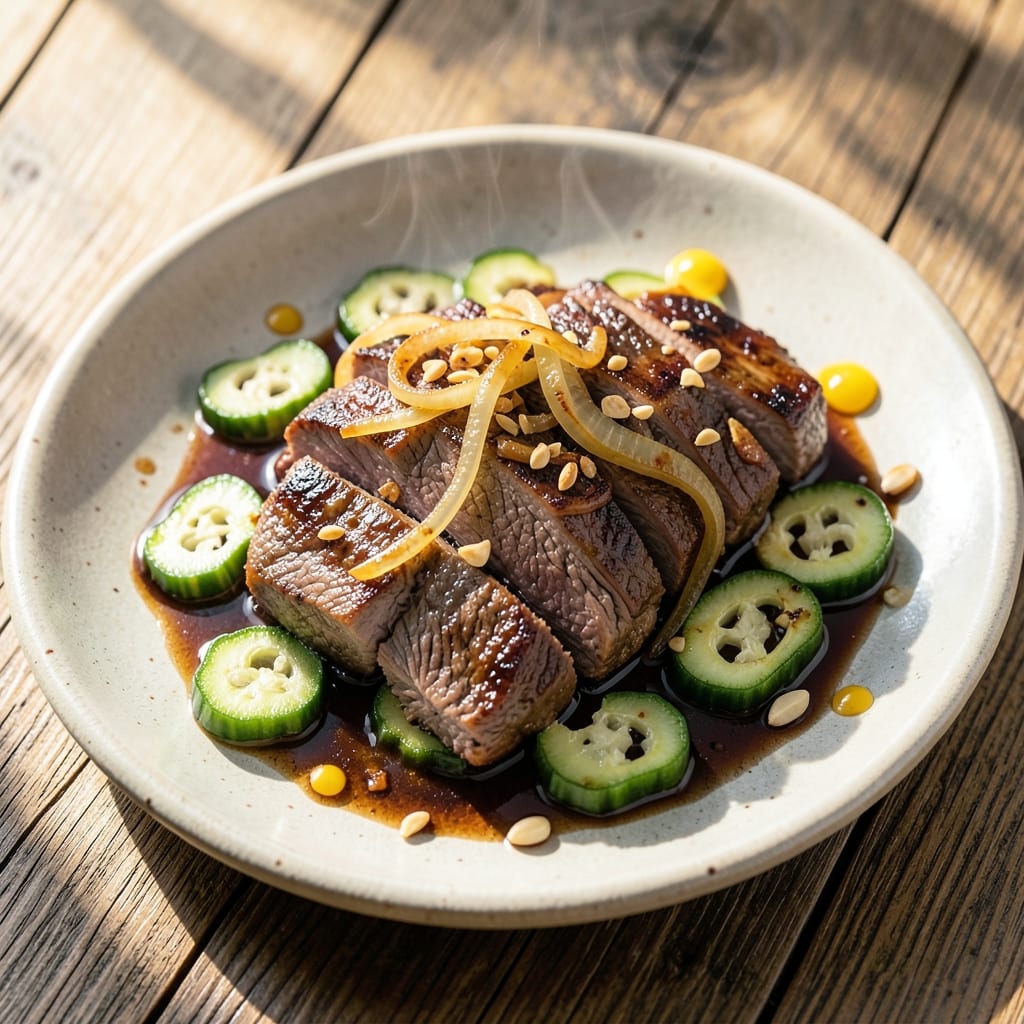
This ampalaya with beef Pinoy recipe delivers the perfect balance of rich, savory beef and bitter melon in a deeply flavorful stew that defines Filipino comfort food. 💛 The secret lies in slow-braising the beef until fork-tender while letting the bitter melon mellow into sweet, caramelized pieces—transforming its natural bitterness into a complex, umami-packed dish.
What sets this recipe apart is the layered seasoning—garlic and onions form the aromatic base, while soy sauce, calamansi, and a touch of sugar create that signature Filipino harmony of salty, tangy, and slightly sweet. The beef simmers until it practically falls apart, absorbing all those rich flavors, while the bitter melon softens just enough to melt in your mouth.
By the time you serve this dish, you'll have a steaming bowl of hearty beef and tender bitter melon swimming in a glossy, savory sauce that's both comforting and restaurant-quality. The aroma alone will have everyone at the table anticipating that first bite—where the bitterness fades into sweetness, and the beef's richness takes over.
Perfect as a main course for family gatherings or weeknight dinners, this recipe captures the soul of Filipino home cooking. Let's get started on creating this beloved dish that's as nourishing as it is delicious.
Ingredients for ampalaya with beef pinoy
Rich beef and tender bitter melon—this Filipino classic needs just these 13 ingredients for deep, comforting flavor.
| Ingredient | Amount | Notes |
|---|---|---|
| Bitter Melon (Ampalaya) 🍈 | 2 lb | Fresh, cut into 1-inch cubes |
| Beef Chuck Roast 🥩 | 1 ½ lb | Cut into 1.5-inch cubes |
| Yellow Onions 🧅 | 2 whole | Thinly sliced, about 2 cups |
| Garlic Cloves 🧄 | 8 cloves | Minced, about 2 tbsp |
| Calamansi Juice 🍋 | ½ cup | Freshly squeezed, or substitute lime |
| Soy Sauce 🍶 | ¼ cup | Regular or light soy sauce |
| White Vinegar 💧 | 2 tbsp | For brightness |
| Granulated Sugar 🍚 | 2 tbsp | Adjust to taste |
| Canola Oil 🫒 | 3 tbsp | For sautéing |
| Bay Leaves 🌿 | 2 whole | For depth of flavor |
| Ground Black Pepper 🌶️ | 1 tsp | Freshly ground preferred |
| Salt 🧂 | 1 ½ tsp | Adjust to taste |
| Water 💧 | 2 cups | For simmering |
The beef is non-negotiable here—chuck roast gives you that melt-in-your-mouth texture after hours of simmering. Filipino markets often carry it pre-cut, but most grocery stores stock it too. Look for good marbling if you're picking a whole roast. For bitter melon, avoid pre-cut packages—they oxidize fast. Buy whole and cube it yourself right before cooking. The difference in freshness is huge. And if you can't find calamansi? Lime juice works in a pinch, though it won't be exactly the same.
No soy sauce? Coconut aminos or even a pinch of salt plus a splash of fish sauce (if not vegetarian) gets you close. The sugar might seem odd, but it's essential to balance the bitterness of the melon—think of it like caramelizing the edges. For extra richness, some cooks add a splash of coconut milk, but I keep it simple with just the beef and melon. The bay leaves? Tear them first—they infuse flavor better. And if your vinegar smells funky, toss it—you want clean, bright acidity here.
This dish tastes even better the next day as flavors meld. Store leftovers in the fridge for up to 4 days—the sauce thickens nicely. Freezes for 3 months if you want to make a big batch. Pro tip: Double the recipe and freeze half. When you're ready to serve, just reheat with a splash of water to loosen the sauce. The aroma alone will have everyone rushing to the table—trust me on that.
Why You'll Love This Recipe
- Here’s what sold me: the beef chuck stays juicy and rich, while the ampalaya’s slight bitterness balances perfectly with the sweet, tangy calamansi splash. That garlic-onion base? It’s the secret—deep, savory, and impossible to resist.
- One-Pan Magic: I swear by this—just slice the beef, chop the ampalaya (no fancy prep needed), and toss it all in one pot. The onions caramelize while the beef tenderizes, and by the time the bitter melon softens, dinner’s ready. Minimal cleanup, maximum flavor.
- Beef Meets Bite: Here’s what sold me: the beef chuck stays juicy and rich, while the ampalaya’s slight bitterness balances perfectly with the sweet, tangy calamansi splash. That garlic-onion base? It’s the secret—deep, savory, and impossible to resist.
- Lunchbox Hero: Between us, this is my go-to for meal prep. The flavors actually improve the next day—yes, even the ampalaya mellows out just enough to make it kid-friendly. Pack it cold or reheat it; either way, it’s a hit.
Step-by-step instructions for ampalaya with beef Pinoy
Here's how to transform bitter melon and beef into a rich, comforting stew.
🍳 Step 1: Sear the Beef Chuck Until Browned
Heat 2 tablespoons of the canola oil in a large pot over medium-high heat until shimmering. Add the 1.5 lb beef chuck roast in 1.5-inch cubes and sear undisturbed for 3-4 minutes until deep golden brown on all sides. This step develops that deep, caramelized flavor that'll carry through the stew.
Real talk: Don't rush this. You want those beef pieces to develop a crust before they hit the simmering liquid. Once browned, remove the beef with a slotted spoon and set aside temporarily. You'll add it back later, and those browned bits will melt into the sauce for maximum flavor.
👨🍳 Step 2: Sauté Onions and Garlic Until Soft
In the same pot, add the remaining 1 tablespoon canola oil and the 2 whole yellow onions in thin slices. Cook over medium heat for 5-6 minutes until softened and translucent. Here's where it gets good—toss in the 8 cloves minced garlic and cook for another 30 seconds until fragrant.
I like to keep the onions slightly al dente—they'll continue cooking in the simmering liquid. If they turn brown too quickly, reduce the heat just a touch. The goal is to build flavor without burning the garlic, which happens in seconds if you're not paying attention.
🥘 Step 3: Build the Flavor Base
Stir in the 2 whole bay leaves, 1.5 tsp salt, and 1 tsp ground black pepper. Pour in the 0.5 cup calamansi juice, 0.25 cup soy sauce, 2 tbsp white vinegar, and 2 tbsp granulated sugar. Give everything a good stir to combine all those flavors.
This is where the magic happens—the acidity from the vinegar and calamansi brightens the dish, while the sugar balances the bitterness of the bitter melon. Let this mixture bubble gently for 2 minutes to let the flavors meld together before adding the beef back in.
🔥 Step 4: Simmer the Beef Until Tender
Return the seared beef to the pot. Add the 2 cups water and bring everything to a gentle boil over medium-high heat. Once boiling, reduce heat to low and cover partially. Let it simmer for 1 hour to 1 hour 15 minutes until the beef is fork-tender and easily pulls apart.
I check for doneness by piercing a beef cube—it should slide in easily with a fork. If the liquid reduces too quickly, add a splash of water to keep it at a gentle simmer. The longer it cooks, the more flavorful the beef becomes, but don't let it dry out.
🍴 Step 5: Add Bitter Melon and Finish
When the beef is tender, add the 2 lb bitter melon (ampalaya) in 1-inch cubes. Simmer uncovered for another 10-12 minutes until the bitter melon is tender but still holds its shape. The bitterness should mellow out as it cooks in the flavorful broth.
Taste and adjust seasoning if needed—you might want to add a bit more soy sauce for saltiness or a touch of sugar to balance any lingering bitterness. Remove the bay leaves before serving, as they can be tough to chew. Ladle the stew into bowls and serve hot with steamed rice to soak up all that delicious sauce.
Pro Tips For Making Ampalaya With Beef Pinoy
- BLANCH THE AMPALAYA FIRST: I learned this the hard way—skipping the 30-second boil in salted water leaves your bitter melon rubbery and bitter. After blanching, shock it in ice water to stop cooking, then slice. The texture becomes tender without turning to mush, and the bitterness mellows just enough to let the beef shine.
- SEAR THE BEEF IN BATCHES: Don’t crowd the pan—this is the thing that matters most for flavor. Work in two batches if needed, using medium-high heat until you get deep brown crusts. Those caramelized bits dissolve into the sauce later, giving your stew that rich, umami depth. (Yes, even if you’re impatient like me.)
- USE GARLIC AND ONIONS LIKE A SAUCE: After browning the beef, cook the onions and garlic until they’re soft but not browned—about 5 minutes. Then, add a splash of water or beef broth to deglaze the pan. This lifts all the stuck-on bits, turning them into the base of your sauce instead of wasting flavor. Sounds weird, but it works.
- ACIDIFY THE SAUCE GRADUALLY: Don’t dump all the calamansi juice at once—start with half, let it simmer for 5 minutes, then add the rest. This prevents the sauce from turning bitter or curdling, especially if you’re using store-bought juice. Taste as you go; you can always add more, but you can’t take it out.
Regional styles of these flavors
Visayan-Style Ampalaya
In the Visayas region, this dish often features shrimp paste (bagoong) for an extra umami punch. Add 1 tbsp shrimp paste when sautéing the onions and garlic, then stir it in until it dissolves completely. The locals also prefer a slightly thicker sauce, so reduce the water to just 1 cup instead of 2 cups. This version is common in Cebu and Bohol, where bitter melon grows abundantly. 🌊
Tagalog Heartland Version
The classic Manila-style ampalaya with beef uses calamansi and white vinegar to balance the bitterness, but some Tagalog cooks add a splash of coconut milk at the end for creaminess. For a richer texture, stir in ½ cup coconut milk during the final 10 minutes of simmering. This variation is popular in Metro Manila and nearby provinces like Bulacan and Pampanga.
Bicolano Adaptation
In the Bicol region, where coconut is king, this dish often includes grated coconut in the sauce. After adding the bitter melon, stir in ¼ cup grated coconut and let it simmer for an extra 5 minutes. The coconut adds a unique sweetness that pairs beautifully with the beef. This version is especially common during family gatherings and festivals in Bicol.
Ilocano Twist
Up north in the Ilocos region, the dish might include longanisa (Ilocano sausage) for extra protein and flavor. Brown 2 slices of longanisa with the beef, then proceed with the recipe as usual. The Ilocanos also prefer a slightly sweeter version, so increase the sugar to 3 tbsp to better balance the bitter melon. This adaptation is a staple in Ilocano households during special occasions. 🔥
Pampanga's Sweet-Savory Style
In Pampanga, known for its rich culinary traditions, this dish often features sweet potatoes alongside the bitter melon. Add ½ lb sweet potato cubes when you introduce the bitter melon, and simmer for the same 10-12 minutes. The sweetness of the potatoes complements the beef and melon beautifully, creating a dish that's both hearty and comforting. This version is a favorite in Pampanga's famous restaurants.
Nutrition facts
Frequently asked questions
Why does bitter melon need sugar in this recipe?
Sugar balances the natural bitterness of the bitter melon by caramelizing its edges and creating a sweet contrast. The 2 tablespoons of sugar in this recipe is essential—it transforms the dish from overly bitter to rich and complex, with a perfect harmony of flavors that makes it so comforting.
Can I use regular melon instead of bitter melon?
No, bitter melon (ampalaya) is non-negotiable for this dish—its unique texture and bitterness are what make it special. However, if you can't find it, you could try long melon (like snake melon), but the flavor and texture will be completely different. The bitterness is what creates the signature taste when balanced with the beef and sweet elements.
What's the best cut of beef for this recipe?
Chuck roast is ideal because it stays tender and flavorful during the long simmer. Other good choices are beef shank or brisket, but avoid lean cuts like sirloin—they can dry out. If you can't find chuck roast, try beef stew meat or even short ribs for extra richness.
How do I know when the beef is fully cooked?
Pierce a beef cube with a fork—it should slide in easily with no resistance. The internal temperature should reach 195°F (or until it's fork-tender). If the sauce reduces too quickly, add a splash of water to keep it moist. Overcooking can make the beef tough, so aim for 1 hour to 1 hour 15 minutes of simmering.
Can I make this dish in a slow cooker?
Sear the beef first, then transfer everything to a slow cooker. Cook on low for 6-8 hours or high for 3-4 hours. Add the bitter melon in the last 30 minutes to prevent it from turning mushy. The slow cooker makes this dish even more tender and flavorful with minimal effort.