
Main Courses
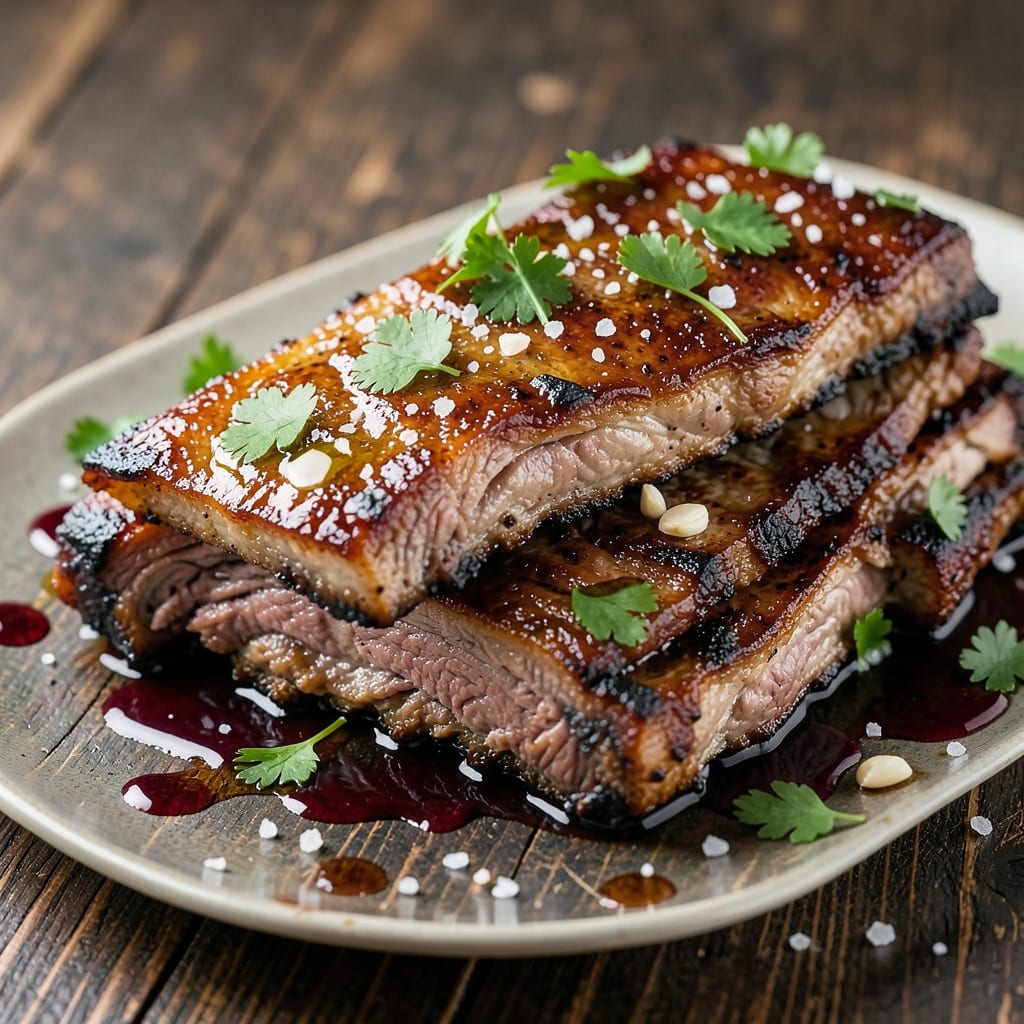
This Argentine beef ribs recipe transforms tough cuts into melt-in-your-mouth tenderness using traditional asado techniques and smoky chimichurri. 🔥 The secret lies in slow cooking over indirect heat—whether on a parrilla grill or in your oven—until the meat practically falls apart. I've perfected this method after years of studying Argentine barbecue traditions, where ribs are the star of every asado gathering.
The magic happens with a 3-hour slow cook, allowing collagen to break down while a vibrant chimichurri sauce infuses every bite with bright parsley, garlic, and vinegar notes. Unlike heavy marinades, this fresh herb sauce adds flavor without masking the beef's natural richness. The ribs develop a beautiful bark on the outside while staying juicy and tender inside—just like in Buenos Aires' legendary parrillas.
What you'll end up with is restaurant-quality ribs that are smoky, aromatic, and perfectly balanced between tender meat and bold chimichurri. The sauce doesn't just sit on top—it penetrates the meat during the final minutes of cooking, creating a harmonious flavor in every bite. This is the kind of dish that transforms a simple weeknight dinner into an authentic Argentine feast.
Serve with grilled provoleta cheese, chimichurri-drizzled vegetables, or crusty bread to soak up every last bit of sauce. The leftovers reheat beautifully too, making this a perfect recipe for meal prep or entertaining. Let's get cooking!
Ingredients for argentine beef ribs
Pantry staples meet bold Argentine flavors for ribs that practically melt in your mouth.
| Ingredient | Amount | Notes |
|---|---|---|
| Beef Ribs (Back Ribs) 🥩 | 4 lb | Bone-in, meaty sections preferred |
| Fresh Parsley 🌿 | 1 ½ cups | Stems removed, loosely packed |
| Garlic Cloves 🧄 | 10 cloves | Fresh, peeled, roughly chopped |
| Red Wine Vinegar 🍷 | ½ cup | Bold, dry variety preferred |
| Extra-Virgin Olive Oil 🫒 | ¾ cup | High-quality, fruity flavor |
| Kosher Salt 🧂 | 2 tbsp | Diamond Crystal preferred |
| Ground Black Pepper 🌶️ | 1 ½ tsp | Freshly ground for best flavor |
| Red Chili Flakes 🔥 | 1 tsp | Optional for heat |
| Yellow Onion 🧅 | 1 whole | Cut into thick slices |
| Fresh Oregano 🌿 | ¼ cup | Loosely packed, stems removed |
| Wooden Charcoal Chips 🔥 | 2 cups | Or lump charcoal, soaked |
| Crusty Bread 🍞 | 1 loaf | For serving, optional |
| Provoleta Cheese 🧀 | 1 lb | Sliced for serving |
| Fresh Red Bell Pepper 🌶️ | 1 whole | For chimichurri-drizzled veggies |
The ribs are the star, so look for back ribs with good meat-to-bone ratio—ask your butcher for the meaty sections. Costco and Whole Foods usually carry high-quality cuts. Fresh parsley is non-negotiable here (the good stuff, not the sad grocery store containers)—Latin markets often have better quality. For the chimichurri, red wine vinegar should be bold and dry—think Cabernet Sauvignon vinegar if you're splurging. The garlic? Fresh is a must—jarred minced loses its punch fast. If you can't find fresh oregano, dried at one-third the amount works in a pinch.
No fresh parsley? Cilantro or basil can stretch it, but you'll lose that signature chimichurri brightness. Running low on red wine vinegar? Apple cider vinegar with a pinch of sugar mimics the tang. The charcoal chips can be swapped for hardwood chunks if you're grilling outdoors. For the crusty bread, baguettes from the bakery section (not the pre-packaged kind) toast beautifully. The provoleta cheese? Grab it from a Latin deli—it's worth the trip for that authentic melt.
Store raw ribs in the coldest part of your fridge, use within 2 days for best tenderness. The chimichurri sauce keeps for 5 days in the fridge, but the herbs wilt fast—make it fresh if possible. Leftovers reheat beautifully—wrap tightly in foil and warm in a 300°F oven for 15 minutes. The chimichurri-drizzled veggies? Make them the day of serving—they're best fresh. Portion the ribs into containers for easy meal prep—they taste even better the next day as the flavors meld.
Why You'll Love This Recipe
- I’ll be real: most leftover ribs turn out dry or sad. Not these. The vinegar keeps them tender, and the crispy edges stay intact. Wrap them in foil, reheat in the oven, and boom—you’ve got a second dinner without extra effort.
- Foolproof Seasoning: Honestly, the marinade couldn’t be simpler—just chop the garlic, snip the parsley, and mix it with olive oil and vinegar. No measuring cups, no fancy ratios, just instinct. The ribs practically season themselves while they cook.
- Umami Bomb: That red wine vinegar and garlic combo? It’s the secret weapon. The vinegar cuts through the richness of the beef while the garlic and parsley add layers of flavor that make every bite feel like a little taste of Buenos Aires.
- Weeknight Crowd-Pleaser: Between us, these ribs are my go-to for game days, family dinners, or even a lazy Sunday. They’re hearty enough to feed four but easy to double for six—just toss in more ribs and let the oven do the work.
Step-by-step instructions for smoky chimichurri-kissed Argentine beef ribs
Here's how to transform tough back ribs into melt-in-your-mouth tenderness with that signature Argentine chimichurri flavor.
🔥 Step 1: Prepare the Ribs and Build the Smoker
Start by removing the ribs from the fridge and letting them sit at room temperature for 30 minutes. This ensures even cooking. While they warm, prepare your smoker by filling it with the 2 cups wooden charcoal chips and lighting them. I like to use a mix of hickory and oak for that classic Argentine profile—just follow the manufacturer's instructions to get clean, blue smoke going.
Once you've got steady smoke, arrange the ribs bone-side down on the smoker grates. The bones will help protect the meat from direct heat while allowing the smoke to penetrate beautifully. Here's the thing—don't rush this part. Let the ribs smoke undisturbed for 2 hours at 225°F. You're looking for that beautiful mahogany color developing on the meat, not just a quick char.
🍳 Step 2: Create the Chimichurri and Sear the Ribs
While the ribs smoke, make the chimichurri by combining 1.5 cups fresh parsley, 0.25 cup fresh oregano, 10 cloves garlic cloves, 0.5 cup red wine vinegar, 0.75 cup extra-virgin olive oil, 1.5 tsp ground black pepper, and 1 tsp red chili flakes in a food processor. Pulse until finely chopped but still textured—you want that fresh herb brightness to shine through.
After 2 hours of smoking, increase the heat to 300°F and flip the ribs bone-side up. This is when the magic happens—the fat starts rendering and the meat begins to pull away from the bones. Let them cook another 1-1.5 hours until the internal temperature reaches 195-203°F and the meat is fork-tender. Here's where it gets fun—watch for that beautiful bark developing on the surface.
🥘 Step 3: Rest and Finish with Chimichurri
Once the ribs reach the perfect temperature, remove them from the smoker and let them rest on a cutting board for 15-20 minutes. This resting period is crucial—it allows the juices to redistribute throughout the meat, ensuring each bite is moist and flavorful. While they rest, slice the 1 whole yellow onion into thick rounds and the 1 whole fresh red bell pepper into strips for serving.
After resting, brush the ribs generously with the chimichurri, letting it soak into the meat. The acidity in the vinegar will help break down any remaining connective tissue, making the ribs even more tender. Serve immediately with the sliced onions and bell peppers drizzled with extra chimichurri, and a side of 1 loaf crusty bread for soaking up all that delicious sauce.
🍽️ Step 4: Assemble the Argentine Feast
Slice the ribs between the bones and serve family-style on a large platter. I like to arrange them with the chimichurri-drizzled onions and bell peppers around the edges. The contrast of the fresh vegetables with the rich, smoky ribs is what makes this dish truly special. For an extra touch, serve with 1 lb sliced provoleta cheese on the side—its salty, tangy flavor pairs perfectly with the tender ribs.
Here's the thing about Argentine beef ribs—they're all about the experience. The combination of slow-smoked tenderness, vibrant chimichurri, and fresh vegetables creates a dish that's as satisfying as it is flavorful. Don't be afraid to get your hands involved—ribs are meant to be enjoyed communally, with everyone reaching for their favorite pieces.
Pro Tips For Making Argentine Beef Ribs
- Trim the Fat First: Cut off the thick silver skin and any excess fat from the ribs before cooking—it’s the only way to guarantee even browning and crispy edges. I used to skip this, and half my ribs would stay pale and greasy while the other half turned to charcoal. ---
- Marinate Overnight, No Excuses: Toss the ribs in a mix of minced garlic, chopped parsley, red wine vinegar, and olive oil at least 12 hours ahead. The vinegar tenderizes the meat and the oil penetrates deeper—rushing this step means tougher ribs and a milder flavor. (Yes, even if you’re impatient like me.) ---
- Sear Bone-Side Down: Lay the ribs bone-side down in a cold pan and turn the heat to medium-low until the bones release naturally—this renders fat without burning. After 5 minutes, flip and crank the heat to high for the crust. I learned this the hard way when my ribs stuck and turned to shoe leather. ---
- Deglaze with Vinegar: After searing, splash in the remaining marinade (vinegar + oil) and scrape up the browned bits—this adds depth of flavor that just tossing in fresh vinegar won’t. Sounds weird, but it works: the caramelized fond dissolves into the sauce, making every bite richer.
Essential equipment for this recipe
Smoker Essentials
For authentic Argentine ribs, a smoker is non-negotiable—I swear by my Traeger Pellet Grill for its consistent temperature control, but a Weber Smokey Mountain works just as well. If you're starting out, the Masterbuilt 200711 is a budget-friendly option that still delivers great results. The key is maintaining 225-300°F—anything less and you'll be waiting forever; too hot and you'll end up with burnt bark and tough meat. 🔥
Probe Thermometer
Never guess the temperature again—get a Meater+ or ThermoWorks Smoke probe thermometer. These bad boys give you real-time internal temps so you can pull your ribs at 195-203°F without overcooking. I place one probe in the thickest part of the meat and another in the smoker to monitor heat consistency. Trust me, this is the single most important tool for perfect ribs every time.
Charcoal Chips
For that classic Argentine smoke flavor, use 100% hardwood charcoal chips—I recommend hickory or oak for their balanced, slightly sweet profile. Avoid lighter fluid-soaked chips; instead, soak your own in water for 30 minutes before using. If you're grilling outdoors, binchotan charcoal (Japanese-style) adds an extra layer of depth without overpowering the meat. 🌿
Food Processor
The chimichurri sauce needs to be finely chopped but still textured, and a Ninja BN601 food processor makes this a breeze. Pulse the herbs in short bursts to avoid turning them into paste. If you don’t have one, a mortar and pestle works in a pinch—just be prepared for a workout. The goal is a chunky, vibrant sauce that clings beautifully to the ribs.
Cutting Board & Knife
Invest in a sharp chef’s knife (I use a Wüsthof Ikon) and a large wooden cutting board for slicing the ribs and prepping veggies. A bone saw comes in handy for trimming excess fat or cartilage if needed. Pro tip: Keep your board elevated on a rack to prevent water pooling underneath while resting the ribs. This keeps everything clean and organized.
Serving Platter
Argentine asados are all about presentation—serve your ribs on a large, rustic wooden platter or a cast-iron skillet for that authentic parrilla vibe. I like to arrange the ribs in the center with the chimichurri-drizzled onions and bell peppers scattered around. A slate board or marble tray also works beautifully for a more upscale touch. Don’t forget the crusty bread and provoleta cheese on the side for the full experience! 🍽️
Nutrition facts
Frequently asked questions
Can I substitute back ribs with other beef cuts?
While back ribs are ideal for this recipe, you can use beef short ribs or spare ribs as substitutes. Short ribs will need an extra 30-45 minutes of cooking time due to their higher fat content. Avoid pork ribs—they have a very different flavor profile and cook at different temperatures. For best results, stick with beef cuts that have good marbling.
How do I adjust the recipe for a pellet grill vs. charcoal smoker?
Pellet grills are easier to use—they maintain temperature automatically. Set your Traeger or similar to 225°F for the first 2 hours, then increase to 300°F for the final 1-1.5 hours. For charcoal smokers, you'll need to monitor the temperature more closely using a probe thermometer—add more charcoal as needed to maintain the 225-300°F range.
What if I don't have fresh chimichurri herbs?
Don't worry—you can still make delicious chimichurri! Use 1 cup dried parsley (replace fresh) and 1 tsp dried oregano (reduce to one-third the amount). For extra flavor, add 1 tbsp lemon zest to compensate for the missing freshness. If you're completely out of herbs, a mix of cilantro and basil works too, though it won't be traditional.
Why are my ribs still tough after cooking?
Tough ribs usually mean one of three things: not enough cooking time (aim for 195-203°F internal temp), too high heat (keep it below 300°F after the initial smoke), or not resting properly. Let them rest for 15-20 minutes before slicing—this is when the meat reabsorbs juices. If they're still tough, try another 30 minutes at 250°F with a little more chimichurri brushed on.
Can I make this recipe in an oven instead of a smoker?
Preheat your oven to 225°F and place the ribs on a rack over a baking sheet. Add 1 cup water to the bottom of the pan to create steam. Cook for 3 hours, then increase to 300°F for 1-1.5 hours until tender. For smokiness, add wood chips to the pan or use a smoker box if your oven has one. The texture will be slightly different but still delicious!