
Salads
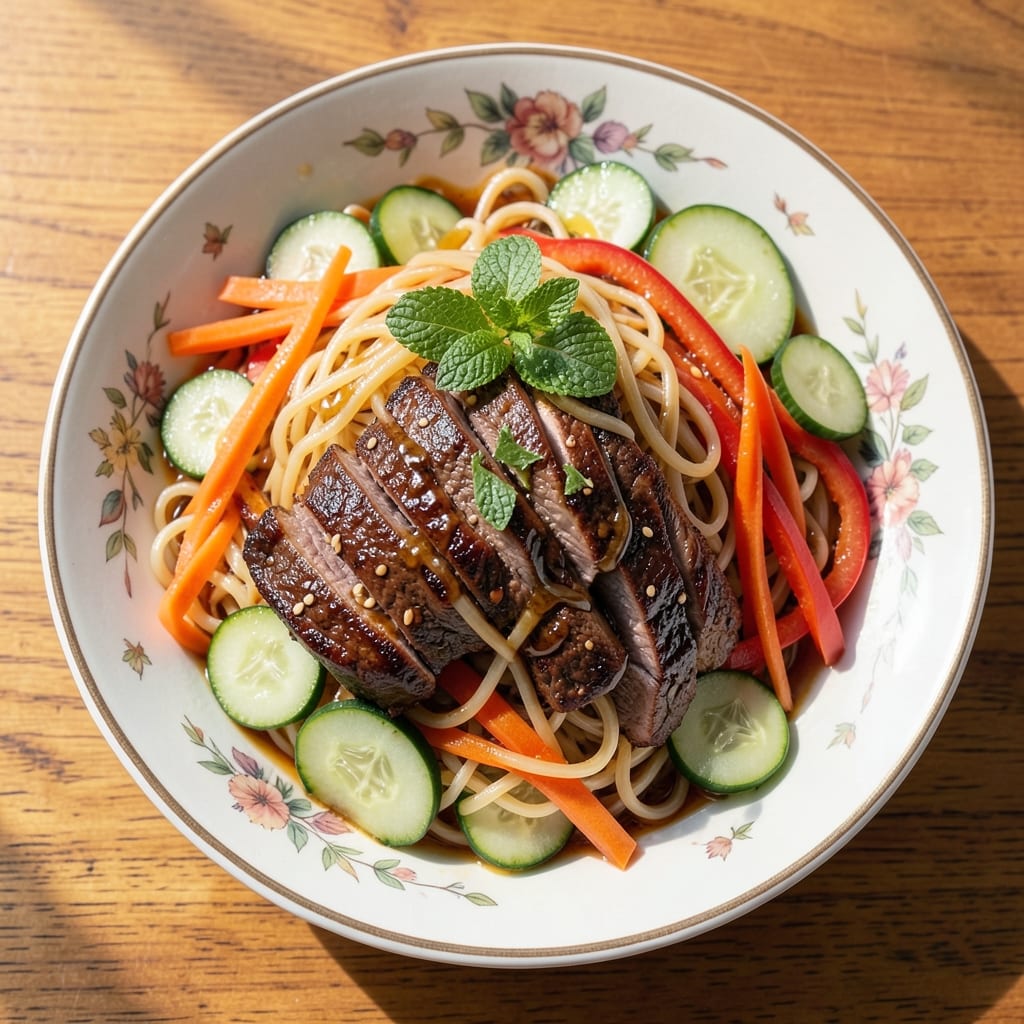
This Asian beef noodle salad recipe delivers restaurant-quality flavors with crisp-tender beef and silky rice noodles that balance perfectly. The secret lies in quick-cooking the beef just until it's tender yet still holds its shape, then tossing it with chilled noodles and a bright, tangy dressing. I developed this version after years of testing different marinades and cooking techniques to achieve that ideal texture contrast—crunchy vegetables, tender beef, and slippery noodles in every bite.
The recipe draws inspiration from Vietnamese bún bò and Thai yum traditions, where fresh herbs, lime, and fish sauce create that signature umami kick. What sets this apart is the two-step beef preparation: first marinating in soy sauce and garlic for depth, then stir-frying until just done. The rice noodles soak up the dressing beautifully when chilled, while shredded carrots and cucumber add refreshing crunch. This dish comes together in under 30 minutes, making it perfect for weeknight dinners or meal prep.
What you'll end up with is a harmonious blend of textures and flavors—crisp-tender beef that melts in your mouth, silky noodles that coat your fork, and a dressing that ties everything together with a perfect balance of sweet, sour, and savory. The dish is vibrant, satisfying, and packed with protein, yet light enough to feel fresh. Serve it with sliced chili peppers and fresh herbs on the side for an extra burst of flavor.
This recipe is incredibly versatile—swap in shrimp for a seafood version, or add grilled chicken for extra heartiness. The dressing can be adjusted to your preference: more lime for brightness, extra fish sauce for depth, or a touch of honey for sweetness. Let's get started on this crowd-pleasing dish!
Ingredients for asian beef noodle salad
Restaurant-quality Asian beef noodle salad starts with these fresh, vibrant ingredients.
| Ingredient | Amount | Notes |
|---|---|---|
| Flank Steak 🥩 | 1 ½ lb | Thinly sliced against grain |
| Rice Noodles 🍜 | 8 oz | Thin or medium width |
| Carrots 🥕 | 2 medium | Shredded, not peeled |
| English Cucumbers 🥒 | 1 whole | Julienned, seeds removed |
| Red Bell Pepper 🌶️ | 1 whole | Thinly sliced, seeds removed |
| Fresh Mint Leaves 🌿 | ½ cup | Torn, not chopped |
| Fresh Cilantro Leaves 🌱 | ¼ cup | Torn, not chopped |
| Lime Juice 🍋 | ½ cup | Freshly squeezed |
| Fish Sauce 🍶 | 2 tbsp | Red Boat preferred |
| Soy Sauce 🥄 | 2 tbsp | Kikkoman or similar |
| Sesame Oil 🫒 | 1 tbsp | Toasted, not flavored |
| Garlic Cloves 🧄 | 4 cloves | Minced, not pressed |
| Honey 🍯 | 1 tbsp | Wildflower preferred |
| Vegetable Oil 🫒 | 2 tbsp | High smoke point |
| Salt 🧂 | 1 ½ tsp | Diamond Crystal preferred |
The beef is everything here. Flank steak is my go-to—it's lean enough to cook fast but tender enough to slice thin. Look for USDA Choice or better at Whole Foods or your local butcher. If you can't find flank, sirloin or ribeye work too, but slice against the grain. The rice noodles? 8-ounce packages are perfect for 4 servings. Soak them in hot water for 10-12 minutes, then rinse in cold water to stop cooking. The carrots? Julienne peeler makes quick work of shredding—no need to peel unless they're waxy.
No fish sauce? Soy sauce plus a splash of Worcestershire gets you close, though it won't have that exact umami punch. Fresh herbs wilt fast, so store them in damp paper towels in the fridge. The lime juice needs to be fresh—bottled just doesn't cut it. For the honey, wildflower or clover adds subtle floral notes that pair perfectly. The sesame oil? Toasted is key—heat it in a dry pan for 30 seconds to deepen the flavor. Want extra crunch? Add thinly sliced jicama or water chestnuts from the Asian aisle.
Prep the dressing first—it keeps for 5 days in the fridge. The beef cooks in 3 minutes flat, so have everything ready. Noodles should be chilled before tossing—that's what makes them silky. Store leftovers in airtight containers for 3 days, but honestly, this tastes even better the next day as the flavors meld. Double the batch if you're feeding a crowd—it disappears fast.
Why You'll Love This Recipe
- No-Cook Prep Magic: I swear by this trick—soak the rice noodles while I slice the veggies and marinate the steak. Ten minutes later, everything’s ready to toss together. No boiling, no fuss, just instant satisfaction.
- Umami Bomb: That thinly sliced flank steak? Marinated in soy, garlic, and a touch of brown sugar, it turns tender and packed with flavor. The crunch of cucumbers and bell pepper cuts through the richness like a cool breeze on a hot day.
- Lunchbox Hero: Between us, this is my secret weapon for packed lunches. The dressing stays fresh for days, the noodles hold up perfectly, and I can swap in whatever veggies I have on hand—no sad, soggy salads here.
- Budget Powerhouse: Flank steak stretches further than you’d think, and rice noodles cost next to nothing. Honestly, I make this twice a week and still have change left for takeout. Plus, leftovers taste just as good cold the next day.
Step-by-step instructions for crisp-tender beef and silky rice noodles
Here's how to balance perfectly seared beef with silky noodles and vibrant freshness.
Marinate and Slice the Flank Steak
In a medium bowl, combine the 1.5 lb flank steak with 2 tbsp soy sauce, 2 tbsp fish sauce, 1 tbsp honey, 4 minced garlic cloves, and 1.5 tsp salt. Let it marinate for at least 30 minutes (or up to 2 hours) in the refrigerator. This time allows the flavors to penetrate deeply while keeping the meat tender.
After marinating, remove the steak and pat it completely dry with paper towels. This step is crucial—any moisture will prevent proper searing. Using a sharp knife, slice the steak thinly against the grain into strips about ¼-inch thick. The grain direction will be visible as slightly wavy lines on the meat. Slice as evenly as possible for consistent cooking.
Sear the Beef to Crisp-Tender Perfection
Heat a large skillet over high heat until it's smoking hot. Add 2 tbsp vegetable oil and let it shimmer for 30 seconds. Working in batches if needed, add the sliced flank steak and cook undisturbed for 1-2 minutes until the edges are deep golden brown and crispy. This high heat creates a beautiful caramelized crust while keeping the interior tender.
Flip the beef and cook for another 30-60 seconds until it reaches 145°F internally. The beef should be just cooked through but still slightly pink in the center—it'll continue cooking slightly when mixed with the noodles. Transfer the cooked beef to a clean bowl and set aside. Don't drain the pan yet; those flavorful browned bits are essential for the dressing.
Prepare the Fresh Vegetable Medley
While the beef cooks, prepare the vegetables by shredding the 2 medium carrots into thin strips using a julienne peeler or mandoline. Remove the seeds from the 1 whole English cucumber and cut it into thin julienne strips. Thinly slice the 1 whole red bell pepper (seeds removed) into matchstick-sized pieces. Place all vegetables in a large mixing bowl.
Add the 0.5 cup torn fresh mint leaves and 0.25 cup torn fresh cilantro leaves to the bowl. The herbs should be torn by hand rather than chopped to maintain their delicate texture. Give everything a gentle toss with your hands to combine. This fresh vegetable medley will provide the salad's crisp, refreshing base.
Cook and Assemble the Noodles
Bring a large pot of water to a rolling boil. Add the 8 oz rice noodles and cook according to package instructions—usually 3-5 minutes—until they're tender but still slightly firm (they'll finish cooking in the dressing). Drain the noodles and rinse them under cold water for 10 seconds to stop the cooking process. Drain well and add them to the vegetable bowl.
To the same skillet used for the beef (still containing the browned bits), add the 0.5 cup lime juice, 1 tbsp sesame oil, and any accumulated juices from the beef. Scrape up all the browned bits from the bottom of the pan with a wooden spoon. Remove from heat and let cool slightly for 1 minute—this prevents the dressing from curdling when mixed with the hot noodles.
Combine and Serve Immediately
Pour the warm dressing over the noodle and vegetable mixture in the bowl. Add the cooked beef and gently toss everything together with your hands until the noodles are evenly coated. The dressing should cling to the noodles and beef, creating a silky, flavorful coating. If the salad seems too dry, add 1-2 tablespoons of water to loosen it.
Taste and adjust seasoning if needed—you might want to add a touch more fish sauce for saltiness or lime juice for brightness. Serve immediately while the beef is still warm and the noodles are silky. This dish is best enjoyed fresh, with the contrast of crisp vegetables, tender beef, and silky noodles in every bite.
Pro Tips For Making Asian Beef Noodle Salad
- Slice Against the Grain: Flank steak is tough when cut with the grain—this is non-negotiable. Slice it diagonally at a 45-degree angle after cooking, or you’ll end up with chewy, stringy strips. (Yes, even if it looks messy—trust me, it’s worth it.)
- Soak Noodles Just Until Flexible: Rice noodles should be barely pliable, not mushy or crunchy. Soak them in warm water for 10-15 minutes, then drain and rinse with cold water—this stops cooking and keeps them from turning into glue. (I learned this after serving a salad where the noodles disintegrated mid-bite.)
- Don’t Overcrowd the Pan: If you’re searing the beef, keep it in a single layer at first. Piling it on causes steam instead of a crust, and you’ll end up with bland, gray meat. Cook in batches if needed—your future self will thank you for that caramelized edge.
- Shave, Don’t Dice, the Veggies: Thin, matchstick cuts for carrots, cucumbers, and bell pepper make this salad actually eatable. A mandoline or sharp knife works best—thick chunks just sit there like sad, unchewed lumps. (And yes, I’ve served both versions. You’ll pick the right one.)
Creative variations of asian beef noodle salad
Vietnamese Bún Bò Fusion
Transform this salad into a Vietnamese-inspired bún bò by adding a spicy beef broth base. Start with the same beef marinade, but after searing, simmer the beef in 2 cups beef broth with 1 tbsp fish sauce, 1 tbsp soy sauce, 1 tsp sugar, and 1 star anise pod for 10 minutes. Strain the broth, then toss the chilled noodles and vegetables in this rich, aromatic liquid. Top with crispy shallots, bean sprouts, and Thai basil for that iconic Saigon street food feel. 🌶️
Thai-Inspired Yum Noodle Salad
For a Thai yum twist, swap the dressing for a tangy lime-chili sauce. Mix ½ cup lime juice, 2 tbsp fish sauce, 1 tbsp honey, 1 tbsp toasted sesame oil, and 1 tbsp minced Thai chilies (or 1 tsp chili flakes). Toss with the noodles, beef, and veggies, then garnish with crushed peanuts, Thai basil, and lime wedges. Serve with grilled lemongrass chicken on the side for a full Isaan-style meal. 🍋
Spicy Korean Bibimbap Noodle Bowl
Add a Korean fusion touch by stir-frying the beef with 1 tbsp gochujang (Korean chili paste) and 1 tsp grated ginger before assembling. Top the salad with quick-pickled radishes (slice ½ cup radishes thin, toss with 1 tbsp rice vinegar and ½ tsp sugar), fried eggs, and sesame seeds. Serve with kimchi on the side for a bold, umami-packed bite. 🥚
Sweet and Smoky Japanese Yakitori Noodles
For a Japanese-inspired version, marinate the beef in 2 tbsp soy sauce, 1 tbsp mirin, 1 tbsp sake, and 1 tsp grated ginger instead. After searing, toss the salad with a dressing of 1 tbsp soy sauce, 1 tbsp mirin, 1 tsp honey, and ½ tsp white miso paste. Garnish with toasted sesame seeds, thinly sliced scallions, and pickled ginger for a yum-yakitori fusion. 🍶
Herb-Forward Southeast Asian Remix
Boost the herbs for a Southeast Asian vibe by adding 1 tbsp torn Thai basil, 1 tbsp torn Vietnamese coriander, and 1 tsp grated ginger to the dressing. For extra depth, stir in 1 tsp shrimp paste (like belacan) into the dressing. Serve with crispy fried shallots and sliced jalapeños for heat. This version screams Malaysian or Indonesian street food energy. 🌿
Protein Swap Variations
Can’t find beef? Swap in grilled shrimp (toss with 1 tbsp fish sauce, 1 tsp lime juice, and ½ tsp chili flakes) or crispy tofu (pan-fry 1 block extra-firm tofu in 1 tbsp oil until golden). For a vegetarian twist, use shitake mushrooms marinated in 1 tbsp soy sauce, 1 tsp sesame oil, and 1 tsp maple syrup, then seared until caramelized. 🍤
Nutrition facts
Frequently asked questions
Can I use regular pasta instead of rice noodles?
Rice noodles are ideal because they absorb the dressing beautifully and stay light, but you can substitute with egg noodles or udon if needed. Just cook them 1 minute less than package instructions since they'll finish cooking in the dressing. Avoid al dente pasta—it gets gummy when tossed with the sauce.
How do I make the beef extra tender?
For melt-in-your-mouth beef, marinate for at least 4 hours (overnight is best) and slice against the grain into ⅛-inch strips. Use cornstarch (1 tsp) in the marinade to help tenderize, or pound the meat lightly before slicing. Cook over medium-high heat for just 1 minute per side to avoid overcooking.
What's the best way to store leftovers?
Store in an airtight container in the fridge for 3-4 days. The flavors actually improve overnight as the dressing melds! To reheat, microwave for 45 seconds with a splash of water, then toss with fresh herbs and lime juice to revive the crunch.
Can I make this gluten-free?
Use tamari (gluten-free soy sauce) and check your fish sauce label—most are naturally gluten-free. For extra safety, swap rice noodles for glutinous rice noodles (they're different from wheat-based "rice" noodles) or chickpea pasta.
Why did my beef turn out chewy?
Overcooking is the most common mistake. Beef should reach 145°F internally and still have slight pink in the center. Use a meat thermometer for accuracy, and cook in batches if needed to avoid crowding the pan. Also ensure you sliced against the grain—this shortens the muscle fibers for tenderness.