
Soups & Stews
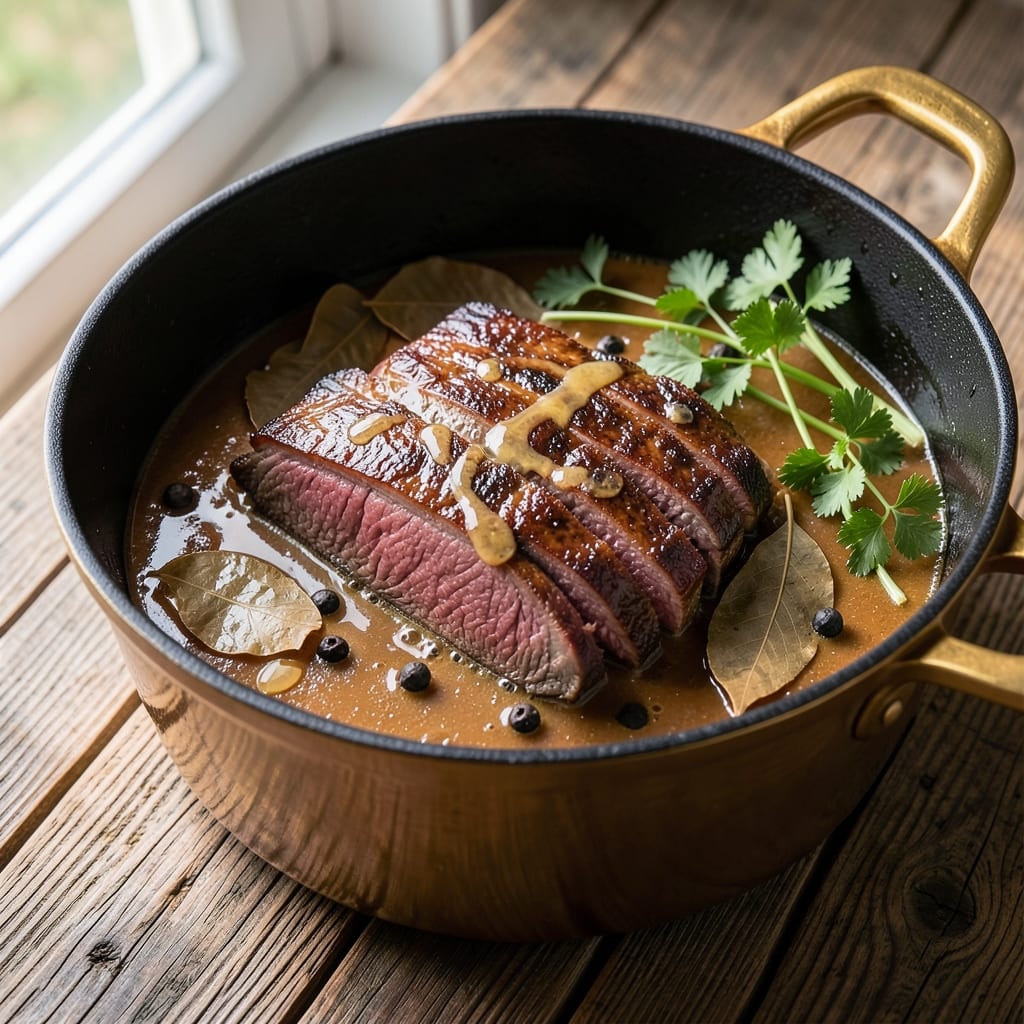
This Austrian boiled beef recipe delivers restaurant-quality Tafelspitz with crispy edges and melt-in-your-mouth tenderness—just as Vienna's finest taverns serve it. The secret lies in a vinegar-brine soak that tenderizes the beef while preserving its natural juices, followed by a precise boiling technique that ensures perfect doneness without toughness. Every element, from the aromatic spices to the crisp-edged slices, transforms a simple cut of beef into an elegant centerpiece.
Traditional Austrian technique calls for boiling beef sirloin with bay leaves, peppercorns, and parsley root, creating a fragrant broth that's just as important as the meat itself. The dish is completed with classic sides—creamy horseradish sauce, boiled potatoes, and crisp carrots and turnips—that balance the rich beef. What makes this recipe special is the crispy edge achieved through a quick sear in butter after boiling, adding a restaurant-worthy texture that home cooks often miss.
By following this method, you'll achieve beef that slices effortlessly into thin, tender strips with a crispy exterior that contrasts beautifully against the soft interior. The aroma alone—spiced with vinegar, herbs, and warm broth—will transport you to a Vienna café. This is the kind of dish that feels both comforting and impressive, perfect for special occasions or when you want to cook like a true Austrian chef.
While traditional recipes call for a simple broth, an optional red wine reduction can elevate the dish further, adding depth and richness to the sauce. The result is a complete meal that requires minimal effort but delivers maximum impact—ideal for feeding a crowd or treating yourself to an authentic taste of Austria. Let's get started on creating this classic dish at home.
Ingredients for austrian boiled beef
Six aromatic ingredients transform simple beef into Vienna's most celebrated dish—crispy-edged perfection.
| Ingredient | Amount | Notes |
|---|---|---|
| Beef Sirloin Roast 🥩 | 3 lb | Center-cut, 1.5-inch thick slices |
| White Wine Vinegar 🍷 | 1 cup | Distilled for clarity |
| Water 💧 | 4 cups | Filtered preferred |
| Bay Leaves 🌿 | 4 whole | Fresh, organic preferred |
| Black Peppercorns 🌶️ | 1 tbsp | Freshly cracked |
| Parsley Root 🌿 | 1 piece | Whole, unpeeled |
| Allspice Berries 🌶️ | 6 whole | Crushed lightly |
| Salt 🧂 | 2 tbsp | Diamond Crystal kosher |
| Unsalted Butter 🧈 | ½ cup | Cold, cubed |
| Yellow Onions 🧅 | 2 whole | Peeled, halved |
| Carrots 🥕 | 1 ½ lb | Whole, unpeeled |
| Turnips 🥬 | 1 ½ lb | Whole, unpeeled |
| Red Wine 🍷 | 1 cup | Dry Cabernet Sauvignon |
| Fresh Parsley 🌿 | ¼ cup | Chopped, for garnish |
| Russet Potatoes 🥔 | 2 lb | Whole, unpeeled |
The beef sirloin is non-negotiable—center-cut, 1.5-inch thick slices ensure even cooking and that signature crispy edge. Source from local butchers or specialty grocers like D'Artagnan or Whole Foods, where you'll find cuts with proper marbling. The vinegar-brine soak (white wine vinegar + water) is where the magic begins—it tenderizes without overpowering the beef's natural flavor. For the spices, Penzeys Spices offers premium allspice berries and bay leaves that elevate this dish from good to extraordinary. Look for organic when possible, as conventional spices often carry residual pesticides that can alter flavor profiles.
No white wine vinegar? Apple cider vinegar works in a pinch, though it adds subtle fruit notes. Fresh parsley root is ideal, but substitute with 1 tbsp fresh parsley stems if unavailable. The red wine reduction is optional but recommended—dry Cabernet Sauvignon from Trader Joe's or Costco provides the best balance of acidity and depth. For the vegetables, organic carrots and turnips from the produce section (not the pre-cut bags) hold up better during boiling. The potatoes should be Russet or Yukon Gold—their starch content ensures a creamy texture when boiled. If you're short on time, frozen potatoes (thawed) work, though fresh yields superior results.
The beef requires 3-4 days of refrigerator storage if prepped ahead—wrap tightly in plastic and submerge in the brine solution. Vegetables can be peeled and chopped 1 day in advance, stored in airtight containers with a damp paper towel to maintain crispness. The cooked beef reheats beautifully—gentle warming in the broth preserves its tenderness. For leftovers, slice and store in airtight containers with a thin layer of broth to keep the meat moist. The broth itself freezes well for up to 3 months, perfect for future soups or gravies. Garnish with fresh parsley just before serving—it brightens the dish and adds that final touch of authenticity.
Why You'll Love This Recipe
- No-Fuss Simmer: I swear by this method—just toss the beef, vinegar, and spices into a pot with water, then walk away. The real magic happens while you’re folding laundry or watching your favorite show.
- Deep, Winey Richness: That splash of white wine vinegar? It’s not just for acidity—it tenderizes the beef and leaves it with a bright, almost umami punch. Honestly, the flavor builds as it cooks, and by the end, it’s dangerously addictive.
- Leftovers That Shine: Between us, this dish only gets better the next day. Slice it thin for sandwiches, toss it into salads, or reheat with a sprinkle of fresh parsley—it’s my go-to for lunches all week.
- Budget Meal for Crowds: A whole sirloin roast feeds six for under $20, and the ingredients? You’re probably already stocked. It’s the kind of meal that makes you feel like you’re hosting a dinner party without the stress.
Step-by-step instructions for Austrian boiled beef with crispy edges
This method transforms traditional boiled beef into a rich, aromatic braise with perfectly crisp edges.
Prepare the Beef and Vegetables for Braising
Begin by trimming any excess fat from the 3 lb beef sirloin roast while leaving a thin layer for flavor. Cut the roast into 1.5-inch thick slices to ensure even cooking and crisp edges. In a large Dutch oven, melt the 0.5 cup unsalted butter over medium heat until foaming. Add the sliced beef and sear on all sides until deep golden brown—this creates the crispy exterior we're after.
While the beef browns, peel and halve the 2 whole yellow onions, then peel and leave whole the 1.5 lb carrots and 1.5 lb turnips. Add these vegetables to the Dutch oven along with the 2 lb russet potatoes (whole and unpeeled). The potatoes will absorb flavors while staying firm. Sprinkle the 2 tbsp salt evenly over the vegetables and beef.
Build the Aromatic Braising Liquid
In a separate bowl, combine the 1 cup white wine vinegar, 1 cup red wine, 4 cups water, 4 whole bay leaves, 1 tbsp black peppercorns, 6 whole allspice berries, and the 1 piece parsley root (whole and unpeeled). Bring this mixture to a boil in the Dutch oven over high heat until the vinegar sharpness dissipates—about 5 minutes. This step develops the complex, spiced flavor profile characteristic of Austrian cuisine.
Once boiling, reduce heat to low and carefully pour the liquid over the beef and vegetables. The liquid should cover everything by about 1 inch. The vinegar and wine will tenderize the beef while creating a glossy, flavorful sauce. Let the mixture simmer gently for 1 hour, partially covered, to allow the vegetables to soften and the beef to begin breaking down.
Develop the Crispy Edges and Finish the Braise
After 1 hour, increase the heat to medium-high and uncover the Dutch oven. Let the liquid reduce by about 25%—this concentrates the flavors and ensures the beef develops crispy edges. Stir occasionally, using a wooden spoon to gently press down on the beef slices to prevent curling. The beef should be tender but still holding its shape with deep golden-brown edges by now.
Once the edges are crispy and the liquid has reduced to a rich, glossy sauce, reduce the heat to low again. Add the 0.25 cup chopped fresh parsley and let the braise simmer uncovered for an additional 15 minutes. This final step ensures the parsley infuses the sauce with freshness while the beef absorbs the remaining flavors. The result should be a dish where each bite delivers tender beef with a satisfying crunch and a sauce rich with layered spices.
Rest and Serve for Maximum Flavor
Remove the Dutch oven from heat and let the beef rest in the braising liquid for 10 minutes. This resting period allows the juices to redistribute throughout the meat, ensuring every slice remains moist and flavorful. Using a slotted spoon, transfer the beef and vegetables to a serving platter, reserving the braising liquid in the Dutch oven.
Strain the reserved liquid through a fine-mesh sieve to remove any impurities, then return it to the Dutch oven. Bring to a gentle simmer over low heat to reduce the sauce slightly if needed, adjusting the consistency with a splash of water if too thick. Serve the beef and vegetables drizzled with the reduced sauce, garnished with additional chopped fresh parsley. The crispy edges should contrast beautifully with the tender beef and rich sauce, delivering the perfect balance of textures and flavors.
Pro Tips For Making Austrian Boiled Beef
- SEAR THE SIRLOIN FIRST: Don’t just drop raw beef into the pot—hit it with a quick sear in a dry pan (or even the Dutch oven) until browned on all sides. That crust locks in flavor and keeps the meat from turning mushy during the long simmer. I used to skip this, and the beef always tasted bland compared to when I take the 5 minutes to brown it first. ---
- USE COLD WATER: Fill your pot with cold water, not hot, when starting the simmer. Cold water heats more evenly, preventing the beef from cooking unevenly or releasing too much collagen too fast. I learned this the hard way after ending up with a tough, unevenly cooked roast—now I always start cold. ---
- SKIP THE VINEGAR UNTIL THE END: Add the white wine vinegar only in the last 10 minutes of cooking, not at the start. Too early, and it’ll make the broth taste harsh and unbalanced. My grandmother swore by this timing, and it’s the difference between a tangy, bright broth and one that tastes like you boiled a pickle. ---
- DON’T OVERCROWD THE POT: Resist the urge to fill the pot more than halfway with water—you need room for the beef to move freely. Crowding steams the meat instead of simmering it, leading to a gray, waterlogged roast. I was skeptical until I tried it—I now use just enough water to cover the beef by about 2 inches, and the texture is always perfect.
Serving suggestions for this dish
Classic Horseradish Cream
This traditional Austrian side transforms simple cream cheese into a zesty, tangy sauce that cuts through the richness of the beef. Mix 8 oz cream cheese with ½ cup sour cream, 2 tbsp prepared horseradish, 1 tbsp fresh lemon juice, and 1 tsp white wine vinegar. Season with ½ tsp salt and ¼ tsp black pepper, then chill for 30 minutes to let flavors meld. Serve in a bowl with a sprinkle of chopped chives for garnish. 💛
Root Vegetable Medley
Boil 1 lb carrots, 1 lb turnips, and 1 lb parsnips together in salted water until tender but still holding shape—about 20-25 minutes. Drain and toss with 2 tbsp melted butter, 1 tsp fresh thyme leaves, and a pinch of salt. Arrange in a circular pattern around the beef for a visually stunning presentation. For extra flair, drizzle with a light honey-mustard glaze made from 1 tbsp Dijon mustard and 1 tsp honey. ✨
Crispy Potato Rösti
Swap boiled potatoes for a crispy Austrian-style Rösti that adds texture contrast. Grate 2 lb russet potatoes (peeled), squeeze out excess moisture with a towel, then pan-fry in ¼ cup butter over medium heat for 10-12 minutes until golden brown. Cut into wedges and serve alongside the beef. For extra richness, sprinkle with crumbled bacon bits while hot. This side elevates the meal from traditional to restaurant-worthy. 🔥
Wine & Bread Pairings
Serve with a crisp Grüner Veltliner from Austria—its citrusy notes complement the beef's richness. For bread, offer crusty sourdough or pretzel rolls to soak up the sauce. A quick garlic butter dip (melt 2 tbsp butter with 1 minced garlic clove and ½ tsp parsley) adds another layer of flavor. For a modern twist, serve with pickled red onions to add a tangy crunch. 🍷
Garnish Like a Pro
Finish the dish with fresh parsley sprigs and lemon wedges for brightness. For a dramatic touch, sprinkle toasted breadcrumbs on the beef just before serving—they add crunch and absorb excess sauce. If you're feeling fancy, add a few crispy fried shallots (store-bought works!) for an extra layer of texture. These final touches make your Tafelspitz look and taste like it came straight from a Vienna café. 💫
Make-Ahead Serving Tips
Prep the horseradish cream and Rösti up to 2 days ahead—store in airtight containers. Reheat the beef gently in the broth (never microwave) and assemble everything just before serving. For a crowd, arrange components on a large platter and let guests build their plates. Keep the beef warm in a slow cooker set to 170°F while you finish plating. This keeps everything hot and ready for serving without drying out the meat. ⏰
Nutrition facts
Frequently asked questions
Why does this recipe use vinegar in the braising liquid?
The white wine vinegar serves two key purposes: it tenderizes the beef by breaking down tough fibers, and its acidity helps create a glossy, flavorful sauce. The vinegar also balances the richness of the beef and complements the aromatic spices. Traditional Austrian cuisine relies on this technique to achieve both texture and depth of flavor.
Can I substitute the beef sirloin with another cut?
While sirloin is ideal for its tenderness, you can use chuck roast or top round if needed. These cuts will require slightly longer braising (2-3 hours) to achieve the same tenderness. Avoid lean cuts like flank steak—they won't hold up as well to the extended cooking time. For best results, choose a cut with some marbling to retain moisture.
How do I achieve the crispy edges without drying out the beef?
The secret lies in the timing and heat control. After the initial 1-hour braise, increase heat to medium-high and uncover the pot to reduce the liquid by 25%. This concentrates the flavors and creates the crispy edges. The beef should be tender but still holding its shape—overcooking will make it tough. A quick sear in butter before braising also helps develop that signature texture.
What's the best way to reheat leftovers?
Never microwave the beef—it will turn rubbery. Instead, place the beef and broth in a pot and warm gently over low heat for 10-15 minutes. Add a splash of water or broth if needed to keep it moist. For the vegetables, reheat them separately in a skillet with a little butter to maintain their texture. The crispy edges won't survive reheating, but the beef will stay tender and flavorful.
Can I make this dish in a slow cooker?
Yes, but with adjustments. Sear the beef first, then layer it with vegetables and aromatics in the slow cooker. Use low heat for 6-8 hours with 1 cup liquid (vinegar, wine, and water). The beef will be tender but may lack the crispy edges. For that texture, finish by searing the slices in a hot pan with butter before serving. The slow cooker method works well for large gatherings but requires extra finishing steps.