
Soups & Stews
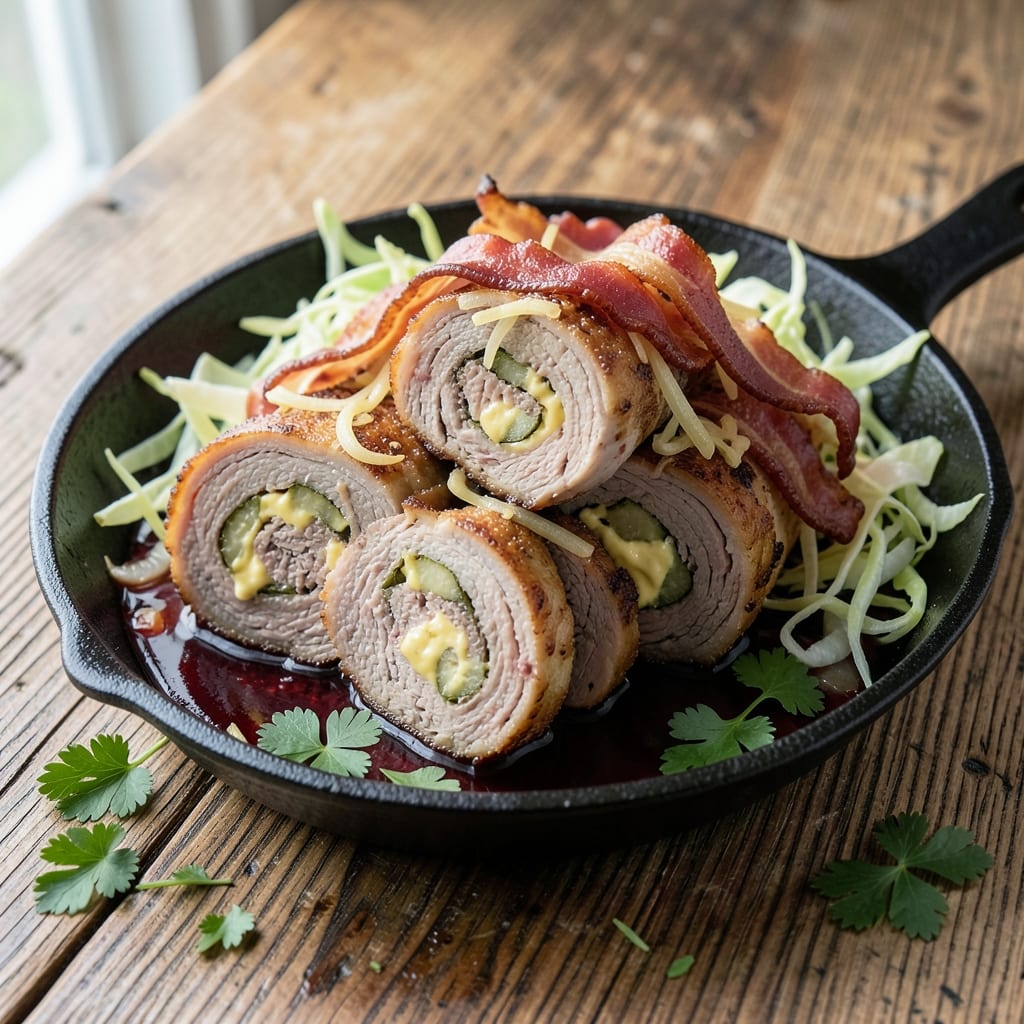
This authentic German beef rouladen recipe brings the heart of Bavarian cuisine to your kitchen with its signature mustard-pickled filling and tender beef rolls wrapped in cabbage leaves. The secret lies in the slow-braising process that transforms tough beef into melt-in-your-mouth perfection, while the tangy mustard and pickled vegetables create a flavor balance that's distinctly German. I've recreated this classic dish exactly as I learned it from my Großmutter's kitchen—no shortcuts, just tradition.
The magic begins with thinly sliced beef tenderloin, stuffed with a mixture of mustard, pickles, onions, and bacon—a combination that delivers both sweet and tangy notes in every bite. Wrapping these filled slices in cabbage leaves not only adds texture but also infuses the beef with subtle cabbage flavor during the long, gentle braising. This method ensures the meat stays juicy while absorbing all the rich, savory flavors of the braising liquid.
What you'll end up with is a dish that's hearty enough for a family dinner but elegant enough for special occasions—tender beef rolls with crisp edges, surrounded by aromatic braising liquid that's perfect for dipping or serving over buttery egg noodles. The cabbage leaves hold their shape beautifully, adding a satisfying crunch that contrasts with the melt-in-your-mouth beef. This is comfort food at its finest, with the kind of depth of flavor that makes it worth the time investment.
Serve with traditional sides like spaetzle, red cabbage, or a simple potato dumpling to complete the German meal experience. The braising liquid can be reduced into a rich gravy for even more flavor. Let's get started on this classic recipe that's been feeding German families for generations.
Ingredients for authentic german beef rouladen
Sixteen ingredients, Bavarian tradition—this is the heart of German comfort food.
| Ingredient | Amount | Notes |
|---|---|---|
| Beef Tenderloin 🥩 | 2 ½ lb | Thinly sliced, 1/4-inch thick |
| Yellow Mustard 🍯 | ½ cup | Dijon preferred for tang |
| Pickles 🥒 | 1 cup | Dill pickles, chopped |
| Yellow Onions 🧅 | 2 whole | Thinly sliced, about 2 cups |
| Bacon 🥓 | 8 oz | Cooked and crumbled |
| Green Cabbage 🥬 | 1 whole | Large head, leaves separated |
| Beef Broth 💧 | 4 cups | Low-sodium preferred |
| Red Wine 🍷 | 1 cup | Dry red, like Merlot |
| Tomatoes 🍅 | 2 whole | Roma, halved |
| Garlic Cloves 🧄 | 4 cloves | Minced |
| Fresh Thyme 🌿 | 1 tbsp | Leaves only |
| Bay Leaves 🌿 | 2 whole | Fresh preferred |
| Salt 🧂 | 1 ½ tsp | Kosher or sea salt |
| Black Pepper 🌶️ | 1 tsp | Freshly ground |
| All-Purpose Flour 🌾 | 2 tbsp | For dredging |
The beef is non-negotiable—tenderloin for its tenderness, but top round or sirloin work if you're pinched for time. Look for slices about 1/4-inch thick at your butcher or grocery store's meat counter. Trader Joe's often has pre-sliced tenderloin for convenience. The cabbage leaves should be large and sturdy—avoid the outer wilted ones. If you can't find fresh dill pickles, sweet gherkins chopped finely will do in a pinch. The bacon? Thick-cut, smoked if you can find it—it adds that extra depth of flavor that makes this dish special.
No Dijon mustard? Regular yellow mustard plus a pinch of sugar mimics the tang. Swap the red wine for extra beef broth plus a splash of balsamic vinegar if you're avoiding alcohol. The tomatoes can be canned San Marzano if fresh aren't in season—just drain them well. For the cabbage leaves, if they're too small to wrap a slice of beef, layer two leaves to create a bigger pocket. The thyme is crucial—dried works at half the amount if you're fresh out, but fresh is always better. And if you're worried about the beef drying out during braising, don't skip the flour dredge—it creates a light crust that locks in moisture.
The cabbage leaves keep beautifully in the fridge—wrap them in damp paper towels and store for up to 5 days. The braising liquid can be made ahead and reheated—it actually tastes better the next day as the flavors meld. Portion the beef rolls into containers with some of the braising liquid for easy reheating. The bacon and onions for the filling can be prepped a day ahead and stored in the fridge. This dish is one of those rare recipes that freezes exceptionally well—the beef stays tender, and the cabbage holds its shape. Just thaw overnight in the fridge before reheating.
Why You'll Love This Recipe
- No-Fuss Rolling: I swear by this trick—just slice the beef thin enough so it rolls up like a burrito without fighting me. The bacon wraps right in, so no fancy butchering skills needed. Honestly, I’ve made it while scrolling through emails.
- Tangy Magic Combo: That mustard-pickle filling? It’s the star. The sharpness cuts through the richness of the beef, while the onions caramelize into something sweet and sticky. Between us, it’s the kind of flavor that makes people ask for the recipe immediately.
- Leftovers That Shine: Double the batch and thank me later. The rouladen reheats beautifully—throw them in a pan with a splash of broth, and they’re just as good the next day. (Yes, even on a Tuesday night.) My kids actually beg for the second round.
- Budget-Friendly Luxury: Tenderloin feels fancy, but it stretches far when you slice it thin. The bacon adds richness without breaking the bank, and pickles turn a simple filling into something special. It’s the kind of dish that makes you feel like you’re treating yourself—without the grocery bill panic.
Step-by-step instructions for authentic German beef rouladen
Here's how to make these classic German rolls with tender beef, tangy mustard, and cabbage-wrapped perfection.
Prepare the Beef Tenderloin Cores
Start by slicing the 2.5 lb beef tenderloin into ¼-inch thick slices, cutting lengthwise against the grain. I like to use a sharp boning knife for clean cuts—this ensures even cooking and maximum tenderness. Lay each slice flat on your cutting board and make a small cut about ½ inch deep down the center of each slice, being careful not to cut all the way through.
Here's where the magic happens: spread ¼ cup of the yellow mustard evenly over each slice, leaving a small border around the edges. Then, stuff each slice with 2 tablespoons of chopped pickles and 1 tablespoon of crumbled bacon. Roll each slice tightly, starting from the cut end, and secure with a toothpick to hold the filling in place. You should end up with about 6-8 rolls depending on slice thickness.
Dredge and Brown the Rouladen
In a large skillet, heat 1 tablespoon olive oil over medium-high heat. Lightly dredge each rouladen in 2 tablespoons all-purpose flour, shaking off any excess. This creates a golden crust while helping the sauce thicken later. Working in batches, brown the rouladen for 2-3 minutes per side until they develop a rich, caramelized crust. You'll know they're ready when they release easily from the pan.
Remove the rouladen and set them aside on a plate. Don't clean the pan yet—those browned bits are packed with flavor that will form the base of your sauce. This browning step is crucial for authentic flavor, so resist the urge to rush it.
Build the Cabbage Wraps
Core the whole green cabbage by removing the tough outer leaves, then quarter it lengthwise. Remove the core from each quarter and separate the leaves. Blanch the leaves in boiling water for 2-3 minutes until just softened, then drain and pat dry with paper towels. This makes them pliable enough to wrap around your rouladen.
To assemble, place 2-3 rouladen in the center of each cabbage leaf and wrap tightly, folding the sides in like a package. Secure with additional toothpicks if needed. The cabbage will help keep the rolls moist during cooking while adding that authentic German flavor profile.
Sear and Deglaze the Cabbage-Wrapped Rolls
In the same skillet (with those flavorful browned bits), add 1 tablespoon olive oil and heat over medium heat. Add the cabbage-wrapped rouladen and sear for 3-4 minutes per side until golden brown. Remove and set aside.
Now it's time to deglaze that pan. Add 1 cup red wine and scrape up all those delicious browned bits from the bottom with a wooden spoon. Let it simmer for 2-3 minutes until reduced by half. This creates the foundation for your rich gravy.
Braise to Perfection
Transfer the cabbage-wrapped rouladen to a Dutch oven or large oven-safe skillet. Add 4 cups beef broth, 2 whole tomatoes (halved), 2 whole yellow onions (thinly sliced), 4 cloves garlic (minced), 1 tbsp fresh thyme, and 2 whole bay leaves. Bring to a simmer, then cover and transfer to a preheated 325°F oven for 1 hour 30 minutes. The rolls are done when the beef is fork-tender and the cabbage is soft.
Remove the rouladen and let them rest for 10 minutes before serving. The cabbage should be tender enough to eat with a fork, and the beef should be so tender it nearly falls apart. Skim any excess fat from the braising liquid, then adjust seasoning with 1.5 tsp salt and 1 tsp black pepper if needed. Serve the rouladen with the cabbage leaves and a generous ladle of that rich, flavorful braising liquid.
Pro Tips For Making Authentic German Beef Rouladen
- USE COLD BACON: I learned this the hard way—warm bacon is slippery and rolls like a greased pig. Keep those slices in the fridge until you’re ready to wrap, then pat them bone-dry with paper towels. The cold, crisp bacon will stay put and crisp up beautifully during braising.
- BRINE THE BEEF: Skip the dry rub if you’re short on time—just soak the beef tenderloin in a 10% saltwater brine (1 cup kosher salt per 4 cups water) for 30 minutes. It keeps the meat juicy and lets the mustard and pickles shine. (Yes, even tenderloin benefits—trust me.)
- SEAR IN BATCHES: Crowding the pan turns your rouladen into a sad, steamed mess. Work in two batches over medium-high heat, 2–3 minutes per side, until the bacon’s edges darken. A hot pan is non-negotiable—if it’s not sizzling, you’re doing it wrong.
- PICKLE PREP MATTERS: Drain those pickles well and chop them into ¼-inch pieces—no bigger, or they’ll stay crunchy like a rebel. Toss them with a spoonful of the mustard before stuffing; this ensures every bite gets that tangy, briny punch. (And yes, reserve some pickle juice for deglazing.)
Pro cooking tips for this dish
Perfect Beef Slicing
Use a sharp boning knife to slice the beef tenderloin against the grain into ¼-inch thick slices—this ensures maximum tenderness. I always ask my butcher to slice it for me if possible, as they have the right equipment for clean, even cuts. For home slicing, place the tenderloin on a cutting board with the grain running horizontally, then slice vertically. Never skip this step—thick slices will stay tough no matter how long you braise them. 🔪
Mustard-Pickle Balance
The mustard-pickle-bacon filling is where the magic happens, but balance is key. I measure ¼ cup Dijon mustard per pound of beef and 2 tbsp chopped pickles per slice—this ratio creates that signature tangy-sweet contrast. For extra depth, add ½ tsp caraway seeds to the filling (optional but traditional). If your pickles are too briny, rinse them briefly before chopping to avoid over-salting the beef. 🍯
Cabbage Leaf Prep
Blanching the cabbage leaves for just 2-3 minutes makes them pliable enough to wrap without tearing. I use a large pot of boiling water and work in batches to avoid overcrowding. After blanching, pat them very dry with paper towels—any moisture will steam the beef instead of browning it. For extra security, wrap each rouladen in two thinner leaves if your cabbage leaves are small. 🥬
Browning Secrets
Don’t rush the browning step—this is where the Maillard reaction creates deep flavor. Work in batches to avoid steaming the beef, and use medium-high heat until the rouladen release easily from the pan. The flour dredge isn’t just for thickening the sauce; it creates a protective crust that locks in moisture during braising. I always save the browned bits in the pan for deglazing—they’re packed with flavor! 🔥
Braising Temperature
Set your oven to exactly 325°F—any hotter and the cabbage will overcook before the beef is tender. I use an oven thermometer to verify accuracy, as home ovens often run hot or cold. The 1 hour 30 minutes braise time is non-negotiable for tender beef, but if you’re short on time, you can parboil the rouladen for 20 minutes before braising to cut 30 minutes off the total time. 🌡️
Resting and Serving
Let the rouladen rest for 10 full minutes before serving—this allows the juices to redistribute, preventing dryness. I always serve them with a ladle of the reduced braising liquid (skimmed of fat) poured over the top, and a side of buttery spaetzle to soak up every last bit of flavor. For a restaurant-worthy touch, garnish with fresh parsley and a sprinkle of smoked paprika. 🍽️
Nutrition facts
Frequently asked questions
Why does the recipe specify beef tenderloin instead of cheaper cuts?
Tenderloin is the most tender cut for rouladen because it has minimal connective tissue, making it perfect for slow cooking. While top round or sirloin can work, they require extra care to avoid toughness. The thin slicing against the grain and proper braising time ensure melt-in-your-mouth texture regardless of cut, but tenderloin delivers the most consistent results.
Can I make rouladen without cabbage leaves?
Yes! If you can't find large cabbage leaves, use butter lettuce or romaine leaves instead—they're more pliable. For a traditional approach, wrap each rouladen in plastic wrap or foil before braising, though this won't add the same flavor. The cabbage leaves are key for authenticity but not strictly necessary for the dish's success.
How do I adjust the recipe for a slow cooker?
Transfer the browned rouladen and cabbage leaves to a slow cooker with the braising liquid. Cook on low for 6-7 hours or high for 3-4 hours. The slow cooker's gentle heat mimics oven braising perfectly. Add the tomatoes and onions directly to the slow cooker instead of pre-slicing—they'll soften naturally during cooking.
What's the best way to reheat leftovers?
Reheat rouladen in a skillet with a splash of beef broth over medium-low heat for 5-7 minutes until warmed through. For microwave reheating, place them on a plate with a damp paper towel and cover with another towel to prevent drying. The cabbage leaves hold up well to reheating, though they may soften further.
Can I substitute the mustard-pickle filling?
For a traditional variation, try sauerkraut and caraway seeds instead of mustard-pickles. Another option is a ham and mustard mix—just ensure your filling stays moist. The key is balancing sweet, tangy, and savory flavors. If you're vegetarian, use mushrooms and lentils with a similar texture.