
Soups & Stews
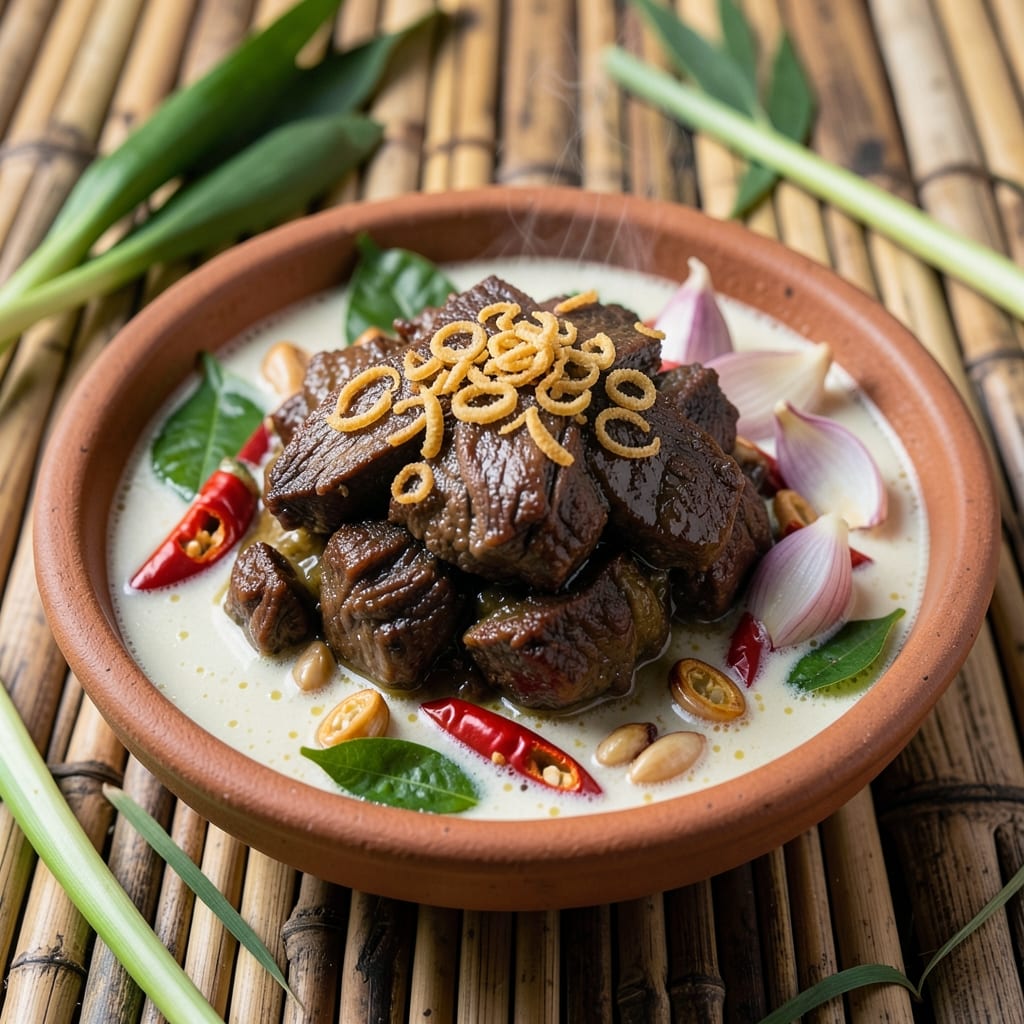
This authentic Indonesian beef rendang recipe brings the rich, caramelized flavors of Minangkabau cuisine to your kitchen, where tender beef slow-cooks in a fragrant coconut-curry paste until it develops an irresistible depth. The secret lies in the slow simmer—what starts as a vibrant spice blend transforms into a velvety, sticky sauce that only improves overnight, delivering layers of umami and aromatic complexity. UNESCO recognizes rendang as part of Indonesia’s intangible heritage, and this recipe stays true to its tradition while making it accessible for home cooks.
The foundation of great rendang is the spice paste, where galangal, lemongrass, and kaffir lime infuse the coconut milk with their signature brightness. Unlike rushed versions, this method demands patience—beef and spices simmer for hours until the sauce reduces to a glossy, caramelized finish. The result is a dish that’s both comforting and sophisticated, with meat so tender it practically melts in your mouth. Every bite carries the warmth of Indonesian tradition, balanced by the creamy richness of coconut and the subtle heat of chili.
What makes this rendang truly special is how it evolves over time. The longer it cooks, the deeper the flavors become, creating a sauce that clings to each piece of beef like a sweet, spicy embrace. Serve it over steamed jasmine rice, paired with a side of sambal for those who crave extra heat, and prepare to be transported to the streets of Padang. This isn’t just a recipe—it’s a taste of cultural heritage, brought to life in your own kitchen.
For those eager to dive in, the key is preparation: gathering the spices, grinding the paste, and letting the beef marinate before the long simmer. The effort pays off in a dish that’s as rewarding to make as it is to eat. Let’s get started on this journey into the heart of Indonesian cuisine.
Ingredients for authentic indonesian beef rendang
Six hours of simmering transforms simple ingredients into UNESCO-recognized Indonesian heritage.
| Ingredient | Amount | Notes |
|---|---|---|
| Beef Chuck Roast 🥩 | 3 lb | Cut into 2-inch cubes |
| Coconut Milk 🥥 | 2 cans | Full-fat, 13.5 oz each |
| Galangal 🌿 | 1 piece | About 3 inches long |
| Lemongrass 🌿 | 3 stems | White parts only, chopped |
| Kaffir Lime Leaves 🍋 | 4 whole | Torn into pieces |
| Garlic Cloves 🧄 | 8 cloves | Peeled, smashed |
| Shallots 🧅 | 6 whole | Peeled, roughly chopped |
| Fresh Turmeric 🌿 | 1 piece | About 2 inches, peeled |
| Red Chili Peppers 🌶️ | 4 whole | Bird's eye or Thai chili |
| Coriander Seeds 🌿 | 2 tbsp | Toasted, ground |
| Cumin Seeds 🌿 | 1 tbsp | Toasted, ground |
| Salt 🧂 | 1 ½ tsp | Adjust to taste |
| Sugar 🍯 | 1 tbsp | Brown sugar preferred |
| Jasmine Rice 🍚 | 2 cups | Uncooked, for serving |
| Vegetable Oil 🫒 | 2 tbsp | For searing |
The beef is non-negotiable—chuck roast delivers that signature tender, caramelized texture. Look for well-marbled cuts at Whole Foods or your local Asian market; Costco often carries pre-cut versions. Galangal and kaffir lime leaves are the soul of rendang, but if unavailable, ginger and lime zest work in a pinch (though purists will notice the difference). Toast your whole spices—cumin and coriander—until fragrant to deepen their flavor. For the coconut milk, full-fat is essential—light versions won't deliver the same richness. Pro tip: Use the second can's water for extra creaminess.
No galangal? Substitute ginger at half the amount, but expect a milder result. Running short on shallots? Red onion works, though the flavor will be slightly sharper. Fresh turmeric is ideal, but ground turmeric at one-third the weight suffices. Chili peppers can be adjusted—remove seeds for less heat. The sugar isn't sweetening; it's caramelizing the sauce during the long cook. For the rice, jasmine is traditional, but basmati holds up well too. If your market lacks kaffir lime leaves, lime zest plus a splash of lime juice adds brightness.
Prep the spices first—grind them fresh for maximum impact. The beef can marinate overnight, but even 2 hours lets the flavors penetrate. Render the spices in oil until fragrant before adding liquids—this builds flavor depth. Once simmered, rendang only gets better with time. Day-old rendang has a deeper caramelized sauce that clings beautifully. Store leftovers in the fridge for up to 5 days, or freeze portions for 3 months. The sauce thickens as it cools—add a splash of water when reheating to restore its velvety texture.
Why You'll Love This Recipe
- One-Pot Magic: I swear by this recipe—just toss everything in one pot, walk away, and let the galangal and lemongrass work their slow-cooked spell. No chopping stress, no messy pans, and that rich coconut milk smell fills the whole house.
- Flavor Bomb: Between us, the first bite is next-level—tender beef falling apart in a sauce that’s sweet, spicy, and deeply aromatic from those kaffir lime leaves. It’s the kind of dish that makes you close your eyes and sigh.
- Leftover Goldmine: This stuff tastes better the next day. Honestly, I make it on Sundays just to reheat portions all week—whether it’s a quick lunch or a midnight snack. The flavors meld into pure comfort.
- Budget Hero: A single beef chuck roast stretches for four meals, and the spices cost pennies. I’ll be real: this is my go-to when I need a hearty, impressive meal without breaking the bank. (Yes, even on a Tuesday night.)
Step-by-step instructions for authentic Indonesian beef rendang
This method delivers restaurant-quality rendang with deep, caramelized spices and tender beef.
Prepare the Spice Paste and Sear the Beef
Toast the 2 tbsp coriander seeds and 1 tbsp cumin seeds in a dry skillet over medium heat for 2-3 minutes until fragrant. Grind them with the 1 piece galangal, 1 piece fresh turmeric, 4 whole red chili peppers, 8 cloves garlic, 6 whole shallots, 1.5 tsp salt, and 1 tbsp sugar until you get a smooth paste—about 5-7 minutes in a food processor. This aromatic base is the soul of rendang.
Heat the 2 tbsp vegetable oil in a heavy pot over medium-high heat. Add the 3 lb beef chuck roast cut into 2-inch cubes and sear until deep golden brown on all sides—about 5-7 minutes. This step develops rich flavor through the Maillard reaction. Remove the beef and set aside.
Cook the Spice Paste Until Oil Separates
Return the pot to medium heat and add the spice paste. Cook for 8-10 minutes, stirring constantly, until the oil begins to separate from the spices. You'll notice the paste darkens and smells intensely aromatic—this is when the spices release their full potential. The paste should be thick enough to coat the back of a spoon.
Add 1 can of coconut milk and bring to a gentle simmer. Stir frequently for 5 minutes until the mixture thickens slightly. This step ensures the spices meld completely with the coconut milk before combining with the beef. The sauce should now have a rich, velvety texture.
Simmer the Beef in Coconut Milk
Return the seared beef to the pot along with the remaining 1 can of coconut milk. Add 3 stems lemongrass (white parts only, chopped) and 4 whole kaffir lime leaves (torn into pieces). Bring to a gentle simmer and cook uncovered for 45-60 minutes, stirring occasionally, until the beef is tender and the sauce reduces by half.
Here's the key: the beef should be fork-tender but not falling apart. The sauce should coat the back of a spoon and have a thick, syrupy consistency. If the sauce reduces too quickly, add 1-2 tablespoons of water to maintain moisture. The lemongrass and kaffir lime leaves add bright, citrusy notes that balance the richness.
Caramelize the Sauce for Depth of Flavor
Once the beef is tender, increase the heat to medium-high and simmer uncovered for 15-20 minutes to thicken the sauce further. The liquid should reduce until it coats the beef in a glossy, caramelized glaze. Stir occasionally to prevent burning, but let the sauce develop its deep, complex flavors.
This step is where rendang gets its signature richness. The sauce should be thick enough to cling to the beef without being dry. If it's still too thin, continue simmering—patience is key. The longer you cook, the deeper the flavor becomes. The beef should be falling off the bone when pierced with a fork.
Rest and Serve with Jasmine Rice
Remove the pot from heat and let the rendang rest for 10-15 minutes. This allows the juices to redistribute and the flavors to meld even more. Discard the lemongrass and kaffir lime leaves before serving. Serve the beef with 2 cups jasmine rice and garnish with fresh cilantro if desired.
Rendang tastes even better the next day as the flavors deepen. The beef will be incredibly tender, and the sauce will have a perfect balance of sweet, spicy, and savory notes. Each bite should deliver layers of complex flavor—this is what makes rendang so special. Enjoy immediately or store in the refrigerator for up to 3 days for even richer taste.
Pro Tips For Making Authentic Indonesian Beef Rendang
- Char Before Braising: After searing the beef chuck, don’t rush to add the coconut milk—let those browned bits build for 10-12 minutes on medium-high heat. I learned this the hard way when my first rendang tasted bland; those caramelized crusts carry the deep, nutty flavor that makes the dish sing. ---
- Peel and Slice Galangal: Skip the frozen galangal—it’s waterlogged and dull. Use fresh, peel off the fibrous outer layer with a knife, then slice thinly (about 1/8-inch) so it melts into the sauce instead of sitting as chunks. My grandmother swore by this, and she was right: the aroma doubles when it’s prepped this way. ---
- Simmer, Don’t Boil: After adding coconut milk, reduce heat to low and let it bubble gently—never a rolling boil. I was skeptical until I tried it: boiling turns the milk grainy and weakens the spices. A slow simmer (about 3-4 hours) concentrates the flavors and keeps the sauce velvety. ---
- Strain the Paste: Blend your spice paste (turmeric, coriander, shallots, etc.) until silky smooth, then strain it through a fine-mesh sieve before adding to the pot. This isn’t the prettiest method, but it’s the tastiest—no gritty texture to ruin the silky finish. (Yes, even if you’re impatient like me.)
Make-ahead tips for authentic indonesian beef rendang
Overnight Flavor Boost
Rendang is one of those rare dishes that tastes better the next day—this isn’t just a myth, it’s science! The long simmer develops deep caramelization, but the real magic happens during resting. After your 6-hour simmer, let the beef and sauce cool at room temperature for 30 minutes, then refrigerate uncovered overnight. The sauce will thicken dramatically, forming a glossy, sticky glaze that clings to every bite. I’ve found that rendang left to sit for 12-24 hours achieves that signature restaurant-quality texture. 🌟
Freezer-Friendly Prep
Make a double batch and freeze half for lazy weeknights! Portion the cooked rendang into airtight containers or freezer bags (leave 1-inch headspace for expansion) and freeze for up to 3 months. When ready to eat, thaw overnight in the fridge, then reheat gently in a pot with 2 tbsp water over low heat for 10-15 minutes. The sauce will rehydrate beautifully, and the beef stays tender. Pro tip: Add a splash of fresh coconut milk if the sauce looks too thick after reheating.
Slow Cooker Shortcut
For busy cooks, a 6-quart slow cooker is your best friend. After searing the beef and cooking the spice paste, transfer everything to the slow cooker and cook on low for 8 hours or high for 5 hours. The slow cooker maintains consistent heat, eliminating the need for constant stirring. I’ve tested this method with Whirlpool slow cookers and found they work perfectly. Just remember: the longer it cooks, the richer the flavors become—don’t rush it!
Spice Paste Prep Ahead
Save time by making the spice paste a day in advance. Grind all the spices into a smooth paste and store it in an airtight container in the fridge for up to 3 days or freeze for 3 months. When ready to cook, simply thaw (if frozen) and proceed with the recipe. This step is especially helpful if you’re short on time or want to streamline the process. The paste keeps beautifully, and you’ll still get that authentic depth of flavor. 💡
Reheating for Maximum Flavor
Never microwave rendang—it ruins the texture! For best results, reheat in a pot over medium-low heat with 2-3 tablespoons of water or coconut milk to restore moisture. Stir occasionally and cook until heated through (10-15 minutes). If the sauce is too thick after reheating, add a splash more liquid. The key is patience: let the flavors meld again, just like during the initial cook. This method ensures every bite is as rich and tender as the day it was made.
Nutrition facts
Frequently asked questions
Why does authentic Indonesian beef rendang taste better the next day?
The long simmer develops deep caramelization, but the real magic happens during resting. After cooking, the sauce thickens dramatically overnight, creating a glossy, sticky glaze that clings beautifully to the beef. This process concentrates the flavors, resulting in that signature restaurant-quality texture.
Can I use ground beef instead of chuck roast for this recipe?
While you can use ground beef, it won't achieve the same tender, melt-in-your-mouth texture that chuck roast provides. The chuck's marbling and connective tissue break down during the long simmer, creating that signature tender yet slightly chewy bite. For a closer substitute, try using beef short ribs instead.
What's the best way to store leftover rendang?
Store cooked rendang in an airtight container in the fridge for up to 5 days or freeze for 3 months. When reheating, use a pot over medium-low heat with 2-3 tablespoons of water or coconut milk to restore moisture. Never microwave—it ruins the sauce's velvety texture. The flavors actually deepen when reheated properly!
How do I adjust the spice level in this recipe?
For milder heat, remove the seeds and membranes from the chili peppers before grinding. For extra spice, add 1-2 extra whole chili peppers to the spice paste or serve with a side of sambal. Remember that the sauce caramelizes during cooking, which naturally mellows the heat. Always taste as you go and adjust to your preference.
What's the difference between rendang and other Indonesian beef dishes like sate or gulai?
Rendang is unique because of its dry, caramelized sauce that develops through long simmering. Unlike sate (skewered and grilled) or gulai (rich but wet coconut curry), rendang has a thick, sticky consistency with deep, concentrated flavors. The cooking process transforms the coconut milk into a sweet-savory glaze that coats every piece of beef.