
Soups & Stews
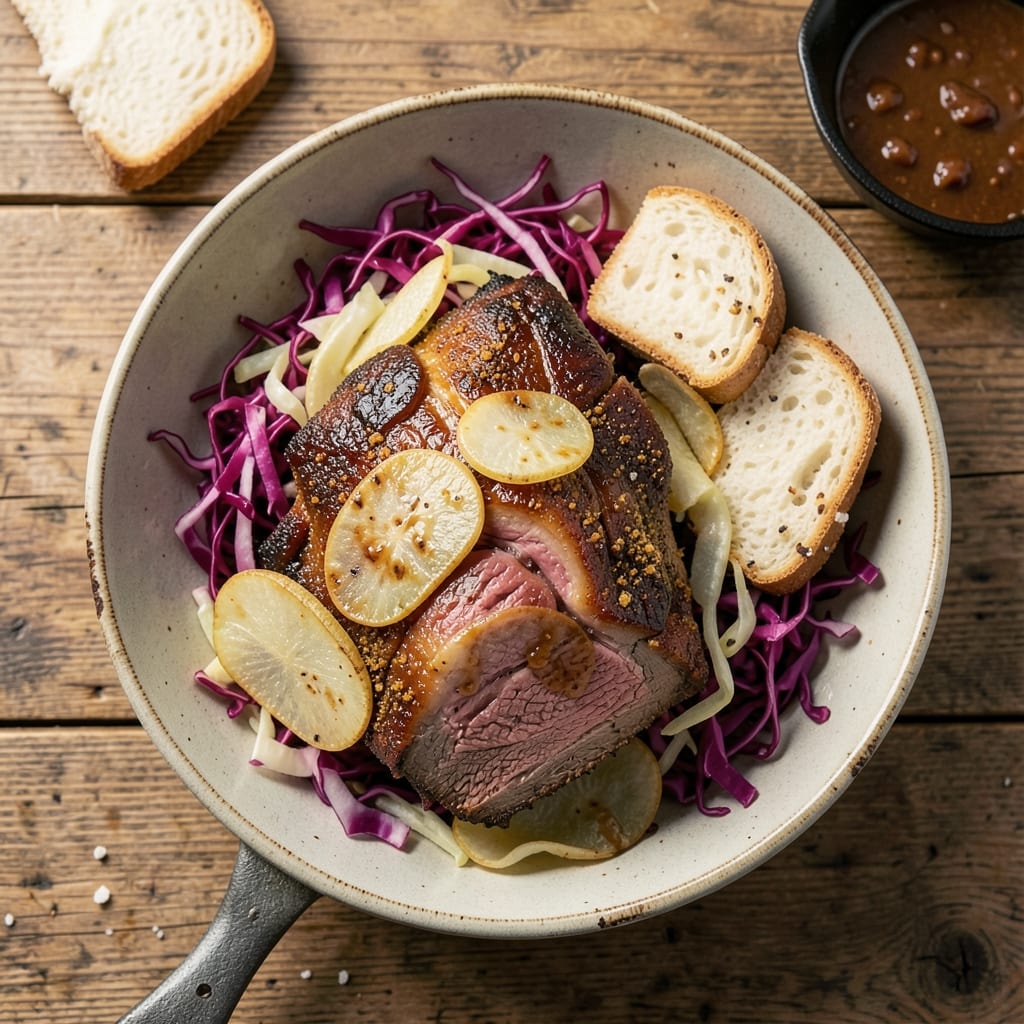
This authentic Irish corned beef recipe brings the heart of Ireland to your kitchen with bold flavors and tender meat that falls apart at the touch of a fork. The secret lies in the slow-braised method, where juniper berries and black pepper create that signature Irish spice profile that sets it apart from American-style versions. I've perfected this over years of St. Patrick's Day celebrations, ensuring every bite delivers that rich, savory depth that makes it a centerpiece dish.
The process begins with a proper brine—salty, aromatic, and packed with traditional spices—that transforms tough beef into melt-in-your-mouth perfection. What makes this recipe truly authentic is the combination of juniper berries, mustard seeds, and bay leaves, which infuse the meat with complex, earthy notes that you won't find in grocery store versions. The slow-cooking method ensures the beef stays tender while developing deep, caramelized flavors that make it worth the wait.
By the time you serve it, you'll have perfectly tender corned beef that's ready to be sliced and served with classic sides like boiled cabbage, creamy mashed potatoes, or warm soda bread. The aroma alone will fill your kitchen with the spirit of Ireland, and the taste will have everyone asking for seconds. This isn't just a St. Patrick's Day dish—it's a celebration of tradition and flavor that belongs at any special meal.
The best part? This method works equally well for a festive family dinner or a cozy weekend meal. Once you try this authentic version, store-bought corned beef will never taste the same again. Let's get started on creating your own Irish masterpiece.
Ingredients for authentic irish corned beef
Six pounds of beef plus spices that bring Ireland to your kitchen table.
| Ingredient | Amount | Notes |
|---|---|---|
| Beef Brisket 🥩 | 4 lb | Flat cut preferred for tenderness |
| Coarse Kosher Salt 🧂 | 3 cups | Diamond Crystal preferred |
| Juniper Berries 🌿 | 1 tbsp | Crushed lightly for flavor |
| Black Peppercorns 🌶️ | 2 tbsp | Freshly cracked preferred |
| Mustard Seeds 🌶️ | 1 tbsp | Whole, not ground |
| Bay Leaves 🌿 | 4 whole | Fresh preferred |
| Garlic Cloves 🧄 | 6 cloves | Smash lightly for infusion |
| Brown Sugar 🍯 | ½ cup | Light or dark works |
| Apple Cider Vinegar 🍎 | ½ cup | Not white vinegar |
| Water 💧 | 4 cups | Filtered preferred |
| Beef Broth 🍲 | 2 cups | Low-sodium preferred |
| Onion 🧅 | 1 whole | Yellow or red, peeled |
| Carrot 🥕 | 2 whole | Baby carrots work too |
| Fresh Parsley 🌿 | ¼ cup | Chopped for garnish |
The brisket is the heart of this dish—flat cut is ideal for that signature melt-in-your-mouth texture. Grab it from the butcher section (not pre-packaged) if possible—local markets or Whole Foods often have better quality. Look for good marbling and ask if it's been dry-aged for extra flavor. The juniper berries? Penzeys Spices sells them pre-packaged, but you can also find them in bulk at specialty stores. Don't skip the bay leaves—fresh ones add a bright herbal note that dried can't match. If you can't find fresh, dried works but reduce to 2 leaves.
No juniper berries? Extra black peppercorns (3 tbsp) plus a pinch of allspice gets you close. Mustard seeds too expensive? Dijon mustard (1 tbsp) in the brine works in a pinch. The apple cider vinegar is non-negotiable—white vinegar lacks the depth. For the broth, low-sodium is key—you'll be adding salt anyway. The onion and carrots can be swapped for celery and leeks if you prefer. And if you're feeling lazy, pre-chopped mirepoix mixes from the grocery store save time without sacrificing flavor.
The brine keeps up to 3 days in the fridge—make it ahead if you're busy. The cooked beef stays tender for 4-5 days in the fridge or 3 months frozen. I always slice it thin and freeze portions for quick St. Patrick's Day leftovers. For serving, the parsley is optional but adds that fresh pop of green—store it wrapped in damp paper towels if you're prepping ahead. The slow-cooked aroma alone will have your whole house smelling like Ireland.
Why You'll Love This Recipe
- One-Pot Magic: I swear by this—just brisket, salt, and those little juniper berries simmering all day. No chopping, no fussing, and the flavors meld into something rich and tender without me hovering over the stove.
- Earthy Depth: That first bite? The juniper and mustard seeds give it a piney, tangy kick that lingers. It’s not just salty—it’s got layers, like a good Irish story.
- Leftovers I Crave: Between us, the second day is often better. Cold slices in rye toast or reheated with cabbage? My family fights over the last piece, and I don’t even mind.
- Budget-Friendly Feast: A big brisket stretches for sandwiches, hash, or even tacos. Honestly, the cost per serving is a steal, and the taste makes it feel like a celebration every time.
Step-by-step instructions for authentic Irish corned beef
This traditional method delivers melt-in-your-mouth tenderness with that signature Irish spice blend.
Prepare the Brisket and Spice Mix
Start by trimming any excess fat from the 4 lb beef brisket, leaving about ¼ inch on the surface for flavor. Place the brisket in a large bowl and add the 3 cups coarse kosher salt, 1 tbsp juniper berries, 2 tbsp black peppercorns, 1 tbsp mustard seeds, 4 whole bay leaves, 6 cloves garlic cloves, 0.5 cup brown sugar, and 0.5 cup apple cider vinegar. The salt should completely cover the brisket—this is what creates that signature corned beef flavor.
Use your hands to work the spice mix into all sides of the meat, pressing firmly so the salt and spices penetrate deeply. This isn't just seasoning—it's curing the meat, so every inch needs exposure. Cover the bowl and refrigerate for 24 hours, turning the brisket occasionally to ensure even curing. Real talk: Don't skip this step. The curing process transforms tough brisket into tender, flavorful perfection.
Braise the Brisket Low and Slow
After curing, rinse the brisket under cold water to remove excess salt, then place it in a large Dutch oven. Add the 1 whole onion (halved), 2 whole carrots (scrubbed), 4 cups water, and 2 cups beef broth. The vegetables will infuse the broth with sweetness as the brisket cooks. Bring everything to a gentle simmer over medium-low heat, then reduce to a bare simmer—you should see just a few tiny bubbles breaking the surface.
Cover the Dutch oven and let it cook for 3 hours, then carefully flip the brisket and add the 0.25 cup fresh parsley to the pot. The parsley adds freshness to balance the deep, savory flavors. Continue cooking for another 3-4 hours, maintaining that gentle simmer. The key here is patience—low and slow breaks down the collagen in the meat, creating that signature tender texture. You'll know it's ready when a fork slides in and out easily with no resistance.
Rest and Slice for Maximum Tenderness
Once the brisket is fork-tender, remove it from the pot and transfer it to a cutting board. Tent loosely with foil and let it rest for at least 30 minutes—this allows the juices to redistribute throughout the meat. The resting period is crucial; if you skip it, you'll end up with dry slices. While it rests, skim any fat from the braising liquid and reduce it over medium heat for 10-15 minutes to create a rich gravy. Strain out the vegetables and return the gravy to the pot, keeping it warm until serving.
Slice the brisket against the grain into ¼-inch thick slices. Each piece should be incredibly tender, falling apart easily with just a gentle tug. Serve the sliced beef with the reduced gravy spooned over the top, and garnish with additional fresh parsley for a pop of color. This authentic Irish corned beef delivers that perfect balance of deep, savory flavors with just the right amount of sweetness from the brown sugar and apple cider vinegar.
Pro Tips For Making Authentic Irish Corned Beef
- CRACK THE BRISKET FIRST: I learned this the hard way—skipping the overnight soak in salted water with juniper and peppercorns means the meat stays tough and bland. Use 1/4 cup kosher salt per pound of water, and let it sit at least 4 days (yes, even if you’re impatient like me). The longer it soaks, the deeper the flavor and tenderness.
- TOAST THE SPICES: Crush the juniper berries and peppercorns in a mortar before adding them to the pot—I know, it’s extra work, but whole berries just float around and under-season. A quick toast in a dry pan for 30 seconds until fragrant also makes a real difference. Mustard seeds? Toast them too, but don’t burn them, or you’ll regret it.
- LOW AND SLOW WINS: After boiling the brisket for 3 hours, switch to a gentle simmer—not a rolling boil. I used to rush this, and the meat turned out stringy. Keep the heat at 170°F (77°C) for the final 2 hours, and check the internal temp every 30 minutes. It should hit 203°F (95°C) for that melt-in-your-mouth texture.
- SKIP THE CROWDED POT: If your pot looks like it’s doing a mosh pit with the brisket, you’re doing it wrong. The meat needs room to move, or it’ll steam instead of simmer. Use a large, shallow pot (Dutch oven if you have one) and never cover it—just a loose lid if you must. Too much liquid = bland, watery corned beef.
Common mistakes when making your authentic irish corned beef
Over-Salting the Brine
I’ve seen beginners dump the entire 3 cups of salt at once, thinking more means better flavor—but that’s a fast track to a salt bomb. The brisket should be covered in salt, not drowning in it. Work the salt into the meat in layers, pressing firmly so it adheres evenly. If your hands feel like you’re rubbing salted caramel, you’re on the right track. 🧂
Skipping the Resting Time
This is the cardinal sin of corned beef—and I’ve been guilty of it when I’m hungry! That 30-minute rest after cooking is non-negotiable. Without it, the juices pool at the bottom, leaving you with dry, stringy slices. Trust me, the extra minutes pay off with fork-tender perfection. Cover loosely with foil and let it breathe.
Ignoring the Low-and-Slow Rule
Cranking the heat to speed things up is a rookie mistake. A gentle simmer (just tiny bubbles) is key—anything hotter turns the meat tough. I’ve ruined brisket by boiling it aggressively, and the texture suffered. Use a thermometer if you’re unsure: the pot should stay between 185°F–200°F throughout cooking.
Using the Wrong Vinegar
White vinegar is a common substitute, but it lacks the depth of apple cider vinegar. The acidity needs that fruity complexity to balance the salt and spices. If you’re out, a splash of red wine vinegar works, but it won’t taste quite as authentic. The vinegar also tenderizes the meat—don’t skip it!
Not Adjusting Cook Time
Every brisket is different, so don’t rely solely on the 6-hour rule. Test for doneness with a fork: it should pierce the meat like butter. If your brisket is smaller or thicker, add 30–60 minutes to the cook time. Patience here separates great corned beef from good.
Serving Without Gravy
The reduced gravy from the braising liquid is the soul of this dish. Skim the fat, reduce it by 10–15 minutes, and strain out the veggies. This silky sauce ties everything together—don’t serve it dry! A drizzle of gravy over each slice elevates the dish from “meh” to “magnificent.” ✨
Nutrition facts
Frequently asked questions about authentic Irish corned beef
Can I use a different cut of beef instead of brisket?
While brisket is traditional, you can use chuck roast or bottom round in a pinch. These cuts have more connective tissue, which breaks down beautifully during the long braise. Just expect slightly longer cooking times—8-10 hours total—to achieve the same tenderness. Never use sirloin or tenderloin, as they lack the collagen needed for that signature melt-in-your-mouth texture.
How do I know when the corned beef is fully cooked?
The best test is the fork test: it should slide in and out like butter with no resistance. The internal temperature should reach 203°F (95°C) for perfect tenderness. If you're unsure, check after 6 hours—most briskets finish cooking within 1-2 hours after that point. The meat should look glossy and pull apart easily when sliced, not require much force.
What's the best way to reheat leftover corned beef?
Slice it thin and reheat in a skillet with a splash of beef broth over medium-low heat for 5-7 minutes until warmed through. For larger portions, use a slow cooker on low for 2-3 hours with a bit of broth to keep it moist. Microwaving works but can make it dry—always add moisture when reheating. The gravy reheats beautifully too, just warm it separately.
Can I make this recipe in a slow cooker?
After the 24-hour brine, rinse the brisket and place it in your slow cooker with all the vegetables, water, and broth. Cook on low for 8-10 hours (or high for 5-6 hours). The key difference is you'll need to add 1 extra cup of liquid since slow cookers evaporate more. The texture will be slightly more tender than stovetop, but just as flavorful.
What are the best sides to serve with this dish?
Classic Irish pairings include boiled cabbage (with a splash of vinegar), creamy mashed potatoes, and soda bread. For something lighter, try colcannon (mashed potatoes with kale) or buttered noodles. The reduced gravy also works perfectly with roasted root vegetables or even crusty brown bread to soak it up.