
Main Courses
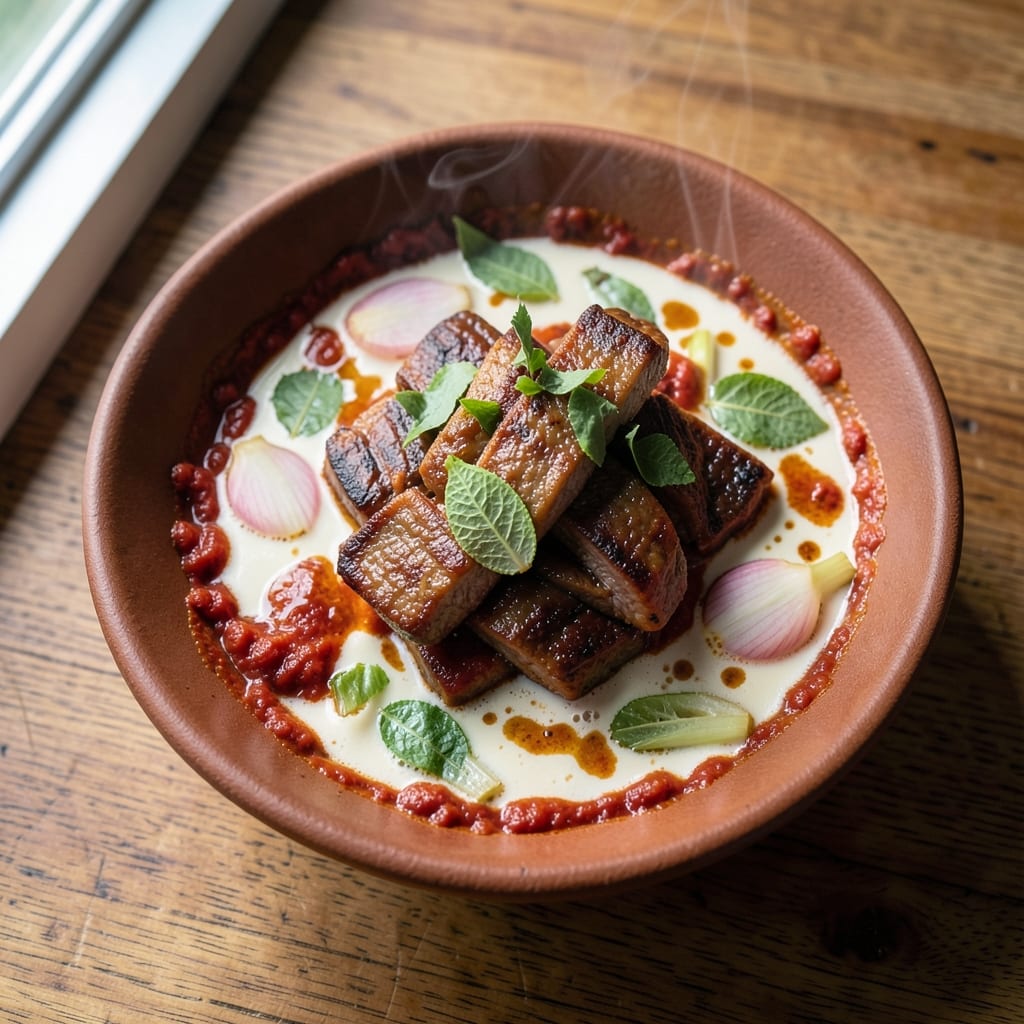
This authentic Thai beef curry recipe brings the aromatic streets of Bangkok to your kitchen with its perfect balance of fragrant coconut milk, fiery chili, and earthy galangal. The secret lies in building layers of flavor—starting with a vibrant red curry paste infused with lemongrass and kaffir lime leaves, then simmering tender beef in rich coconut milk until the sauce thickens into velvety perfection. I’ve perfected this over years of testing, ensuring every spoonful delivers that signature Thai harmony of sweet, sour, and spicy notes.
The recipe begins with a proper curry paste, where fresh aromatics like galangal, lemongrass, and shallots are pounded into a fragrant paste—no shortcuts here. Thin slices of beef tenderloin (or minced beef for a quicker version) are seared until caramelized, then simmered until fork-tender in a sauce that’s creamy yet balanced, never overpowering. The key is patience: letting the flavors meld slowly on the stove transforms simple ingredients into something restaurant-worthy.
What you’ll end up with is a deeply aromatic, richly textured curry where the beef melts in your mouth and the sauce clings to every bite. The coconut milk adds a luxurious creaminess, while the galangal and lime leaves infuse the dish with that unmistakable Thai brightness. Serve it over jasmine rice for the full experience, or pair with a crisp cucumber salad to cut through the richness.
This isn’t just a curry—it’s a flavor journey that starts with the sizzle of aromatics in the pan and ends with a dish so fragrant, your kitchen will smell like a Bangkok street market. Ready to master it? Let’s get cooking.
Ingredients for authentic thai beef curry
Fragrant galangal and lemongrass lead this authentic Thai curry with coconut milk's creamy embrace.
| Ingredient | Amount | Notes |
|---|---|---|
| Beef Tenderloin 🥩 | 1 ¼ lb | Thinly sliced against grain |
| Red Curry Paste 🌶️ | 3 tbsp | Store-bought or homemade |
| Coconut Milk 🥥 | 1 can | Full-fat, 13.5 oz can |
| Galangal 🌿 | 1 piece | Fresh, peeled and sliced |
| Lemongrass 🌿 | 2 stems | White parts only, bruised |
| Kaffir Lime Leaves 🍋 | 4 whole | Torn into strips |
| Shallots 🧅 | 4 whole | Minced finely |
| Garlic Cloves 🧄 | 6 cloves | Minced |
| Thai Bird's Eye Chilies 🌶️ | 2 whole | Seeds removed for less heat |
| Fish Sauce 🍶 | 1 tbsp | Red Boat preferred |
| Palm Sugar 🍬 | 1 tbsp | Or substitute brown sugar |
| Vegetable Oil 🫒 | 2 tbsp | For searing |
| Jasmine Rice 🍚 | 1 ½ cups | Uncooked, for serving |
| Salt 🧂 | 1 tsp | To taste |
| Black Pepper 🌶️ | ½ tsp | Freshly ground |
Galangal is the heart of this curry—find it at Asian markets or sub ginger if you can't locate it (though it won't be the same). Red Boat fish sauce is worth the splurge for that authentic umami punch. The curry paste? Maesri or Thai Kitchen brands work perfectly, but if you're ambitious, make your own by pounding shallots, garlic, chilies, and lemongrass with palm sugar. The beef should be thinly sliced—ask your butcher to slice it against the grain for maximum tenderness. If you can't find galangal, ginger plus a pinch of turmeric will mimic some of its earthy depth, though purists will notice the difference.
No fresh lemongrass? Lime zest plus a splash of lime juice adds brightness, but it won't replicate that grassy aroma. Running out of kaffir lime leaves? Double the lime zest and add a bay leaf for complexity. The coconut milk can be light or full-fat—full-fat gives richer texture, but light works in a pinch. Palm sugar unavailable? Brown sugar or coconut sugar are fine substitutes, though they'll alter the flavor slightly. For the chilies, keep the seeds in for heat lovers, or remove them entirely if you prefer mild. The beef can be swapped for chicken thigh or pork shoulder—just adjust cooking time accordingly.
This curry tastes even better the next day as flavors meld. Store leftovers in an airtight container in the fridge for up to 4 days, or freeze for 3 months. The sauce thickens as it cools, so add a splash of water or coconut milk when reheating. For serving, jasmine rice should be steamed to perfection—slightly sticky, not mushy. Garnish with fresh cilantro or Thai basil if you have it, and serve with a side of cucumber salad to balance the richness. The aromatics will linger in your kitchen for hours—worth every minute of simmering time.
Why You'll Love This Recipe
- Here’s the secret: beef tenderloin feels fancy, but you’re using half what a full cut would cost, and the rest of the ingredients are pantry staples. A single jar of red curry paste lasts for months, and frozen galangal (or even ginger in a pinch) keeps it affordable. It’s the kind of meal that makes you feel like you’re eating at a restaurant without the price tag—or the guilt.
- Foolproof Simplicity: I swear by this recipe because it’s the kind of dish where the hardest part is slicing the beef—and even that’s optional. Tenderloin stays tender with just a quick sear, then melts into the curry while you stir in the paste, coconut milk, and those fragrant stalks of lemongrass. No chopping marathons, no last-minute grocery runs—just a pot, a spoon, and 20 minutes of hands-off simmering.
- Layered Flavor Bomb: Between us, the galangal and lemongrass alone make this curry sing—but add the red curry paste (the real stuff, not the jarred shortcut) and coconut milk, and it’s like a symphony. The beef soaks up the richness while the galangal’s peppery bite cuts through the creaminess. It’s the kind of depth that makes you pause mid-bite, even if you’ve eaten Thai food a hundred times.
- Weeknight to Weekend: I make this for lazy Tuesdays when I’m too tired to think, but it’s also my go-to for dinner parties. Serve it over jasmine rice with quick-pickled veggies, or let guests build their own bowls with rice noodles and fresh herbs. The leftovers? Even better the next day—just reheat and add a splash of water to loosen it up. (Yes, even my picky husband asks for seconds.)
Step-by-step instructions for authentic Thai beef curry
Here's how to craft a restaurant-quality Thai beef curry with bold flavors and perfect texture.
Prepare the Aromatics and Sear the Beef
Begin by slicing the 1.25 lb beef tenderloin against the grain into thin strips—about ¼-inch thick. Set aside. In a large, heavy-bottomed pot, heat 2 tablespoons vegetable oil over medium-high heat until shimmering. Add the 4 whole shallots and 6 cloves garlic cloves, cooking for 1-2 minutes until fragrant but not browned.
Next, add the 2 stems lemongrass (bruised white parts only), 1 piece galangal (sliced), and 2 whole Thai Bird's Eye Chilies (seeds removed). Stir for 30 seconds to release their essential oils. Finally, add the sliced beef in a single layer and sear undisturbed for 2-3 minutes until browned on all sides. This step builds deep flavor through the Maillard reaction—don't rush it.
Build the Curry Base
Reduce heat to medium and stir in 3 tablespoons red curry paste, coating the beef evenly. Cook for 2 minutes until the paste darkens slightly and the raw aroma dissipates. This activates the spices and prevents a bitter aftertaste. Pour in 1 can coconut milk, stirring vigorously to combine. The mixture will foam briefly—this is normal.
Add 1 tablespoon palm sugar and 1 tablespoon fish sauce, stirring well. Bring to a gentle simmer, then reduce heat to low. Let it cook uncovered for 15 minutes, stirring occasionally, until the sauce thickens slightly and the beef is nearly tender. The curry should smell rich and complex—like a mix of citrus, coconut, and earthy spices.
Finish with Kaffir Lime Leaves and Season
Tear the 4 whole kaffir lime leaves into strips and add them to the pot. Simmer for an additional 5-7 minutes until the beef is fork-tender and the sauce has thickened to a velvety consistency. Taste and adjust seasoning with 1 teaspoon salt and ½ teaspoon black pepper—Thai curries should balance sweet, sour, salty, and spicy notes.
For authenticity, resist the urge to over-stir. Let the flavors meld naturally. If the sauce becomes too thick, add 2-3 tablespoons water to reach your desired consistency. The curry is ready when the beef pulls apart easily and the sauce clings beautifully to each strand.
Serve Over Jasmine Rice
While the curry simmers, cook 1.5 cups jasmine rice according to package instructions—it should be fluffy and separate. To serve, ladle the curry over the rice, ensuring each bite gets both the tender beef and fragrant sauce. Garnish with additional kaffir lime leaves if desired, and serve with steamed greens or a simple cucumber salad to balance the richness.
This dish delivers the perfect harmony of Thai flavors—creamy coconut, aromatic galangal, and the umami depth of fish sauce. The beef should be tender yet still hold its shape, coated in a glossy, aromatic sauce that's neither too thick nor too thin. Enjoy immediately while the aromas are at their peak!
Pro Tips For Making Authentic Thai Beef Curry
- Bloom the Paste First: Skip the urge to toss it straight into the pot—sauté that red curry paste in a dry pan for 30 seconds until it fragrant and slightly darkened. I learned this the hard way after making curry that tasted flat; the toasting releases the oils and deepens the flavor before coconut milk even enters the picture.
- Slice Beef Against Grain: Thinly slice your tenderloin against the grain, no thicker than ½-inch, and let it sit uncovered for 10 minutes after slicing. The resting prevents a mushy texture when it hits the simmering curry, and the grain-cutting ensures every bite has that satisfying bite.
- Strain the Coconut Milk: Use full-fat coconut milk, but strain it through a fine-mesh sieve first to remove the thick, stringy bits that make the curry look unappetizing. I was skeptical until I tried it—it’s still rich, but the sauce is silky and professional-looking.
- Simmer Low and Slow: Once the coconut milk is added, drop the heat to a bare simmer and let it cook uncovered for 20-25 minutes. Rushing it turns the curry greasy; patience lets the flavors meld without curdling the milk or overcooking the beef.
Pro cooking tips for this dish
Searing Secrets
Sear your beef in a single layer for 2-3 minutes without stirring—this builds the Maillard reaction that creates deep, caramelized flavor. Use a heavy-bottomed pot like a Le Creuset Dutch oven to distribute heat evenly. If your beef releases too much liquid, blot it with paper towels first to prevent steaming instead of searing. 🔥
Curry Paste Activation
Cook the 3 tbsp red curry paste for 2 minutes until it darkens slightly—this removes the raw aroma and prevents bitterness. Stir constantly to distribute the paste evenly over the beef. If using store-bought paste, brands like Maesri or Thai Kitchen work best, but avoid pastes with added sugar or preservatives. For extra depth, toast the paste in the oil for 30 seconds before adding coconut milk.
Coconut Milk Technique
When adding the 1 can coconut milk, stir vigorously to emulsify the sauce immediately. The first 5 minutes of simmering are critical—this is when the flavors meld. If the sauce splits or separates, whisk in 1 tbsp cornstarch mixed with 2 tbsp water to stabilize it. For a creamier texture, use full-fat coconut milk—light versions can make the sauce watery. 🥥
Galangal and Lemongrass
Bruise the lemongrass stems by pounding gently with the side of your knife to release their oils. Slice the galangal thinly (about ⅛-inch thick) to maximize flavor infusion. If you can't find fresh galangal, substitute 1 tbsp grated ginger + ½ tsp turmeric, though purists will notice the difference. Remove these aromatics after 10 minutes of simmering to prevent bitterness.
Balancing Flavors
Taste your curry at the 15-minute mark and adjust with fish sauce for saltiness, palm sugar for sweetness, or lime juice for acidity. The ideal balance should have all four Thai flavors: sweet, sour, salty, and spicy. If the curry tastes flat, add ½ tsp white pepper for depth. For extra brightness, finish with 1 tbsp fresh lime juice and 2 tbsp chopped cilantro just before serving. ✨
Low-and-Slow Simmering
Maintain a gentle simmer (low heat) to prevent the sauce from curdling or the beef from drying out. If the sauce reduces too quickly, add 2-3 tbsp water or coconut milk in small increments. The curry is done when the beef reaches 160°F internal temperature and the sauce coats the back of a spoon. Never rush this step—rushing leads to a thin, flavorless sauce. Patience is key to restaurant-quality results. 💪
Nutrition facts
Frequently asked questions
What's the best cut of beef for this authentic Thai curry?
Thinly sliced beef tenderloin is ideal—it stays tender and absorbs the sauce beautifully. For a quicker version, use minced beef (like ground chuck), but tenderloin delivers that melt-in-your-mouth texture. Ask your butcher to slice it against the grain for maximum tenderness.
Can I make this curry without galangal?
Yes, but the flavor won't be identical. Substitute 1 tbsp grated ginger + ½ tsp turmeric for the galangal's earthy depth. For extra brightness, add ½ tsp coriander seeds toasted in the oil. Galangal's unique citrusy-pine aroma is hard to replicate, but this combo works in a pinch.
Why did my curry sauce separate?
This usually happens when coconut milk isn't stirred vigorously enough or the heat is too high. To fix it, whisk in 1 tbsp cornstarch mixed with 2 tbsp water, then simmer for 2 minutes until smooth. For prevention, always use full-fat coconut milk and stir constantly when adding it.
How spicy should this curry be?
The recipe uses 2 Thai Bird's Eye Chilies (seeds removed) for mild heat, but adjust to taste. For extra spice, add 1 more chili or ½ tsp chili flakes. Remember, Thai curries balance sweet, sour, salty, and spicy—taste as you go and adjust with palm sugar or fish sauce to maintain harmony.
Can I make this curry in a slow cooker?
Sear the beef and aromatics first, then transfer everything to the slow cooker. Cook on LOW for 5-6 hours or HIGH for 3 hours. The slow cooker keeps the sauce creamy without risk of curdling. Just add 1 extra tbsp coconut milk if needed to maintain thickness.