
Soups & Stews
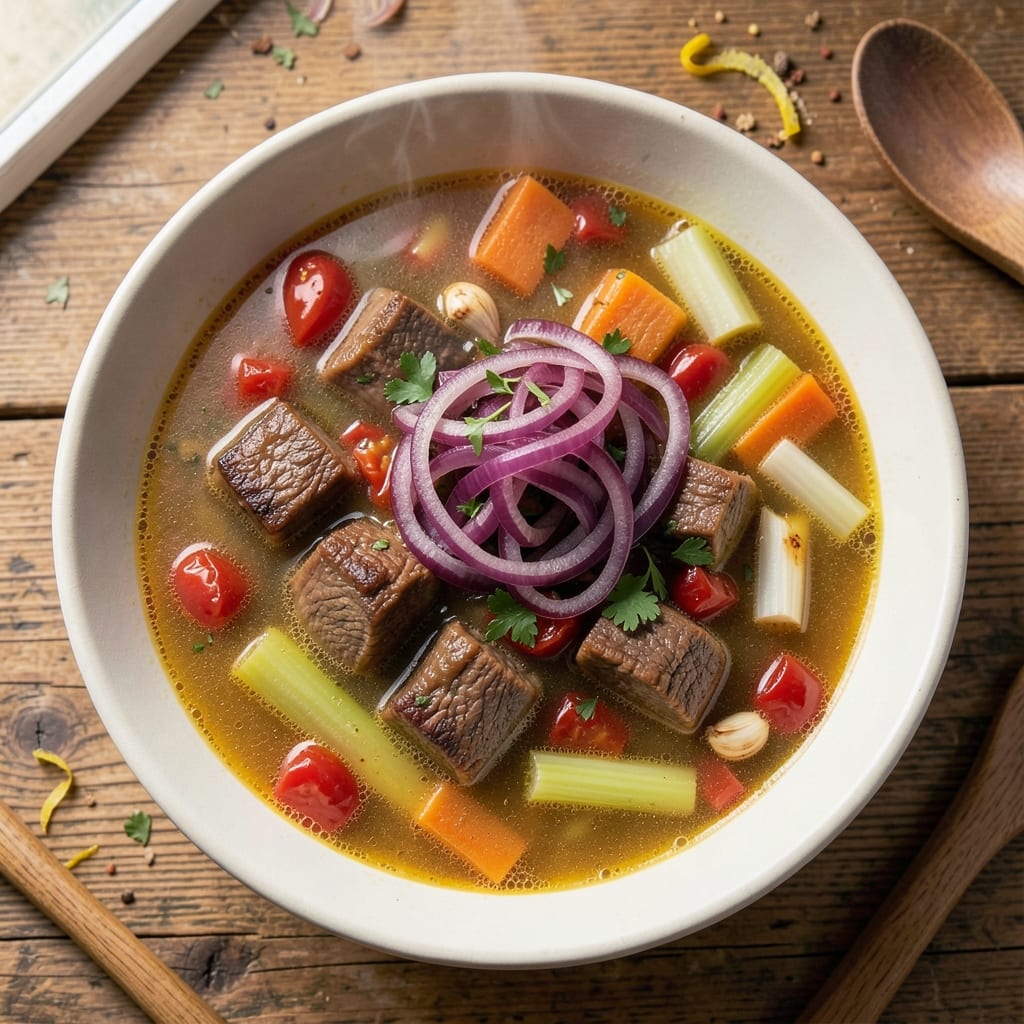
This Barefoot Contessa-inspired vegetable beef soup delivers the kind of hearty, comforting warmth that makes winter dinners feel like a hug. 💛 The secret lies in balancing tender beef, seasonal vegetables, and a rich broth that simmers until every ingredient melts into perfect harmony. I've adapted Ina Garten's approach to modern kitchens—keeping the soul of her cooking while making it accessible for home cooks.
The beauty of this recipe is its simplicity: just a few pantry staples and fresh vegetables transform into a deeply flavorful soup. You'll start with aromatics sautéed until fragrant, then build layers of taste through slow simmering. The beef becomes fork-tender while absorbing the surrounding flavors, creating a bowl that's both nourishing and satisfying.
What makes this soup special is how the vegetables—carrots, celery, onions—develop sweetness from the simmering process, while the beef adds hearty protein. The result is a steaming bowl of comfort with just the right balance of textures: tender beef, al dente vegetables, and a velvety broth that coats every spoonful.
Perfect for chilly evenings or meal prep, this soup tastes even better the next day as flavors deepen. The technique is straightforward but yields restaurant-quality results—exactly what you'd expect from the Barefoot Contessa's kitchen. Let's get started on creating this winter essential.
Ingredients for barefoot contessa vegetable beef soup
Sixteen ingredients, one steaming bowl of winter comfort that tastes like home.
| Ingredient | Amount | Notes |
|---|---|---|
| Chuck Roast 🥩 | 1 ½ lb | Cut into 1-inch cubes |
| Yellow Onion 🧅 | 1 whole | Diced, medium size |
| Carrots 🥕 | 4 medium | Peeled, cut into chunks |
| Celery Stalks 🧄 | 3 whole | Trimmed, chopped |
| Garlic Cloves 🧄 | 4 cloves | Minced, fresh preferred |
| Canned Crushed Tomatoes 🍅 | 1 can | 28 oz can, San Marzano preferred |
| Beef Broth 💧 | 4 cups | Low-sodium preferred |
| Dry Red Wine 🍷 | ½ cup | Bold variety like Cabernet |
| Tomato Paste 🍅 | 2 tbsp | Smooth consistency |
| Fresh Thyme 🌿 | 1 tbsp | Leaves only, chopped |
| Fresh Rosemary 🌿 | 1 tsp | Finely chopped |
| Bay Leaves 🍃 | 2 whole | Dried, standard size |
| Olive Oil 🫒 | 2 tbsp | Extra-virgin preferred |
| Salt 🧂 | 1 ½ tsp | Kosher or sea salt |
| Black Pepper 🌶️ | ½ tsp | Freshly ground |
The beef is non-negotiable—chuck roast gives you that melt-in-your-mouth texture, while sirloin stays tough. Costco or your butcher shop are best for quality cuts, but the pre-cubed packs at Walmart work in a pinch. Look for good marbling—those little fat pockets make the soup rich. Fresh thyme and rosemary from the grocery store herb section add brightness, but dried works if you're in a bind (just double the amount). The carrots and celery? Organic if you can swing it, but regular will do—just scrub them well. I always grab a few extra carrots because they sweeten up beautifully during simmering.
No red wine? Beef broth plus a splash of balsamic vinegar works just as well. Short on tomato paste? Crushed tomatoes at half the amount stretch it out. The celery can be swapped for fennel if you're feeling fancy—it adds a nice anise note. Fresh herbs are ideal, but dried thyme and rosemary (one-third the amount) keep the flavor alive. For the tomatoes, San Marzano cans from Trader Joe's are my go-to—they're sweeter and smoother than store brands. If you're using pre-chopped veggies, drain and rinse them first to avoid watering down the broth.
This soup tastes even better the next day—flavors meld like magic—so make extra. Store in the fridge for up to 5 days or freeze portions for 3 months. I like to portion it into glass containers with a splash of broth on top to keep everything moist. The beef gets extra tender with reheating, so don't skip this step. For serving, a sprinkle of fresh parsley and a drizzle of good olive oil take it to the next level. Leftovers? Perfect for lunchboxes or quick dinners—just heat and enjoy.
Why You'll Love This Recipe
- I swear by this trick: just toss in whole onions, carrots, and celery stalks—no dicing required. The chuck roast practically melts down on its own, so you’re basically simmering while you scroll through your phone.
- Chop-Free Prep: I swear by this trick: just toss in whole onions, carrots, and celery stalks—no dicing required. The chuck roast practically melts down on its own, so you’re basically simmering while you scroll through your phone.
- Garlic Bomb Flavor: That slow-cooked chuck roast? It soaks up the garlic cloves like a sponge, turning every spoonful into rich, savory perfection. Honestly, I’ve never tasted beef broth this deep and satisfying without fancy techniques.
- Lunchbox Magic: Between us, this soup is my secret weapon for meal prep. The carrots stay crisp, the beef shreds easily, and it reheats like a dream—pack it cold for lunch or warm it up for dinner. (Yes, even on a Tuesday night.)
Step-by-step instructions for hearty vegetable beef soup
This rich, comforting stew comes together with simple pantry staples and bold flavors.
🔥 Step 1: Sear the Chuck Roast Until Deeply Browned
Heat the 2 tablespoons olive oil in a large Dutch oven over medium-high heat until shimmering. Pat the 1.5 lb chuck roast dry with paper towels and season generously with 1 teaspoon salt and ½ teaspoon black pepper—this helps create a flavorful crust. Add the meat in a single layer and sear undisturbed for 4-5 minutes until deeply browned on one side. Flip carefully and sear the other side for another 4-5 minutes.
Don't be tempted to move the meat around—those browned bits (fond) are packed with flavor that will dissolve into the soup. If your pan gets crowded, work in batches. Once browned, remove the meat and set it aside on a plate.
👨🍳 Step 2: Build the Flavor Base with Aromatics
In the same Dutch oven, reduce heat to medium and add the 1 whole yellow onion, 4 medium carrots, and 3 whole celery stalks—all chopped into even ½-inch pieces. Cook for 8-10 minutes, stirring occasionally, until the vegetables soften slightly and begin to release their natural juices. This step develops their sweetness and forms the foundation of your soup.
Add the 4 cloves minced garlic and cook for just 30 seconds—garlic burns quickly, so keep an eye on it. Stir in the 2 tablespoons tomato paste and cook for another 1 minute until it darkens slightly. This paste will deepen the soup's richness and help thicken the broth.
🍳 Step 3: Deglaze and Simmer with Wine and Tomatoes
Pour in the ½ cup dry red wine and scrape up any browned bits from the bottom of the pot with a wooden spoon—this is called deglazing, and it captures all those flavorful bits you worked so hard to create. Let the wine simmer for 2-3 minutes until it reduces by half and the alcohol cooks off. Add the 1 can crushed tomatoes and stir to combine.
Return the seared chuck roast to the pot along with the 4 cups beef broth. Bring everything to a gentle boil, then reduce heat to low and add the 1 tablespoon fresh thyme, 1 teaspoon fresh rosemary, and 2 whole bay leaves. The soup should simmer gently—if it boils vigorously, the meat will toughen instead of tenderize.
⏰ Step 4: Cook Until Meat is Fork-Tender
Cover the pot and let the soup simmer for 2-2.5 hours, stirring occasionally. The chuck roast should break apart easily with a fork when tested—this is your signal it's done. If the soup reduces too much and becomes too thick, add ½ cup hot water at a time to maintain the right consistency.
I know two hours feels like forever, but patience pays off here. The long cooking time transforms the tough chuck roast into melt-in-your-mouth pieces. If you're short on time, you can use a pressure cooker and cut this step down to 45 minutes on high pressure, but the flavor won't be quite as deep.
🥘 Step 5: Season and Serve Warm
Remove the bay leaves and adjust seasoning with additional ½ teaspoon salt if needed—the broth should taste rich and savory, not bland. Ladle the soup into bowls and serve immediately with crusty bread or over your favorite pasta. The aroma alone will make your kitchen smell like a cozy winter evening.
This soup tastes even better the next day as the flavors continue to meld. Store leftovers in the refrigerator for up to 5 days or freeze for 3 months. The meat will continue to tenderize with time, making it even more delicious when reheated.
Pro Tips For Making Barefoot Contessa Vegetable Beef Soup
- Sear the Chuck Roast: DESCRIPTION:
- Cut Celery and Carrots Uniformly: DESCRIPTION:
- Don’t Rush the Garlic: DESCRIPTION:
- Use a Splatter Screen: DESCRIPTION:
Wine and beer pairings for this dish
Red Wine Pairings
This hearty soup pairs beautifully with a medium-bodied Cabernet Sauvignon from California or a Chianti Classico from Italy. The wine's acidity cuts through the richness of the beef while its dark fruit notes complement the tomatoes and herbs. I always reach for a 2018 Apothic Red—its smooth tannins and blackberry flavors elevate every spoonful of soup. 🍷
Beer Complements
For beer lovers, a Belgian-style Dubbel like Westmalle Trappist offers a perfect balance. The caramel and spice notes in the beer mirror the soup's depth, while its slight sweetness contrasts the savory beef. If you prefer lighter options, a German Helles Lager provides crispness that refreshes your palate between bites.
White Wine Alternative
Don't have red wine? A dry Riesling from Germany works surprisingly well. Its bright acidity and citrus notes cleanse your palate between rich spoonfuls. I've also enjoyed pairing this soup with an off-dry Gewürztraminer—the slight sweetness balances the hearty flavors beautifully.
Non-Alcoholic Options
For a refreshing non-alcoholic pairing, try a sparkling apple cider like Martinelli's. The effervescence cuts through the soup's richness while the apple notes complement the caramelized onions and tomatoes. A ginger beer with a squeeze of lime also adds a zesty contrast to the savory broth.
Beverage Temperature Tips
Serve your wine or beer slightly cooler than room temperature—around 60-65°F for reds and 45-50°F for whites. Chill your sparkling cider in the fridge for 30 minutes before serving to enhance its crispness. The temperature difference between the warm soup and cool beverage creates a satisfying contrast that enhances each bite. ❄️
Nutrition facts
Frequently asked questions
Can I substitute chuck roast with another cut of beef?
Yes! For a quicker option, use sirloin tips (they cook faster) or stew meat (already cut for soups). However, chuck roast is ideal because its fat content keeps the soup rich and tender during long simmering. If using a leaner cut like flank steak, add 1 tablespoon olive oil to the pot to compensate for lost moisture.
How do I prevent the soup from becoming too thick?
Add ½ cup hot water at a time while simmering if the soup thickens too much. The key is maintaining a gentle simmer—not a rolling boil—which helps control consistency. For extra insurance, stir in 1 tablespoon cornstarch mixed with 2 tablespoons cold water and simmer for 2 minutes to adjust thickness after cooking.
Can I make this soup in a slow cooker?
Brown the meat in a skillet first, then transfer everything to your slow cooker. Cook on low for 8 hours or high for 4-5 hours—the meat will become fork-tender. The slow cooker method is perfect for hands-off cooking, especially on busy days. Just add ½ cup water if the soup looks too thick when done.
What vegetables can I swap in for carrots or celery?
Try parsnips (sweeter than carrots), fennel (adds an anise flavor), or mushrooms (for earthiness). For celery, leeks or bell peppers work well—just adjust cooking time slightly. If using softer veggies like zucchini, add them in the last 15 minutes to prevent mushiness.
Why does my soup taste bland even after seasoning?
Blandness often comes from not deglazing the pan or using low-sodium broth. Always scrape up browned bits with wine or broth, and finish with a splash of red wine vinegar or lemon juice to brighten flavors. For extra depth, add 1 teaspoon soy sauce or a pinch of smoked paprika when serving—both add umami without overpowering.