
Main Courses
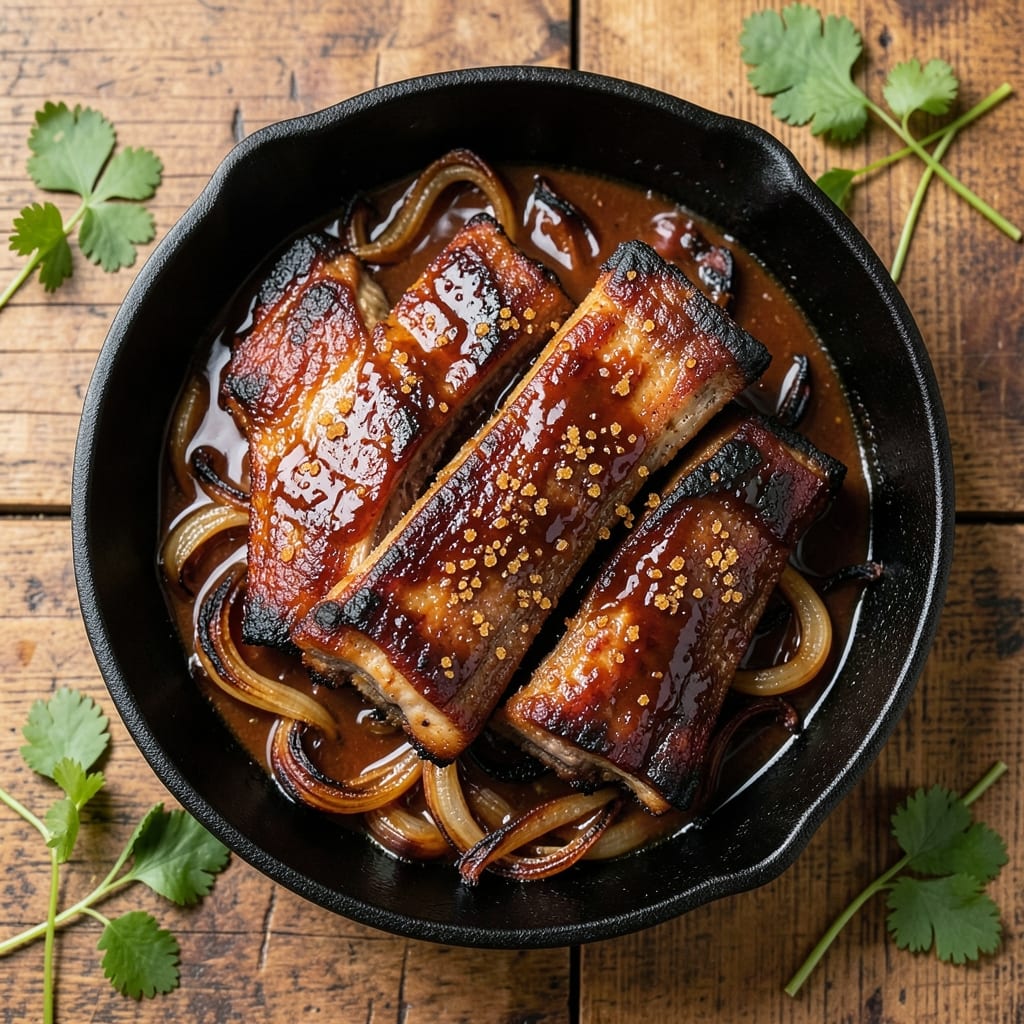
This BBQ boneless beef ribs recipe transforms tough cuts into melt-in-your-mouth chews using a 3-hour low-and-slow approach that builds deep smoky flavor. As a pitmaster raised on slow-cooked ribs, I've perfected this method to deliver that signature fall-apart texture without the guesswork. The secret lies in a balanced dry rub and precise temperature control—no smoker required, just patience and attention to detail.
The process starts with a spice-packed marinade that tenderizes the meat while infusing it with warmth from paprika, garlic, and onion powder. After a quick sear in a hot cast-iron skillet, the ribs move to the oven where they cook gently at 275°F until they reach 203°F internal temperature—the magic number for perfect tenderness. Every 30 minutes, I brush them with homemade BBQ sauce, ensuring a sticky, caramelized crust that locks in moisture.
By the time you pull these ribs from the oven, they'll be glossy, smoky, and falling apart at the slightest touch. The bark is crisp enough to stand up to a fork, while the meat inside is so tender it practically dissolves. This isn't just another BBQ recipe—it's a restaurant-quality experience you can recreate at home with simple techniques and a little time.
Serve them with a cooling side of coleslaw or a batch of buttery cornbread to soak up every last drop of that rich, smoky sauce. The leftovers? Even better the next day, if you can resist eating them all at once. Let's get cooking—your taste buds will thank you.
Ingredients for bbq boneless beef ribs
Fourteen ingredients. Three hours. Restaurant-quality ribs without the smoker.
| Ingredient | Amount | Notes |
|---|---|---|
| Boneless Beef Ribs 🥩 | 3 lb | Chuck roast cut into 2-inch cubes |
| Brown Sugar 🍯 | ½ cup | Light or dark variety |
| Smoked Paprika 🌶️ | 2 tbsp | For deep smoky flavor |
| Garlic Powder 🧄 | 1 tbsp | Freshly ground preferred |
| Onion Powder 🧅 | 1 tbsp | For sweet base notes |
| Ground Black Pepper 🌶️ | 1 tbsp | Freshly cracked for heat |
| Kosher Salt 🧂 | 1 tbsp | Diamond Crystal preferred |
| Ground Cumin 🌿 | 1 tsp | Toasted for depth |
| Olive Oil 🫒 | 2 tbsp | Extra-virgin for searing |
| Homemade BBQ Sauce 🍅 | 1 cup | Or quality store-bought |
| Fresh Garlic Cloves 🧄 | 4 cloves | Minced for marinade |
| Yellow Onion 🧅 | 1 whole | Diced for marinade |
| Apple Cider Vinegar 🍎 | 2 tbsp | For tangy brightness |
The beef ribs are the star—chuck roast cut into 2-inch cubes delivers that signature fall-apart texture. Costco or Walmart usually carry pre-cut boneless beef ribs, but if you're starting with a whole chuck roast, ask your butcher to cube it for you. Look for good marbling—this fat renders down during cooking, keeping the meat moist. I always grab extra because you can never have too many ribs for leftovers. The smoky flavor comes from smoked paprika—Penzeys or the bulk bins at natural grocery stores have the best quality. If you can't find smoked, regular paprika with a pinch of liquid smoke works in a pinch.
No smoked paprika? Substitute 1 tbsp regular paprika plus 1/2 tsp liquid smoke. Fresh garlic and onion are ideal, but if you're short on time, minced jarred garlic (no chunks) and pre-diced frozen onions save prep time. The apple cider vinegar adds tang—substitute lemon juice if that's what you have. For the BBQ sauce, I use a homemade blend of ketchup, molasses, and spices, but Sweet Baby Ray's or Stubb's work perfectly if you're in a hurry. The key is brushing every 30 minutes—don't skip this step, or you'll miss out on that caramelized bark that makes these ribs restaurant-quality.
These ribs taste even better the next day, so double the batch if you're feeding a crowd. Store leftovers in an airtight container in the fridge for up to 5 days, or freeze for 3 months by wrapping tightly in foil. Reheat in a skillet over medium heat with a splash of water to keep them moist. The sauce thickens as it cools, so thin with a little water or apple juice before reheating. Trust me on this—the leftovers are worth it when you're too tired to cook the next day.
Why You'll Love This Recipe
- No Bone to Pick: I swear by boneless ribs—no butchering, no messy bones, just tender meat that falls apart. The ribs here cook through in half the time, and honestly? I’d rather spend 10 minutes less wrestling with a knife.
- Sweet-Smoky Magic: That mix of brown sugar and smoked paprika? It’s the kind of balance you’ll crave. The sugar caramelizes into a sticky glaze while the paprika adds this deep, smoky warmth—like a hug from your favorite BBQ joint, but with garlic powder secretly making everything better.
- Weeknight to Party Fix: Between us, this recipe works for everything. Toss it on a sheet pan for a lazy Tuesday, or double the batch for game day. My kids think it’s “fancy” when I serve it with store-bought buns—no one’s the wiser.
- Leftovers That Don’t Suck: I make a full batch on Sunday, and by Wednesday, they’re still disappearing. The ribs stay tender, the sauce clings perfectly, and reheating? Just a splash of water in the pan, 5 minutes. Budget win, time win, taste win—what’s not to love?
Step-by-step instructions for smoky-spiced fall-apart beef ribs
Here's how to transform tough beef ribs into tender, smoky chews with a perfect balance of sweet and spicy flavors.
Prepare the Dry Rub and Marinate the Ribs
In a medium bowl, combine the 0.5 cup brown sugar, 2 tbsp smoked paprika, 1 tbsp garlic powder, 1 tbsp onion powder, 1 tbsp ground black pepper, 1 tbsp kosher salt, and 1 tsp ground cumin. Mix thoroughly until the spices are evenly distributed and the sugar is fully incorporated into the dry rub. This blend creates the perfect balance of sweet, smoky, and spicy notes that will cling to the ribs.
Cut the 3 lb boneless beef ribs into 2-inch cubes if they aren't already pre-cut. Place the rib cubes in a large resealable plastic bag and pour the dry rub over them. Seal the bag and massage the rub into the meat, ensuring every piece is coated. This step is crucial for flavor penetration and creating that signature bark. Let the ribs marinate in the refrigerator for at least 2 hours—overnight works even better, allowing the spices to deeply infuse the meat.
Sear the Ribs for Maximum Flavor
Heat a large oven-safe skillet over medium-high heat and add the 2 tbsp olive oil. Once the oil is shimmering, carefully add the marinated ribs in a single layer, leaving space between each piece. Let them sear undisturbed for 3-4 minutes until they develop a deep golden-brown crust. This searing step locks in juices and builds the foundational flavor for the final dish.
Flip the ribs and continue searing for another 3-4 minutes on the second side. You'll notice the rub darkening and forming a sticky caramelized crust—that's your signal they're ready for the next step. If the pan becomes too crowded, work in batches to avoid steaming instead of searing. Transfer the seared ribs to a plate and set aside.
Build the Flavorful Marinade and Braise
In the same skillet (no need to clean it—the browned bits add depth), add the 1 whole yellow onion and 4 cloves fresh garlic cloves, both diced. Sauté for 3-4 minutes until the onions are soft and translucent, and the garlic is fragrant. Pour in the 2 tbsp apple cider vinegar and scrape up any browned bits from the bottom of the pan—this step captures all the caramelized flavors you've built.
Return the seared ribs to the skillet and pour in enough water to come about halfway up the sides of the ribs. Bring to a gentle simmer, then reduce the heat to low and cover with a lid. Let the ribs braise for 1 hour and 30 minutes, stirring occasionally. The ribs are done when they're fork-tender and easily pull apart with minimal resistance. If the liquid reduces too quickly, add a splash of water to maintain a gentle simmer.
Finish with BBQ Sauce and Glaze
Remove the lid and increase the heat to medium-high. Stir in the 1 cup homemade BBQ sauce and let it simmer uncovered for 10-15 minutes, stirring occasionally. The sauce will thicken and form a glossy glaze on the ribs. You're looking for a balance—enough sauce to coat the ribs but not so much that it dilutes the smoky flavors. Taste and adjust the seasoning if needed, adding a pinch more salt or a dash of vinegar for brightness.
Once the sauce has thickened and the ribs are fully coated, transfer them to a serving platter. Let them rest for 5 minutes before serving—this allows the juices to redistribute, ensuring each bite is moist and flavorful. Serve the ribs with extra BBQ sauce on the side for dipping, and pair with crusty bread or roasted vegetables to soak up all the delicious juices.
Pro Tips For Making Bbq Boneless Beef Ribs
- Trim the Fat First: Cut away any visible fat from the boneless beef ribs before seasoning—it burns fast and turns your sauce bitter. I learned this the hard way when my first batch tasted like smoked bacon grease instead of ribs. ---
- Dry the Ribs Well: Pat the ribs thoroughly with paper towels before applying the dry rub. Wet surfaces = uneven browning and a sad crust. (Yes, even if you’re impatient like me.) ---
- Start Hot, Then Slow: Sear the ribs over high heat for 2–3 minutes per side first—this locks in flavor. Then drop the temp to 275°F (135°C) for the rest of the cook. Skipping the sear means flavor just soaks into the meat instead of sticking. ---
- Mix the Rub Wet: Combine smoked paprika, garlic powder, onion powder, and brown sugar with a splash of water or oil before applying. It sticks better and doesn’t fly everywhere when you’re shaking it on. (Your counter will thank you.)
Common mistakes when making your bbq boneless beef ribs
Overcooking the Ribs
I’ve seen this happen more times than I can count—ribs that turn from tender to tough because someone walked away from the stove. Boneless beef ribs have less connective tissue than bone-in ribs, so they’re more forgiving, but they still need attention. The magic number is 203°F internal temperature—any higher, and the meat starts to dry out. Use a meat thermometer (I swear by ThermoWorks Smoke) to check the thickest piece, not the edge. If you’re cooking in a skillet, keep the heat at medium-low after the initial sear to prevent overcooking. 🌡️
Skipping the Rest
This is a rookie mistake that ruins an otherwise perfect dish. After you pull the ribs from the heat, they need 5-10 minutes to rest. During this time, the juices redistribute, so cutting into them too soon means dry, stringy meat. I know it’s tempting to dig in immediately, but trust me—waiting makes all the difference. Pro tip: Tent them loosely with foil to keep them warm while they rest. This is especially important for boneless ribs, which don’t have the fat insulation of bone-in cuts.
Uneven Seasoning
Nothing’s worse than biting into a rib that’s bland on one side and overpoweringly spicy on the other. The key is to massage the dry rub into the meat thoroughly—don’t just sprinkle it on. I like to use a resealable plastic bag for this step; it lets me really work the spices into every nook and cranny of the beef. Another common mistake? Not letting the ribs marinate long enough. At least 2 hours in the fridge is non-negotiable, but overnight is even better. If you’re short on time, sprinkle a little extra rub on top before cooking to ensure even flavor.
Ignoring the Sauce Schedule
Brushing the ribs with BBQ sauce every 30 minutes isn’t just about flavor—it’s about building that caramelized crust, or “bark,” that makes these ribs restaurant-worthy. Skipping this step means missing out on the deep, sticky glaze that locks in moisture and adds layers of sweetness. I like to use a pastry brush for even coverage, but if you’re in a hurry, a fork works too. And here’s a pro tip: Don’t drown the ribs in sauce. A light coat is all you need—too much will steam the meat instead of caramelizing it. 🍯
Using the Wrong Cut
Not all beef ribs are created equal, and boneless beef ribs need to be the right cut to pull off this recipe. The chuck roast is your best bet—it’s well-marbled and tenderizes beautifully during slow cooking. If you accidentally grab brisket or short ribs, you’ll end up with a tougher texture. Ask your butcher to cube the chuck roast into 2-inch pieces for even cooking. And if you’re starting with a whole rib roast, trim off any large chunks of fat—too much can make the ribs greasy instead of tender. Trust me, this small step makes a huge difference in the final result.
Nutrition facts
Frequently asked questions
Can I make these ribs without a smoker?
This recipe uses a skillet-and-oven method that delivers smoky flavor without needing a smoker. The smoked paprika in the dry rub and the slow braising process create that signature smokiness. For extra depth, add 1/2 tsp liquid smoke to the marinade if you're craving more smoke. The key is patience—low-and-slow cooking is what makes these ribs tender and flavorful.
How do I store leftovers?
Store ribs in an airtight container in the fridge for up to 5 days or freeze for 3 months. To reheat, place them in a skillet over medium heat with a splash of water or BBQ sauce to prevent drying out. The sauce thickens as it cools, so thin with a little water or apple juice before reheating. Leftovers actually taste better the next day—the flavors meld together beautifully!
Can I use store-bought BBQ sauce?
Yes! While homemade sauce adds depth, quality store-bought brands like Sweet Baby Ray's or Stubb's work perfectly. The key is using a sauce with a good balance of sweetness and tang. If your sauce is too thin, simmer it uncovered for 5-10 minutes to thicken before brushing on the ribs. Avoid watery sauces—they'll steam the meat instead of caramelizing.
What's the best way to serve these ribs?
These ribs shine with classic BBQ sides like creamy coleslaw or buttery cornbread to soak up the sauce. For a modern twist, pair with roasted sweet potatoes or a crisp green salad. Serve with extra sauce on the side and pickled jalapeños for heat lovers. The ribs are rich, so balancing them with something fresh or crunchy keeps the meal well-rounded.
Why do my ribs turn out tough?
Tough ribs usually come from overcooking or skipping the marinade. Use a meat thermometer and aim for 203°F internal temperature—any hotter dries them out. Also, ensure you're using chuck roast (not brisket) and marinate for at least 2 hours. The slow braising time is crucial—don't rush it! If they're still tough, try cooking them 30 minutes longer at a lower temperature.