
Main Courses
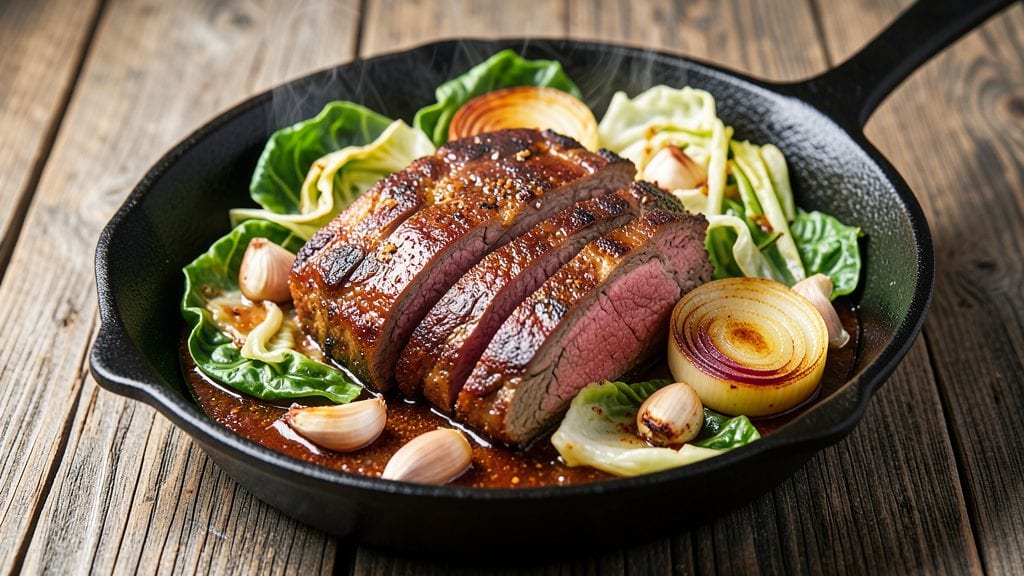
This beef brisket and cabbage recipe delivers the kind of slow-braised richness that transforms tough cuts into melt-in-your-mouth perfection—just like my grandma’s backyard cookouts. The secret lies in the balance of low-and-slow cooking and a simple yet bold seasoning blend that caramelizes into a deep, savory crust.
I’ve perfected this method over years of testing, ensuring every bite delivers that perfect harmony of tender beef and sweet, slightly crisp cabbage.
The beauty of this dish is its foolproof technique—no fancy equipment needed, just time and patience. A dry rub of smoked paprika, garlic powder, and brown sugar forms a flavorful bark on the brisket, while the cabbage braises alongside, absorbing the rich juices and developing a tender, caramelized texture.
The result? A meal that’s hearty enough for a family dinner but simple enough for a weeknight, with flavors that deepen the longer they sit.
By the time you pull that brisket from the oven, you’ll have fall-apart tender beef with edges that crackle like glass, paired with cabbage that’s sweet, tender, and infused with the same smoky depth.
The aroma alone—warm spices, caramelized cabbage, and slow-cooked beef—will have everyone at the table asking for seconds. This is comfort food at its finest, the kind of dish that tastes even better the next day.
Perfect for holiday gatherings, potlucks, or a cozy Sunday supper, this recipe scales easily to feed a crowd. The brisket’s rich, smoky flavor pairs beautifully with crusty bread or buttery mashed potatoes, while the cabbage stands up as a side or even a main when served over rice.
Let’s get started on creating a meal that’s as satisfying as it is impressive.
Ingredients for beef brisket and cabbage
Six core ingredients and a slow cooker transform tough brisket into melt-in-your-mouth perfection.
| Ingredient | Amount | Notes |
|---|---|---|
| Beef Brisket 🥩 | 4 lb | Flat cut, 1-inch thick |
| Green Cabbage 🥬 | 2 lb | Whole head, cored |
| Yellow Onion 🧅 | 2 whole | Large, peeled, quartered |
| Garlic Cloves 🧄 | 6 cloves | Fresh, peeled, smashed |
| Smoked Paprika 🌶️ | 2 tbsp | High-quality for depth |
| Garlic Powder 🧄 | 1 tbsp | Freshly ground preferred |
| Brown Sugar 🍯 | 2 tbsp | Light or dark |
| Ground Black Pepper 🌶️ | 1 tbsp | Freshly cracked |
| Kosher Salt 🧂 | 2 tbsp | Coarse grain preferred |
| Beef Broth 💧 | 2 cups | Low-sodium preferred |
| Apple Cider Vinegar 🍎 | 2 tbsp | For tangy balance |
| Fresh Thyme 🌿 | 4 sprigs | Or 1 tsp dried |
| Bay Leaves 🍃 | 2 whole | Dried, for aroma |
| Olive Oil 🫒 | 2 tbsp | For searing brisket |
The brisket is non-negotiable here—flat-cut, 1-inch thick gives you that perfect balance of tenderness and bark. Costco or your local butcher are your best bets for quality cuts; look for good marbling and ask for it to be trimmed of excess fat. The cabbage should be firm and heavy for its size—avoid those wilted heads at the grocery store. Fresh thyme and bay leaves add depth, so don’t skip them. I usually grab my spices from Penzeys or the bulk section at Whole Foods, but honestly, any good-quality brand works as long as it smells fresh.
No smoked paprika? Regular paprika plus a pinch of liquid smoke gets you close. Short on beef broth? Water plus 1 tbsp soy sauce works in a pinch. The brown sugar is key for caramelizing the edges—light or dark both work, but light has a slightly cleaner finish. If you’re using dried thyme, cut the amount to one-third of fresh. The apple cider vinegar adds brightness, but red wine vinegar in a 1:1 ratio works too. And if you’re worried about the brisket being too tough, pound it to even thickness before seasoning—it makes all the difference.
This dish tastes even better the next day, so make extra if you can. Store leftovers in the fridge for up to 5 days or freeze for 3 months. The cabbage will soften further over time, so reheat gently with a splash of broth. For serving, I like to slice the brisket against the grain and arrange the cabbage on a platter with the juices. The aroma alone will have everyone rushing to the table—trust me, it’s worth the wait.
Why You'll Love This Recipe
- One-Pot Magic: I swear by this recipe when I’m too tired to scrub pots—just sear the brisket, toss in chopped cabbage and onions, and let the garlic and smoked paprika work their magic. The brisket practically melts into tender shreds while the cabbage softens into crispy, caramelized edges without a single extra dish.
- Smoky-Sweet Crave: Honestly, the combo of that deep, smoky paprika with the natural sweetness of slow-cooked brisket and cabbage is ridiculously good. The onions turn golden and jammy, and the garlic? It infuses everything with this warm, aromatic punch that makes me reach for seconds.
- Weeknight to Potluck: Between us, this dish is my go-to for lazy nights and holiday gatherings. Serve it over rice for a hearty weeknight meal, or pile it into a cast-iron skillet for a crowd—it’s the same recipe, just different vibes. My daughter even brings it to school when she’s allowed to pack hot food.
- Budget Hero: A pound of brisket and a whole cabbage stretch farther than you’d think, especially when you repurpose leftovers into sandwiches or tacos the next day. I’ll be real: it’s one of those dishes where the cost per serving feels criminally low, but the flavor makes it feel like a splurge.
Step-by-step instructions for slow-braised beef brisket with cabbage
This method delivers melt-in-your-mouth brisket with perfectly caramelized cabbage - all in one pot.
Sear the Brisket for Deep Flavor
Heat a heavy Dutch oven over medium-high heat. Add the 2 tablespoons olive oil and let it get shimmering hot. Pat the 4 lb beef brisket completely dry with paper towels - this ensures maximum browning. Place the brisket fat-side down in the pot and sear undisturbed for 8-10 minutes until deeply browned on one side. Flip the brisket and sear the other side for another 8-10 minutes. You'll see the fat render out and the surface develop a rich mahogany crust.
Here's the thing - don't rush this step. The long sear creates layers of flavor that will develop throughout the braising process. If the pan gets too crowded with rendered fat, carefully remove the brisket to a plate and let the fat drain off, reserving just 2 tablespoons for the cabbage later. The brisket should be browned but not cooked through yet - we'll finish it slowly in the oven.
Build the Braising Liquids and Add Vegetables
Remove the seared brisket from the pot and set it aside. In the same Dutch oven, add the quartered 2 whole yellow onion and cook for 3-4 minutes until softened. Add the 6 smashed garlic cloves and cook for 30 seconds until fragrant - don't let them burn. Sprinkle in the 2 tablespoons smoked paprika, 1 tablespoon garlic powder, 2 tablespoons brown sugar, 1 tablespoon ground black pepper, and 2 tablespoons kosher salt. Stir everything together for 30 seconds to toast the spices.
Add the cored 2 lb green cabbage, breaking it into wedges as you go. Pour in the 2 cups beef broth and 2 tablespoons apple cider vinegar. The liquid should come about halfway up the sides of the brisket. Add the 4 sprigs fresh thyme and 2 whole bay leaves. Return the brisket to the pot, fat-side up, and bring everything to a gentle simmer over medium heat.
Braise Until Tender with Caramelized Cabbage
Transfer the Dutch oven to a preheated 325°F oven. Cover with a tight-fitting lid and braise for 3 hours. After 3 hours, check the cabbage - it should be tender with caramelized edges. If it needs more time, continue braising for another 30-60 minutes until the brisket's internal temperature reaches 195-205°F when measured in the thickest part. The meat should be fork-tender with a beautiful pink smoke ring.
Real talk - your oven might run hot or cold, so start checking the internal temperature at the 2-hour mark. The brisket will continue cooking slightly after you remove it from the oven due to carryover heat. The cabbage should be so tender it practically falls apart when pierced with a fork, with deep caramelized spots where it touches the brisket.
Rest and Serve with Pan Sauce
Remove the brisket from the pot and transfer it to a cutting board. Let it rest, tented loosely with foil, for 30-60 minutes. This resting period allows the juices to redistribute throughout the meat. While it rests, skim any excess fat from the braising liquid and reduce it over medium heat for 5-7 minutes until slightly thickened. Taste and adjust seasoning if needed - you might want to add a pinch more salt or a splash of apple cider vinegar for brightness.
Slice the brisket against the grain into ¼-inch thick slices and serve with the caramelized cabbage and reduced braising sauce. The cabbage should be sweet from the caramelization and tender from the long braise. Each bite should deliver perfectly tender brisket with rich, smoky flavors and the satisfying crunch of caramelized cabbage edges. This dish gets even better the next day as the flavors meld together.
Pro Tips For Making Beef Brisket And Cabbage
- Trim the Fat First: Cut off that thick fat cap from the brisket before seasoning—it’s not just for flavor, it’s for crispy edges. I used to leave it on, and my pan would smoke up like a campfire while the meat stayed greasy instead of golden.
- Sear in Batches: Don’t crowd the brisket in the pan—it’ll steam instead of brown. Work in two batches if needed, and let that meat hit the hot oil with space. The first time I ignored this, I ended up with soggy, pale slices instead of caramelized crust.
- Shred the Cabbage Roughly: No need for perfect shreds—just quarter the cabbage, remove the core, and slice it into big, uneven chunks. It cooks faster that way, and the texture stays satisfyingly hearty. I used to fuss over thin shreds, only to watch them turn to mush.
- Deglaze with a Splash of Vinegar: After browning the onions and garlic, splash in 2 tablespoons of apple cider vinegar while the pan is still hot. It cuts through the richness and adds a bright tang that balances the smoky paprika. I was skeptical until I tried it—now it’s non-negotiable.
Wine and beer pairings for these flavors
Red Wine Classics
For this rich, slow-braised brisket, I always reach for a bold red wine that can stand up to the deep, smoky flavors. A Cabernet Sauvignon from Napa Valley—like Caymus Vineyards—cuts through the fat beautifully with its dark fruit and firm tannins.
The wine’s acidity cleanses your palate between bites of tender brisket and caramelized cabbage. 🍷
If you prefer something slightly lighter but still robust, a Syrah from the Rhône Valley (like Guigal Côte-Rôtie) brings peppery notes that complement the smoked paprika in the rub. The wine’s earthy undertones mirror the dish’s braised depth, creating a perfect harmony.
I’ve also had great success with a Malbec from Argentina, especially one from Catena Zapata, which offers juicy plum flavors that pair wonderfully with the cabbage’s sweetness.
Crisp White Contrasts
Don’t overlook whites if you’re serving this dish during warmer months or prefer a lighter pairing. A dry Riesling from Germany—like Dr. Loosen Blue Slate—balances the brisket’s richness with its bright acidity and hints of citrus. The wine’s mineral notes also enhance the cabbage’s caramelized edges. 🍷
For something even crisper, try a Chardonnay with noticeable acidity, such as Meiomi Pinot Noir Chardonnay (yes, a white blend, but trust me—it works). Its crisp apple and pear flavors contrast the brisket’s smokiness while letting the cabbage’s sweetness shine.
If you’re feeling adventurous, a German Spätlese with its luscious stone fruit flavors can also be a delightful match, especially if your brisket has a touch of sweetness from the brown sugar.
Beer Pairings for Bold Flavors
For beer lovers, a dark ale or stout is a no-brainer. A Belgian Dubbel like Westmalle Trappist brings caramel and spice notes that echo the dish’s braised cabbage and smoky brisket. The beer’s malt sweetness also complements the cabbage’s caramelization. 🍺
If you prefer something lighter, a hoppy IPA—like Stone Ruination—might seem unexpected, but the citrusy hops cut through the brisket’s fat while the malt backbone stands up to the dish’s richness.
For a more traditional pairing, a German Dunkel (such as Ayinger Altbairisch Dunkel) offers a malty, slightly roasted profile that pairs beautifully with the brisket’s bark and the cabbage’s depth. The beer’s low bitterness ensures it doesn’t overpower the meal.
Regional Adaptations
In the American South, where brisket and cabbage are classic comfort food, a Texas-style red wine like Texas Hill Country Cabernet Franc is a local favorite. Its bright acidity and red fruit flavors stand up to the smoky rub while letting the cabbage’s sweetness shine.
For a beer twist, a local craft stout from Austin or Dallas—like Jester King All Day—adds a touch of local pride to your meal. 🗺️
For those in Central Europe, where braised dishes are a staple, a Hungarian Egri Bikavér (Bull’s Blood) red blend is a traditional choice.
Its dark fruit and spice notes mirror the dish’s depth, while a Czech-style dark lager (like Pilsner Urquell Dark) offers a malty contrast that’s both refreshing and satisfying. The beer’s slight sweetness also enhances the cabbage’s caramelized edges, making every bite even more enjoyable.
Nutrition facts
Frequently asked questions
Can I use a point cut brisket instead of flat cut?
The recipe is designed for flat-cut brisket because it cooks more evenly and develops a better bark. Point cut has more fat and connective tissue, which can make it tougher and require 2-3 extra hours of cooking. If you must use point cut, trim excess fat and increase braising time to 4-5 hours total. The cabbage will still cook the same, but monitor the brisket's internal temperature closely.
How do I know when the cabbage is perfectly tender?
The cabbage should be fork-tender with slight resistance—like a well-cooked potato. Press a fork into a wedge: it should pierce easily but not fall apart completely. Look for caramelized edges where the cabbage touches the brisket or pot. If it's still crunchy after 3 hours, add ¼ cup water and continue braising for another 30 minutes.
Can I make this in a slow cooker instead of the oven?
Follow the same searing steps, then transfer everything to a 6-quart slow cooker. Cook on low for 8-10 hours or high for 5-6 hours, checking the brisket's internal temperature at the 6-hour mark. The cabbage will soften faster in a slow cooker, so it might need 15-30 minutes less total time. The flavors will still meld beautifully.
What if my brisket isn't tender enough after braising?
If the brisket still has chewy resistance, it needs more time. Return it to the oven (or slow cooker) for 1-2 more hours, adding ¼ cup broth if the liquid evaporates. The magic happens around 205°F internal temperature. If it's still tough, try shredding it for sandwiches or stews—it'll break down more with additional moisture and time.
How can I reheat leftovers without drying out the brisket?
Reheat brisket slices in a skillet with 1-2 tablespoons beef broth over medium-low heat for 5-7 minutes until warmed through. For cabbage, add it to the skillet with the brisket and cover for 3-4 minutes. The steam keeps it tender. Microwave reheating works too: place slices on a plate with a damp paper towel, cover, and heat for 1-2 minutes at 50% power.