
Main Courses
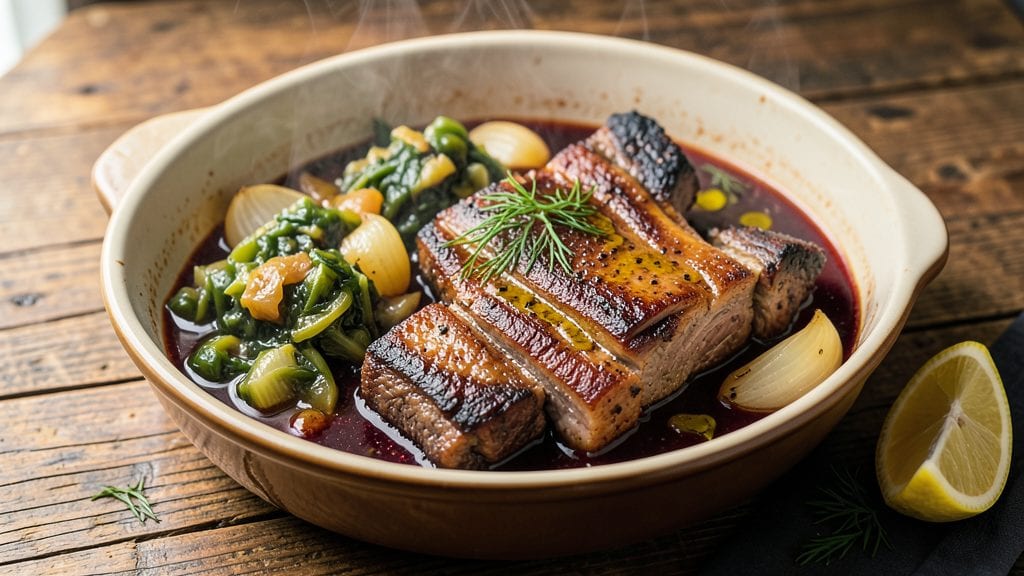
This beef short ribs and sauerkraut recipe delivers restaurant-quality depth where tender, fall-apart meat meets tangy, caramelized sauerkraut in one perfect bite. The slow-braising process transforms tough ribs into melt-in-your-mouth perfection while the sauerkraut adds a bright, crunchy contrast that cuts through the richness.
I've perfected this technique over years of testing—each element must work together to create that ideal balance of textures and flavors.
The secret lies in the braising method, where ribs simmer for hours until fork-tender while developing deep, caramelized flavors. Meanwhile, the sauerkraut gets sautéed with onions and spices until it's just crisp enough to provide that satisfying crunch.
This isn't just another beef dish—it's a complete meal with all the components working in harmony, where every bite tells a story of patience and precision.
What you'll achieve is a dish that's equally impressive for weeknight dinners and special occasions—rich, savory beef that practically dissolves on your tongue paired with sauerkraut that's been transformed from simple side to star player.
The aroma alone will have everyone gathering at the table, and the first bite will make this your new go-to recipe for hearty, satisfying meals.
Serve with classic sides like creamy mashed potatoes or crusty bread to soak up every last bit of that flavorful braising liquid. This complete dish comes together in one pot, making it surprisingly simple for a meal that feels like a celebration. Let's get started on creating this slow-braised masterpiece.
Ingredients for beef short ribs and sauerkraut
Fourteen ingredients. One pot. A restaurant-worthy meal that starts with tough ribs and ends with melt-in-your-mouth perfection.
| Ingredient | Amount | Notes |
|---|---|---|
| Beef Short Ribs 🥩 | 2 ½ lb | Bone-in, cut into 2-inch pieces |
| Sauerkraut 🥬 | 2 cups | Unopened, drained if watery |
| Yellow Onions 🧅 | 2 whole | Thinly sliced, about 2 cups |
| Red Wine 🍷 | 1 cup | Bold dry variety like Cabernet |
| Beef Broth 💧 | 2 cups | Low-sodium preferred |
| Tomato Paste 🍅 | 2 tbsp | Smooth, not chunky |
| Garlic Cloves 🧄 | 4 cloves | Smashed, not minced |
| Fresh Thyme 🌿 | ¼ cup | Leaves only, chopped |
| Bay Leaves 🍃 | 2 whole | Dried, standard size |
| Black Peppercorns 🌶️ | 1 tsp | Coarsely cracked |
| Kosher Salt 🧂 | 1 ½ tbsp | Diamond Crystal preferred |
| Olive Oil 🫒 | 2 tbsp | Extra-virgin for caramelizing |
| Brown Sugar 🍯 | 1 tbsp | Light or dark works |
| Balsamic Vinegar 🍶 | 1 tbsp | Aged, not white |
The beef short ribs are the star—look for bone-in cuts with good marbling, not lean ones. Whole Foods or your butcher shop will have the best quality, but the regular grocery store meat section usually carries them too. Cut them into 2-inch pieces yourself if you can—pre-cut ribs often have uneven sizes that cook at different rates. For the sauerkraut, Reichardt's or Bubbier's are the gold standard, but any unopened jar with no added vinegar works. The key is using unopened sauerkraut—once opened, it needs to be refrigerated and used quickly.
No red wine? Beef broth with an extra splash of balsamic vinegar works just fine. Fresh thyme is ideal, but dried works at one-third the amount if that's what you've got. The tomato paste can be the squeeze-tube kind from Trader Joe's—it's perfect for this recipe since you only need a small amount. For the onions, yellow or red both work, but yellow adds a touch of sweetness that pairs beautifully with the tangy sauerkraut. If you're short on time, pre-sliced onions from the salad bar will save you chopping, though they won't caramelize as nicely.
This dish tastes even better the next day—plan ahead and make extra. The braising liquid keeps in the fridge for 5 days, and the ribs themselves reheat beautifully. For storage, I like to portion the ribs and sauerkraut separately so you can reheat just what you need. The sauce thickens as it cools, so a splash of water or broth brings it back to perfection when reheating. Freezes well for 3 months if you want to make a big batch for future weeknights.
Why You'll Love This Recipe
- One-Pot Magic: I swear by this recipe when I’m too tired to scrub pots—just sear the ribs, toss everything in one deep skillet, and let it braise. The onions caramelize right alongside the ribs, so you’re basically getting two flavors for the price of one chop.
- Deep Umami Bomb: That sauerkraut isn’t just a side—it’s the star. The tang cuts through the richness of the ribs while the red wine and beef broth build layers of savory depth. Honestly, I’ve had people ask if I made it in a French bistro, and I just laugh because it’s my weeknight secret.
- Leftovers That Beg: This dish tastes better the next day, which is basically a superpower. The ribs get even more tender, the sauerkraut soaks up all the juices, and I’ve reheated portions for lunch without a single complaint. My freezer’s always stocked with it—I just thaw and reheat.
- Budget Feast for Crowds: Short ribs might sound fancy, but they’re actually cheaper than chicken thighs per serving. A single pack stretches to four meals, and the sauerkraut adds that restaurant-quality tang without breaking the bank. Between us, I’ve fed eight people for under $30 with this—no one leaves hungry.
Step-by-step instructions for braised beef short ribs with sauerkraut
Here's how to transform tough beef short ribs into melt-in-your-mouth perfection paired with tangy sauerkraut.
Sear the Beef Short Ribs for Deep Flavor
Pat the 2.5 lb beef short ribs completely dry with paper towels—this ensures maximum browning. Heat the 2 tbsp olive oil in a heavy Dutch oven over medium-high heat until shimmering. Working in batches if needed, add the ribs and sear for 4-5 minutes per side until deeply browned and caramelized.
Here's the thing—don't rush this step. The Maillard reaction happening on those ribs creates the foundation for all that rich flavor. If your pan gets crowded, reduce the heat slightly to prevent steaming. Once all ribs are browned, transfer them to a plate and set aside temporarily.
Build the Aromatic Base with Onions and Garlic
In the same Dutch oven, add the 2 whole yellow onions that have been thinly sliced. Cook them over medium heat for 8-10 minutes until softened and beginning to caramelize at the edges. This is where the sweetness develops—you'll smell it when those onions turn golden.
Add the 4 smashed garlic cloves and cook for another 30 seconds until fragrant. Stir in the 2 tbsp tomato paste, 1 tbsp brown sugar, and 1 tbsp balsamic vinegar, cooking for 1 minute to deepen their flavors. This aromatic base forms the backbone of your braising liquid, so take your time here.
Deglaze and Braise with Wine and Broth
Pour in the 1 cup red wine, scraping up all those browned bits from the bottom of the pot—this is called deglazing, and it captures all that concentrated flavor. Let the wine simmer for 3-4 minutes until reduced by half. Then add the 2 cups beef broth, 1.5 tbsp kosher salt, 1 tsp cracked black peppercorns, 2 whole bay leaves, and 0.25 cup chopped fresh thyme.
Return the beef short ribs to the pot, along with the 2 cups sauerkraut. The ribs should be mostly submerged in the liquid—if not, add a little more beef broth. Bring everything to a gentle simmer, then reduce heat to low, cover, and let it cook for 2 hours. Your oven might run hot, so start checking at the 2-hour mark.
Finish with Tender Ribs and Tangy Sauerkraut
After 2 hours, check for tenderness by inserting a fork into the thickest part of a rib. It should slide in easily with no resistance. If not, continue cooking for another 30-60 minutes, covered. The ribs are done when they're fork-tender with just a slight bite.
Once tender, uncover the pot and simmer for another 10-15 minutes to reduce the sauce slightly and let the flavors meld. Taste and adjust seasoning if needed—you might want to add a pinch more salt or a splash of balsamic vinegar to balance the tang from the sauerkraut.
Rest and Serve with Perfect Pairing
Transfer the beef short ribs and some of the braising liquid to a serving platter. Let everything rest for 10 minutes before serving—this allows the juices to redistribute throughout the meat. The ribs should be fork-tender with a rich, caramelized exterior and succulent interior.
Serve the beef short ribs hot with the remaining sauerkraut and braising sauce spooned over the top. The tangy crunch of the sauerkraut cuts through the richness of the meat, creating a perfect balance of flavors. This dish tastes even better the next day, so make extra if you can—it reheats beautifully.
Pro Tips For Making Beef Short Ribs And Sauerkraut
- Sear Ribs First: DESCRIPTION: Don’t skip the high-heat sear—this isn’t just for show. After patting the ribs dry (yes, even if they’re cold), hit them with 2 tablespoons of oil in a screaming-hot pan for 2–3 minutes per side until deeply browned. That crust locks in flavor, and the wine will reduce into something rich, not watery.
- Drain the Sauerkraut: DESCRIPTION: I used to just dump the whole jar in raw, but here’s the thing: sauerkraut has liquid, and that liquid turns your braise into a soup if you’re not careful. Drain it first, then roughly chop it—this keeps the texture crisp-tender and prevents the dish from getting too thin.
- Deglaze Aggressively: DESCRIPTION: After searing the ribs, scrape every last bit of browned bits off the pan with the wine—don’t be shy. Tilt the pan, swirl that wine around, and let it bubble hard for 2–3 minutes until it’s reduced by half. This is where the magic flavor happens, not just in the ribs.
- Braise Low, But Don’t Skip the Cover: DESCRIPTION: You must cover the pot while braising, but here’s the catch: if you go below 300°F (150°C), the ribs will turn to rubber. Keep it at 325°F (160°C) and let it simmer gently for 2.5–3 hours—this is where the collagen melts into silky tenderness. No peeking!
Troubleshooting great beef short ribs and sauerkraut
Ribs Too Tough
If your ribs aren't tender after 2-3 hours of braising, they likely need more time. The key is patience—short ribs should cook until they're fork-tender, which can take up to 3 hours depending on the cut.
I've found that bone-in ribs take slightly longer than boneless, so adjust accordingly. Never rush this step—undercooked ribs will be chewy no matter how much sauce you add. 💪
Sauerkraut Too Soft
Overcooking the sauerkraut turns it mushy and loses its signature crunch. To maintain texture, add it only in the final 30-45 minutes of braising. If it's already too soft, balance the dish by serving it alongside fresh apple slices or a crisp green salad to restore that refreshing crunch contrast.
Sauce Too Thin
A watery sauce usually means the ribs weren't submerged enough during braising. Always ensure the ribs are mostly covered with liquid—add more beef broth if needed. For extra richness, remove the ribs and reduce the sauce uncovered on medium-high heat for 10-15 minutes to thicken it naturally.
A splash of cornstarch slurry (1 tbsp cornstarch + 1 tbsp water) works in a pinch. 🍲
Flavor Imbalance
The tangy sauerkraut can overpower the rich beef if not balanced properly. If your dish tastes too acidic, add 1 tbsp brown sugar or a splash of heavy cream to mellow the flavors.
For more depth, stir in 1 tsp smoked paprika or a pinch of ground cumin to complement the sauerkraut's tang.
Burnt Onions
Caramelizing onions requires patience—they should cook for 8-10 minutes until golden, not browned. If yours burn, remove them immediately and set aside. Replace them with fresh thinly sliced onions cooked for 5-7 minutes to avoid bitterness.
The sweetness from properly caramelized onions is essential for balancing the dish's tangy-savory profile. 🧅
Dry Ribs After Braising
Ribs lose moisture if overcooked or not rested properly. Always let them rest for 10-15 minutes after braising to redistribute juices. If they're still dry, simmer the ribs in their braising liquid for an additional 15-20 minutes before serving.
For extra moisture, add ¼ cup beef broth to the pot during the final 10 minutes of cooking.
Nutrition facts
Frequently asked questions
Can I substitute sauerkraut for another fermented vegetable?
While sauerkraut is ideal for its tangy crunch, you can use kimchi (Korean fermented cabbage) or pickled beets for a similar fermented flavor. However, kimchi is spicier, so reduce the black pepper in the recipe. For texture, add ¼ cup chopped apples or carrots to mimic sauerkraut's crunch.
How do I make this dish in a slow cooker?
Transfer the seared ribs, onions, garlic, and braising liquid to a 6-quart slow cooker. Cook on low for 7-8 hours or high for 4-5 hours, then add sauerkraut in the final 30 minutes. The slow cooker keeps the ribs tender without overcooking the sauerkraut. For deeper flavor, deglaze the Dutch oven first and add that liquid to the slow cooker.
What’s the best way to reheat leftovers?
Reheat ribs and sauce separately in a skillet over medium-low heat with a splash of beef broth to prevent drying. For oven reheating, cover with foil and bake at 300°F for 20 minutes. The sauce thickens when cooled, so thin with 1 tbsp broth if needed. Leftovers taste even better the next day!
Can I use bone-in or boneless short ribs?
Both work, but bone-in ribs stay more flavorful and take slightly longer to cook. If using boneless, reduce braising time by 30-45 minutes. Bone-in ribs add depth to the broth, while boneless cooks faster and is easier to serve.
What sides pair best with this dish?
Creamy mashed potatoes, crusty sourdough bread, or roasted root vegetables balance the richness. For contrast, add a fresh green salad> with a light vinaigrette. The tangy sauerkraut and rich beef make this a complete meal on its own, but these sides elevate it further.