
Main Courses
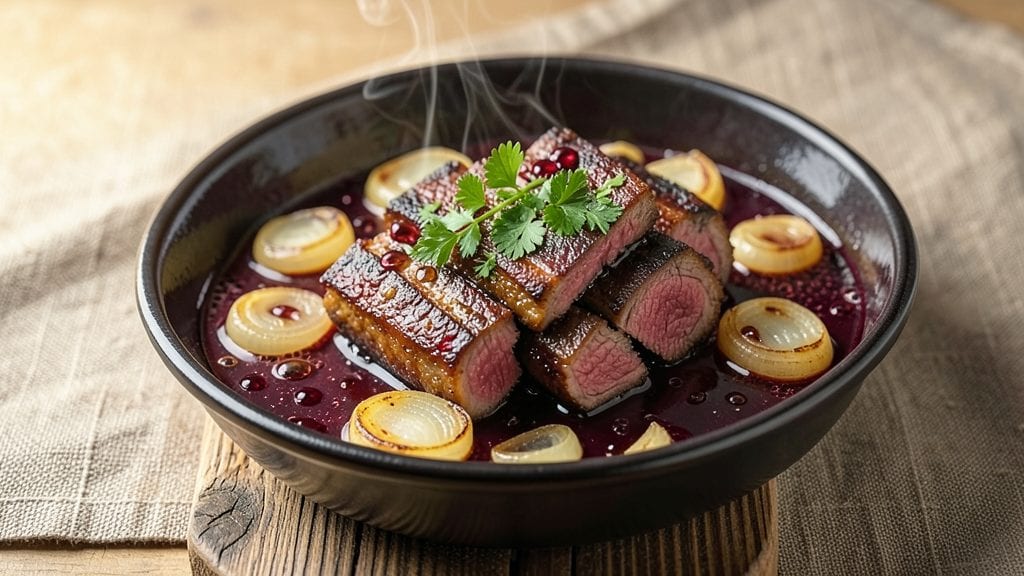
This beef short ribs recipe in red wine sauce delivers melt-in-your-mouth tenderness with a velvety sauce that's rich, complex, and packed with umami depth. The slow-braising process transforms tough ribs into fork-tender perfection while the wine reduces into a glossy, flavorful sauce that clings to every bite.
After years of perfecting this dish, I've developed a method that ensures consistent results without requiring specialized equipment.
The foundation of great short ribs begins with proper searing to create a flavorful crust, followed by slow cooking that renders fat and collagen into the sauce.
A good red wine—like Cabernet Sauvignon or Merlot—adds acidity and depth, while aromatic herbs and a touch of brandy elevate the sauce to restaurant-quality levels. This recipe balances technique with simplicity, making it achievable for home cooks while delivering professional results.
By the time you serve these ribs, you'll have tender, caramelized meat that falls apart at the touch of a fork, all swimming in a glossy red wine sauce that's rich enough to coat every bite.
The sauce's velvety texture and deep umami flavor make this dish feel like a special occasion, yet the method is straightforward enough for regular weeknights. Pair with creamy mashed potatoes or buttery polenta to soak up every last drop of that luxurious sauce.
While this recipe works beautifully as written, you can easily customize it—add mushrooms for earthiness, swap the wine for a bold port, or finish with a sprinkle of fresh thyme for brightness.
The slow-cooked method ensures flexibility, so feel confident experimenting while maintaining that signature rich, wine-infused flavor profile. Let's get started on creating this showstopping main course.
Ingredients for beef short ribs in red wine sauce
Four pounds of beef short ribs and a bottle of bold red wine transform into a restaurant-worthy masterpiece.
| Ingredient | Amount | Notes |
|---|---|---|
| Beef Short Ribs 🥩 | 4 lb | Bone-in, cut into 2-inch pieces |
| Dry Red Wine 🍷 | 2 cups | Cabernet Sauvignon or Merlot |
| Beef Broth 💧 | 2 cups | Low-sodium preferred |
| Brandy 🍷 | ½ cup | For depth of flavor |
| Tomato Paste 🍅 | 2 tbsp | Squeeze tube preferred |
| Yellow Onion 🧅 | 1 whole | Diced, medium size |
| Garlic Cloves 🧄 | 6 cloves | Minced, fresh preferred |
| Fresh Thyme 🌿 | ¼ cup | Leaves only, chopped |
| Fresh Rosemary 🌿 | ¼ cup | Needles only, chopped |
| Olive Oil 🫒 | ½ cup | Extra-virgin for searing |
| Diamond Crystal Kosher Salt 🧂 | 2 tsp | For seasoning |
| Freshly Ground Black Pepper 🌶️ | 1 tsp | Coarsely ground |
| All-Purpose Flour 🌾 | 2 tbsp | For dusting |
| Unsalted Butter 🧈 | 2 tbsp | For finishing sauce |
The quality of your short ribs makes all the difference—look for bone-in, well-marbled cuts from a trusted butcher or Costco's pre-cut ribs for convenience. If buying whole, ask for the chuck or plate cut, which delivers maximum tenderness. For the wine, opt for a Cabernet Sauvignon or Merlot with at least 12% alcohol—avoid sweet varieties, as they'll overpower the dish. Trader Joe's and Whole Foods carry excellent options at reasonable prices. The tomato paste should be smooth and vibrant, not clumpy or discolored, indicating freshness. Fresh herbs are ideal, but if using dried, reduce to one-third the amount—Penzeys or Spicewalla offer high-quality dried options.
No red wine on hand? Dry sherry or port works in a pinch, though the flavor profile will differ slightly. Substituting beef broth for wine? Add 1 tbsp balsamic vinegar to mimic acidity. Fresh thyme and rosemary can be swapped for dried equivalents at one-third the quantity, but the aroma won't be as vibrant. For the onion, yellow or red varieties both work, but avoid sweet onions like Vidalia. The brandy adds depth—substitute with 1 tsp vanilla extract if unavailable, though it won't be identical. Olive oil should be extra-virgin and peppery; California or Italian varieties like Bertolli or Filippo Berio excel here. Preferring a smoother sauce? Reduce the tomato paste to 1 tbsp and add 1 tsp sugar to balance acidity.
Store the raw ribs in the coldest part of your fridge, sealed in a container, for up to 3 days. Once cooked, the ribs reheat beautifully—simmer in their sauce for 10-15 minutes until heated through. The sauce thickens as it cools, so stir in a splash of broth or water if it becomes too stiff. Portion the ribs and sauce into airtight containers for 4-5 days of fridge storage or freeze for 3 months. For a quicker weeknight dinner, double the recipe and freeze half—the flavors deepen over time, making it worth the prep.
Why You'll Love This Recipe
- Weeknight-Friendly Luxury: I swear, this feels like a fancy dinner but takes less time than ordering takeout. The ribs practically melt into the sauce—no babysitting required—while the red wine and brandy do all the heavy lifting.
- Rich Without Effort: That first sip of sauce? Pure umami gold. The tomato paste deepens the flavor, the wine adds brightness, and the brandy? It’s like a little secret boost that makes the whole dish taste restaurant-worthy—no fancy skills needed.
- Leftovers That Shine: Between us, the sauce gets better the next day. I freeze portions for lazy nights when I can’t be bothered to cook, and reheating it turns into a cozy, no-fuss meal. (Yes, even on a Tuesday night.)
- Budget-Friendly Feast: Short ribs might sound splurge-y, but they stretch across meals—serve them over mashed potatoes one night, toss with crusty bread the next. The wine and brandy elevate without breaking the bank, and the beef broth stretches the flavor further. Worth every penny.
Step-by-step instructions for beef short ribs in red wine sauce
Here's the method for achieving melt-in-your-mouth tenderness with a velvety red wine reduction.
Sear the Short Ribs for Maximum Flavor
Pat the 4 lb beef short ribs dry with paper towels - this ensures maximum browning. Heat the 0.5 cup olive oil in a heavy Dutch oven over medium-high heat until shimmering. Working in batches if needed, sear the short ribs on all sides until deeply browned, about 3-4 minutes per side. The key here is patience - don't crowd the pan or the temperature will drop and you'll steam instead of sear.
As they brown, you'll notice the fat rendering out and the meat developing a rich crust. This Maillard reaction creates the deep, caramelized foundation for your sauce. Transfer the seared ribs to a plate and set aside temporarily. The residual heat will continue cooking them slightly while you build the sauce.
Build the Aromatic Base
In the same Dutch oven, reduce heat to medium and add the diced 1 whole yellow onion. Cook for 5-6 minutes until softened and beginning to caramelize. Add the 6 cloves minced garlic cloves and cook for an additional 30 seconds until fragrant - you should smell that distinctive garlic aroma without any bitterness.
Stir in the 2 tbsp tomato paste and cook for 1 minute to develop its flavor. This step creates the flavor foundation that will carry through the entire braising process. The tomato paste adds depth and helps thicken the sauce later. Sprinkle the ribs with the 2 tsp diamond crystal kosher salt and 1 tsp freshly ground black pepper, then return them to the pot.
Deglaze and Braise with Wine and Broth
Pour in the 2 cups dry red wine and scrape up all the browned bits from the bottom of the pot - this is where all the concentrated flavor lives. Let the wine simmer for 3-4 minutes until reduced by about half. Add the 2 cups beef broth, bringing the mixture to a gentle simmer. The liquid should come about halfway up the ribs.
Here's the crucial part: cover the pot with a tight-fitting lid and transfer to a preheated 300°F oven. Braise for 3 hours, then carefully flip each rib and add the 0.5 cup brandy. Return to the oven for an additional 1-2 hours until the meat is fork-tender and falls off the bone. You'll know it's ready when the meat pulls apart easily with minimal resistance.
Finish with Herbs and Butter
Remove the ribs from the pot and transfer to a serving platter. Strain the braising liquid through a fine-mesh sieve into a clean saucepan. Discard the solids. Return the sauce to medium heat and stir in the 0.25 cup chopped fresh thyme and 0.25 cup chopped fresh rosemary. Simmer for 2 minutes to infuse the flavors.
Whisk in the 2 tbsp unsalted butter until melted and incorporated. Taste and adjust seasoning if needed - you may need to add a pinch more salt or pepper. The sauce should coat the back of a spoon with a velvety consistency. Return the ribs to the sauce just before serving to warm through and allow them to absorb the final flavor layers.
Pro Tips For Making Beef Short Ribs In Red Wine Sauce
- Sear Until Blackened: Don’t just brown the ribs—get them deep, dark brown with crusty edges. I used to stop too soon, but pushing it for 3-4 minutes per side (yes, even if it looks scary) builds flavor that carries through the slow cook. A hot, dry pan is non-negotiable here—skip the oil splash unless you’re frying.
- Deglaze Immediately: As soon as you remove the ribs, hit that pan with wine right away—the residual heat will pull up all the fond. Scrape the bottom aggressively with a wooden spoon while pouring; if you wait, you’re leaving flavor behind. This is where the sauce’s depth starts.
- Use Bone Broth, Not Water: Store-bought beef broth adds richness the ribs crave, but cheap versions taste like they came from a lab. Splurge on a good one (or make your own) and reduce it slightly before adding to the wine—this thickens the sauce naturally without tomato paste overpowering.
- Add Brandy Last: I learned this after a disastrous batch where the brandy burned off too fast. Pour it in the final 5 minutes of cooking, just before serving—this lets the alcohol cook off gently and keeps the sauce bright, not bitter. A splash of cold broth afterward helps too.
Make-ahead tips for this dish
Prep Ahead Secrets
Start by searing and seasoning the ribs up to 2 days in advance—store them in a sealed container in the fridge. The crust stays intact, and you can finish cooking directly from cold.
I like to prep the aromatics (onions, garlic, tomato paste) in a separate container too, so everything's ready when you're. This cuts your active cooking time by 45 minutes on the day you serve. 🌟
Sauce Pre-Reduction
Make the red wine sauce base ahead by combining wine, broth, and tomato paste in a saucepan. Simmer until reduced by half, then cool completely before storing in an airtight container. Keep it refrigerated for up to 3 days—it develops deeper flavor over time.
When ready to cook, simply add the pre-seared ribs and continue with the braising process. This step saves 2 hours of active cooking on the final day.
Freezer-Friendly Braising
For maximum convenience, braise the ribs completely and freeze them in their sauce. Portion into individual containers with sauce, leaving ½ inch headspace for expansion. Thaw overnight in the fridge, then reheat gently in a skillet with a splash of water to restore that velvety texture.
The sauce thickens beautifully after freezing—just whisk in a little extra broth if needed. This method works perfectly for 3 months of freezer storage. ❄️
Herb Prep Shortcut
Chop all your fresh herbs (thyme and rosemary) and store them in a small airtight container with a damp paper towel. Keep them in the fridge for up to 5 days—they'll stay vibrant and ready to infuse into your sauce at the last moment.
I also like to make a quick herb blend by combining them with a pinch of salt and pepper, so I can sprinkle them directly into the sauce without measuring. 🌿
Equipment Prep
Set up your Dutch oven the night before by lining it with parchment paper cut to fit the bottom. This makes cleanup effortless and prevents the sauce from sticking. I also like to preheat my oven to 300°F while the ribs are braising—this ensures consistent temperature control without waiting.
Keep a fine-mesh strainer and clean saucepan ready for the final sauce reduction step. Having everything prepped means you can focus on the cooking process without last-minute scrambling. 🔥
Sauce Thickening Hack
If you're short on time, make a quick slurry by mixing 1 tbsp cornstarch with 2 tbsp cold water and whisking it into the finished sauce. Simmer for 2-3 minutes until thickened to your desired consistency.
This works especially well if you're reheating from frozen. For best results, use this method only after the ribs have been fully cooked and removed from the sauce. 💡
Nutrition facts
Frequently asked questions
Can I substitute white wine for red wine in this recipe?
While you can technically use white wine, it won't deliver the same rich, umami depth. Red wine's tannins and fruitiness complement the beef beautifully. For a lighter sauce, try dry sherry or a bold port instead. If you must use white wine, add 1 tsp balsamic vinegar to mimic acidity and depth.
How do I know when the short ribs are fully tender?
The ribs are done when they easily pull apart with a fork and the meat slides off the bone with minimal resistance. For best results, check after 3 hours of braising, then flip and add brandy for the final 1-2 hours. Overcooking can make the meat dry, so aim for that perfect "fork-tender" texture.
Can I make this recipe in a slow cooker?
Sear the ribs first, then transfer everything (including wine and broth) to your slow cooker. Cook on low for 6-8 hours or high for 4-5 hours. The sauce may need thickening afterward—simmer it uncovered for 10 minutes to reduce. The slow cooker method works beautifully for hands-off cooking.
What's the best way to reheat leftover ribs and sauce?
Place the ribs and sauce in an oven-safe dish, cover with foil, and reheat at 325°F for 20-25 minutes. For stovetop reheating, simmer gently over low heat for 10 minutes, adding a splash of broth if the sauce thickens too much. Never microwave—it ruins the sauce's velvety texture.
Can I add mushrooms to this recipe?
Yes! Sauté 1 lb sliced mushrooms with the onions for 5-6 minutes until golden before adding garlic. They'll absorb the wine sauce beautifully and add earthy depth. For extra richness, finish with a sprinkle of fresh parsley and a pat of butter on top.