
Soups & Stews
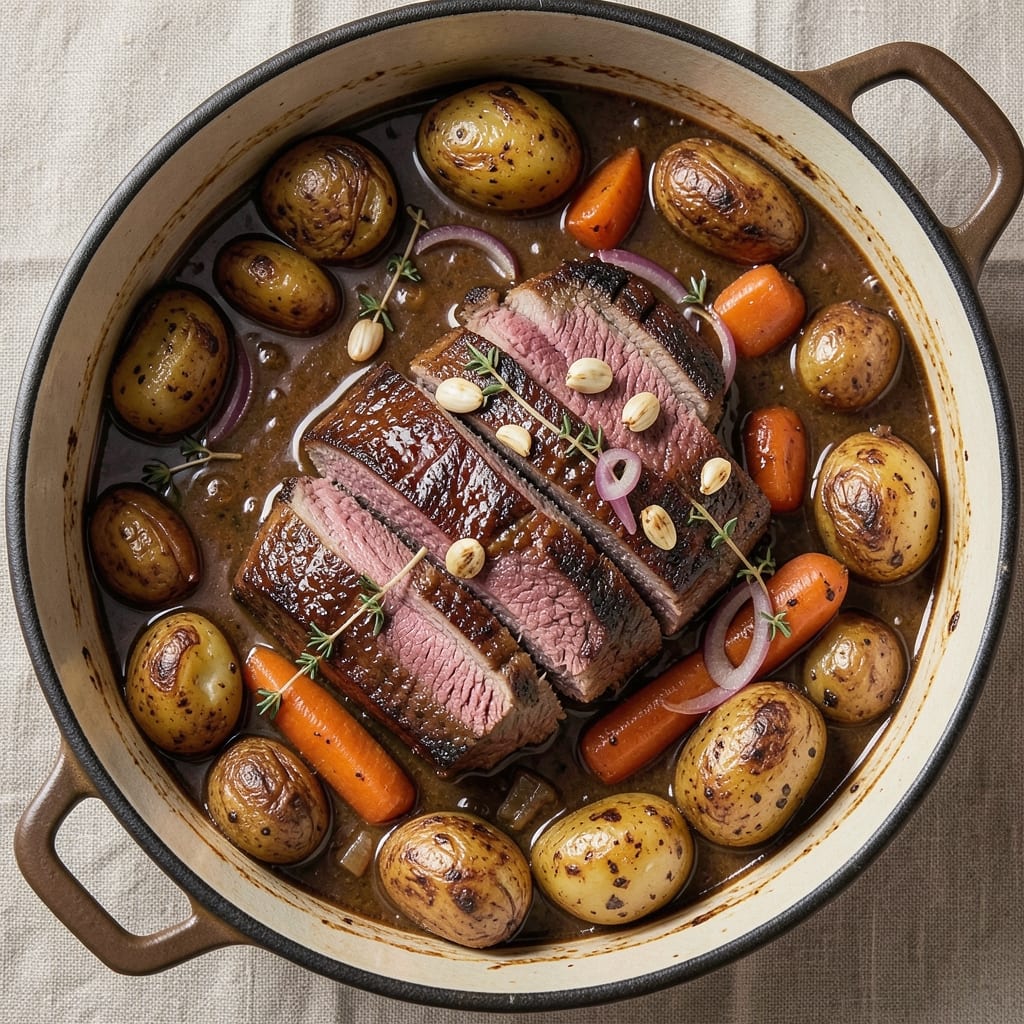
A rich beef stew with beer transforms tough cuts into melt-in-your-mouth tenderness through slow simmering—where the beer’s malty depth becomes the stew’s soul. The secret lies in using a dark ale or stout, which caramelizes beautifully while tenderizing the meat over hours. I’ve perfected this technique through countless batches, ensuring every spoonful delivers that perfect balance of hearty beef, aromatic vegetables, and beer’s unmistakable umami richness.
This recipe builds flavor through patience: browning the meat develops a deep, caramelized crust, while the beer reduces into a velvety sauce that clings to every bite. The slow simmer—3 to 4 hours on low heat—allows tough cuts like chuck roast to dissolve into fork-tender perfection. No shortcuts here; the beer’s alcohol evaporates, leaving behind layers of malted sweetness that elevate even the simplest vegetables.
What you’ll end up with is a stew so deeply flavorful it feels like a hug in a bowl—golden-brown edges on the meat, tender carrots and potatoes, and a sauce thick enough to coat a spoon. The aroma alone will have everyone gathering at the table, while the first bite delivers that unmistakable harmony of beef, beer, and slow-cooked comfort. Serve it with crusty bread to soak up every last drop of that rich, beer-infused sauce.
This isn’t just a stew; it’s a weeknight masterpiece that turns a simple pot of ingredients into a restaurant-worthy dish. The beer isn’t just a cooking liquid—it’s the flavor anchor that ties everything together, creating depth that store-bought broths can’t match. Let’s get cooking.
Ingredients for beef stew with beer
Sixteen ingredients transform tough beef into velvety, beer-infused perfection through slow simmering.
| Ingredient | Amount | Notes |
|---|---|---|
| Chuck Roast 🥩 | 3 lb | Tough cut for maximum tenderness |
| Dark Ale or Stout Beer 🍺 | 2 cups | Non-alcoholic option available |
| Yellow Onion 🧅 | 1 whole | Diced into 1/2-inch pieces |
| Carrots 🥕 | 4 medium | Peeled and cut into 1-inch chunks |
| Russet Potatoes 🥔 | 2 lb | Cut into 1-inch cubes |
| Garlic Cloves 🧄 | 4 cloves | Minced for aromatic depth |
| Beef Broth 💧 | 2 cups | Homemade or high-quality store-bought |
| Tomato Paste 🍅 | 2 tbsp | For concentrated umami |
| Thyme 🌿 | 1 tbsp | Fresh or 1 tsp dried |
| Bay Leaves 🌿 | 2 whole | For subtle herbal complexity |
| Salt 🧂 | 1 ½ tsp | Diamond Crystal preferred |
| Black Peppercorns 🌶️ | 1 tsp | Freshly cracked for intensity |
| Olive Oil 🫒 | 2 tbsp | Extra-virgin for richness |
| All-Purpose Flour 🌾 | 2 tbsp | For thickening the sauce |
The chuck roast is non-negotiable here—its collagen-rich composition breaks down beautifully during the long cook. Costco and Whole Foods carry excellent quality, but any well-marbled cut from your local butcher will work. Look for pieces with visible fat marbling; this ensures tenderness and moisture. The dark ale or stout should have a malty sweetness—Guinness, Samuel Adams Black Lager, or Corona Premier are reliable choices. Non-alcoholic versions like Heineken 0.0 work perfectly for those avoiding alcohol, though the flavor profile will differ slightly. The tomato paste adds depth without overpowering; San Marzano is ideal, but any high-quality brand suffices. Fresh thyme is preferred, but dried works at one-third the quantity if needed.
No dark beer? Substitute with beef broth and a splash of balsamic vinegar—it mimics the malty sweetness, though the depth won’t be identical. The potatoes can be swapped for parsnips or turnips if you prefer a nuttier flavor, but russets hold their shape best. Short on thyme? Dried oregano or rosemary at half the amount will bridge the gap. The bay leaves are critical—they infuse subtle herbal notes that elevate the stew. If you’re using dried thyme, crush the leaves slightly to release their oils; this enhances their aromatic contribution. For the flour, ensure it’s all-purpose; bread flour can make the sauce gummy. If you’re health-conscious, cornstarch works equally well for thickening.
This stew tastes even better the next day as flavors meld. Store in an airtight container in the fridge for up to 5 days, though the sauce may thicken further—simply reheat with a splash of beer or broth. For longer storage, freeze for up to 3 months. The meat will continue to tenderize in the freezer, making it ideal for meal prep. To reheat, warm over medium-low heat, stirring occasionally, and add a splash of liquid if the sauce becomes too thick. Serve with crusty sourdough or garlic bread to soak up every last drop of that beer-infused sauce—it’s the star of the dish.
Why You'll Love This Recipe
- Hands-Off Cooking: That chuck roast? It practically cooks itself. Sear it once, dump in the beer and veggies, then let the slow simmer do the work while you watch Netflix or answer emails. No hovering required—just come back to melt-in-your-mouth beef.
- Beer Magic: Honestly, the beer isn’t just an ingredient—it’s the secret weapon. That dark ale or stout breaks down the meat into tender perfection while adding a deep, malty richness that turns ordinary stew into something ridiculously good. Trust me, the first sip of that sauce will make you question why you’ve never done this before.
- Leftovers That Win: This stew tastes even better the next day—yes, really. I make a double batch on Sundays because it’s my go-to for lunches, potlucks, or feeding unexpected guests. The potatoes get even softer, the flavors meld deeper, and somehow, it always disappears faster than planned.
- Budget-Friendly Feast: Chuck roast is cheap, but it feels like a splurge. You’re getting a hearty, protein-packed meal for pennies, and the beer adds that restaurant-quality depth without the price tag. Plus, the veggies stretch the dish further—carrots and potatoes turn this into a full meal for less than takeout.
Step-by-step instructions for slow-cooked beer stew
Transform tough chuck roast into melt-in-your-mouth tenderness through precise technique and patience.
Sear the Chuck Roast for Deep Flavor
Pat the 3 lb chuck roast completely dry with paper towels—this ensures maximum browning. Heat 2 tablespoons olive oil in a heavy Dutch oven over medium-high heat until shimmering. Place the roast in the pot and sear for 4-5 minutes per side until deeply browned and developing a crust. This initial sear locks in juices and creates the rich, caramelized foundation for your stew.
While the roast browns, dice the 1 whole yellow onion into ½-inch pieces and peel and cut the 4 medium carrots into 1-inch chunks. These will join the pot shortly, but their prep now keeps your workflow smooth. The onions should soften slightly while you work, but they'll cook fully during the long simmer ahead.
Build the Flavor Base with Aromatics and Beer
Remove the seared roast and set it aside. In the same Dutch oven, add 2 tablespoons tomato paste and cook for 1 minute until it darkens slightly. This concentrated paste adds umami depth that balances the beer's acidity. Immediately pour in the 2 cups dark ale or stout beer, scraping up any browned bits from the bottom—this deglazing captures all the flavor you've built.
Add the diced yellow onion, carrots, 2 tablespoons all-purpose flour, 1.5 teaspoons salt, and 1 teaspoon freshly cracked black peppercorns. Stir well to coat everything in the flour, which will help thicken the stew later. Return the roast to the pot, nestling it into the vegetables. The beer should come about halfway up the roast—if not, add ½ cup beef broth to compensate.
Simmer Until the Meat is Fork-Tender
Bring the stew to a gentle boil, then immediately reduce heat to low and cover partially. The liquid should bubble softly around the edges but not vigorously. Simmer for 2 hours, stirring occasionally to prevent scorching. This slow cook transforms the tough chuck roast into tender, shreddable meat through collagen breakdown.
After 2 hours, check the roast's tenderness by inserting a fork—it should pierce easily with minimal resistance. If not, continue simmering for another 30-60 minutes. The stew should reduce slightly, concentrating flavors while keeping the meat moist. Here's where patience pays off: rushing this step results in chewy meat instead of melt-in-your-mouth perfection.
Add Potatoes and Herbs for Final Cooking
Cut the 2 lb russet potatoes into 1-inch cubes and add them to the pot along with the 4 minced garlic cloves, 1 tablespoon thyme, and 2 whole bay leaves. Stir gently to distribute the potatoes evenly without breaking them. The potatoes need about 30-45 minutes to cook through completely, so they go in last to prevent overcooking.
Continue simmering uncovered for 30-45 minutes until the potatoes are fork-tender and the stew has thickened to your preferred consistency. The sauce should coat the back of a spoon but still be saucy enough to spoon over the potatoes. Taste and adjust seasoning—you may need a pinch more salt to balance the beer's bitterness, especially if using a dark stout.
Rest and Serve with Crusty Bread
Remove the stew from heat and let it rest for 15 minutes before serving. This resting period allows flavors to meld and the meat to reabsorb any released juices. Skim off any excess fat that has risen to the surface—this ensures a cleaner presentation while preserving the stew's richness.
Ladle the stew into bowls, ensuring each serving gets a generous portion of tender roast, potatoes, and vegetables. The aroma alone will make your kitchen irresistible. Serve immediately with crusty bread to soak up the deeply flavorful sauce. The beer's maltiness pairs beautifully with the hearty vegetables, while the slow-cooked meat delivers maximum tenderness in every bite.
Pro Tips For Making Beef Stew With Beer
- SEAR THE ROAST FIRST: Chuck roast needs a deep, brown crust to hold up through hours of cooking—don’t skip the sear. Heat your Dutch oven until it’s smoking hot (I’m talking 5 minutes on high), then pat the meat dry and let it sit untouched for 3-4 minutes per side. The beer will mellow the bitterness later, but that initial crust is what keeps the stew from tasting like boiled beef.
- SALT THE POTATOES BEFORE ADDING: I used to toss potatoes in raw, and they’d turn mealy no matter how long I cooked them. Instead, salt them generously (about 1 tsp per pound) while peeling, then let them sit for 10 minutes before adding to the stew. The salt draws out moisture, which crisps the skin and keeps them fluffy—especially important when submerged in liquid.
- DON’T RUSH THE BEER REDUCTION: Pouring in the beer and immediately adding veggies means you’ll end up with a stew that tastes like diluted beer. Let the liquid reduce by half (about 10-15 minutes) before adding onions, carrots, or potatoes—this concentrates the flavor and thickens the sauce naturally. (Yes, even if you’re eager to eat.)
- USE PAR-SIMMER NOT BOIL: After everything’s in the pot, keep the heat low enough that you see tiny bubbles at the edges, not a full rolling boil. Boiling toughens the meat and turns the potatoes gluey. A gentle simmer (about 180°F) breaks down collagen for tenderness without wrecking texture. I learned this after serving a stew where the potatoes fell apart like overcooked pasta.
Pro cooking tips for beef stew with beer
Sear Like a Pro
That initial sear isn’t just about browning—it’s about building flavor bombs through the Maillard reaction. Use a heavy Dutch oven (I swear by Le Creuset) and medium-high heat for 4-5 minutes per side until the meat develops a deep, caramelized crust. Pat the chuck roast completely dry first—this ensures maximum contact with the hot pan. If your roast is large, work in batches to avoid crowding the pot, which steams instead of sears. 🔥
Beer Selection Matters
Not all beers are created equal in stews. Dark ales and stouts (like Guinness or Samuel Adams Black Lager) add malty sweetness that caramelizes beautifully, while lighter beers can taste flat. For a non-alcoholic option, Heineken 0.0 works surprisingly well, though it lacks the depth of real beer. If you’re substituting, ½ cup balsamic vinegar mimics some of the malty notes, but nothing beats the real thing. Pour the beer hot (after searing) to help it integrate flavors faster.
Deglaze Religiously
After searing, never skip the deglaze—those browned bits on the bottom are flavor gold. Immediately add 2 tbsp tomato paste and let it cook for 1 minute to deepen its umami. Then pour in the beer, scraping every last bit with a wooden spoon. This step captures 50% of the stew’s depth, so don’t rush it. If your beer level is too low, add ½ cup beef broth to keep the roast submerged—it should be halfway up the meat for even cooking.
Low and Slow Wins
Patience is your best friend here. Simmer on low heat for 2-3 hours—the collagen in the chuck roast breaks down into gelatin, creating that silky, velvety texture. Stir occasionally (every 20-30 minutes) to prevent scorching, but avoid over-mixing, which can make the meat tough. If the stew reduces too quickly, add ¼ cup beef broth to maintain moisture. The internal temperature should reach 195-200°F—this is when the meat becomes fork-tender.
Potatoes Go Last
Adding potatoes too early turns them mushy. Instead, wait until the meat is 70% tender (after 2 hours of simmering), then add them with the garlic, thyme, and bay leaves. The potatoes need 30-45 minutes to cook through, so they go in last. If you’re short on time, parboil them for 5 minutes before adding to the stew. For extra richness, roast the potatoes first at 400°F for 20 minutes before simmering—they’ll add a caramelized edge that’s pure magic. 🥔
Rest for Maximum Flavor
Skipping the 15-minute rest means juices running everywhere when you serve. Let the stew sit off the heat—this allows the meat to reabsorb its own juices, making every bite juicier and more flavorful. While resting, skim excess fat from the surface with a spoon. The fat isn’t bad, but a cleaner presentation makes the stew look (and taste) even more impressive. Serve with crusty sourdough or garlic bread—trust me, you’ll want to soak up every last drop of that beer-infused sauce.
Nutrition facts
Frequently asked questions
Can I use any beer in this recipe?
Dark ales or stouts work best—Guinness or Samuel Adams Black Lager add rich malty sweetness that caramelizes beautifully. Lighter beers like pilsners lack depth, but they won’t ruin the dish. For non-alcoholic versions, Heineken 0.0 or balsamic vinegar (½ cup) can substitute, though the flavor differs slightly.
Why does the stew taste better the next day?
The flavors meld more deeply during refrigeration, with the meat continuing to tenderize and the beer’s maltiness developing complexity. The sauce also thickens naturally, creating a richer mouthfeel. Store in an airtight container for up to 5 days—just reheat gently with a splash of broth or beer if needed.
What if my stew is too thin or too thick?
For a thinner stew, add ¼ cup beef broth and simmer uncovered for 10-15 minutes to reduce excess liquid. If it’s too thick, stir in 2 tbsp beer or broth and simmer for another 5 minutes. The ideal consistency coats the back of a spoon but remains saucy. A splash of cream or sour cream at the end adds richness without thinning it.
Can I make this in a slow cooker?
Brown the meat first in a skillet, then transfer everything to the slow cooker. Cook on low for 7-8 hours or high for 4-5 hours, adding potatoes and herbs during the last 1 hour. The slow cooker’s gentle heat ensures perfect tenderness, though you’ll lose some of the caramelized depth from stovetop browning.
What’s the best way to reheat leftovers?
Gently reheat on the stovetop over low heat with a splash of beer or broth to restore moisture. Avoid microwaving—it makes the potatoes rubbery. For extra richness, stir in 1 tbsp butter or a dollop of sour cream while warming. Reheat only until steaming hot (165°F) to prevent overcooking the meat.