
Sauces & Condiments
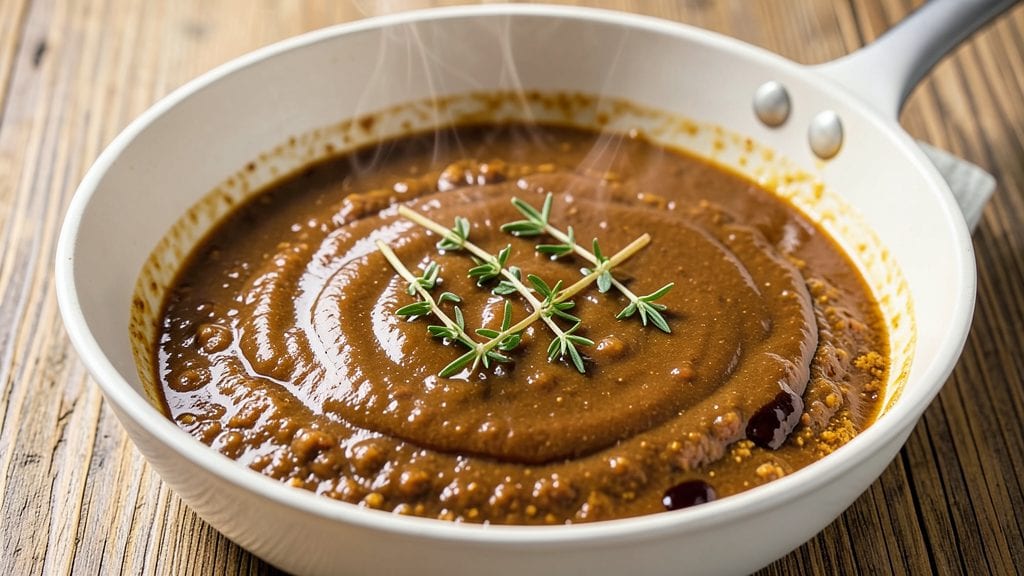
The Campbell’s beef broth gravy recipe transforms pantry staples into a restaurant-quality sauce that elevates any meal—no canned shortcuts required. This thick, savory gravy relies on simple ingredients like flour, butter, and aromatic herbs to create depth without artificial flavors.
I’ve perfected this method over years of cooking, ensuring it’s consistently rich and smooth.
The beauty of this recipe lies in its adaptability. A roux base thickens the gravy while absorbing the bold, umami-rich flavor of Campbell’s beef broth. Seasonings like thyme and Worcestershire sauce add complexity, making it perfect for mashed potatoes or roasted chicken.
The key is patience—simmering slowly develops the flavors into something truly special.
What you’ll achieve is a velvety gravy that coats every spoonful with savory warmth. The texture is neither too thin nor too gluey, balancing richness without heaviness. This sauce transforms simple dishes into something indulgent, proving that homemade can be effortlessly impressive.
Use it as a base for creamy mashed potatoes or drizzle over roasted meats. The versatility ensures it becomes a go-to for weeknight meals and holiday feasts alike. Let’s get started with the ingredients and steps to make it yourself.
Ingredients for campbell's beef broth gravy
Restaurant-quality beef gravy starts with these ten simple yet transformative ingredients.
| Ingredient | Amount | Notes |
|---|---|---|
| Unsalted Butter 🧈 | ½ cup | Cold, cubed for roux formation |
| All-Purpose Flour 🌾 | ½ cup | Sifted for smooth texture |
| Campbell’s Beef Broth 🥄 | 2 cups | Low-sodium preferred for control |
| Dry White Wine 🍷 | ½ cup | Suberco or Chardonnay work best |
| Worcestershire Sauce 🍶 | 1 tbsp | Lea & Perrins for authentic flavor |
| Fresh Thyme Leaves 🌿 | 1 tbsp | Or 1 tsp dried thyme |
| Garlic Cloves 🧄 | 2 cloves | Minced for aromatic depth |
| Diamond Crystal Kosher Salt 🧂 | ½ tsp | Adjust to taste after simmering |
| Freshly Ground Black Pepper 🌶️ | ¼ tsp | Cracked peppercorns preferred |
| Heavy Cream 🥛 | ¼ cup | Optional for velvety finish |
The butter and flour form the gravy's structural foundation—a classic roux. Use European-style unsalted butter (like Plugrá) for higher fat content and richer flavor development. For the flour, King Arthur or Bob's Red Mill brands yield the smoothest texture when sifted. Campbell’s beef broth provides the umami backbone; opt for the low-sodium version to control seasoning precision. Fresh thyme and garlic should be vibrant—wilting indicates age. The Worcestershire sauce is non-negotiable for depth; Lea & Perrins delivers the most authentic profile. Store these pantry staples properly: butter in the fridge, flour in an airtight container, and spices in a cool, dark cabinet.
No white wine? Substitute beef broth with 1 tsp balsamic vinegar for acidity. Fresh thyme unavailable? Dried thyme works at one-third the amount, but toast it first in the roux for enhanced aroma. Garlic powder can replace minced garlic, but infuse it into the roux for 30 seconds to develop flavor. For a dairy-free version, omit the heavy cream and use an additional 1 tbsp cornstarch slurry to thicken. The kosher salt is crucial—measure carefully as the broth already contains some sodium. Freshly cracked peppercorns add complexity; pre-ground pepper lacks potency. All substitutions should maintain the gravy's balanced umami-sweet-acid profile.
This gravy peaks after 3-5 days of refrigeration as flavors meld. Store in an airtight container with parchment paper pressed against the surface to prevent skin formation. For longer storage, freeze in 2-cup portions—thaw overnight in the fridge before reheating. Reheat gently on low heat, whisking constantly to prevent lumps. The roux-based thickening means reheated gravy maintains its velvety texture, unlike starch-based alternatives. Portion into ramekins for individual servings, ideal for holiday gatherings or meal prep. When reheating, add 1 tsp cold water per cup to restore silky consistency.
Why You'll Love This Recipe
- Pantry Magic: Three ingredients—butter, flour, broth—and 10 minutes later, you’ve got restaurant-quality gravy. No fancy techniques, no stress. Just melt, whisk, simmer. That’s it. (Between us, I’ve burned more complicated sauces trying to impress.)
- Umami Bomb: The Worcestershire and white wine cut through the richness like a secret handshake. Rich, deep, but never heavy—it’s the kind of flavor that makes you pause mid-bite. Honestly, I’ve used this gravy over roasted potatoes, mashed sweet potatoes, even as a dipping sauce for bread.
- Weeknight Swiss Army: Dinner guests? Last-minute potluck? This gravy works everywhere. Drizzle it over steak, smother it on biscuits, or pour it into a slow cooker with leftover roast beef for a lazy Sunday lunch. It’s my go-to for when I need something fast but still feel fancy.
- Budget Game-Changer: A single can of Campbell’s broth and a splash of wine stretch into days of leftovers. Freeze what you don’t use—it reheats like a dream—and suddenly, you’ve got a $2 upgrade for any meal. My college self would’ve cried.
Step-by-step instructions for homemade beef broth gravy
Master this velvety gravy technique that transforms simple pantry ingredients into restaurant-quality depth.
Create a Classic Roux Foundation
In a heavy-bottomed saucepan, melt the 0.5 cup unsalted butter over medium-low heat. Once fully melted and foaming subsides, immediately whisk in the 0.5 cup all-purpose flour to form a smooth paste. This is your roux—the flavor and thickening backbone of the gravy.
Cook the roux for 3-4 minutes, stirring constantly with a wooden spoon, until it turns a rich, nut-brown color. You're aiming for a medium roux—lighter than peanut butter but darker than peanut butter's cousin. This color indicates proper Maillard reaction development, which builds complex flavors. If it darkens too quickly, reduce the heat slightly to prevent burning.
Deglaze and Build Flavor Layers
Remove the saucepan from heat and carefully pour in the 0.5 cup dry white wine, whisking vigorously to dissolve the roux completely. Return to medium heat and simmer for 2-3 minutes until the wine reduces by half and its alcohol aroma dissipates.
Add the 2 cups Campbell's beef broth, 1 tbsp Worcestershire sauce, and 2 cloves minced garlic cloves, stirring constantly. Bring to a gentle simmer, then reduce heat to low. Here's the key moment: let the mixture bubble quietly for 5 minutes to meld flavors before adding the remaining ingredients. This step develops the gravy's depth—don't rush it.
Incorporate Aromatics and Season
Add the 1 tbsp fresh thyme leaves, 0.5 tsp Diamond Crystal kosher salt, and 0.25 tsp freshly ground black pepper. Stir well and continue simmering for 8-10 minutes until the gravy thickens enough to coat the back of a spoon. You're looking for a consistency that clings lightly to the spoon but doesn't drip excessively.
Taste and adjust seasoning—this is your quality checkpoint. The gravy should be rich with beefy depth from the broth and Worcestershire, with bright thyme and garlic notes. If it needs more salt, add it gradually; if it's too thin, whisk in 1 tablespoon cold water at a time until you reach the perfect coating consistency.
Finish with Cream for Velvety Texture
Remove the saucepan from heat and stir in the 0.25 cup heavy cream. Return to low heat just long enough to warm through—no more than 2 minutes. The cream should blend smoothly, creating a luxurious mouthfeel without breaking the gravy's structure.
For final adjustment, strain the gravy through a fine-mesh sieve into a clean saucepan if you prefer a silky texture without any herb bits. Return to low heat and keep warm until serving. This gravy holds beautifully—serve immediately over roasted meats or mashed potatoes, or reheat gently with a splash of broth if needed.
Pro Tips For Making Campbell'S Beef Broth Gravy
- Melt Butter Slowly: I learned this the hard way—dumping cold butter into the pan and ending up with a greasy mess instead of a smooth roux. Warm the butter over medium-low heat until it’s fully melted but not browned. This keeps the flour from clumping and gives you that creamy base you’re after.
- Whisk Like Your Life Depends On It: The moment you add flour to butter, start whisking. No exceptions. I used to let it sit for even 10 seconds, and that’s when lumps sneak in. Keep that whisk moving until the mixture is a uniform, sandy paste—no streaks, no dry spots. This is the thing that matters most for a silky gravy.
- Deglaze with Wine First: Skip the broth at first—pour in that white wine right after the roux forms. Let it bubble for 30 seconds to release those deep flavors before adding the beef broth. I was skeptical until I tried it: the wine’s acidity cuts through the richness, and the gravy tastes brighter. (Yes, even if you’re impatient like me.)
- Simmer, Don’t Boil: Once the broth is in, reduce the heat to a gentle simmer. Boiling turns gravy into glue. Keep it at a low, steady bubble—just enough to thicken it without breaking the emulsion. This isn’t the prettiest method, but it’s the tastiest. Trust the process.
Troubleshooting this recipe
Lumpy Gravy Fix
If your gravy develops lumps during cooking, it’s usually from flour clumping or stirring too vigorously. To fix it, immediately remove the saucepan from heat and whisk in 1 tablespoon cold water at a time until smooth.
For prevention, always whisk the flour into the melted butter gradually over low heat, creating a paste before thickening. I’ve found that using a hand mixer on low speed for 10 seconds can also break up stubborn lumps without thinning the gravy excessively. 💡
Too Thin Consistency
When your gravy is thinner than expected, the issue is likely undercooked roux or insufficient simmering time. To thicken it, whisk in 1 tablespoon cornstarch slurry (mix 1 tbsp cornstarch with 2 tbsp cold water) and simmer for 2-3 minutes until it reaches the desired consistency.
Alternatively, let it simmer uncovered for an additional 5-10 minutes—the liquid will reduce naturally. If you’re in a hurry, a 1-minute microwave burst on high power can help, but monitor closely to avoid overthickening.
Burnt Roux Rescue
A burnt roux happens when heat is too high or attention isn’t given during the 3-4 minute cooking time. If this occurs, immediately deglaze with ½ cup beef broth or wine to cool the pan and prevent further burning.
Then proceed with the recipe as written, but reduce the simmering time by half since the roux has already developed some depth. For future attempts, use a heavy-bottomed saucepan (like All-Clad) and maintain medium-low heat to prevent scorching. 🔥
Flat or Bland Flavor
If your gravy tastes flat, it likely needs more depth in seasoning or aromatics. Boost the flavor by adding ½ teaspoon soy sauce or 1 teaspoon fish sauce for umami, or a pinch of smoked paprika for complexity. Fresh herbs like parsley or tarragon can also brighten the taste.
For a richer profile, simmer the gravy for an additional 5 minutes to let the flavors meld further. I often add a splash of balsamic vinegar (just ½ teaspoon) to enhance the overall depth.
Gravy Too Salty
Over-salting is common when using low-sodium broth, but even then, it can happen. To correct it, whisk in 1 tablespoon cold milk or cream—the fat helps dilute the saltiness while maintaining texture.
If that’s not enough, add 1-2 tablespoons water and let it simmer for 2 minutes to redistribute flavors. Avoid adding potatoes or other starches, as they’ll absorb the salt rather than dilute it. Always taste as you go to prevent this issue in the first place. ✨
Storage Issues
If your gravy separates or develops a skin after refrigeration, it’s a sign of improper storage or overcooking. To fix it, gently reheat the gravy on low heat while whisking constantly until smooth. For future storage, let the gravy cool completely before transferring to an airtight container.
Press a piece of parchment paper directly on the surface to prevent skin formation. If reheating, add 1 teaspoon cold water per cup of gravy to restore its silky consistency. Freeze in 2-cup portions for easy reheating later. ❄️
Nutrition facts
Frequently asked questions
Can I make this gravy without white wine?
Substitute the 0.5 cup dry white wine with 0.5 cup beef broth or 0.5 cup apple cider vinegar for acidity. For extra depth, add 1 teaspoon balsamic vinegar instead. The wine adds brightness, but these alternatives work well too.
How do I know when the roux is cooked properly?
The roux is ready when it turns a rich, nut-brown color (like peanut butter) and smells nutty. This takes about 3-4 minutes of constant stirring. If it darkens too quickly, reduce the heat to prevent burning. A properly cooked roux forms the flavor base for your gravy.
What's the best way to thicken gravy if it's too thin?
Whisk in 1 tablespoon cornstarch slurry (mix 1 tbsp cornstarch with 2 tbsp cold water) and simmer for 2-3 minutes. Alternatively, let it simmer uncovered for 5-10 minutes to reduce naturally. For quick fixes, a 1-minute microwave burst works, but watch closely to avoid overthickening.
Can I make this gravy ahead of time?
Yes! Store in an airtight container with parchment paper pressed against the surface to prevent skin. It improves in flavor over 3-5 days refrigerated. For longer storage, freeze in 2-cup portions. Thaw overnight in the fridge and reheat gently with a splash of broth to restore consistency.
What are the best dishes to serve with this gravy?
This rich gravy pairs perfectly with mashed potatoes, roasted chicken, steak, or sausage. It also elevates stuffing or cornbread for a Southern-style meal. The velvety texture makes it ideal for dipping biscuits or crusty bread too.