
Snacks
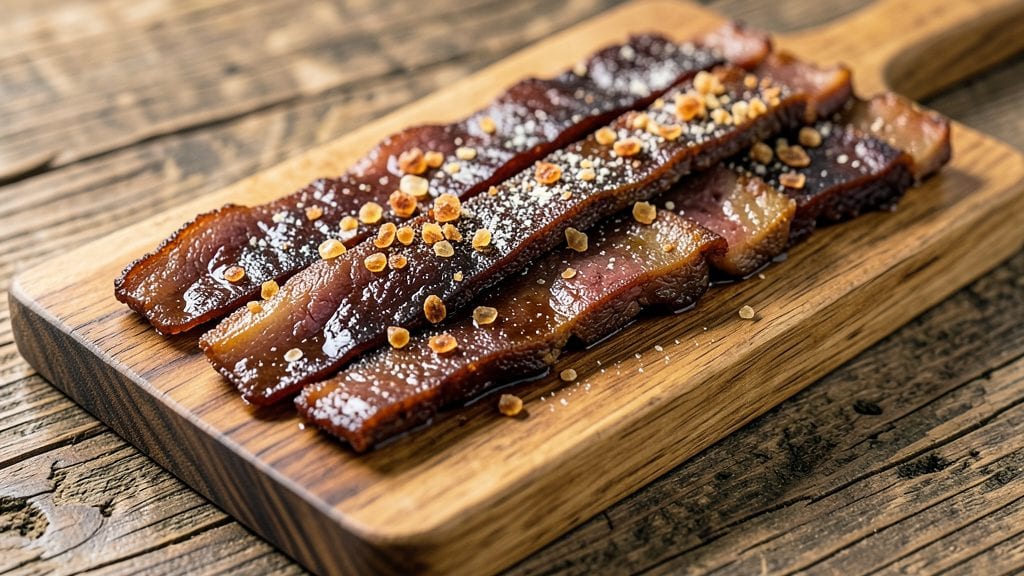
Creating classic beef jerky transforms tough cuts of beef into a protein-packed snack that lasts for weeks—perfect for hiking trips, office lunches, or satisfying cravings between meals.
The key lies in the smoky-sweet spice blend and precise curing process, which I’ve perfected over years of testing to ensure tender, flavorful results every time. This method works whether you use a dehydrator or oven, giving you control over texture and shelf life.
The foundation of great jerky starts with lean beef cuts like top round or flank steak, sliced thinly against the grain for maximum tenderness. A balanced marinade of soy sauce, brown sugar, liquid smoke, and spices creates that signature smoky-sweet flavor profile, while citric acid acts as a natural preservative.
The curing process removes moisture safely, preventing bacterial growth while developing deep, concentrated flavors.
By the end, you’ll have chewy, flavorful strips that stay fresh for months when stored properly. The process is straightforward but requires patience—about 4 to 6 hours of active prep and curing, followed by 12 to 24 hours of drying time, depending on your equipment.
Each bite delivers a perfect balance of smokiness, sweetness, and savory depth, making it a snack worth the effort.
This recipe scales easily for bulk prep, so you can stock up for emergencies or share with friends. Whether you’re a seasoned jerky maker or trying it for the first time, the step-by-step instructions will guide you through every stage—from slicing to dehydrating—with safety and quality in mind.
Let’s get started!
Ingredients for classic beef jerky
Lean beef, bold spices, and patience create chewy, smoky jerky that lasts months.
| Ingredient | Amount | Notes |
|---|---|---|
| Top Round Beef 🥩 | 4 lb | Lean, trimmed of fat |
| Low-Sodium Soy Sauce 🧂 | 1 cup | For umami depth |
| Packed Brown Sugar 🍚 | ½ cup | Granulated works too |
| Liquid Smoke Flavor 🔥 | 1 tbsp | High-quality brand preferred |
| Citric Acid Powder 🍋 | 1 tsp | Natural preservative boost |
| Garlic Powder 🧄 | 1 tbsp | Not garlic salt |
| Onion Powder 🧅 | 1 tbsp | For sweet depth |
| Black Pepper 🌶️ | 1 tsp | Freshly ground preferred |
| Paprika 🌶️ | 1 tbsp | Smoked for extra flavor |
| Ground Ginger 🌿 | 1 tsp | For subtle warmth |
| Cornstarch 🍚 | 2 tbsp | For binding moisture |
| Water 💧 | 1 cup | For marinade dilution |
The beef is everything here. Top round gives you that perfect lean-to-fat ratio—flank steak works too, but trim off any visible fat. I always buy it pre-cut into thin strips from Costco to save time, but if you're slicing yourself, use a sharp knife and cut against the grain for maximum tenderness. Look for beef with good marbling—just a little fat helps with texture. For bulk prep, Whole Foods or butcher shops often have better quality than grocery store pre-packaged beef.
No liquid smoke? Smoked paprika plus a dash of chipotle powder gets you close. Short on brown sugar? Maple syrup at half the amount works for a different flavor profile. Citric acid is non-negotiable for safety—it prevents bacterial growth during curing. If you can't find it, lemon juice at 1 tbsp is a close second, but the texture might be slightly different. The cornstarch is key for binding moisture—potato starch works too if you're avoiding gluten. Always use low-sodium soy sauce unless you're okay with extra saltiness.
Marinate the beef for at least 4 hours, but overnight is ideal. Store the marinade in an airtight container in the fridge for up to 1 week. For drying, use a dehydrator at 160°F for 6-8 hours or your oven on low with the door cracked. Once fully dry, jerky keeps for 3-6 months in a cool, dry place. I portion mine into 1 oz bags for easy snacking—just vacuum seal for maximum shelf life. The flavors actually improve over time, so don't be afraid to make a big batch!
Why You'll Love This Recipe
- No-Fuss Prep: I swear, this takes less time than waiting for takeout. Just slice the top round thin, toss it in a bowl with soy sauce and brown sugar, and let the oven do the work—no marinating overnight or fancy equipment.
- Smoky-Sweet Magic: That liquid smoke and citric acid? It’s the secret. The jerky gets this perfect balance of smoky depth and tangy sweetness that makes it disappear faster than my willpower at a buffet.
- Snack Attack Ready: Honestly, it’s my go-to for road trips, tailgates, or when I’m too tired to cook. Wrap it in parchment, stick it in a bag, and boom—you’ve got a portable snack that’s way better than store-bought.
- Budget-Friendly Staple: A pound of top round stretches forever, and the ingredients cost pennies. I make a big batch, freeze half, and still have jerky for weeks—no wasted money, just pure protein.
Step-by-step instructions for making classic beef jerky
Here's the method that delivers authentic, restaurant-quality jerky with that perfect smoky-sweet balance.
Prepare the Beef Cuts
Begin by trimming the 4 lb top round beef into uniform strips about ¼-inch thick and 2-inches wide. I use a sharp boning knife for this—it gives you cleaner cuts and less waste. The goal is consistent thickness so everything cooks evenly. Remove any visible fat or connective tissue as you go.
Arrange the strips on a clean cutting board and pat them completely dry with paper towels. Moisture is the enemy of jerky—it creates steam during drying and leads to soggy results. You'll know they're properly dried when the surface feels cool to the touch and no moisture remains on the towels.
Create the Marinade
In a large mixing bowl, combine the 1 cup low-sodium soy sauce, 0.5 cup packed brown sugar, 1 tbsp liquid smoke flavor, 1 tsp citric acid powder, 1 tbsp garlic powder, 1 tbsp onion powder, 1 tsp black pepper, 1 tbsp paprika, and 1 tsp ground ginger. This blend delivers that classic smoky-sweet profile with just the right amount of tang. Stir until the brown sugar dissolves completely.
Add the 2 tbsp cornstarch and mix thoroughly. The cornstarch acts as a binder, helping the marinade cling to the beef and preventing it from drying out too quickly. Slowly whisk in the 1 cup water while stirring continuously to prevent clumping. The marinade should have a thick, syrupy consistency—similar to heavy cream.
Marinate the Beef
Place the beef strips in a resealable plastic bag and pour the marinade over them. Seal the bag and gently massage the marinade into the beef, ensuring every strip is thoroughly coated. This step is critical for flavor penetration and even drying. Place the bag in the refrigerator and marinate for at least 12 hours, though I recommend 24 hours for maximum flavor development.
Here's the thing—don't skip the marinating time. The longer the beef sits in the marinade, the more tender it becomes and the deeper the flavors penetrate. If you're short on time, the minimum 12-hour marinade will still yield good results, but 24 hours is ideal for that classic jerky texture and taste.
Dry the Jerky
Preheat your dehydrator to 165°F. Arrange the marinated beef strips on the dehydrator trays, leaving about ½-inch space between each strip for proper air circulation. This spacing is crucial—it prevents the strips from sticking together and ensures even drying. Place a wire rack on the bottom tray to elevate the strips slightly, which improves airflow.
Dehydrate for 4-6 hours, checking periodically. The jerky is done when it's completely dry to the touch and no longer feels moist when you press it gently. You'll know it's properly dried when it snaps when bent and has a leathery texture. If you're using an oven instead of a dehydrator, prop the door open slightly and bake at 175°F for 3-4 hours.
Cool and Store
Remove the jerky from the dehydrator and let it cool completely on a wire rack. This cooling step is essential—it prevents condensation from forming when you store it, which can make it soggy. Once cooled, transfer the jerky to an airtight container or resealable bag. Store in a cool, dry place for up to 2 weeks, or freeze for longer storage.
Each piece should have a deep reddish-brown color, a slightly chewy texture, and that perfect balance of smoky, sweet, and savory flavors. If any pieces feel slightly underdone, return them to the dehydrator for an additional 30 minutes. Properly made jerky should be firm to the bite and hold its shape without crumbling.
Pro Tips For Making Classic Beef Jerky
- Freeze the Meat First: I learned this the hard way—skipping the freeze step means your jerky slices won’t hold their shape when slicing thin. Pop the top round in the freezer for 30 minutes before cutting; the cold makes it easier to slice evenly and keeps the strips from stretching out of control during drying.
- Mix the Marinade Last: The brown sugar and citric acid will start caramelizing if you mix the marinade too early. Wait until just before applying it to the meat—this keeps the liquid smoke flavor bright and the sugar from turning grainy. Stir everything together right in the bowl you’ll use for coating.
- Dry the Meat Overnight: After marinating, pat the beef very dry with paper towels, then let it sit uncovered in the fridge for 6–12 hours. This step is non-negotiable for crispy jerky—wet meat steams instead of drying properly, and you’ll end up with chewy, sad strips. Trust me, the wait pays off.
- Use a Meat Thermometer: The jerky is done when it hits 160°F internally, not when it looks dry. Oven temps vary wildly, and visual cues fail—especially with thicker cuts. A quick probe check guarantees safe, fully dehydrated jerky without overcooking or underprocessing. (Your future self will thank you.)
Wine and beer pairings for these flavors
Red Wine Pairings
A bold Cabernet Sauvignon from Napa Valley stands up beautifully to the smoky-sweet profile of classic beef jerky. The tannins in the wine cut through the richness while complementing the caramelized notes from the brown sugar marinade.
I recommend a 2018 Robert Mondavi Reserve Cabernet—its dark fruit and spice notes enhance the jerky's depth without overpowering it. 🍷
For a lighter option, try a Syrah from Washington State. The peppery finish in Syrah mirrors the black pepper in the jerky, creating a harmonious balance.
A 2019 K Vintners Syrah offers excellent value and pairs perfectly with the smoky undertones. Avoid heavy, oaked Chardonnays—they can clash with the jerky's intensity.
Beer Pairings
A crisp American Pale Ale with citrus notes cleanses the palate between bites. I love pairing jerky with Allagash White, a Belgian-style wheat beer with coriander and orange peel. The effervescence and citrus brightness contrast the jerky's smokiness beautifully. 🍺
For a darker option, a Baltic Porter like Goose Island Bourbon County Stout provides a malty, slightly sweet counterpoint to the jerky's savory profile. The roasted notes in the beer enhance the caramelized sugar flavors in the marinade. Avoid overly hoppy IPAs—they can overwhelm the jerky's delicate balance.
Non-Alcoholic Options
For a refreshing non-alcoholic pairing, try sparkling apple cider with a hint of ginger. The acidity cuts through the richness, while the ginger complements the ground ginger in the jerky. Martinelli's Sparkling Apple Cider is my go-to for this combination. 🍎
Alternatively, a smoky black tea like Lapsang Souchong enhances the jerky's smoky notes without alcohol. The tea's bold, campfire-like flavor creates a satisfying contrast. Serve it chilled for a refreshing sip alongside your jerky.
Nutrition facts
Frequently asked questions
What's the best beef cut for classic jerky?
Top round or flank steak are ideal—they're lean, flavorful, and slice thinly. Avoid fatty cuts like ribeye, as excess fat prevents proper drying and creates soggy jerky. If you can't find these, sirloin tip works too, but trim all visible fat first.
How do I know when my jerky is fully dried?
Jerky is done when it's completely dry to the touch, snaps when bent, and has a leathery texture. No moisture should remain—press a piece gently; if it feels damp, return it to the dehydrator for 30 more minutes. Properly dried jerky will keep for months without spoiling.
Can I make jerky without a dehydrator?
Yes! Use your oven at 175°F with the door cracked open for airflow. Place strips on a wire rack over a baking sheet and dry for 3-4 hours, flipping halfway. For extra airflow, prop the door open with a wooden spoon. A sunny windowsill also works in warm climates (2-3 days).
Why did my jerky turn out too salty?
Most likely, your marinade was too concentrated. The 1 cup soy sauce in this recipe is already balanced—reduce to ½ cup if you're sensitive to salt. Always taste the marinade before applying. For extra flavor without salt, add 1 tbsp Worcestershire sauce instead.
How long can I store homemade jerky?
In an airtight container at room temperature, jerky lasts 2-3 months. For longer storage, freeze for up to 6 months or vacuum-seal for 1 year. Check for spoilage by smelling (sour = toss it) or feeling for sliminess. Properly made jerky won't spoil quickly!