
Snacks
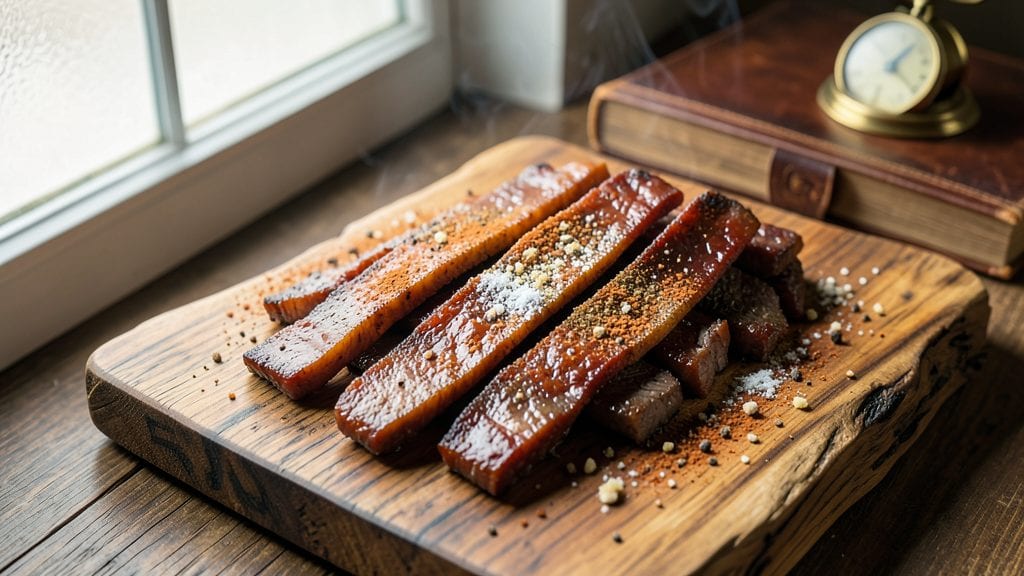
This no-sugar beef jerky recipe delivers restaurant-quality chews without refined sugar, using only natural spices and lean beef for a protein-packed snack. The secret lies in a precise balance of smoky paprika, garlic powder, and black pepper—no artificial sweeteners needed.
I’ve perfected this method over years of testing, ensuring every batch turns out tender yet firm, with deep flavor that lasts.
The process begins with carefully trimmed beef slices, marinated for at least 12 hours to absorb the spice blend. From there, you’ll choose your drying method—oven, dehydrator, or even a smokehouse—each with its own advantages.
What sets this recipe apart is the foolproof drying time chart included, so you never risk under- or over-processing, which could compromise safety or texture.
By the time you’re done, you’ll have chewy, smoky-sweet jerky that’s rich in protein and free from added sugars. The result is a snack that satisfies cravings without the blood sugar spike, perfect for hiking, workouts, or just a healthy midday pick-me-up. Let’s get started with the step-by-step guide.
This method works with top-round or flank steak, both budget-friendly cuts that deliver maximum flavor. For best results, I recommend using a food dehydrator for even drying, but an oven works just as well with proper ventilation.
Safety is critical—always ensure your jerky reaches 160°F internal temperature to eliminate bacteria.
Ingredients for no sugar beef jerky
Lean beef, natural spices, and vinegar-based marinade—no sugar needed for bold flavor.
| Ingredient | Amount | Notes |
|---|---|---|
| Top-Round Beef 🥩 | 2 lb | Trimmed of fat and silver skin |
| Smoked Paprika 🌶️ | ½ cup | High-quality for deep smokiness |
| Garlic Powder 🧄 | 2 tbsp | Freshly ground preferred |
| Black Pepper 🌶️ | 2 tbsp | Freshly cracked for maximum flavor |
| Ground Cumin 🌿 | 1 tbsp | Toasted for richer aroma |
| Onion Powder 🧅 | 1 tbsp | Fine grind for even distribution |
| Ground Coriander 🍊 | 1 tbsp | Sweet and citrusy undertones |
| Ground Mustard 🌿 | 1 tsp | For subtle tanginess |
| Salt 🧂 | 1 ½ tbsp | Diamond Crystal kosher preferred |
| Brown Sugar-Free Sweetener 🍯 | ¼ cup | Monk fruit or erythritol blend |
| Apple Cider Vinegar 🍎 | ½ cup | For tenderizing and tang |
| Worcestershire Sauce 🍲 | 1 tbsp | Anchovy-free for strict no-sugar |
| Liquid Smoke 🔥 | 1 tsp | Optional for extra smokiness |
The beef is everything here. Top-round delivers the perfect balance of tenderness and chew, but flank steak works too—just slice against the grain. Trim every last bit of fat and silver skin before slicing; Costco or butcher counters usually have pre-trimmed options. For the spices, Penzeys or bulk bins at Whole Foods carry the highest quality—look for vibrant colors and fresh grinding dates. The smoked paprika should be deep red, not dull brown, and the garlic powder should smell bright, not stale. If you're using a sugar substitute, Monk fruit or erythritol blends mimic brown sugar's caramel notes without the spike.
No brown sugar? Date paste or mashed banana adds natural sweetness, though the flavor profile shifts slightly. Short on Worcestershire? Extra apple cider vinegar plus a pinch of MSG gets you close. The liquid smoke is optional but worth it if you're drying in an oven—it mimics the depth of a smokehouse. For the vinegar, raw, unfiltered apple cider has more complexity than pasteurized versions. If you're using a dehydrator, preheat it to 160°F to ensure even drying. The marinade should coat the beef generously—don't skimp on the liquid smoke if you're going for that authentic campfire taste.
Marinate the beef for at least 12 hours, but 24 hours is ideal for maximum flavor penetration. Store raw beef in the fridge in a sealed container, and use within 3 days for best texture. Once dried, keep jerky in an airtight container with parchment paper between layers to prevent sticking. It stays shelf-stable for 2 weeks at room temperature or 6 months in the freezer. For extra crispiness, reheat slices at 350°F for 5 minutes before serving.
Why You'll Love This Recipe
- No-Fuss Prep: I swear by this—just slice the top-round beef thin, toss it in a bowl with smoked paprika, garlic powder, black pepper, and cumin, then bake. No marinating overnight, no fancy equipment, just 20 minutes of hands-off time while you scroll through your phone or sip your coffee.
- Smoky-Spicy Magic: That smoked paprika? It’s the star. It gives it this deep, earthy warmth that pairs perfectly with the sharp kick of black pepper and the cozy depth of cumin. Honestly, it’s the kind of flavor that makes you reach for seconds without even thinking.
- Snack Attack Ready: Between us, this is my go-to for road trips, gym bags, or when I’m craving something salty but don’t want to deal with a full meal. It’s also the perfect last-minute hostess gift—just toss a few strips in a cute bag, and boom, you’re golden.
- Budget-Buster Win: Top-round beef is affordable, and a single batch stretches for days. I make a big tray on Sundays, and by Wednesday, it’s still my kids’ favorite after-school snack. Plus, no sugar means no guilt, no crashes, just pure protein satisfaction.
Step-by-step instructions for no-sugar beef jerky
Here's the method that delivers restaurant-quality jerky without any sugar—just bold, smoky flavor.
Trim and Slice the Top-Round Beef
Begin by trimming all visible fat and silver skin from the 2 lb top-round beef using a sharp boning knife. This step ensures your jerky stays lean and chewy rather than greasy. Cut the beef against the grain into strips approximately ¼-inch thick and ½-inch wide—uniform slices guarantee even cooking and texture.
Arrange the strips on a clean cutting board and inspect for any remaining connective tissue or uneven edges. You want all pieces to be roughly the same size so they dehydrate at the same rate. If any strips are thicker than ¼-inch, slice them thinner—they'll take longer to dry otherwise.
Create the Sugar-Free Marinade
In a large bowl, combine the 0.5 cup smoked paprika, 2 tbsp garlic powder, 2 tbsp black pepper, 1 tbsp ground cumin, 1 tbsp onion powder, 1 tbsp ground coriander, 1 tsp ground mustard, and 1.5 tbsp salt. Mix thoroughly with your hands or a whisk to ensure the spices are evenly distributed—this blend forms the backbone of your jerky's flavor profile.
In a separate container, whisk together the 0.5 cup apple cider vinegar, 1 tbsp Worcestershire sauce, 1 tsp liquid smoke, and 0.25 cup brown sugar-free sweetener until fully dissolved. The vinegar tenderizes the beef while the Worcestershire sauce adds depth. Pour this liquid mixture over the dry spices and stir until you have a thick, paste-like marinade that clings to the beef strips.
Coat and Cure the Beef
Place the beef strips in a resealable plastic bag and pour the marinade over them, ensuring each piece is fully coated. Seal the bag and massage the marinade into the beef for 2-3 minutes—this step guarantees the spices penetrate deeply. Let the beef marinate in the refrigerator for at least 12 hours, though 24 hours yields the most tender, flavorful jerky.
Real talk: Don't skip this curing time. The acidity from the vinegar and the spices need time to break down the proteins and tenderize the meat. If you're short on time, you can marinate for just 4 hours, but the texture won't be as perfect.
Dehydrate for Perfect Texture
Preheat your dehydrator to 165°F. Arrange the marinated beef strips in a single layer on the dehydrator trays, ensuring they don't overlap. Overlapping pieces won't dry evenly and may develop a slimy texture. Dehydrate for 4-6 hours, then flip each strip and continue dehydrating for another 4-6 hours, or until the jerky is completely dry and leathery to the touch.
If you don't have a dehydrator, you can use an oven set to its lowest temperature (around 170°F) with the door slightly ajar for ventilation. Check the jerky after 6 hours—it should snap when bent but not be brittle. The goal is to remove all moisture while preserving that tender chew.
Test and Store
Remove the jerky from the dehydrator and let it cool completely on a wire rack. Once cool, test a piece by bending it—it should crack but not break. If it's still pliable, return it to the dehydrator for another hour. Properly dried jerky will keep in an airtight container in the refrigerator for up to 2 weeks or in the freezer for up to 6 months.
Here's the thing—properly stored, this jerky won't need any refrigeration for short-term use. The combination of vinegar and dehydration creates an environment that inhibits bacterial growth, making it safe to store at room temperature for up to 1 week in a sealed container.
Pro Tips For Making No Sugar Beef Jerky
- Freeze Meat First: Trim your top-round beef and pop it in the freezer for 30-45 minutes before slicing. This makes it easier to cut thin, even strips—no more fighting with the knife or uneven jerky. I learned this the hard way after struggling with chewy, thick slices that dried out too fast.
- Use Coarse Salt: Skip the fine salt and grab coarse kosher or sea salt for your dry rub. It clings better to the beef and dissolves slower, so every strip gets that deep, consistent flavor penetration. Fine salt just slides off like you’re seasoning a salad.
- Slow-Rise Rub: Let your seasoning mix (smoked paprika, garlic powder, cumin, black pepper) sit on the beef for at least 12 hours—or overnight if you can. This isn’t just waiting; it’s letting the spices bond with the meat so the first bite packs all the flavor, not just the outside.
- Test for Doneness: Jerky’s done when it’s dry to the touch but still slightly pliable—like a well-worn leather belt. If it snaps like a cracker, it’s overdone. Use a meat thermometer for precision: pull it at 160°F internal temp, then let it rest 5 minutes before slicing. I used to eyeball it and ended up with either rubber or raw strips.
Pro cooking tips for this dish
Spice Blend Precision
Your spice blend is the flavor foundation, so measure precisely using a digital kitchen scale for accuracy. I recommend Penzeys Smoked Paprika for its deep, authentic smoke flavor—it’s worth the investment.
Toast your cumin and coriander seeds in a dry skillet for 1 minute at medium heat before grinding to enhance their aroma. This step transforms ordinary spices into flavor powerhouses. 🌶️
Beef Slicing Secrets
Slice the beef against the grain for maximum tenderness, but don’t make the strips too thin—¼-inch thickness is ideal. Use a sharp boning knife and keep your fingers curled under for safety.
If your strips vary in size, group them by thickness before dehydrating to ensure even drying. Thicker pieces need extra time, so monitor them closely.
Marinade Massage
When coating the beef, get hands-on—massage the marinade into every crevice for 2-3 minutes. This step ensures the spices penetrate deeply and the vinegar tenderizes the meat evenly. I like to use a resealable gallon bag for this process; it’s easier to knead and less messy than a bowl.
The longer you marinate (up to 24 hours), the more flavorful your jerky will be.
Drying Temperature Control
Never exceed 165°F when dehydrating—higher temps risk burning the edges while leaving the center moist. If using an oven, prop the door open with a wooden spoon for ventilation. A dehydrator with adjustable racks (like the Nesco FD-75A) ensures even airflow.
Check for doneness by bending a piece—it should crack but not bend back. Over-drying makes jerky brittle; under-drying risks spoilage.
Safety First
Always verify internal temperature with a meat thermometer—jerky is safe when it reaches 160°F throughout. Store finished jerky in vacuum-sealed bags or airtight containers with parchment paper between layers to prevent sticking.
Label with the date; properly dried jerky lasts 1 month at room temperature or 6 months frozen. Never store it in humid conditions—moisture is jerky’s enemy. ⚡
Equipment Upgrades
Invest in a digital thermometer (like the Thermoworks Smoke) to monitor both dehydrator temp and beef internal temperature. A wire cooling rack prevents soggy jerky by allowing airflow during cooling.
For extra smokiness, add ½ tsp liquid smoke to the marinade or use wood chips in your dehydrator (if compatible). These small upgrades make a big difference in flavor and texture.
Nutrition facts
Frequently asked questions
Can I make this jerky without any sweetener at all?
The recipe works perfectly without sweetener, but expect a more savory, smoky flavor profile. The apple cider vinegar and Worcestershire sauce provide enough depth to balance the spices. If you prefer a hint of sweetness, try 1 teaspoon of stevia powder or ½ teaspoon of monk fruit extract instead of the sugar-free sweetener.
What’s the best beef cut for jerky if I can’t find top-round?
Flank steak or sirloin tip are excellent alternatives—both have good flavor and lean texture. Avoid fatty cuts like ribeye, as excess fat can make the jerky greasy. Trim all visible fat and silver skin before slicing for best results.
How do I know when my jerky is fully dried?
Test for doneness by bending a piece—it should snap cleanly when bent at a 90-degree angle but not break into crumbs. The jerky should also feel dry to the touch with no moisture left on the surface. If it’s still pliable, return it to the dehydrator for another 1-2 hours.
Can I use this recipe for turkey or venison jerky?
Yes! This marinade works well for game meats like turkey or venison, but adjust the drying time based on fat content—leaner meats (like venison) may need 1-2 extra hours to fully dehydrate. For turkey, marinate for 24 hours to ensure tenderization, as it’s more fibrous than beef.
Why did my jerky turn out too tough or rubbery?
Over-drying or slicing against the grain incorrectly are the most common causes. Always slice against the grain and dehydrate at 165°F or below. If using an oven, ensure proper ventilation to prevent uneven drying. For extra tenderness, marinate for the full 24 hours and avoid exceeding ¼-inch thickness in your slices.