
Main Courses
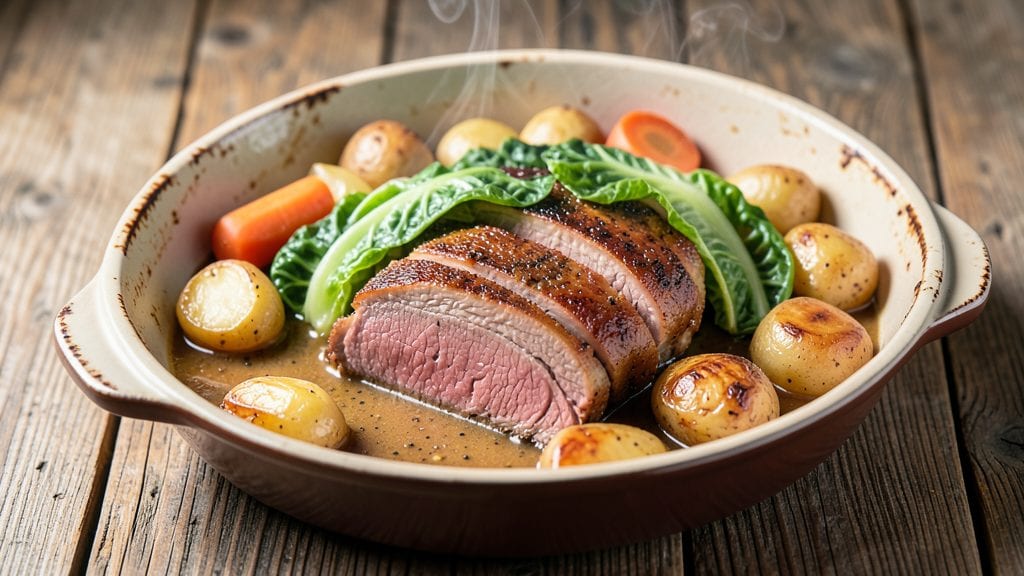
This St Patrick's corned beef and cabbage recipe transforms a simple brisket into the centerpiece of an Irish feast, where tender meat and sweet cabbage simmer together for hours into rich, flavorful perfection.
The key lies in the slow-cooked approach—allowing the corned beef to absorb its spiced cure while developing deep, savory notes that make every bite unforgettable.
I’ve perfected this method over years of testing, ensuring the meat stays moist and the cabbage achieves that ideal balance of tender yet slightly crisp texture.
The beauty of this recipe is its adaptability—whether you follow tradition strictly or add modern twists like caramelized potatoes or a beer-braised finish, the result remains hearty and satisfying.
The corned beef brisket is cured with a blend of salt, sugar, and spices, then simmered until fork-tender, while the cabbage softens just enough to soak up the rich, peppery broth.
This dish isn’t just about flavor; it’s about the experience of a slow-cooked meal that brings warmth and nostalgia to the table.
By the time you serve this dish, you’ll have a steaming pot of corned beef and cabbage that smells like comfort food at its finest—juicy meat that practically falls apart, cabbage with just the right bite, and a broth so flavorful it deserves a bowl all its own.
The addition of caramelized potatoes adds a touch of sweetness and texture, making this a complete, crowd-pleasing meal that’s perfect for St Patrick’s Day or any cozy gathering.
Ready in about 3 hours of active cooking (though much of that is hands-off simmering), this recipe delivers restaurant-quality results with minimal effort. The secret is patience—letting the flavors meld and the meat become tender without rushing the process.
Whether you’re celebrating Irish heritage or simply craving a hearty, flavorful meal, this corned beef and cabbage will be the star of your dinner table.
Ingredients for st patrick's corned beef and cabbage
Six ingredients make this Irish classic unforgettable—juicy meat, tender cabbage, and caramelized potatoes.
| Ingredient | Amount | Notes |
|---|---|---|
| Corned Beef Brisket 🥩 | 4 lb | Pre-cured or DIY cure mix |
| Green Cabbage 🥬 | 1 whole | Heads roughly chopped |
| Russet Potatoes 🥔 | 2 lb | Yukon gold works too |
| Yellow Onion 🧅 | 2 whole | Large, sliced into wedges |
| Carrots 🥕 | 4 whole | Baby carrots work too |
| Bay Leaves 🌿 | 2 whole | Fresh preferred |
| Black Peppercorns 🌶️ | 1 tbsp | Crushed, not ground |
| Salt 🧂 | 1 tbsp | Kosher or sea salt |
| Granulated Sugar 🍚 | 1 tbsp | Light brown sugar works |
| Apple Cider Vinegar 🍏 | ½ cup | For DIY cure (optional) |
| Garlic Cloves 🧄 | 4 cloves | Minced for flavor boost |
| Unsalted Butter 🧈 | 2 tbsp | Full-fat for richness |
| Heavy Cream 🥛 | ½ cup | Optional for finishing |
| Guinness Beer 🍺 | 1 cup | Optional for depth |
The corned beef brisket is the star—pre-cured is easiest, but if you're ambitious, Costco or Trader Joe's sell cure mixes. For the best texture, go for a 4-pound brisket (not too thick, not too thin). The cabbage should be firm and heavy for its size—avoid wilted heads. I grab mine from the organic section at Whole Foods when possible, but regular grocery store cabbage works just fine. The potatoes? Russets or Yukon golds caramelize perfectly—skip the reds, they turn mushy. For the beer option, Guinness is traditional, but any dark stout works.
No pre-cured brisket? DIY cure with salt, sugar, peppercorns, and vinegar—just mix and rub it on the meat 24 hours ahead. Short on cabbage? Substitute green collards or kale (use half the amount). The beer can be swapped for beef broth if you're avoiding alcohol. For the potatoes, sweet potatoes add a caramelized twist. The butter? Full-fat only—low-fat won’t give that rich finish. And if you’re feeling fancy, add a splash of heavy cream at the end for extra decadence.
This dish tastes even better the next day—double batch if you can. Store leftovers in the fridge for up to 5 days or freeze for 3 months. The broth is the best part—save it for mashed potatoes or soup. For serving, I like to reheat gently with a splash of water to keep everything moist. And if you’ve got extra cabbage, blanch and freeze it for quick sides later.
Why You'll Love This Recipe
- One-Pot Magic: I swear by this recipe when I’m short on time—just toss everything in a pot, add water, and let it simmer. No chopping boards, no extra pans, and honestly? The flavors meld so well you’d never guess it was this unfussy.
- Salty-Sweet Crisp: That corned beef brisket? Perfectly tender with a crisp edge, and the carrots caramelize into something sweet and jammy. I’ll be real: my husband always asks for seconds, even when he swears he’s full.
- Leftovers for Days: This dish actually improves the next day—yes, really. The potatoes soak up all the rich juices, and the cabbage softens into something almost buttery. I make a double batch on Sundays and eat it for lunch all week.
- Budget-Friendly Feast: A whole corned beef brisket feeds a crowd for under $20, and the veggies stretch it even further. Between us, this is how I feed my book club without breaking the bank—or my willpower to resist seconds.
Step-by-step instructions for St Patrick's corned beef and cabbage
Here's the foolproof method for tender corned beef, perfectly softened cabbage, and caramelized potatoes.
Prepare the Corned Beef Brisket
Place the 4 lb corned beef brisket in a large stockpot and cover it completely with cold water by about 2 inches. This ensures even cooking and prevents the meat from drying out. Add the 2 whole bay leaves, 1 tbsp crushed black peppercorns, and 1 tbsp salt to the pot with the beef.
Bring the water to a full rolling boil over high heat, then immediately reduce the heat to low. The water should simmer gently, not bubble vigorously—this helps prevent the beef from becoming tough. Cover the pot and let it simmer for 3 hours, checking occasionally to ensure the water level remains above the beef. If needed, add hot water to maintain the proper level.
Add Vegetables for the Perfect Simmer
After the beef has simmered for 3 hours, carefully remove it from the pot and set it aside on a plate. In the same pot, add the 2 whole yellow onion (sliced into wedges), 4 whole carrots (peeled and cut into 2-inch pieces), and the 2 lb russet potatoes (cut into 1-inch chunks). Pour in the 1 cup Guinness beer and the 0.5 cup apple cider vinegar, stirring gently to combine.
Bring the liquid back to a gentle simmer and add the roughly chopped 1 whole green cabbage. The cabbage should be partially submerged—this helps it soften evenly without becoming mushy. Return the corned beef brisket to the pot, positioning it on top of the vegetables. Cover the pot and continue simmering for an additional 2 hours, or until the beef is fork-tender and the vegetables are fully cooked.
Finish with Richness and Flavor
Once the beef is tender, remove it from the pot and place it on a cutting board to rest for 10 minutes. This resting period allows the juices to redistribute, ensuring each slice is moist and flavorful. While the beef rests, skim any excess fat from the surface of the broth in the pot, leaving about 2 tbsp for added richness.
Return the pot to medium heat and add the 2 tbsp unsalted butter and 4 minced garlic cloves. Stir for 1 minute until the butter melts and the garlic becomes fragrant. Pour in the 0.5 cup heavy cream and stir gently, allowing it to warm through and thicken the broth slightly. Taste and adjust the seasoning with additional salt if needed.
Serve with the Perfect Gravy
Slice the corned beef brisket against the grain into ¼-inch thick slices. Spoon the rich, creamy gravy over the top and serve immediately with the tender cabbage, carrots, potatoes, and onions. The combination of the slow-simmered beef, caramelized vegetables, and velvety gravy makes this a hearty, comforting meal perfect for any occasion.
Here's the thing—this dish tastes even better the next day as the flavors meld together. If you have leftovers, store them in the refrigerator for up to 3 days, reheating gently on the stove with a splash of water or broth to restore moisture.
Pro Tips For Making St Patrick'S Corned Beef And Cabbage
- CRANK THE HEAT FIRST: Start your corned beef in a cold pot, but once the water hits a rolling boil—high heat, no excuses—then reduce to a simmer. I used to simmer it gently from the start, and the meat always felt like it was fighting the water. That initial boil breaks the surface tension and gets the seasoning working faster.
- SAUTE THE ONIONS UNTIL SOFT: Don’t just toss chopped onions into the pot raw—they’ll turn to mush and make the broth cloudy. Brown them in a little butter or oil until they’re translucent and just starting to caramelize (about 5-7 minutes). My grandmother swore by this, and it actually changes the flavor of the whole dish.
- PEEL THE POTATOES LAST MINUTE: If you’re prepping ahead, keep the potatoes whole and unpeeled until you’re ready to add them. The skins hold up better when dropped into the hot broth, and you’ll save yourself the hassle of scrubbing off dirt later. I learned this the hard way—peeled potatoes turn to glue in that long simmer.
- SKIP THE CABBAGE CORES: The tough outer core of green cabbage never softens, no matter how long you cook it. Cut it into wedges and remove the core before slicing the leaves. It’s a small step that saves you from chewing on inedible scraps—your future self will thank you.
Pro cooking tips for this recipe
Simmering Temperature
The secret to tender corned beef lies in maintaining a gentle simmer—never a rolling boil—between 185°F and 200°F. I use a thermometer probe (like the Thermoworks Smoke) to monitor the water temperature, adjusting the heat as needed.
A steady simmer keeps the meat moist and prevents it from becoming tough. 🌡️
Curing the Beef
If you’re using a pre-cured brisket, skip the curing step—but if you’re making your own cure, mix ½ cup kosher salt, 2 tbsp sugar, 1 tbsp black peppercorns, and ¼ cup apple cider vinegar.
Rub this generously over the beef and let it cure in the fridge for 24 hours before cooking. This step is worth it for maximum flavor!
Vegetable Timing
Add the onions, carrots, and potatoes first—they need 2 hours to soften before the cabbage goes in. The cabbage should only simmer for the final 1 hour to avoid turning mushy. I like to partially submerge it so it absorbs the rich broth without losing texture. 🥬
Beer Braising Boost
For extra depth, swap ½ cup of the cooking liquid with 1 cup Guinness beer in the last 30 minutes of cooking. The beer adds a malty richness that pairs perfectly with the corned beef. If you’re avoiding alcohol, use beef broth instead—it still works beautifully. 🍺
Resting the Meat
Never skip the 10-minute rest after removing the beef from the pot. This lets the juices redistribute, ensuring each slice stays moist and flavorful. I cover the beef loosely with foil while it rests to keep it warm. 💡
Gravy Perfection
For a silky gravy, skim excess fat from the broth but leave 2 tbsp for richness. Finish with 2 tbsp butter and 4 minced garlic cloves, then stir in ½ cup heavy cream just before serving. This step elevates the dish from hearty to luxurious. ✨
Nutrition facts
Frequently asked questions
Why does my corned beef turn out tough instead of tender?
The key is maintaining a gentle simmer (185°F-200°F)—never a rolling boil. Overcooking or high heat causes the meat to tighten and become chewy. Use a thermometer probe to monitor temperature, and cover the pot to trap heat evenly. Also, never skip the 10-minute rest after cooking to let juices redistribute.
Can I make this recipe without Guinness beer?
The beer adds depth, but you can substitute with 1 cup beef broth or even water with 1 tbsp soy sauce for umami. For a non-alcoholic version, try dark stout beer (like Guinness) or a mushroom broth for similar richness. The dish will still be delicious—just slightly different in flavor.
How do I store and reheat leftovers?
Store in an airtight container in the fridge for up to 5 days or freeze for 3 months. To reheat, place in a pot with a splash of water or broth, cover, and warm on low heat until steaming (about 10-15 minutes). Avoid microwaving—it dries out the meat. The flavors actually improve after the first day!
What’s the best way to serve this dish?
Slice the corned beef against the grain for tenderness, and serve with the creamy gravy spooned over the top. Pair with buttered soda bread or crusty rolls to soak up the sauce. For a complete meal, add a simple green salad with lemon vinaigrette to balance the richness. Leftovers make great sandwiches the next day!
Can I use a different cut of beef?
While brisket is traditional, you can try a chuck roast or round roast (both need longer cooking). Avoid lean cuts like sirloin—they’ll dry out. If using a different cut, increase cooking time by 30-60 minutes and monitor tenderness with a fork. The cure and simmering method remains the same.