
Soups & Stews
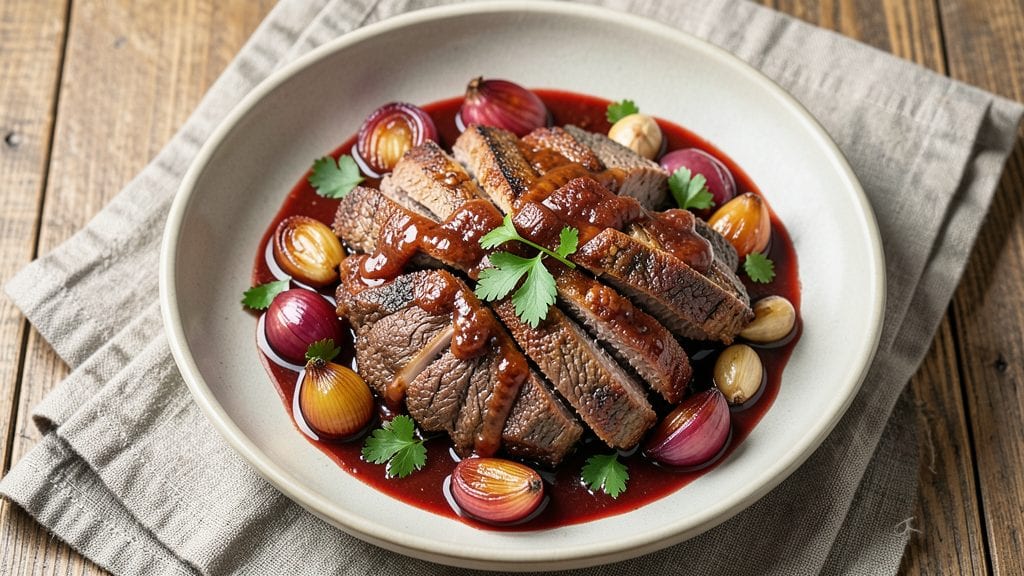
This stewed beef brisket recipe transforms tough cuts into melt-in-your-mouth perfection through slow cooking—exactly the kind of dish that turns weeknight dinners into cozy traditions.
After years of perfecting this technique in my Boston kitchen, I’ve developed a method that ensures deep flavor, tender meat, and a rich sauce without requiring hours of babysitting. The secret lies in patience and precision: letting the brisket break down slowly while building layers of savory, caramelized richness.
The beauty of this recipe is its foolproof approach—whether you’re using a stovetop, slow cooker, or oven, the same principles apply. A well-balanced blend of aromatics (onions, garlic, and herbs) forms the foundation, while red wine and beef broth create a sauce that clings to every bite.
What makes this version stand out is the crispy edge on the brisket, achieved by searing it first and finishing it under the broiler for that restaurant-quality touch.
By the time you serve this dish, your kitchen will smell like a New England diner, and your guests will be asking for seconds. The brisket falls apart at the touch of a fork, soaking up the velvety sauce while staying tender and juicy.
Pair it with mashed potatoes, crusty bread, or roasted vegetables to complete the meal—this is comfort food at its finest, built to impress without intimidating.
Here’s the best part: leftovers reheat beautifully, making this recipe perfect for meal prep or feeding a crowd. Let’s get started on creating a dish that feels like a hug in every bite.
Ingredients for stewed beef brisket
Foolproof ingredients for melt-in-your-mouth brisket that smells like New England comfort.
| Ingredient | Amount | Notes |
|---|---|---|
| Beef Brisket 🥩 | 3 lb | Flat cut preferred, trimmed of fat |
| Yellow Onions 🧅 | 2 whole | Medium size, sliced into wedges |
| Garlic Cloves 🧄 | 6 cloves | Peeled, smashed for deep flavor |
| Red Wine 🍷 | 1 cup | Bold dry variety like Cabernet |
| Beef Broth 💧 | 3 cups | Low-sodium preferred, homemade if possible |
| Tomato Paste 🍅 | 2 tbsp | Smooth texture, no sugar added |
| Dried Thyme 🌿 | 1 tbsp | Or 1 tbsp fresh thyme leaves |
| Fresh Rosemary 🌿 | ½ oz | Or 1 tbsp dried rosemary |
| Bay Leaves 🍃 | 2 whole | Dried, removed before serving |
| Olive Oil 🫒 | 2 tbsp | Extra-virgin for searing |
| All-Purpose Flour 🌾 | 2 tbsp | For making roux |
| Salt 🧂 | 1 ½ tsp | Kosher or sea salt |
| Black Pepper 🌶️ | 1 tsp | Freshly ground preferred |
| Carrots 🥕 | 2 whole | Medium size, sliced into rounds |
| Fresh Parsley 🌿 | ¼ cup | Chopped, for garnish |
The brisket is non-negotiable—flat cut breaks down better than point cut, and Costco or Whole Foods carry the best quality. Look for good marbling and ask the butcher to trim excess fat. I always buy mine a day ahead to let it sit at room temperature before cooking—2-3 lbs is perfect for four servings. The onions? Yellow adds sweetness, but red works too. Just make sure they're fresh—no rubbery ones here. For the herbs, Trader Joe's has great dried thyme and rosemary in small jars, but fresh is ideal if you've got it.
No red wine? Beef broth with a splash of balsamic vinegar works in a pinch, but the acidity helps tenderize the meat. Fresh thyme and rosemary can be swapped for dried at one-third the amount—just crush the dried leaves between your fingers to release their flavor. The tomato paste? Trader Joe's squeeze tubes are perfect—no waste, and they keep for months. If you're using a slow cooker, skip the flour roux and just thicken the sauce at the end with a cornstarch slurry. The carrots can be baby carrots if you're lazy, but whole carrots add better texture.
This reheats like a dream—better the next day once everything melds together. Store in an airtight container with the sauce for 5-6 days in the fridge, or freeze for up to 3 months. I always make double batches because it's that good. For serving, I like to broil the brisket for 3-4 minutes at the end to get that crispy edge—don't skip this step if you want that restaurant-quality finish.
Why You'll Love This Recipe
- One-Pot Magic: I swear by this recipe because it’s all hands-off after the initial chop. Toss in the brisket, onions, and garlic, pour the wine and broth, then let it simmer. No flipping, no fussing—just rich, falling-apart meat when you’re ready.
- Wine-Infused Richness: That splash of red wine? It’s the secret weapon. It cuts through the beef’s richness while adding depth—like a cozy hug in a bowl. The onions caramelize just enough to make every bite taste like a restaurant-worthy bite.
- Leftovers That Shine: Between us, this stew only gets better the next day. The flavors meld into something even more tender and flavorful. I make a double batch on Sundays and reheat portions all week—no one ever skips seconds.
- Budget-Friendly Feast: Brisket is affordable, and this recipe stretches it into enough servings to feed a family or save for later. Honestly, it’s my go-to when I want a hearty meal without breaking the bank. Plus, the broth stretches so well with extra veggies if needed.
Step-by-step instructions for stewed beef brisket
Here's how to transform tough brisket into melt-in-your-mouth perfection through slow cooking.
Sear the Brisket for Deep Flavor
Heat a heavy Dutch oven over medium-high heat until very hot. Add the 2 tablespoons olive oil and swirl to coat the bottom. Place the 3 lb beef brisket fat-side down and press gently with a spatula to ensure even contact with the pan. Sear for 5 minutes without moving it until a deep golden crust forms.
Flip the brisket and sear the other side for another 5 minutes. The fat should render and sizzle vigorously. Remove the brisket and set it aside on a plate. Here's the thing—this initial sear locks in juices and builds that rich, caramelized base for your stew. Don't rush this step or you'll end up with uneven browning.
Build the Aromatic Base
In the same Dutch oven, add the 2 whole yellow onions sliced into wedges and the 6 cloves garlic that have been peeled and smashed. Cook for 5 minutes until the onions soften and begin to caramelize slightly. Stir occasionally to prevent burning.
Add the 2 tablespoons tomato paste and cook for 1 minute, stirring constantly to prevent sticking. This creates a flavorful paste that will form the foundation of your stew. Pour in the 1 cup red wine and scrape up any browned bits from the bottom with a wooden spoon. Let it simmer for 3 minutes until the wine reduces by half and its alcohol note cooks off.
Create the Roux and Season
Sprinkle the 2 tablespoons all-purpose flour over the wine mixture and stir vigorously for 1 minute until smooth. This creates a roux that will thicken your stew beautifully. Gradually whisk in the 3 cups beef broth, ensuring no lumps form. Add the 1.5 teaspoons salt, 1 teaspoon black pepper, 1 tablespoon dried thyme, 0.5 ounce fresh rosemary, and 2 whole bay leaves.
Return the seared brisket to the Dutch oven, fat-side up. The brisket should be mostly submerged in the liquid. Bring everything to a gentle simmer, then reduce heat to low. Cover partially with a lid, leaving a small gap for steam to escape. This slow cooking method is crucial—it breaks down the tough muscle fibers while allowing flavors to meld perfectly.
Slow Cook Until Fork-Tender
Cook for 3 to 3.5 hours, maintaining a gentle simmer. Check occasionally and add ¼ cup water if the liquid level gets too low. The brisket is done when it's fork-tender and easily pulls apart with minimal resistance. You'll know it's ready when the internal temperature reaches 205°F.
During the last 30 minutes of cooking, add the 2 whole carrots sliced into rounds. This ensures they absorb all those rich flavors without overcooking. The stew should have thickened slightly and developed a deep, reddish-brown color from the caramelized onions and wine.
Finish and Serve
Remove the brisket and strain the stew through a fine-mesh sieve into a clean pot. Discard the bay leaves and any large herb stems. Return the brisket to the strained stew and let it simmer uncovered for 10 minutes to reduce slightly and intensify the flavors.
Shred the brisket using two forks, discarding any large fat pieces. Return the shredded meat to the stew and stir gently. Taste and adjust seasoning if needed. Ladle the stew into serving bowls and garnish with the 0.25 cup chopped fresh parsley. Serve immediately with crusty bread or over mashed potatoes to soak up every last bit of that rich, flavorful sauce.
Pro Tips For Making Stewed Beef Brisket
- SEAR THE BRISKET FIRST: I learned this the hard way—skipping the sear means flavor gets lost in the broth. Hit that brisket with a hot pan (no oil needed—just let the fat render) until it’s deep brown on all sides. The crust locks in juices and makes the whole dish taste richer.
- SLICE ONIONS THIN AND EVEN: Thick onion chunks? They’ll turn to mush. Cut them paper-thin (⅛-inch or less) so they soften into the broth without falling apart. Same goes for garlic—mince it finely so it blends in instead of sitting as chunks.
- DEGLAZE WITH WINE IMMEDIATELY: Let that seared meat sit for 30 seconds after removing it—then pour in the red wine. The wine will lift all the browned bits (fond) from the pan, giving your stew depth. Scrape the pan hard with a wooden spoon; don’t just pour and walk away.
- LOW AND SLOW WINS: After browning, reduce heat to actual low (200°F or less) and cover the pot. I used to rush it, but brisket needs time—at least 3 hours, ideally 4. The connective tissue breaks down, and the meat falls apart tender. Patience here makes the difference.
Dietary considerations for this recipe
Gluten-Free Adaptations
This recipe is naturally gluten-free if you use a certified gluten-free flour blend for the roux. I recommend Bob's Red Mill 1-to-1 Gluten-Free Baking Flour—just substitute it 1:1 for the all-purpose flour.
The sauce will still thicken beautifully, though you might need an extra ½ teaspoon of xanthan gum to help bind it properly. Always check your broth labels too, as some contain hidden gluten.
Dairy-Free Considerations
No dairy is required in this recipe, making it naturally dairy-free. The rich sauce comes from the beef, wine, and tomatoes—not cream or butter. If you're serving alongside dairy-based sides (like mashed potatoes), offer a dairy-free alternative like olive oil-based mashed potatoes with roasted garlic.
The brisket's natural fat provides plenty of richness on its own.
Low-Carb Options
For a lower-carb version, skip the carrots and onions entirely or replace them with cauliflower florets (add them during the last 30 minutes). The red wine and beef broth provide enough depth without needing starchy vegetables.
If you're strict about carbs, use 1 cup bone broth instead of wine—it adds umami without the sugar content. The brisket itself is naturally low-carb, so you're mostly adjusting the vegetable components.
Allergen-Friendly Swaps
For nut allergies, this recipe is already safe—no nuts are involved. If someone has a wine allergy, substitute the red wine with an extra ½ cup beef broth plus 1 teaspoon balsamic vinegar for acidity.
For soy allergies, check your broth label—many contain soy-based thickeners. I always keep a low-sodium soy-free broth on hand for these situations. The herbs and spices are typically allergen-free, but always double-check dried mixes.
Protein-Packed Boost
Want to make this even more protein-rich? Add ½ cup cooked lentils to the stew during the last 30 minutes of cooking. They absorb the flavors beautifully and add fiber without altering the texture. For a meatier boost, include ½ lb sliced mushrooms (they release their own umami).
Both additions work well in my Boston kitchen—just be sure to add them after the brisket is already tender to avoid overcooking.
Slow Cooker Simplicity
If you're using a slow cooker, this recipe becomes even more forgiving for dietary needs. Simply sear the brisket first (critical for flavor!), then transfer everything to your slow cooker and cook on low for 8 hours or high for 5 hours.
The slow cooker's gentle heat makes it perfect for gluten-free or low-carb versions since you're not worrying about roux or precise temperature control. I've tested this with Instant Pot too—just use the "beef stew" setting for 60 minutes after searing.
Nutrition facts
Frequently asked questions
Why does the recipe call for searing the brisket first?
Searing creates a flavorful crust that locks in juices and builds depth through caramelization. Without this step, your stew will taste more like broth than rich, savory beef. The 5-minute sear on each side develops that deep, meaty flavor that makes the dish unforgettable.
Can I use a slow cooker instead of a Dutch oven?
Sear the brisket first, then transfer everything to a slow cooker and cook on low for 8 hours or high for 5 hours. The slow cooker's gentle heat works perfectly for tenderizing the meat while keeping flavors balanced. Just remember to add carrots in the last 30 minutes.
What if my brisket isn't tender after 3.5 hours?
Check your internal temperature—it should reach 205°F. If it's not quite there, add another 30-60 minutes of cooking time. The key is patience! If you're in a hurry, you can finish it in a 400°F oven for 20-30 minutes with a little extra liquid to prevent drying.
How do I make this recipe gluten-free?
Use a 1:1 gluten-free flour blend (like Bob's Red Mill) for the roux and check your broth for hidden gluten. For extra binding, add ½ teaspoon xanthan gum. The flavor stays rich and satisfying—just as good as the original!
Can I make this ahead of time?
This dish actually tastes better the next day! Store in an airtight container for 5-6 days in the fridge or freeze for up to 3 months. The flavors deepen as it sits, making it perfect for meal prep. Just reheat gently on the stove with a splash of water or broth to restore moisture.