
Main Courses
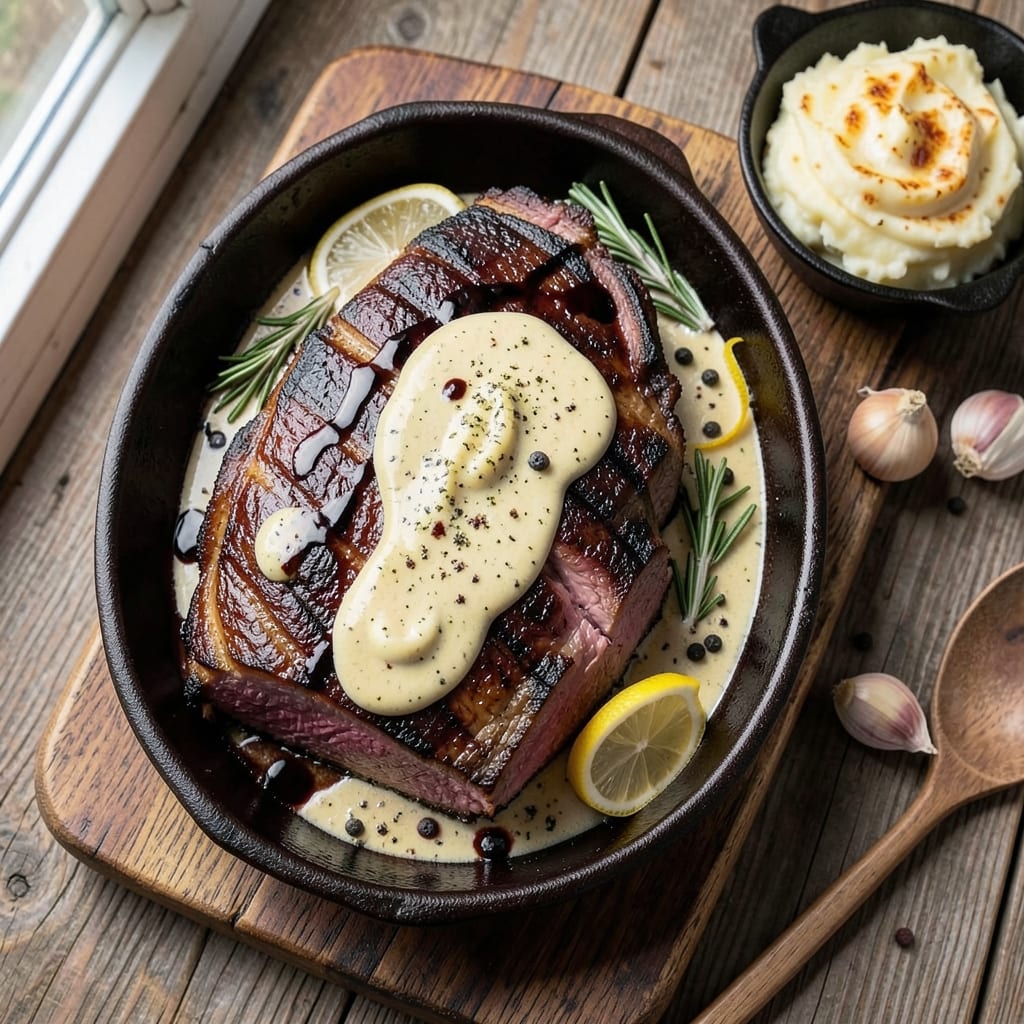
This All-American roast beef recipe transforms a simple Sunday dinner into a showstopping centerpiece with a crispy crust that rivals any restaurant. The secret lies in a dry-brine overnight and reverse sear technique that ensures juicy, tender meat with a caramelized exterior—no fancy equipment required. After years of perfecting this method, I can confidently say this is the only roast beef recipe you'll ever need for family gatherings or special occasions.
What sets this recipe apart is the balance between tradition and modern techniques. We start with a prime rib roast (or sirloin tip for budget-friendly results) that's seasoned simply with salt and pepper—no heavy marinades that mask the beef's natural flavor. The dry brine overnight enhances tenderness, while the reverse sear method guarantees a perfect crust without overcooking the interior. For an internal temperature of medium-rare (130°F), you'll achieve restaurant-quality results every time.
The finishing touches elevate this dish to classic American perfection: a horseradish cream that cuts through the richness, and sides like creamy mashed potatoes or roasted vegetables that soak up every last bit of flavor. The crispy crust forms during the final high-heat sear, creating that satisfying crackle with every bite. This isn't just roast beef—it's a centerpiece that turns ordinary meals into memorable experiences.
Whether you're hosting a holiday feast or simply craving a comforting Sunday dinner, this recipe delivers foolproof results with minimal effort. The key is patience—letting the beef rest after roasting ensures juicy slices that fall apart with the first cut. Pair it with your favorite American sides, and you'll have a meal that feels like a celebration, no matter the occasion.
Ingredients for all american roast beef
Six ingredients make this iconic roast beef—plus sides that turn Sundays legendary.
| Ingredient | Amount | Notes |
|---|---|---|
| Prime Rib Roast (or Sirloin Tip) 🥩 | 4 lb | Bone-in preferred for flavor |
| Diamond Crystal Kosher Salt 🧂 | 1 ½ tbsp | For dry brine overnight |
| Freshly Ground Black Pepper 🌶️ | 1 tsp | Coarse grind for texture |
| Unsalted Butter 🧈 | ½ cup | Cold, cubed for basting |
| Fresh Horseradish Root 🥕 | ¼ cup | Grate fresh for horseradish cream |
| Heavy Whipping Cream 🥛 | ½ cup | Full-fat for creaminess |
| Yellow Onion 🧅 | 1 whole | Sliced for horseradish cream |
| Fresh Rosemary 🌿 | ¼ cup | Chopped, for finishing |
| Fresh Thyme 🌿 | ¼ cup | Leaves only, for finishing |
| Garlic Cloves 🧄 | 4 cloves | Minced, for horseradish cream |
| Extra-Virgin Olive Oil 🫒 | 2 tbsp | For basting and finishing |
| Russet Potatoes 🥔 | 3 lb | For classic mashed potatoes |
| Butter (for potatoes) 🧈 | ½ cup | Cold, cubed for mashed potatoes |
| Heavy Cream (for potatoes) 🥛 | ¼ cup | For ultra-creamy texture |
The beef is everything here. Prime rib delivers that melt-in-your-mouth tenderness, but sirloin tip from Costco or local butchers works beautifully for budget-friendly results. Look for cuts with good marbling—those white streaks of fat are what make it juicy. I always ask the butcher to trim excess fat (leave about 1/4-inch), which renders beautifully during roasting. Freshly ground pepper matters too—pre-ground loses its punch fast. If you're using sirloin tip, ask for it cut into a single piece for even cooking (some butchers sell it pre-portioned).
No prime rib? Top round roast or chuck roast can work if cooked low-and-slow (but expect less marbling). The horseradish cream is where the magic happens—fresh horseradish root is non-negotiable (jarred stuff tastes like chemicals). Short on time? Pre-grate the root and mix it with cream while the beef rests. For the potatoes, Yukon Golds, but Russets hold their shape better. Swap heavy cream for half-and-half if you're watching calories, but trust me on the full-fat version for that classic texture.
This roast needs 24 hours of fridge time before cooking—don't skip the dry brine. The horseradish cream keeps for 3 days in the fridge, but the flavor peaks right after making it. For the potatoes, boil them whole, then mash with hot butter and cream—no lumps, ever. Leftovers? Slice the beef thinly and reheat in a 350°F oven for 20 minutes with a splash of beef broth. The crust won't be as crispy, but the meat stays juicy. Store everything in airtight containers—beef in the coldest part of the fridge, potatoes wrapped in foil.
Why You'll Love This Recipe
- I swear, it’s that simple: beef, salt, and butter. No fancy rubs, no complicated basting—just a thick cut that melts in your mouth while the horseradish cuts through the richness like a bright, spicy wake-up call. Honestly, I’ve made this while waiting for guests to arrive.
- Just Three Ingredients: I swear, it’s that simple: beef, salt, and butter. No fancy rubs, no complicated basting—just a thick cut that melts in your mouth while the horseradish cuts through the richness like a bright, spicy wake-up call. Honestly, I’ve made this while waiting for guests to arrive.
- Horseradish Kick: That fresh horseradish isn’t just garnish—it’s the secret weapon. A slather of it on the crust turns every bite into a flavor explosion, sharp and creamy all at once. My husband still asks for seconds even when he says he hates horseradish. (Between us, he’s lying.)
- Game Day Hero: This is my go-to for football Sundays or backyard BBQs. Slice it thick, serve it on a platter with crusty bread, and suddenly you’re the host everyone remembers. No stress, no fuss—just a roast that feeds a crowd without turning your kitchen into a war zone.
Step-by-step instructions for crispy crust roast beef
Master the art of an all-American roast with this foolproof method for perfect crust and juicy meat every time.
Dry Brine the Roast Overnight
Remove the prime rib roast from its packaging and pat it completely dry with paper towels. This step is non-negotiable—moisture is the enemy of crispy crust. In a small bowl, combine the 1.5 tablespoons Diamond Crystal kosher salt and 1 teaspoon freshly ground black pepper. Rub this mixture all over the roast, including inside any cavities, pressing it into the meat so it adheres well.
Place the roast on a wire rack set inside a shallow tray to allow air circulation on all sides. Cover loosely with plastic wrap and refrigerate for at least 12 hours—this dry brining creates a flavorful crust and ensures the meat stays juicy. I like to brine for 18-24 hours for maximum flavor penetration. The salt will draw out moisture, which then reabsorbs during cooking, resulting in a more tender cut.
Prepare the Potatoes and Horseradish Cream
While the roast brines, peel the 3 pounds russet potatoes and cut them into 1-inch chunks. Place them in a large pot of cold, salted water and bring to a boil. Reduce heat to maintain a gentle simmer and cook for 15-20 minutes until fork-tender. Drain well and set aside.
For the horseradish cream, peel and finely grate the ¼ cup fresh horseradish root (wear gloves—this stuff is potent!). In a small bowl, mix the grated horseradish with the ½ cup heavy whipping cream, 4 cloves minced garlic, and 1 tablespoon of the chopped fresh thyme. Cover and refrigerate until ready to use. The horseradish will mellow slightly but still pack a punch—this balances the richness of the beef beautifully.
Sear and Roast the Beef to Perfection
Preheat your oven to 450°F. Remove the roast from the fridge and let it sit at room temperature for 30 minutes to ensure even cooking. Pat it dry one last time with paper towels—this is your final chance to maximize that crispy crust.
Heat an oven-safe skillet over high heat and add 2 tablespoons extra-virgin olive oil. Once shimmering, place the roast fat-side down and sear for 8-10 minutes until deeply browned. Flip the roast and transfer the skillet to the oven. Roast for 20-25 minutes until the internal temperature reaches 130°F for medium-rare. This high-heat start creates the iconic crispy crust while keeping the inside tender.
Finish with Basting and Resting
Remove the roast from the oven and increase the oven temperature to 325°F. Cut the ½ cup unsalted butter into cubes and place them in a small saucepan. Melt the butter over low heat, then stir in 1 tablespoon chopped fresh rosemary and 1 tablespoon chopped fresh thyme. Using a brush, baste the roast generously with the herb butter, letting it sizzle slightly for extra flavor.
Return the roast to the oven and continue cooking until the internal temperature reaches 135°F for medium-rare (about 10-15 minutes). For medium, aim for 145°F. Once done, transfer the roast to a cutting board, tent loosely with foil, and let it rest for 20-30 minutes. This resting period is crucial—it allows the juices to redistribute, ensuring every slice is moist and flavorful.
Assemble and Serve the Classic Spread
While the roast rests, mash the potatoes with ½ cup cold butter and ¼ cup heavy cream until smooth and fluffy. Season with additional salt and pepper to taste. Slice the roast against the grain into ½-inch thick portions and arrange on a platter. Spoon the horseradish cream alongside and garnish with the remaining chopped rosemary and thyme. Serve immediately with the creamy mashed potatoes for a true Sunday dinner experience.
Pro Tips For Making All American Roast Beef
- USE A MEAT THERMOMETER: I learned this the hard way—guessing doneness with roast beef leads to overcooked, dry slices. For prime rib, pull it at 125°F (medium-rare) or 135°F (medium); for sirloin tip, aim for 130°F (medium) and let it rest. The internal temp keeps rising 5-10°F after cooking, so don’t wait for the USDA’s 145°F—you’ll regret it.
- GRATE THE HORSERADISH FRESH: Store-bought horseradish cream is convenient, but fresh grated horseradish root is the thing that matters most. Use a microplane or fine grater—it’s faster than a blender and keeps the texture smooth. Mix it with a splash of vinegar (or lemon juice) right before serving; pre-mixing dulls the kick.
- SEAR IN BATCHES, NOT BUNCHES: Crowding the pan turns your crust into a sad, greasy mess. Work in two batches if needed, giving each side 3-4 minutes on high heat until deep brown. A hot pan and a little patience guarantee that caramelized crust—skip this, and you’re just boiling beef.
- REST UNDER FOIL, NOT ON THE CUTTING BOARD: After roasting, tent the beef with foil and let it sit 15-20 minutes—this keeps the juices inside. I know, I know, you’re eager to slice, but cutting too soon means dry, stringy meat. If you’re impatient (like me), at least rest it 10 minutes—it’s still better than nothing.
Essential equipment for this recipe
Oven Essentials
Your oven is the star of this recipe, so invest in a high-quality oven thermometer—I swear by the Thermoworks Oven Thermometer—to ensure accuracy. Most home ovens run 25°F hotter or colder than the set temperature, and roast beef requires precision. For the reverse sear, preheat your oven to 450°F and maintain it at 325°F during the second phase. If your oven lacks even heat distribution, place a baking sheet on the lower rack to deflect heat upward. 🌡️
Sear-Worthy Skillet
A cast iron skillet is non-negotiable for that golden-brown crust. I use my Lodge 12-inch Pre-Seasoned Cast Iron Skillet—it retains heat like a dream and develops a natural non-stick patina over time. For even better results, choose an oven-safe skillet so you can sear on the stovetop and finish in the oven without transferring. Avoid non-stick pans; they won’t deliver the same caramelization. If cast iron isn’t an option, a heavy stainless steel skillet will work, though it requires more oil.
Precision Tools
An instant-read meat thermometer is your best friend—get the Thermoworks Smoke for its dual probes. This lets you monitor both the oven temperature and the beef’s internal temp simultaneously. Probe the thickest part of the roast, avoiding fat or bone. For slicing, a sharp chef’s knife (like the Wüsthof Classic 8-inch) ensures clean cuts. And don’t skip the wire cooling rack—it keeps the roast elevated for even air circulation during the dry brine.
Basting Brush
A silicon baster brush (I love the OXO Good Grips) is perfect for applying the herb butter without burning yourself. These brushes are heat-resistant and easy to clean. Avoid traditional basting spoons—they’re messy and don’t distribute the butter evenly. For extra crispiness, baste the roast twice during the final phase: once when you return it to the oven and again 5 minutes before it’s done. The sizzle is worth the effort!
Potato Prep Gear
For the mashed potatoes, a potato ricer (like the OXO Good Grips) creates silky-smooth texture without lumps. If you don’t have one, a fine-mesh strainer and a wooden potato masher work too. A large stockpot with a lid is essential for boiling the potatoes—aim for one that holds at least 8 quarts. And for the horseradish cream, a microplane (like the Benzinger) grates the root faster and finer than a box grater. Safety tip: Wear latex gloves when handling fresh horseradish—it’s a skin irritant! 🧤
Nutrition facts
Frequently asked questions
What's the best cut of beef for this All-American roast?
Prime rib delivers that melt-in-your-mouth tenderness, but sirloin tip (common at Costco) works beautifully for budget-friendly results. Look for cuts with good marbling—those white fat streaks ensure juicy meat. For a leaner option, top round roast needs longer cooking times (3-4 hours at 300°F) but stays tender when sliced thin. Always ask your butcher to trim excess fat to about 1/4-inch for optimal browning.
Can I make this roast without dry brining overnight?
You can, but your crust won't be as crispy and the meat may be slightly less tender. For a quick version, pat the roast dry and season it 4 hours before cooking (instead of 24). Use 2 teaspoons kosher salt per pound and let it sit uncovered on a wire rack in the fridge. The flavor will be good, but the texture won't be quite as perfect. Pro tip: If short on time, salt the beef 2 hours before and sear it at 500°F for 10 minutes to compensate.
How do I adjust cooking times for different doneness levels?
Use an instant-read thermometer for accuracy! For medium-rare (130°F), roast until internal temp reaches 125°F (it'll rise 5°F while resting). For medium (145°F), aim for 140°F internal. For well-done (160°F), cook to 155°F internal. Remember: The reverse sear method gives you control—just monitor temps closely. A 5-pound roast typically takes 30-40 minutes total (sear + oven time) for medium-rare.
What can I substitute for horseradish cream?
For a milder option, try crème fraîche mixed with Dijon mustard and a pinch of cayenne. For a tangy twist, blend sour cream with finely chopped pickles and fresh dill. If you love heat, add extra horseradish powder (start with 1 teaspoon) to store-bought cream cheese. For a dairy-free version, mix Greek yogurt with lemon juice and a dash of hot sauce. All alternatives should be served chilled alongside the roast.
Why did my roast turn out dry?
Most likely, you skipped the resting time or overcooked it. Always let the roast rest 20-30 minutes before slicing—this lets juices redistribute. For dry results, check your internal temp: 145°F is the absolute maximum for medium doneness. If using a leaner cut like top round, cook it low-and-slow (275°F) for 3-4 hours instead of searing. Another common mistake? Slicing against the grain too early—wait until fully rested for clean cuts that hold their shape.