
Main Courses
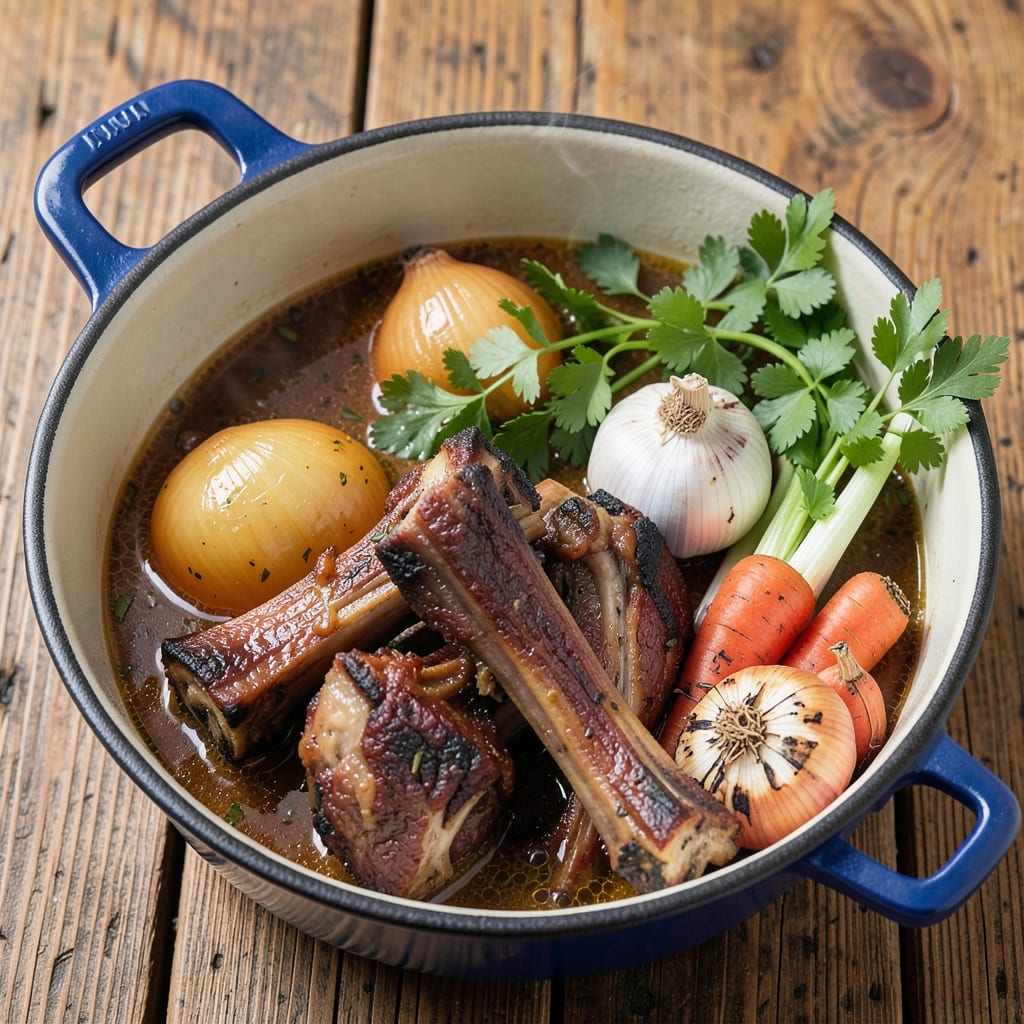
Alton Brown's beef stock recipe transforms humble pantry ingredients into a deep, umami-rich foundation for everything from soups to braised meats. This isn't just stock—it's the secret weapon behind restaurant-quality depth in home cooking. The key lies in slow extraction, where bones and aromatics release their essence over hours, creating a flavor profile far beyond bouillon cubes.
What sets this method apart is its simplicity: no special equipment beyond a large pot and a fine-mesh strainer. You'll work with beef bones (or even store-bought cuts), vegetables, and herbs that most kitchens already stock. The process requires patience—simmering for 4-6 hours—but yields a liquid so flavorful it becomes the backbone of countless dishes. Every sip delivers layers of savory complexity that elevate simple recipes to gourmet levels.
The result is a clear, golden stock with concentrated beef flavor and subtle herbal notes. Unlike commercial versions, this homemade base contains no additives—just pure, umami-packed liquid that intensifies with each use. It's the kind of foundation that transforms canned tomatoes into a rich sauce or turns basic roasted vegetables into a restaurant-worthy side. The best part? It keeps beautifully in the freezer for months, ready to enhance any dish.
Whether you're prepping for a week of soups or building flavor layers for braised short ribs, this stock is your culinary multiplier. The technique is straightforward, but the impact is profound—turning ordinary meals into extraordinary ones with just a few hours of simmering time. Let's build this flavor foundation together.
Ingredients for alton brown beef stock
Pantry staples and simple aromatics build this umami-rich foundation for restaurant-quality cooking.
| Ingredient | Amount | Notes |
|---|---|---|
| Beef Bones 🦴 | 4 lb | Raw or roasted for depth |
| Yellow Onions 🧅 | 1 whole | Peeled, halved, charred slightly |
| Carrots 🥕 | 4 whole | Scrubbed, cut into chunks |
| Celery Stalks 🥬 | 4 whole | Trimmed, cut into pieces |
| Garlic Cloves 🧄 | 6 cloves | Peeled, lightly crushed |
| Fresh Parsley 🌿 | ¼ cup | Stems included, roughly chopped |
| Fresh Thyme 🌿 | 2 sprigs | Stems attached for infusion |
| Fresh Bay Leaves 🌿 | 2 whole | Lightly crushed |
| White Wine 🍷 | 1 cup | Dry, full-bodied |
| Apple Cider Vinegar 🍎 | 2 tbsp | For acidity balance |
| Kosher Salt 🧂 | 1 tsp | Diamond Crystal preferred |
| Black Peppercorns 🌶️ | 10 whole | Crushed lightly |
| Water 💧 | 8 cups | Filtered for clarity |
The bones are the heart of this stock, so choose marrow-rich cuts like knuckles or neck bones from your butcher—they yield the deepest flavor. Local butchers often have these pre-cut, while grocery stores may require you to ask for them specifically. If using store-bought cuts, pat them dry before roasting to enhance browning. The vegetables form the aromatic base: onions, carrots, and celery (the 'holy trinity') should be scrubbed, not peeled, to retain their natural flavors. For the herbs, fresh thyme and bay leaves are non-negotiable—they contribute earthy depth that dried versions can't match. If you're short on time, roasting the bones and vegetables at 400°F for 20 minutes before simmering unlocks even more complexity through the Maillard reaction.
No wine on hand? Substitute with extra water and 1 tbsp of lemon juice for brightness, though the acidity won't be identical. Fresh herbs unavailable? Dried thyme at one-third the amount works in a pinch, but skip the bay leaves entirely if you can't find fresh. For a vegetarian version, swap bones for mushroom stems and soy sauce, though the umami profile will differ. The vinegar is crucial—it helps extract collagen from the bones during simmering, so don't skip it. If you prefer a clearer stock, strain through a fine-mesh sieve lined with cheesecloth for maximum clarity, though some sediment adds body. For a richer result, skim off any congealed fat before refrigerating—it can be saved for cooking.
This stock freezes beautifully, so divide it into ice cube trays or silicone molds for portion control. Label containers with the date—it keeps for up to 6 months in the freezer. For best results, thaw overnight in the fridge before using. The stock reduces slightly as it cools, so plan to make about 10% more than needed if you're using it immediately. A little goes a long way: 1 cup of stock enhances 4 cups of sauce, transforming it from ordinary to extraordinary. The first batch will be your most flavorful, so use it up within a few weeks for peak quality.
Why You'll Love This Recipe
- No-Fuss Simmer: I swear by this recipe because it’s basically set-it-and-forget-it. Roast the bones first—yes, that’s the secret—but after that? Just toss in the onions, carrots, celery, and garlic, cover with water, and let it work its magic. I’ve done it while grading papers, folding laundry, even watching a movie.
- Deep Umami Magic: That first sip? Chef’s kiss. The roasted bones caramelize into something rich and complex, while the garlic and celery add this bright, layered depth. Honestly, it’s the kind of flavor that makes you pause mid-sip and think, “Wait, I made this?”
- Stock for Everything: This isn’t just for soup—it’s my secret weapon for braising, risottos, even gravy. Freeze it in ice cube trays for quick boosts later, or keep a big batch in the fridge for when I’m too tired to roast another bone. (Yes, even on a Tuesday night.)
- Budget Booster: Beef bones are cheap, and this recipe stretches them into gallons of liquid gold. I buy them in bulk, freeze them, and pull them out whenever I need a flavor upgrade without breaking the bank. Plus, the leftovers? They last forever—if they even make it that far.
Step-by-step instructions for alton brown's beef stock
Mastering this rich, umami-packed stock requires patience and precision—here's how to build depth from simple ingredients.
Prepare and Roast the Beef Bones
Preheat your oven to 450°F. Place the 4 lb beef bones on a rimmed baking sheet lined with aluminum foil. Roast for 30 minutes, turning occasionally, until they develop a deep mahogany color and begin to smell intensely caramelized. This step develops the Maillard reaction, creating complex flavors that form the stock's foundation.
Real talk: don't skip the roasting. The bones will release more gelatin and flavor when simmered after this step. I like to turn them every 10 minutes to ensure even browning. If you're using pre-roasted bones, skip this step entirely—just clean them thoroughly to remove any residual char.
Sauté the Vegetable Base
While the bones roast, heat a large stockpot over medium heat. Add the halved 1 whole yellow onion, cut 4 whole carrots, and trimmed 4 whole celery stalks. Cook for 8-10 minutes, stirring occasionally, until the vegetables soften and begin to caramelize slightly. This step builds a flavorful base that infuses the stock.
Here's the thing—you're not trying to fully cook the vegetables. They'll continue breaking down during the simmer. The goal is to develop a light brown color and release their natural sugars. If the vegetables stick, add a splash of water to deglaze and scrape up those flavorful browned bits from the bottom of the pot.
Add Aromatics and Deglaze
Push the vegetables to one side of the pot and add the 6 peeled garlic cloves, 2 lightly crushed bay leaves, and 10 lightly crushed black peppercorns. Stir for 30 seconds until fragrant. Pour in the 1 cup white wine and 2 tbsp apple cider vinegar, scraping up any browned bits from the bottom of the pot with a wooden spoon. This deglazing step captures all the concentrated flavors.
The wine and vinegar serve dual purposes: they add acidity to help break down the bones and collagen, while also introducing bright, complex flavors. Let the mixture simmer for 2 minutes until the wine reduces by about half. This ensures the alcohol burns off, leaving only the flavor compounds behind.
Simmer the Stock for Maximum Depth
Add the roasted beef bones to the pot, along with the 8 cups water and 1 tsp kosher salt. Bring to a gentle boil, then immediately reduce heat to maintain a barely simmering temperature—you should see just a few small bubbles breaking the surface. This low-and-slow approach extracts maximum gelatin and flavor without clouding the stock.
Cover the pot and simmer for 3-4 hours, skimming off any foam or impurities that rise to the surface with a fine-mesh skimmer. The longer you simmer, the richer and more gelatinous the stock will become. I check the consistency every 30 minutes—when it coats the back of a spoon with a glossy sheen, it's ready.
Finish and Strain
Once the stock has developed a deep, rich color and coats a spoon, remove the pot from heat. Let it sit for 10 minutes to allow any settled particles to sink to the bottom. Using a fine-mesh strainer or cheesecloth-lined colander, strain the stock into a clean container, pressing gently on the solids to extract every last drop of flavor.
Add the 0.25 cup roughly chopped fresh parsley and 2 sprigs fresh thyme to the strained stock and let it steep for 10 minutes before removing the herbs. This final infusion adds freshness and brightness to balance the deep umami flavors. Store the stock in the refrigerator for up to 5 days or freeze for up to 3 months.
Pro Tips For Making Alton Brown Beef Stock
- BLISTER THE BONES FIRST: Alton’s recipe calls for roasting the bones, but don’t just toss them in—get them deep brown with a crust. I used to rush this, and the stock ended up tasting like undercooked bones. Spread them in a single layer, skin-side down, and let them sit uncovered for 20 minutes before turning. That’s when the Maillard reaction does its magic, and your stock will taste richer for it.
- CHOP VEGETABLES UNIFORM: The onions, carrots, and celery should be cut into even ½-inch chunks—no tiny dice, no giant hunks. I learned this the hard way when my celery turned to mush before the carrots even softened. A knife skill upgrade here means no bitterness or stringy textures in your stock. If chopping feels tedious, buy pre-cut mirepoix—just don’t skimp on the quality.
- SKIP THE BOIL: The moment your stock starts to simmer, lower the heat so it’s just below a rolling boil. I used to let mine boil hard for hours, and it turned cloudy and bitter. A gentle simmer (tiny bubbles, occasional skimming) keeps it clear and concentrated. Alton’s recipe is designed for patience—this is where it pays off.
- USE COLD WATER: Start with cold water, not hot. I know it feels counterintuitive, but cold water extracts more gelatin from the bones, giving your stock that velvety mouthfeel. If you’re short on time, at least let the pot sit for 10 minutes after adding water before heating—it makes a real difference. Trust me, your future gravy will thank you.
Flavor customization for this recipe
Herbal Infusions
Swap the classic thyme and parsley for rosemary and sage—about 1 sprig each—to add piney, earthy depth that pairs beautifully with hearty beef dishes. For a Mediterranean twist, add ½ cup fresh oregano and 1 cinnamon stick (remove before serving) to your simmering stock. These herbs infuse the liquid with aromatic complexity that elevates braised short ribs or beef stews. 🌿
Spice Variations
Add 1 tsp whole coriander seeds and ½ tsp ground cumin during the simmer for a North African-inspired stock that works wonders in tagines or couscous dishes. For a smoky profile, include 1 smoked paprika packet (about 1 tsp) when deglazing with wine. These spices transform your stock into a versatile base for global cuisines without sacrificing its foundational richness.
Umami Boosters
Increase depth by adding 1 tbsp soy sauce or 1 packet (3g) kombu seaweed (remove before serving) during the simmer. These ingredients amplify the beef's natural umami, creating a stock so flavorful it can replace bouillon in recipes. For a vegetarian-friendly version, add 2 tbsp miso paste and 1 cup shiitake mushrooms to the simmering pot, though the texture will differ slightly.
Acid Balance Adjustments
For a brighter stock, increase the apple cider vinegar to 3 tbsp or add 1 tbsp lemon juice at the end of simmering. If you prefer a sweeter profile, add 1 tbsp honey or 1 crushed fennel bulb to the vegetables during sautéing. These adjustments let you tailor the stock to complement specific dishes—tangy for seafood-based recipes or sweet for fruit-infused braises.
Regional Adaptations
For a French-inspired version, add 1 shallot and 2 parsley roots to the vegetable base, along with 1 tsp tarragon during simmering. For an Italian touch, include ½ cup dried porcini mushrooms (rehydrated) and 1 tsp fennel seeds. These regional tweaks transform your stock into a specialized foundation for specific cuisines while maintaining the core technique.
Nutrition facts
Frequently asked questions
Why should I roast the beef bones before simmering?
Roasting develops deep caramelization through the Maillard reaction, creating complex flavors that infuse the stock. This step unlocks richer umami and gelatin release during simmering—skipping it results in noticeably weaker flavor. The bones should turn mahogany-brown and smell intensely aromatic before adding liquid.
Can I use store-bought beef bones instead of fresh?
Store-bought bones work perfectly, but choose marrow-rich cuts like knuckles or neck bones for maximum flavor. If pre-roasted, clean them thoroughly to remove any char before using. For best results, roast store-bought bones at 450°F for 20-30 minutes to develop deeper flavor.
How do I know when the stock is done simmering?
The stock is ready when it coats the back of a spoon with a glossy sheen and has a deep, rich color. This typically takes 3-4 hours of gentle simmering. Test by tasting—it should be intensely beefy with no bitter or metallic notes. The longer it simmers (up to 6 hours), the more gelatinous and flavorful it becomes.
What's the best way to store and reheat this stock?
Store in airtight containers in the fridge for up to 5 days or freeze for 3-6 months. For reheating, thaw overnight in the fridge, then warm gently on the stove over low heat—never microwave. Bring to a simmer for 5 minutes to reactivate the flavors. The stock reduces slightly when cooled, so make 10% extra if using immediately.
Can I make this stock in a slow cooker?
Yes! Follow the same steps but transfer everything to a slow cooker after deglazing. Simmer on low for 8-10 hours instead of 3-4 hours. The longer cook time enhances gelatin extraction, but monitor closely to prevent over-simmering. Use a fine-mesh strainer to remove any rubbery bits before storing.