
Main Courses
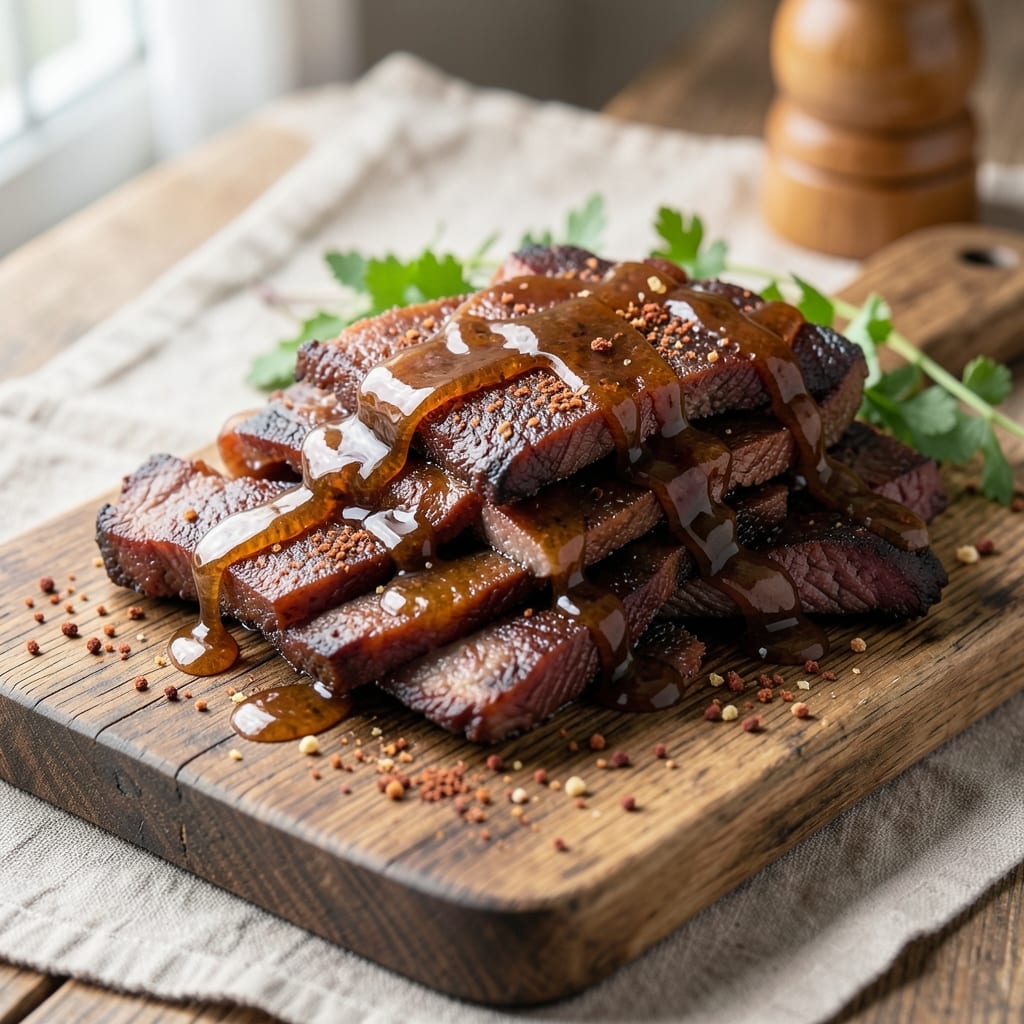
This amazing beef jerky recipe transforms tough cuts of beef into chewy, flavorful strips that last for days—no store-bought shortcuts needed. 🔥 The secret lies in a homemade spice blend that penetrates every bite, keeping it tender while locking in bold flavors. I’ve perfected this method after years of trial and error (and a few too many chewy failures), so you’ll get restaurant-quality jerky without the guesswork.
What makes this recipe stand out is the foolproof technique: thinly sliced beef marinated in a tangy-sweet-spicy mix, then slowly dehydrated to perfection. Whether you use a dehydrator, smoker, or even your oven, the result is jerky that’s tender enough to eat in one bite but still holds up for weeks in the pantry. No more rubbery, dry strips—just pure, addictive flavor.
The spice blend is where the magic happens—think smoky paprika, garlic powder, and a touch of brown sugar for that perfect balance of sweet and savory. This isn’t just jerky; it’s a protein-packed snack that’s great for hiking, meal prep, or just satisfying that late-night craving. Plus, you’ll love how customizable it is—swap spices for different flavors without sacrificing tenderness.
Ready to make jerky that’ll have everyone asking for seconds? Let’s get started—your taste buds (and future self) will thank you.
Ingredients for amazing beef jerky
Four pounds of beef and a bold spice blend—this is your secret to jerky that stays tender for days.
| Ingredient | Amount | Notes |
|---|---|---|
| Top-Round Roast Beef 🥩 | 2 lb | Thinly sliced against grain (1/8-inch thick) |
| Brown Sugar 🍯 | ½ cup | Light or dark variety |
| Worcestershire Sauce 🍶 | ¼ cup | Anchovy-free version preferred |
| Liquid Smoke 🔥 | 1 tbsp | Adjust for smoky intensity |
| Smoked Paprika 🌶️ | 2 tbsp | For deep smoky flavor |
| Garlic Powder 🧄 | 1 ½ tbsp | Freshly ground preferred |
| Onion Powder 🧅 | 1 tbsp | For subtle depth |
| Ground Black Pepper 🌶️ | 1 ½ tbsp | Freshly cracked for heat |
| Granulated Salt 🧂 | 1 ½ tbsp | Diamond Crystal preferred |
| Kosher Salt 🧂 | 1 tbsp | For post-drying seasoning |
| Lemon Juice 🍋 | ¼ cup | Freshly squeezed for brightness |
| Apple Cider Vinegar 🍎 | ¼ cup | For tangy penetration |
| Honey 🍯 | ¼ cup | Wildflower preferred |
| Beef Tenderizer 🧪 | 1 tbsp | Powdered enzyme blend |
The beef is everything here. Top-round roast is your best bet—it's lean but still flavorful, and the grain direction matters. Slice against the grain for that perfect chew. Most butchers will slice it for you if you ask, but if you're doing it yourself, freeze the roast for 30 minutes first—it makes slicing easier. I always grab mine from Costco or Whole Foods since they carry pre-sliced options, but if you're buying a whole roast, look for one with good marbling to keep it from drying out completely. The tenderizer powder is non-negotiable—it breaks down proteins for that melt-in-your-mouth texture.
No Worcestershire? Substitute with 1/4 cup soy sauce plus 1 tsp liquid smoke. Want less sweetness? Cut the brown sugar to 1/4 cup and add an extra 1 tbsp of vinegar for tang. The honey can be swapped for maple syrup if you're avoiding it, but I find honey gives that perfect balance. For the spices, Penzeys or McCormick are my go-tos—they've got consistent quality. If you're making a big batch, double the spices and store them in an airtight container for up to 6 months. Pro tip: Toast the spices in a dry pan for 30 seconds before mixing—they'll sing with flavor.
Marinate the beef for at least 12 hours, but I usually do 24 hours for maximum tenderness. Store the marinade in the fridge in a ziplock bag with the beef—it keeps everything flavorful and makes cleanup a breeze. Once dried, store your jerky in an airtight container with a paper towel to absorb any moisture. It'll keep for 2-3 weeks at room temperature, or up to 6 months in the freezer. I portion mine into ziplock bags with oxygen absorbers for long-term storage—game changer for camping trips.
Why You'll Love This Recipe
- No-Fuss Slicing: I swear by my sharp steak knife—this recipe only needs thin strips, no fancy cutting skills. Top-round roast is lean but tender when sliced against the grain, and the marinade does all the heavy lifting after that.
- Smoky-Sweet Magic: That combo of Worcestershire and liquid smoke? It’s like a campfire in your mouth, but better. The brown sugar caramelizes just enough to balance the smoky kick—no bitterness, just pure addictive flavor.
- Snack Attack Ready: Honestly, I make a big batch every weekend because it’s perfect for hiking, road trips, or just munching while grading papers. It keeps for weeks in the fridge, so no more forgetting snacks mid-week.
- Budget Meal Hack: Top-round roast is cheap, and this recipe stretches it into something special. A pound of beef turns into a mountain of jerky—way more cost-effective than store-bought, and way tastier. Plus, it’s my go-to for feeding a crowd without breaking the bank.
Step-by-step instructions for homemade beef jerky
Here's how to transform tough top-round beef into restaurant-quality jerky that stays tender for days.
👨🍳 Step 1: Prep the Meat for Perfect Texture
Start by placing the 2 lb Top-Round Roast Beef on a cutting board and patting it completely dry with paper towels. Remove any visible fat or silver skin—this ensures even drying and better flavor penetration. Using a sharp boning knife, slice the beef against the grain into ⅛-inch thick strips. You'll want about ¼-inch wide strips for optimal drying time.
Here's the thing—thin slices dry faster but can become brittle, while thicker slices stay chewy but take longer. The ⅛-inch thickness gives you that perfect balance of tenderness and texture. Arrange the slices on a baking sheet lined with parchment paper and refrigerate uncovered for 30 minutes to dry the surfaces further. This chilling step prevents the meat from steaming when you add the marinade.
🍳 Step 2: Create the Signature Marinade
In a large mixing bowl, combine the 0.5 cup Brown Sugar, 0.25 cup Worcestershire Sauce, 0.25 cup Lemon Juice, 0.25 cup Apple Cider Vinegar, 0.25 cup Honey, 1 tbsp Liquid Smoke, 1 tbsp Beef Tenderizer, 1.5 tbsp Granulated Salt, 1.5 tbsp Ground Black Pepper, 2 tbsp Smoked Paprika, 1.5 tbsp Garlic Powder, and 1 tbsp Onion Powder. Whisk vigorously until the brown sugar and honey dissolve completely—this creates a smooth, even coating.
This marinade does double duty: the lemon juice and vinegar tenderize the meat while the brown sugar and honey add caramelization during drying. The beef tenderizer enzyme breaks down proteins for that melt-in-your-mouth texture. I like to let this marinade sit for 10 minutes before using so the flavors meld together—you'll notice the aroma becomes more intense and inviting.
🥘 Step 3: Marinate and Cure the Beef
Pour the marinade over the beef strips in the baking sheet, making sure every piece is thoroughly coated. Use a silicone spatula to flip each strip and ensure even coverage on all sides. Cover the sheet with plastic wrap and refrigerate for 12-24 hours. This long marinating time is crucial—it allows the beef tenderizer to work its magic and the flavors to penetrate deeply.
After 12 hours, remove the beef and sprinkle lightly with the remaining 1 tbsp Kosher Salt. This extra salt layer helps draw out moisture during the drying process. Return the beef to the refrigerator for another 12 hours if you want maximum tenderness, or proceed to drying if you're eager to get started. The longer it marinates, the more tender your jerky will be, but even 12 hours gives excellent results.
🔥 Step 4: Dry to Perfect Texture
Preheat your dehydrator to 160°F—this low temperature ensures even drying without cooking the meat. Arrange the marinated beef strips on dehydrator trays, leaving ½-inch between each piece for proper air circulation. Place a small fan nearby to gently circulate air around the trays, which helps prevent uneven drying.
Dry the beef for 4-6 hours until it reaches your desired texture. For chewy jerky, remove it when it's still slightly pliable but no longer sticky to the touch. For more brittle jerky, continue drying for another 1-2 hours until completely dry. The jerky is ready when it snaps cleanly when bent but doesn't feel hard or rubbery. If you're unsure, cut a small piece—it should be fully cooked through with no pink center.
⏰ Step 5: Rest and Store for Maximum Freshness
Once the jerky reaches your desired texture, remove it from the dehydrator and let it cool completely on a wire rack. This cooling period helps set the texture and prevents condensation from forming in storage. Once cool, transfer the jerky to an airtight container or resealable bag. I like to store mine in a vacuum-sealed bag to preserve freshness for up to 3 months at room temperature or 6 months in the freezer.
Here's the secret to long-lasting jerky: let it rest in the container for 24 hours before eating. This allows any residual moisture to redistribute, resulting in jerky that stays tender for days. The flavors will continue to develop and deepen over time, making your homemade jerky even more amazing with each passing day.
Pro Tips For Making Amazing Beef Jerky
- Trim Thin, Not Thick: I learned this the hard way—jerky needs to be ¼-inch thick max for even drying. Thicker slices stay chewy; thinner ones crisp up perfectly. Use a sharp knife and slice against the grain for that satisfying texture. ---
- Marinate Overnight (No Exceptions): The Worcestershire and liquid smoke need 12+ hours to penetrate that tough top-round beef. I used to rush it, and the flavor was just there—not deep. Set it in the fridge and let the meat soak up every drop. ---
- Skip the Crowding in Dehydrator: Overlapping slices traps moisture, turning jerky into leather. Space them ½-inch apart on trays—yes, it means fewer batches, but it’s worth the wait. Trust me, your future self will eat the difference. ---
- Brush On Smoke Last: Save the liquid smoke for after the first 6 hours of drying. A light coat right before the final hour intensifies the smoky flavor without making it taste like a campfire. (Pro move: use a pastry brush for even coverage.)
Wine and beer pairings for this recipe
Red Wine Pairings
A bold Cabernet Sauvignon from Napa Valley is my go-to pairing for this smoky-sweet jerky. The wine's dark fruit notes and firm tannins stand up to the smoked paprika and liquid smoke flavors while cutting through the richness. Look for a 2018 or newer vintage with 14-15% ABV—it's robust enough to handle the jerky's intensity without being overpowered. 🍷
For something lighter but still complementary, try a Zinfandel from California. The wine's jammy berry flavors and spicy finish mirror the jerky's sweet-savory profile. I recommend a Lodi Zinfandel with 14.5% ABV—it's fruit-forward enough to balance the smokiness while adding a nice warmth to each bite. Chill slightly before serving to enhance its refreshing qualities.
Malbec Magic
Argentinian Malbec is a game-changer for jerky lovers. The wine's velvety texture and dark fruit flavors create a perfect harmony with the jerky's caramelized sweetness. A Mendoza Malbec with 13.5-14% ABV works beautifully, especially if it has notes of blackberry and vanilla. The wine's natural acidity also helps cleanse your palate between bites. 🍇
Beer Pairings
A crisp American Pale Ale with 5-6% ABV is my top beer recommendation. The hoppy bitterness balances the jerky's sweetness, while the malt backbone complements the smoky flavors. Look for a beer with 20-30 IBUs—just enough hop character to create contrast without overpowering. Fat Tire or New Belgium Fat Tire is a perfect match for this jerky.
For a darker option, try a Belgian Dubbel like Westmalle Dubbel. The beer's caramel and raisin notes enhance the jerky's sweetness, while its slight alcohol warmth complements the smoky flavors. The 6-7% ABV makes it substantial enough to stand up to the jerky without being too heavy. Serve slightly chilled to appreciate both the beer's complexity and the jerky's depth.
Cider Complements
Dry hard cider with 5-6% ABV is an unexpected but excellent pairing. The cider's crisp acidity cuts through the jerky's richness, while its subtle apple notes complement the honey and brown sugar in the marinade. I recommend a dry English cider like Thatchers or Westons—their tartness enhances the jerky's smoky-sweet profile beautifully. 🍏
For a sweeter option, try a dry Riesling instead of cider. The wine's bright acidity and stone fruit flavors create a refreshing contrast to the jerky's boldness. A German Kabinett with 8-9% ABV works perfectly, especially if it has notes of green apple and citrus. The slight sweetness in the wine balances the jerky's savory depth without overpowering it.
Nutrition facts
Frequently asked questions
Can I use any cut of beef for jerky?
Top-round roast is ideal, but you can also use sirloin tip, flank steak, or round steak. Avoid fatty cuts like ribeye—they won't dry properly. The key is lean meat with good marbling. If using pre-sliced jerky meat from the store, check for less than 10% fat content for best results.
How do I know when the jerky is fully dried?
Jerky is done when it snaps cleanly when bent but doesn't feel hard or rubbery. For chewy jerky, remove it when it's still slightly pliable (about 4-6 hours at 160°F). If you cut a piece and see no pink, it's safe to eat. Over-drying turns jerky brittle—better to remove it slightly underdone than risk toughness.
Can I make jerky without a dehydrator?
Use an oven set to 175°F with the door slightly open for airflow. Place strips on a wire rack over a baking sheet and dry for 3-5 hours, checking frequently. A smoker works too—set to 165°F for 4-6 hours with indirect heat. The key is low, consistent heat and proper ventilation.
Why did my jerky turn out rubbery?
Rubbery jerky usually means it was over-dried or the meat wasn't sliced thin enough. Always slice against the grain and use the beef tenderizer in the marinade. For extra tenderness, marinate for 24 hours and dry at 160°F—never higher. If using pre-sliced jerky meat, check for thin, even slices (⅛-inch thick).
How long does homemade jerky last?
Properly stored jerky keeps for 2-3 weeks at room temperature in an airtight container with a paper towel to absorb moisture. For longer storage, vacuum-seal it or freeze for up to 6 months. The apple cider vinegar and lemon juice in the marinade act as natural preservatives, but always refrigerate if storing beyond 3 weeks.