
Snacks
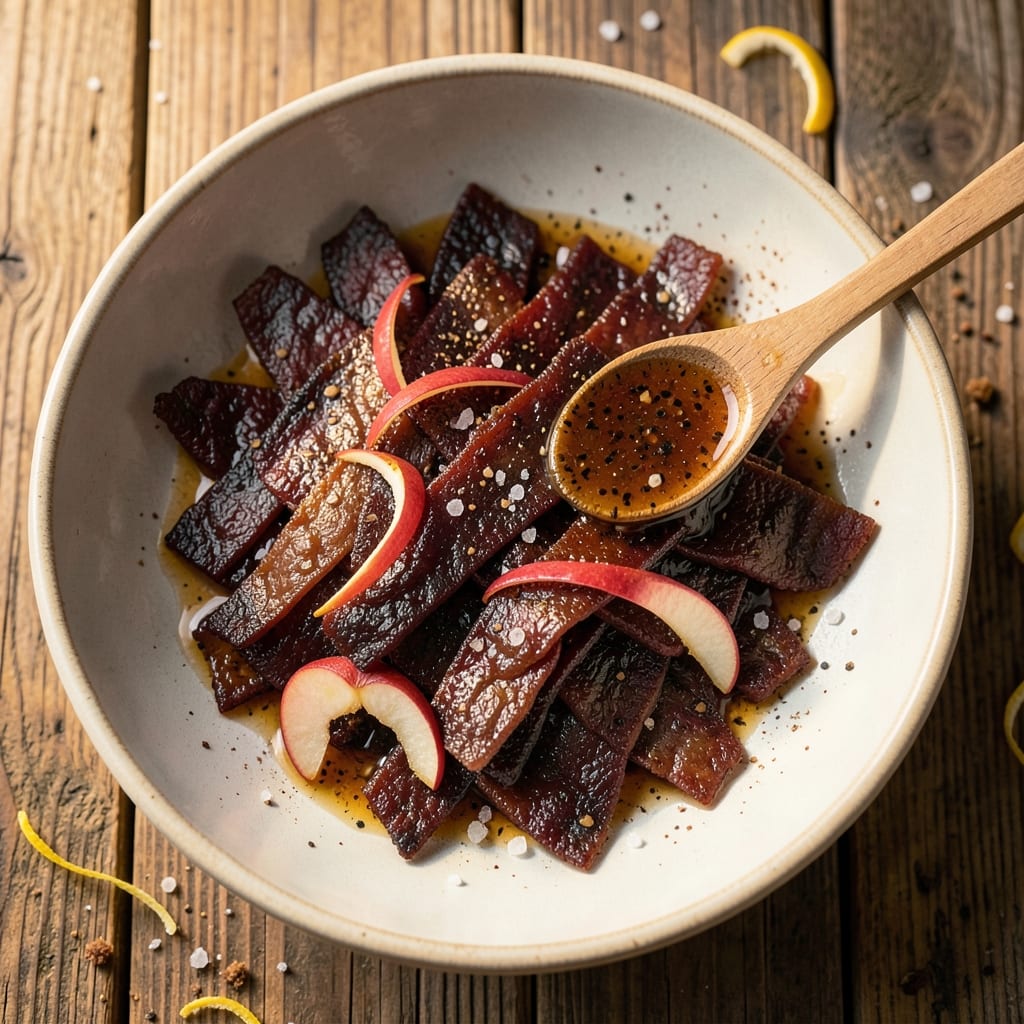
This apple cider vinegar beef jerky recipe transforms tough cuts into dehydrator-crispy, tangy-sweet bites that taste like a cross between traditional jerky and gourmet snacking. The secret lies in apple cider vinegar—its acidity tenderizes the meat while adding a bright, complex flavor that cuts through the richness. I’ve perfected this method over years of testing, ensuring every strip emerges perfectly chewy on the inside and crispy on the outside, ready in just 4 hours—no smoking required.
The process is straightforward but precise: thinly sliced beef soaks in a marinade of apple cider vinegar, Worcestershire, and spices for 2 hours, breaking down fibers and infusing flavor. After a quick rinse and pat dry, the meat dehydrates at 160°F for 4–6 hours, depending on thickness, until it reaches a safe internal temperature of 165°F. This method guarantees restaurant-quality jerky without the guesswork, and the tangy-sweet profile makes it irresistible straight from the dehydrator.
What sets this recipe apart is the balance of textures and flavors—crispy edges that shatter with each bite, a tender yet firm bite, and a tangy-sweet finish from the vinegar and brown sugar. The jerky keeps well in an airtight container for 2 weeks, making it perfect for meal prep, hiking snacks, or gifting. Whether you’re a jerky novice or a seasoned maker, this recipe delivers foolproof results every time.
For those new to dehydrating, don’t worry—this recipe includes step-by-step guidance to avoid common pitfalls like uneven drying or overcooking. The key is patience and precision, but the payoff is jerky so good, you’ll forget you made it yourself. Let’s get started on your first batch!
Ingredients for apple cider vinegar beef jerky
Lean beef, tangy vinegar, and precise spices—transform tough cuts into restaurant-quality jerky.
| Ingredient | Amount | Notes |
|---|---|---|
| Lean Beef Top Round Roast 🥩 | 2 lb | Thinly sliced against grain (1/4-inch thick) |
| Apple Cider Vinegar 🍎 | 1 cup | Raw, unfiltered preferred (Bragg brand recommended) |
| Worcestershire Sauce 🍶 | 2 tbsp | Anchovy-free version for strict dietary needs |
| Brown Sugar 🍚 | ½ cup | Light or dark, packed firmly |
| Kosher Salt 🧂 | 2 tbsp | Diamond Crystal preferred (less iodine) |
| Ground Black Pepper 🌶️ | 1 tbsp | Freshly cracked preferred |
| Garlic Powder 🧄 | 1 tbsp | Freshly ground preferred |
| Onion Powder 🧅 | 1 tbsp | Non-GMO preferred |
| Smoked Paprika 🌶️ | 1 tbsp | Spanish paprika for authentic flavor |
| Cayenne Pepper 🔥 | ½ tsp | Adjust for heat preference |
| Lemon Juice 🍋 | 1 tbsp | Freshly squeezed for brightness |
| Extra-Virgin Olive Oil 🫒 | 1 tbsp | For final coating (high smoke point) |
The beef cut is everything here. Top round roast delivers the perfect balance of lean protein and connective tissue for that signature chewy texture. Look for USDA Choice or higher at Costco or Whole Foods—their bulk sections often have pre-cut roasts that save time. If buying whole, slice against the grain for maximum tenderness. The vinegar matters too: Bragg brand is my go-to for its robust apple flavor, but any raw, unfiltered variety works. For the spices, Penzeys Spices offers the highest quality, but their bulk bins at natural grocery stores are more budget-friendly.
No apple cider vinegar? White vinegar plus 1 tsp apple juice concentrate works in a pinch, though the flavor won't be identical. Worcestershire sauce contains anchovies—if avoiding fish, use vegetarian Worcestershire or sub with 1 tbsp soy sauce plus 1 tsp molasses. For the brown sugar, coconut sugar adds subtle caramel notes, while raw cane sugar has a cleaner finish. The lemon juice is non-negotiable for brightness, but if you're out, lime juice at half the amount gives a similar zip. For the final coating, olive oil prevents sticking and adds a subtle richness—avocado oil works too if you prefer a higher smoke point.
Pre-sliced beef keeps in the fridge for 3 days wrapped tightly in plastic, but it's best used immediately. The marinade can be made 2 days ahead and stored in a sealed container. Once dehydrated, jerky stays crispy and flavorful for 2 weeks in an airtight container with parchment paper between layers. For longer storage, vacuum-seal portions for up to 6 months in the freezer. I always make a double batch—one for snacking, one to gift in mason jars tied with twine.
Why You'll Love This Recipe
- No-Fuss Marinade: The beef soaks in the marinade overnight—no fancy steps, just toss it in a bag, let it work its magic. Honestly, the apple cider vinegar does most of the heavy lifting while you sleep.
- Sweet-Savory Magic: That tangy-sweet combo? It’s ridiculously good—the brown sugar caramelizes just enough to balance the vinegar’s bite, and Worcestershire adds this deep, umami punch. (Yes, even on a Tuesday night.)
- Meal Prep Hero: Slice it thin, dehydrate it, and boom—you’ve got a snack for road trips, gym bags, or lazy afternoons. I’ll be real: my kids grab it before soccer practice, and I don’t even have to pack it.
- Budget-Friendly Protein: Top round roast is cheap, and this recipe stretches it into something special without breaking the bank. Plus, leftovers? Just slice thinner next time—no waste, all flavor.
Step-by-step instructions for apple cider vinegar beef jerky
Here's the professional method for dehydrator-perfect jerky with tangy-sweet depth and crispy texture.
Prepare the Marinade with Precision
In a large mixing bowl, combine the 1 cup apple cider vinegar, 2 tablespoons Worcestershire sauce, 0.5 cup brown sugar, 2 tablespoons kosher salt, 1 tablespoon ground black pepper, 1 tablespoon garlic powder, 1 tablespoon onion powder, 1 tablespoon smoked paprika, 0.5 teaspoon cayenne pepper, and 1 tablespoon lemon juice. Whisk vigorously for 2 minutes until the brown sugar dissolves completely and the mixture becomes homogeneous.
The vinegar and lemon juice create the signature tang, while the brown sugar balances with natural sweetness. This marinade should be thick enough to coat the meat thoroughly but not so syrupy that it pools. If it's too thick, whisk in 1 tablespoon water at a time until you achieve a smooth, pourable consistency. Here's the thing—this marinade needs to penetrate every fiber of the beef for maximum flavor and tenderness.
Slice and Marinate the Beef
Using a sharp boning knife, slice the 2 lb lean beef top round roast against the grain into ¼-inch thick strips. This against-the-grain cutting ensures the jerky remains tender despite the dehydration process. Arrange the slices in a single layer in a resealable plastic bag and pour the marinade over them, ensuring each piece is fully coated.
Seal the bag and massage the marinade into the beef by hand for 1 minute, pressing firmly to ensure complete saturation. Let the beef marinate in the refrigerator for at least 4 hours, though I recommend 12 hours for deeper flavor penetration. Real talk: the longer it marinates, the more tender and flavorful your jerky will be. Don't skip this step—it's the foundation of your jerky's quality.
Prep the Dehydrator for Optimal Drying
Preheat your dehydrator to 160°F and arrange the dehydrator trays with parchment paper. Line each tray with a fresh sheet of parchment to prevent the jerky from sticking. Remove the beef from the marinade and pat each piece dry with paper towels, removing any excess liquid. This drying step is crucial—it prevents the jerky from steaming in the dehydrator, which would make it soggy instead of crispy.
Arrange the beef strips in a single layer on the trays, ensuring they don't overlap. Overlapping pieces won't dry evenly and may develop uneven texture. If you're short on space, you can stack trays in your dehydrator, but leave at least ½ inch of space between layers for proper air circulation. This is the moment that matters: proper airflow ensures consistent drying and crispy texture throughout.
Dehydrate Until Leather-Like Perfection
Place the trays in the dehydrator and set the temperature to 160°F. Dehydrate for 6-8 hours, checking the jerky after 4 hours. The jerky is done when it's completely dry, flexible but not brittle, and no longer sticky to the touch. You'll know it's ready when it bends slightly but doesn't snap—this indicates perfect moisture removal without over-drying.
If the jerky isn't fully dry after 8 hours, continue dehydrating for 1-2 hours more, checking every 30 minutes. Over-drying makes jerky tough and unappetizing. Once fully dehydrated, remove the jerky from the dehydrator and let it cool completely on a wire rack. This cooling step allows the jerky to firm up and develop its final crispy texture.
Coat with Olive Oil for Extra Crispiness
While the jerky is still warm, place it in a single layer on a baking sheet lined with parchment paper. Using a pastry brush, lightly coat each piece with 1 tablespoon extra-virgin olive oil. This final step enhances the jerky's crispiness and adds a subtle richness that balances the tangy marinade. Don't overdo it—you're just adding a light sheen, not drowning the jerky in oil.
Let the jerky cool completely before storing it in an airtight container. The olive oil will set as the jerky cools, giving it that satisfying crunch. Store the jerky in the refrigerator for up to 2 weeks or freeze it for 3 months to preserve its crispy texture. This final coating is what takes your jerky from good to exceptional—don't skip it, even if it seems like an extra step.
Pro Tips For Making Apple Cider Vinegar Beef Jerky
- Trim Thin, Not Fat: Slice your top round against the grain into ¼-inch strips—thinner than you’d think. I learned this the hard way when my first batch turned chewy; the grain direction matters more than you’d guess, and skipping this step means jerky that fights your teeth instead of melts on your tongue. ---
- Marinate Cold, Not Room Temp: Pop your beef in the fridge with the marinade for at least 12 hours, but don’t let it warm up first. I used to pull it straight from the fridge into the mix, and the vinegar would start cooking the meat before dehydrating—leading to mushy jerky. Keep everything cold until you’re ready to dehydrate. ---
- Pat Dry Like Your Life Depends On It: Wrap your beef in paper towels and press hard to remove every drop of moisture before marinating. I know, it’s tedious, but wet jerky sticks together and takes forever to dry. Do this step, and your slices will separate cleanly and crisp up faster—no more gloppy clumps. ---
- Dehydrate Low and Slow: Set your dehydrator to 145°F (63°C) and leave it running for 6–8 hours, flipping strips halfway. I used to crank it to 160°F to save time, but the jerky ended up tough and dry. Lower heat preserves texture, and the extra time ensures it’s safe to eat without tasting like cardboard.
Regional styles of apple cider vinegar beef jerky
Southern BBQ Style
In the South, jerky gets a smoky, sweet twist by adding ½ cup molasses and 1 tablespoon liquid smoke to the marinade. I like to use Bragg's liquid smoke for that authentic campfire flavor. Serve it with a side of honey mustard or sriracha mayo for dipping. This variation is especially popular in Texas, where it's often paired with sweet tea and cornbread. 🔥
Spicy Southwest
For a Southwestern kick, swap the smoked paprika for 1 tablespoon chili powder and add 1 teaspoon ground cumin and ½ teaspoon oregano to the marinade. A dash of hot sauce like Cholula or Valentina elevates the heat. This version works perfectly with guacamole or queso fresco for a party-friendly snack. The tangy vinegar balances the spice beautifully.
Italian-Inspired
Give your jerky an Italian flair by replacing Worcestershire with 2 tablespoons balsamic vinegar and adding 1 teaspoon dried rosemary and ½ teaspoon fennel seeds to the marinade. A sprinkle of grated Parmesan cheese on the finished jerky adds a savory finish. Pair it with olive oil and balsamic dip or serve alongside proscuitto-wrapped melon for an elegant appetizer.
Sweet & Smoky Pacific Northwest
Inspired by Pacific Northwest flavors, this version swaps brown sugar for ½ cup maple syrup and adds 1 teaspoon cinnamon and ½ teaspoon allspice to the marinade. A light brush of maple glaze before dehydrating adds extra caramelization. This jerky pairs wonderfully with local cheeses like Havarti or blue cheese and a glass of Pinot Noir. The maple and vinegar create a unique sweet-tangy balance that's hard to resist. 🍁
Herb-Infused Mediterranean
For a Mediterranean twist, add 1 tablespoon dried oregano, 1 teaspoon dried thyme, and ½ teaspoon dried basil to the marinade. A splash of lemon zest brightens the flavor profile. Serve with hummus or tzatziki for dipping, and pair with warm pita bread and olives for a complete meal. This variation is perfect for summer gatherings and brings a refreshing herbal note to the classic jerky flavor.
Classic Midwest
The Midwest keeps it simple with a focus on bold flavors. Add 1 teaspoon mustard powder and ½ teaspoon celery salt to the marinade for a tangy, savory kick. This version is often served at tailgate parties with beer cheese dip or spicy ketchup. The apple cider vinegar gives it that familiar tangy sweetness that Midwest palates love. It's a crowd-pleaser that's easy to customize with additional spices like onion powder or garlic powder for extra depth. 🌽
Nutrition facts
Frequently asked questions
Can I use a different vinegar instead of apple cider vinegar?
Apple cider vinegar is ideal for its complex flavor, but you can substitute with white vinegar (add 1 teaspoon apple juice concentrate for depth) or rice vinegar. Avoid balsamic—it's too sweet and will overpower the marinade. The acidity is key for tenderizing, but the flavor profile changes dramatically.
Why does my jerky turn out chewy instead of crispy?
Chewy jerky usually means it didn't dry enough. Double-check your dehydrator temperature (160°F) and drying time (6-8 hours). Pat the beef very dry before dehydrating—excess moisture creates steam, not crispiness. For extra crunch, brush with olive oil after cooling, but don't overdo it.
How do I store homemade jerky to keep it crispy?
Store in an airtight container with parchment paper between layers to prevent sticking. Keep it in the fridge for 2 weeks or freeze for 3 months. For longer storage, vacuum-seal portions. Avoid plastic bags—they trap moisture and make jerky soggy. Pro tip: Add a silica gel packet to the container for extra crispness.
Can I make this jerky without a dehydrator?
Yes! Use an oven set to 175°F with the door slightly open for airflow. Place trays on the middle rack and bake for 2-3 hours, checking frequently. A smoker works too—maintain 165°F for 4-5 hours. The key is low heat and patience to avoid overcooking.
What's the best way to slice beef for jerky?
Slice against the grain into ¼-inch thick strips for maximum tenderness. Use a sharp boning knife and freeze the beef for 30 minutes first to firm it up. Thicker slices (>⅛ inch) take longer to dry and may not get crispy. For even slices, use a mandoline with a meat slicing blade.