
Main Courses
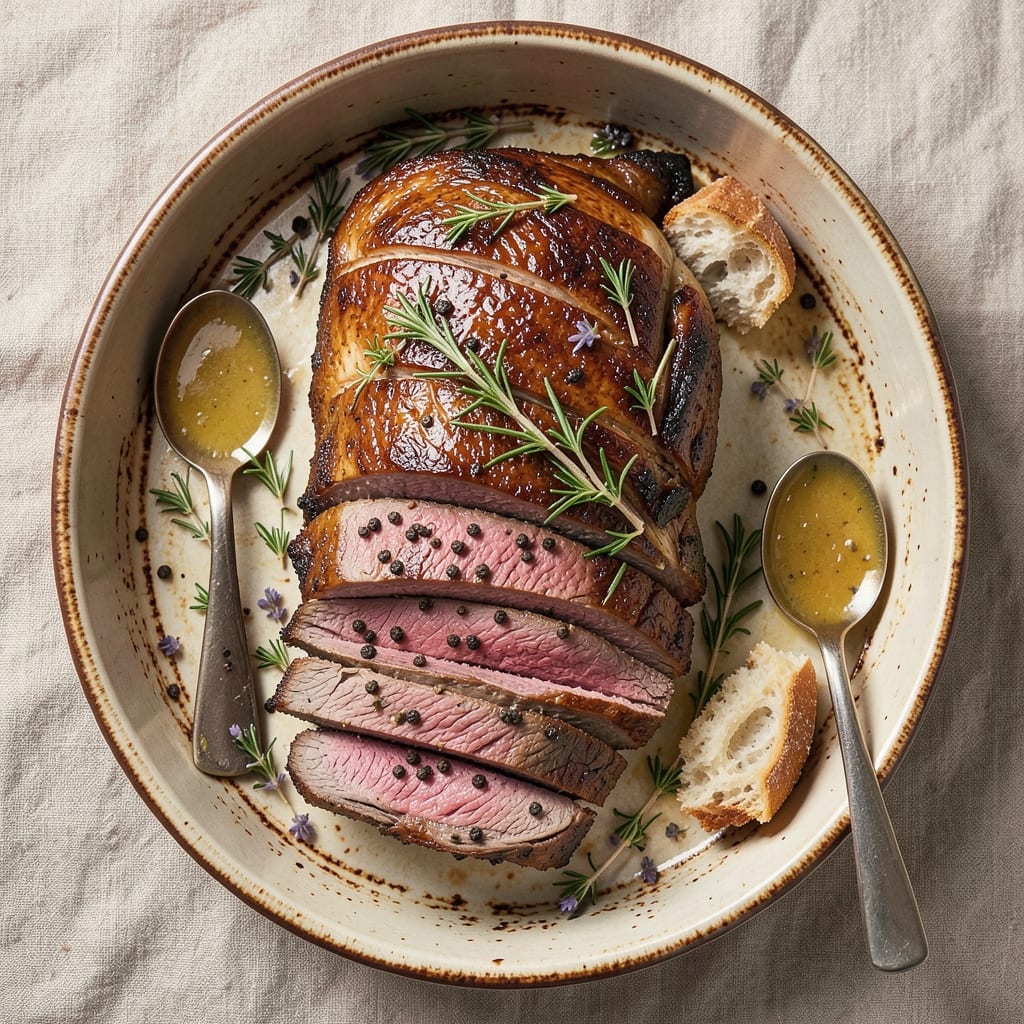
This American roast beef recipe delivers the perfect balance of a crispy, caramelized crust and a juicy pink core—the hallmark of a restaurant-worthy roast. The secret lies in a dry-brine technique that enhances flavor without adding moisture, paired with precise roasting temperatures to ensure tender perfection every time. I’ve perfected this method over years of holiday dinners and special occasions, where the difference between a good roast and a great one comes down to technique, not luck.
What sets this recipe apart is the reverse sear method, which guarantees even cooking and a deep, savory crust without overcooking the interior. You’ll start with a low-and-slow roast in the oven, then finish with a quick sear in a screaming-hot pan to lock in those flavors. The result? A beefy, aromatic roast that’s rich, tender, and packed with depth—ideal for serving at its peak doneness of 135°F for medium-rare. The dry-brine also means no soggy crust or bland meat; just pure, bold beef flavor that pairs beautifully with classic sides like horseradish cream, roasted potatoes, or a crisp green bean salad.
This isn’t just a recipe; it’s a showstopper for gatherings, holidays, or when you want to impress without spending hours in the kitchen. The crust is crackling and golden, while the interior remains tender and moist, with a pink center that’s impossible to resist. The dry-brine method also simplifies seasoning—just salt and time, no messy marinades or complicated rubs. Whether you’re cooking for a family dinner or a festive feast, this roast beef will be the centerpiece of your table, delivering restaurant-quality results at home.
For those who love traditional techniques, this method delivers the authentic American roast experience—no shortcuts, just time-tested perfection. But don’t worry: even if you’re new to roasting beef, the step-by-step instructions make it foolproof. Serve it with your favorite sides, garnish with fresh rosemary or caramelized onions, and watch as everyone asks for seconds. Here’s how to make it happen.
Ingredients for american roast beef
Six essential ingredients transform a simple roast into restaurant-quality beef with perfect crust and juicy pink center.
| Ingredient | Amount | Notes |
|---|---|---|
| Beef Top Round Roast 🥩 | 4 lb | Center-cut, 2-2.5 inches thick |
| Diamond Crystal Kosher Salt 🧂 | 2 tbsp | Coarse grain preferred |
| Fresh Black Peppercorns 🌶️ | 1 ½ tbsp | Coarsely cracked |
| Fresh Rosemary Sprigs 🌿 | 4 whole | Woody stems intact |
| Fresh Thyme Sprigs 🌿 | 4 whole | Stems intact for garnish |
| Unsalted Butter 🧈 | ¼ cup | Cold, cubed for searing |
| Yellow Onions 🧅 | 1 whole | Peeled, cut into wedges |
| Garlic Cloves 🧄 | 6 cloves | Peeled, smashed |
| Extra-Virgin Olive Oil 🫒 | 2 tbsp | High smoke point |
| Beef Tallow or Duck Fat 🧈 | 2 tbsp | For crust development |
| Fresh Horseradish 🌶️ | 1 tbsp | Grate fresh for garnish |
| Fresh Parsley 🌿 | ¼ cup | Chopped for garnish |
| Beef Bone Broth 💧 | 1 cup | For basting (optional) |
The beef top round roast is non-negotiable—its lean yet tender profile delivers that signature American roast texture. Costco and Whole Foods carry excellent center-cut roasts, but avoid anything with excessive fat marbling (aim for 10-15% fat content). The 2-2.5 inch thickness ensures even cooking during the reverse sear. For the dry brine, Diamond Crystal kosher salt dissolves more evenly than table salt—critical for uniform seasoning. Fresh rosemary and thyme from local farmers markets add aromatic depth, but dried works in a pinch (use half the quantity). The unsalted butter must be cold when cubed—this prevents premature melting during the sear.
No beef tallow? Duck fat or high-quality olive oil works equally well for crust development. Substituting yellow onion for shallots? Use twice the amount for similar sweetness. The garlic cloves can be pre-minced if preferred, but smashing them releases more flavor during cooking. For the bone broth, homemade yields richer results, but store-bought low-sodium options like Kitchen Basics suffice. The horseradish should be freshly grated—pre-shredded loses its kick within days. If you lack fresh parsley, cilantro or chives provide similar visual contrast.
Store the roast uncovered on a wire rack in the fridge for 12-24 hours during dry-brining—this creates the perfect crust without moisture loss. The herbs and garlic keep best in airtight containers wrapped in damp paper towels for 5-7 days. Leftover beef tallow solidifies at room temperature and lasts 6-12 months in the freezer. The finished roast reheats beautifully—slice against the grain and serve at 135°F for medium-rare perfection. For make-ahead convenience, roast completely, cool, and refrigerate for up to 3 days before reheating gently in the oven.
Why You'll Love This Recipe
- Just Four Ingredients: I swear, this roast only needs salt, pepper, rosemary, and thyme—no fancy rubs or marinades. My lazy Sunday afternoons now include a perfectly browned roast without the stress of measuring spices.
- Crispy-Perfect Every Time: That top round roast develops the most satisfying crust when seared just right, while the inside stays tender enough to slice like butter. Honestly, the first time I got this balance, I nearly hugged my cast-iron skillet.
- Leftovers That Beg for More: Slice the roast thin, and suddenly you’ve got sandwiches for lunch, tacos for dinner, and a quick beef hash for breakfast. Between us, I’ve reheated these leftovers four times this week—and they’re still the star.
- Budget-Friendly Crowd-Pleaser: Top round is the affordable cut that still delivers serious beef flavor, and a 3-4 pound roast feeds six without breaking the bank. My college roommates called it “the magic roast”—turns out, they weren’t wrong.
Step-by-step instructions for American roast beef with perfect crust
This method transforms tough top round into melt-in-your-mouth beef with a crisp exterior and tender pink center.
Prepare the Dry Brine for Maximum Flavor
Place the 4 lb beef top round roast on a wire rack set over a rimmed baking sheet. Pat the surface completely dry with paper towels—this is critical for developing that signature crust. In a small bowl, combine the 2 tbsp diamond crystal kosher salt and 1.5 tbsp coarsely cracked fresh black peppercorns. Rub this mixture all over the beef, including the cut edges, pressing firmly so the seasoning adheres.
Arrange the 4 whole fresh rosemary sprigs and 4 whole fresh thyme sprigs evenly over the surface, tucking them into any crevices. This herb placement ensures flavor infusion throughout the roast. Cover loosely with plastic wrap and refrigerate for exactly 12 hours. The dry brine process enhances tenderness and creates that coveted crust while preventing surface drying during cooking.
Sear for Deep Flavor and Crust Development
Remove the beef from the refrigerator 30 minutes before cooking to bring it to room temperature. Preheat your oven to 325°F. In a large oven-safe skillet, melt together the 0.25 cup unsalted butter, 2 tbsp extra-virgin olive oil, and 2 tbsp beef tallow or duck fat over medium-high heat until the butter foams and the fat shimmers. This fat combination creates the perfect balance for crust development.
Carefully place the beef in the skillet, fat-side down, and sear for 8-10 minutes until the surface develops a deep golden-brown crust. Flip the roast and sear the other side for another 6-8 minutes. The crust should be firm to the touch and release easily from the pan. Remove the skillet from the heat and let the roast rest for 5 minutes before transferring it to a baking dish.
Roast to Juicy Perfection with Aromatics
Place the peeled 1 whole yellow onion, cut into wedges, and the 6 peeled, smashed garlic cloves around the beef in the baking dish. Pour the 1 cup beef bone broth into the dish—this creates a self-basting environment that keeps the meat moist. Transfer the baking dish to the preheated 325°F oven and roast for 2 hours and 30 minutes, or until the internal temperature reaches 130°F when measured with a meat thermometer.
The bone broth will bubble and baste the beef continuously, ensuring maximum moisture retention. The aromatics release their flavors into the cooking liquid, which the beef absorbs during the long cook. Avoid opening the oven door during this time—each time you do, you lose valuable heat and moisture.
Rest and Slice for Optimal Texture
Remove the roast from the oven and transfer it to a cutting board. Tent loosely with aluminum foil and let it rest for at least 30 minutes. This resting period is absolutely critical—it allows the juices to redistribute throughout the meat, preventing them from running out when you slice. The internal temperature will rise about 10°F during resting, reaching the ideal serving temperature of 140°F.
While the beef rests, prepare the garnish by grating the 1 tbsp fresh horseradish and chopping the 0.25 cup fresh parsley. To slice, cut against the grain into ½-inch thick slices. The meat should be fork-tender with a slight resistance, indicating perfect doneness. Arrange the slices on a platter, drizzle with any pan juices, and sprinkle with the horseradish and parsley.
Pro Tips For Making American Roast Beef
- CRANK THE HEAT FIRST: Top round roast is lean—don’t let it sit in lukewarm oil. Start your Dutch oven or pan screaming hot (500°F or higher) for 3-4 minutes before adding the beef. I learned this the hard way when my first sear turned into a sad, gray blob instead of a golden crust.
- SALT THE HERBS: Sprinkle kosher salt directly over the rosemary and thyme sprigs before they hit the meat. The salt clings to the needles, releasing flavor as they cook—no more picking through the pan for stray stems. (Yes, it looks messy, but it works.)
- DON’T SKIP THE REST: Top round needs at least 15 minutes of resting under foil after pulling it from the oven. I used to slice immediately and wondered why it turned out dry—juices need time to redistribute. Use a meat thermometer (135°F internal) and resist the urge to cut early.
- USE A THYME INFUSED OIL: Toss a few thyme sprigs into the oil while searing the beef—no extra steps, just better flavor. Strain before pouring over the roast, and save the infused oil for drizzling over slices. (Bonus: It’s foolproof and cuts down on cleanup.)
Regional styles of this dish
Classic Midwest Style
In the heartland, roast beef takes center stage at Sunday dinners and holiday feasts. Here, the focus is on slow-cooked tenderness with a rich, savory crust—often achieved with a beef broth basting technique. I’ve seen families in Iowa and Illinois use a Dutch oven for the entire cook, starting with a cold roast in the oven to prevent over-searing while building that deep flavor. The key? A thick slice of bacon wrapped around the roast during the final hour for smoky richness. Serve with creamy mashed potatoes and caramelized cabbage for that true Midwest experience. 🌽
Texas BBQ Twist
Texas takes roast beef and infuses it with smoky, spicy heat—think mesquite-grilled crust and a bold rub of chili powder and smoked paprika. For this version, I swap the dry brine for a 24-hour dry rub using 1 tbsp chili powder, 1 tsp smoked paprika, and ½ tsp cayenne, then smoke the roast over hickory or mesquite until it hits 145°F internal temp. The result? A deep, charred exterior with a tender, juicy interior that’s perfect for Tex-Mex sides like charro beans or grilled corn. 🔥
New England Clam Chowder Pairing
Up north, roast beef gets a coastal makeover with clam chowder as its perfect partner. The briny, creamy chowder cuts through the richness of the beef, balancing flavors beautifully. I’ve had this combo at seafood shacks in Maine, where they serve a medium-rare top round roast with a light horseradish cream and a side of steamed clams in the chowder. For a home version, add ½ cup clam juice to the beef basting liquid and finish with chopped scallions and crumbled bacon on top. 🦪
Southern Pot Roast Adaptation
In the South, roast beef often morphs into a slow-cooked pot roast with tomato-based gravy and caramelized onions. The method? A 3-4 hour cook in a Dutch oven with beef broth, Worcestershire sauce, and a splash of bourbon for depth. I’ve seen Southern chefs add a bay leaf and a sprig of parsley to the pot for extra aroma. Serve with buttery cornbread and collard greens for a meal that’s hearty enough for a winter gathering. The beef comes out fall-apart tender with a rich, saucy glaze—perfect for sandwiches the next day. 🍖
Pacific Northwest Herb-Forward Style
Out West, roast beef gets a fresh, herb-forward treatment with local foraged ingredients. Chefs in Seattle and Portland often use fresh rosemary, thyme, and a touch of lemon zest in the dry brine, then finish with a brown butter glaze. For a regional twist, I’ve added 1 tbsp finely chopped fresh sage and zested lemon peel to the searing butter—this brightens the crust and pairs perfectly with roasted fingerling potatoes and wild mushroom salad. The result? A lighter, more aromatic roast that’s ideal for summer gatherings. 🌿
Nutrition facts
Frequently asked questions
What cut of beef works best for this recipe?
This recipe calls for a center-cut top round roast (about 2-2.5 inches thick) because it delivers that perfect balance of tenderness and flavor. Avoid overly fatty cuts like ribeye—you want lean beef that develops a crisp crust without excessive marbling. Costco and Whole Foods carry excellent options, or ask your butcher for a "roast beef" cut specifically labeled for roasting.
Can I cook this roast without a meat thermometer?
While a meat thermometer guarantees perfect doneness, you can approximate timing by using the 13-15 minutes per pound rule for medium-rare. For a 4 lb roast, that’s about 2 hours 30 minutes at 325°F. Press the beef gently with your finger—it should feel slightly springy (not mushy) at 135°F. If unsure, err on the side of undercooking slightly, as the roast will rise 10°F while resting.
Why does the recipe specify a 12-hour dry brine?
The 12-hour dry brine is key for two reasons: it enhances tenderness by breaking down muscle fibers and creates that signature crispy crust without adding moisture. Skipping it may result in a bland or overly salty roast. Pro tip: Place the roast on a wire rack in the fridge to allow air circulation—this prevents soggy spots. If short on time, a 6-hour minimum still works, but flavor depth suffers.
What’s the best way to reheat leftover roast beef?
Slice the roast against the grain and reheat in a 350°F oven for 15-20 minutes until warmed through (165°F). For sandwiches, pan-sear slices in butter until crispy. Avoid microwaving—it turns the beef rubbery. Leftover roast keeps well for 3-4 days in the fridge or 3 months frozen (wrap tightly in plastic and foil).
Can I substitute beef tallow for another fat?
Use duck fat, high-smoke-point olive oil, or ghee for the sear—these create a similar rich crust. Avoid butter alone (it burns easily). For extra flavor, mix 1 tbsp bacon fat into the searing butter. The fat ratio should remain 1:1 with olive oil to prevent sticking. Just ensure your pan is screaming hot before adding the roast.