
Soups & Stews
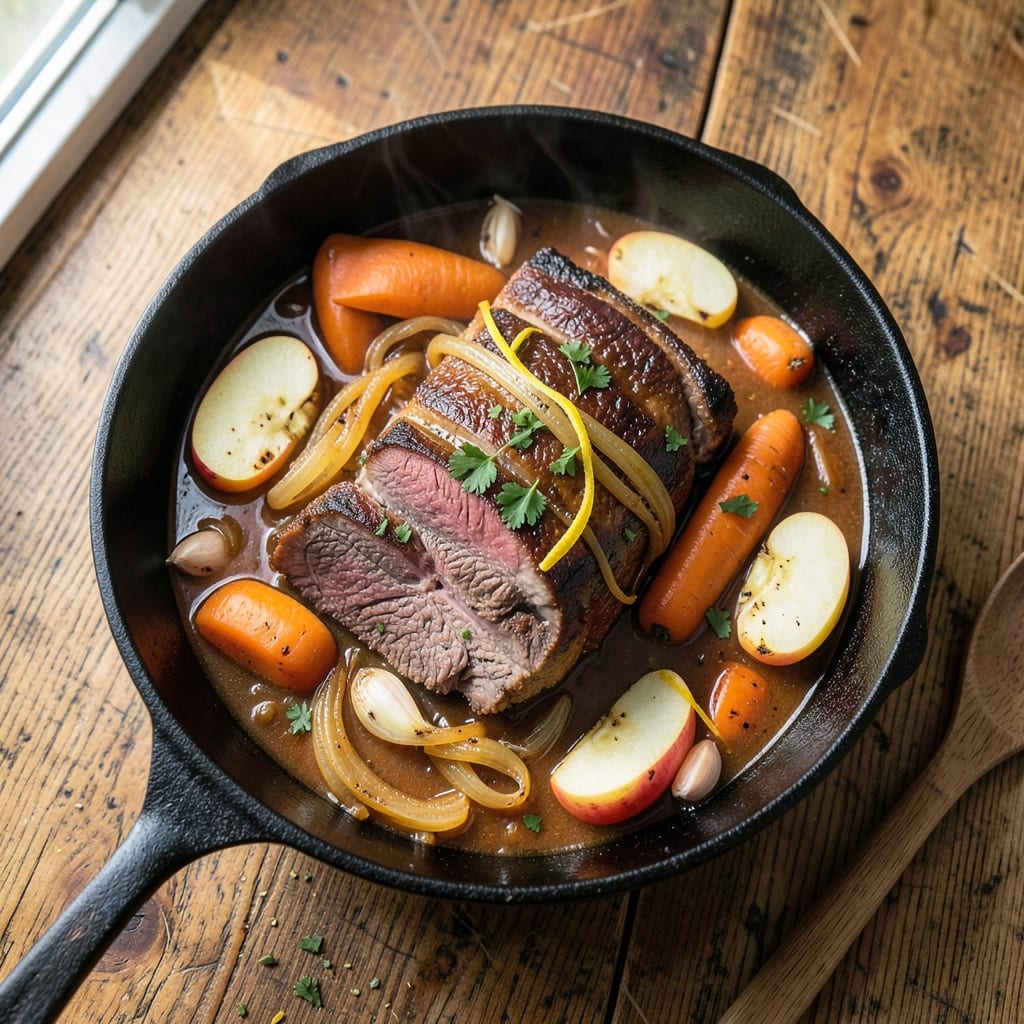
This apple beef stew recipe transforms humble beef and apples into a rich, caramelized masterpiece that tastes like autumn in a bowl. The secret lies in slow-braising beef with tender apples and onions until the flavors meld into a velvety, sweet-savory symphony. I perfected this recipe after years of experimenting with French-inspired braising techniques, and the result is a dish that's both comforting and sophisticated—ideal for chilly evenings or special gatherings.
The foundation of this stew begins with a deep, flavorful caramelized onion fond, which builds layers of sweetness that balance the beef's richness. While traditional beef stews rely on hardy vegetables, this version incorporates apples for a subtle sweetness that brightens the dish without overpowering the beef. The slow cooking process ensures the meat becomes fork-tender, while the apples soften into a melt-in-your-mouth texture that adds unexpected depth.
What you’ll end up with is a hearty stew where each spoonful delivers tender beef, caramelized onions, and perfectly softened apples in a deeply aromatic broth. The aroma alone—warm spices, sweet apples, and savory beef—will have everyone gathered around the table. This isn’t just stew; it’s a restaurant-quality dish that’s surprisingly easy to make at home, with minimal prep and maximum reward.
The beauty of this recipe lies in its versatility—serve it with crusty bread to soak up every last drop, or pair it with mashed potatoes for a cozy meal. The flavors improve as it sits, making it perfect for meal prep or leftovers. Let’s get started on creating this apple beef stew recipe that will become a staple in your winter repertoire.
Ingredients for apple beef stew
Sixteen ingredients transform into a restaurant-quality apple beef stew with French-inspired caramelized onion fond.
| Ingredient | Amount | Notes |
|---|---|---|
| Beef Chuck Roast 🥩 | 3 lb | 2-inch cubes, trimmed of fat |
| Yellow Onions 🧅 | 4 large | Thinly sliced for fond |
| Honeycrisp Apples 🍎 | 4 medium | Peeled, cored, sliced |
| Carrots 🥕 | 4 medium | Peeled, cut into chunks |
| Garlic Cloves 🧄 | 6 cloves | Minced for depth of flavor |
| Beef Broth 💧 | 4 cups | Low-sodium preferred |
| Red Wine 🍷 | 1 cup | Dry, full-bodied like Cabernet |
| Tomato Paste 🍅 | 2 tbsp | For rich base color |
| Thyme 🌿 | 2 tbsp | Fresh, stems removed |
| Bay Leaves 🌿 | 2 whole | For aromatic depth |
| Black Peppercorns 🌶️ | 1 tsp | Freshly cracked |
| Salt 🧂 | 2 tsp | Diamond Crystal preferred |
| Olive Oil 🫒 | ½ cup | Extra-virgin for richness |
| Balsamic Vinegar 🍶 | 1 tbsp | For subtle acidity |
| All-Purpose Flour 🌾 | 2 tbsp | For thickening fond |
The beef chuck roast is non-negotiable for texture—Costco or Whole Foods carry the best quality with good marbling. Look for 2-inch cubes pre-cut at the butcher counter to save time. Honeycrisp apples are ideal—they hold their shape while adding sweetness, but Granny Smith works if you prefer tartness. Carrots should be firm and straight, not woody. For the onions, yellow or red both work, but yellow develops deeper caramelization. Penzeys or Trader Joe's bulk bins offer the freshest thyme and bay leaves, which are essential for that aromatic depth. If you can't find fresh thyme, dried at one-third the quantity suffices, though fresh is preferred for this sophisticated dish.
No red wine? Substitute with beef broth and 1 tbsp balsamic vinegar for acidity. The tomato paste can be replaced with 1 cup crushed San Marzano tomatoes if you prefer freshness. Short on apples? Swap in pears or pears mixed with apples for a different texture. For the fond, if you're concerned about burning, deglaze with extra broth between color changes. The balsamic vinegar adds subtle complexity—skip it only if you're avoiding acidity entirely. For a quicker version, pre-slice the onions in the food processor, but hand-slicing gives better caramelization. Olive oil quality matters here—use something you'd drizzle on bread, not the cheap cooking oil.
This stew tastes even better the next day as flavors meld. Store in the fridge for up to 5 days or freeze for 3 months—portion into airtight containers with a layer of broth on top to preserve moisture. The fond can be made ahead and refrigerated for 3 days or frozen for 3 months. For serving, reheat gently on the stove with a splash of broth to restore richness. Garnish with fresh thyme just before serving to highlight the aromatic notes. Double the recipe if you're feeding a crowd—it reheats beautifully and tastes even more complex the second time around.
Why You'll Love This Recipe
- One-Pot Magic: I swear by this recipe when I’m too tired to wash dishes. Chuck roast, onions, and carrots all simmer together—no extra pots, no fuss—while the apples caramelize right in the pot. Honestly, the cleanup is half the battle won.
- Sweet-Savory Balance: That first bite? Rich beef meets crisp Honeycrisp apples in every spoonful. The garlic and onions deepen as they cook, but the apples keep it bright—like a hug for your taste buds. (Yes, even on a Tuesday night.)
- Leftovers That Beg: This stew only gets better the next day. The beef gets fork-tender, the apples soak up all the flavor, and I’ve sent containers home with coworkers who now demand seconds. Between us, it’s my secret weapon for work lunches.
- Budget-Friendly Feast: A chuck roast stretches for days, and apples add luxury without breaking the bank. I’ve fed six people for under $20, and everyone leaves happy. Not the prettiest, but the taste makes up for it—every time.
Step-by-step instructions for apple beef stew
Transform tough beef into melt-in-your-mouth tenderness with this method.
Build the Onion Fond for Rich Depth
Heat the 0.5 cup olive oil in a large Dutch oven over medium-low heat. Add the 4 large yellow onions, sliced thinly, and cook undisturbed for 15 minutes until deeply caramelized and golden brown. Stir occasionally to promote even browning.
This slow caramelization creates the fond—the flavor foundation of your stew. You're looking for a deep amber color and a sweet, almost jam-like consistency. If the onions start to stick, gently scrape up the browned bits with a wooden spoon. These bits contain concentrated flavor that will dissolve into your stew. Once the onions are perfectly caramelized, remove them and set aside for later.
Sear the Beef for Maximum Flavor
Increase heat to medium-high and add the 3 lb beef chuck roast, cut into 2-inch cubes. Sear the beef in batches if needed, working in a single layer, for 3-4 minutes per side until deeply browned. This step develops the Maillard reaction, creating complex flavors that will infuse your stew.
Don't overcrowd the pan—this prevents proper browning. You want each piece to develop a rich crust. As each batch sears, transfer the beef to a plate and set aside. The residual fat in the Dutch oven will help build your sauce. Once all beef is browned, remove and set aside with the onions.
Develop the Base with Aromatics and Wine
Return the Dutch oven to medium heat and add the 6 cloves minced garlic, 2 tbsp tomato paste, and 2 tbsp thyme. Stir for 1 minute until fragrant. Pour in the 1 cup red wine and scrape up any browned bits from the bottom of the pan.
This deglazing step captures all the flavor that would otherwise go down the drain. Let the wine simmer for 3-4 minutes until reduced by half. The alcohol will cook off, leaving behind concentrated wine flavor. Add the 2 whole bay leaves and 1 tsp cracked black peppercorns to the pot.
Combine and Braise to Perfection
Return the browned beef and onions to the Dutch oven. Add the 4 medium honeycrisp apples, 4 medium carrots cut into chunks, and the 4 cups beef broth. Stir to combine, then bring to a gentle simmer over medium-low heat. The liquid should just bubble gently—this is crucial for even cooking.
Cover and transfer to a 325°F oven. Braise for 2.5-3 hours until the beef is fork-tender. The apples should be soft but still hold their shape, and the carrots should be easily pierced with a fork. Check after 2 hours—your oven may run hot or cold, so adjust timing accordingly.
Finish and Adjust for Balance
Remove the stew from the oven and stir in the 1 tbsp balsamic vinegar and 2 tbsp all-purpose flour. Simmer uncovered on the stovetop over medium heat for 10-15 minutes to thicken the sauce slightly. Taste and adjust seasoning with additional salt if needed.
The balsamic vinegar adds a subtle acidity that brightens the rich flavors, while the flour helps create a velvety texture. The stew should be thick enough to coat the back of a spoon but still spoonable. Serve immediately with crusty bread or over mashed potatoes to soak up every delicious bite.
Pro Tips For Making Apple Beef Stew
- SEAR THE ROAST FIRST: Brown that beef chuck in batches—don’t skip this. The Maillard reaction on the outside gives the stew depth, and skipping it means you’ll end up with a mushy, flavorless slab of meat. Use a hot, dry pan and let it sit for 2-3 minutes per side until deep golden. (Yes, even if you’re in a hurry—this is the thing that matters most.)
- PEEL AND CORE APPLES LAST: I learned this the hard way—prepping apples too early turns them mealy. Keep them whole until you’re ready to add them to the pot, then peel and core right before tossing in. For Honeycrisp, cut them into ½-inch chunks so they soften but don’t dissolve into the broth.
- SIMMER LOW AND SLOW: After browning everything, cover the pot and reduce heat to a bare simmer—think tiny bubbles, not rolling. Too high a temp and the apples will turn to mush in 20 minutes. This isn’t a race; let the beef break down for at least 2.5 hours. (Your future self will thank you.)
- SAUTE ONIONS UNTIL CARAMELIZED: Don’t just chop and toss the onions—cook them until they’re deep golden, about 12-15 minutes. The sweetness balances the acidity of the apples and beef, and it’s the base flavor of the stew. If you’re short on time, use 1 tablespoon of honey or brown sugar to shortcut the process, but don’t skip the step entirely.
Pro cooking tips for this recipe
Master the Fond
The caramelized onion fond is the soul of this stew—don't rush it! Use yellow onions sliced into ⅛-inch strips for even cooking. I like to work in batches if needed, but never let the onions burn. The key is medium-low heat and patience—this takes 20-25 minutes total, not 15. The fond should be deep amber with a jam-like consistency. If it sticks, add a splash of beef broth to deglaze before scraping up those precious browned bits. 🌡️
Beef Sear Secrets
For maximum flavor, sear the beef in single layers over medium-high heat until it develops a deep crust. I use a cast-iron Dutch oven because it retains heat perfectly. If your beef is extra fatty, trim it first—fat renders quickly but can make the stew greasy. For extra tenderness, pat the beef dry with paper towels before searing. This helps create a better crust through the Maillard reaction. Work in batches if needed, but never overcrowd the pan. 🔥
Wine Reduction Magic
The red wine should reduce by half—this concentrates the flavor beautifully. After adding the wine, let it bubble away until it's thickened slightly (about 3-4 minutes). This step is where 90% of the flavor develops, so don't skip it. If you're using a bold Cabernet, the tannins will pair perfectly with the beef. For a non-alcoholic version, substitute with extra beef broth and add 1 tbsp balsamic vinegar for acidity. 🍷
Braising Time Control
Braising at 325°F ensures the beef becomes fork-tender without drying out. Use a meat thermometer to check doneness—203°F internal temperature is ideal. If your oven runs hot, reduce to 300°F to prevent overcooking. The apples should soften but still hold their shape—Honeycrisp works best here. For extra richness, skim any excess fat from the surface before serving. 💪
Flour Thickening Hack
Stir in the 2 tbsp flour during the final 10 minutes of simmering to thicken the sauce naturally. This creates a velvety texture without making it gluey. If the stew is too thick, add 1-2 tbsp beef broth to adjust. The balsamic vinegar brightens the flavors—don't skip it! Taste and season with salt at the end, as the flavors develop during braising. 💡
Equipment Upgrades
Invest in a heavy-bottomed Dutch oven (like Le Creuset) for even heat distribution. A meat thermometer is a game-changer—Thermoworks Smoke is my top pick. For hands-off cooking, use an Instant Pot on High Pressure for 45 minutes, then natural release. The flavors will be slightly different but still incredible. 🏆
Nutrition facts
Frequently asked questions
Can I substitute apples in this beef stew?
While Honeycrisp apples work best for their balance of sweetness and texture, you can swap in Granny Smith for tartness or Bosc for firmer bites. For a different twist, try pears or even sweet potatoes (peeled and cubed) for a heartier stew. Just adjust cooking time—pears soften faster than apples.
How do I make this stew in a slow cooker?
Transfer the seared beef, caramelized onions, and all ingredients (except flour) to a 6-quart slow cooker. Cook on Low for 7-8 hours or High for 4-5 hours. Stir in the flour and balsamic vinegar during the last 30 minutes to thicken. The slow cooker method yields slightly more tender beef and a deeper flavor concentration.
Why is my stew too thin or too thick?
For a thinner stew, add ½ cup beef broth at a time while simmering. If it's too thick, whisk in 1 tbsp flour mixed with 2 tbsp cold water (roux) and simmer for 5 minutes. The flour in the recipe should naturally thicken it, but braising times vary. Always taste-test before serving to adjust seasoning and consistency.
Can I prepare this stew ahead of time?
This stew tastes even better the next day! Store it in an airtight container in the fridge for up to 5 days or freeze for 3 months. Reheat gently on the stove with a splash of broth to restore richness. The flavors deepen as it sits, making it perfect for meal prep or holiday gatherings.
What wine should I use if I don't like red wine?
For a non-alcoholic version, replace the wine with 1 cup beef broth + 1 tbsp balsamic vinegar for acidity. If you prefer white wine, use dry Chardonnay or Sauvignon Blanc—they add brightness that complements the apples. Just reduce the white wine for 2-3 minutes instead of 3-4 minutes to avoid bitterness.